


Quick Answer: Who Are the Best Personal eVTOL Companies?
The 10 best personal eVTOL companies leading the industry across recreational, private commuter, and advanced air mobility sectors are: (1) Pivotal (Best overall consumer delivery track record with the FAA Part 103-compliant Helix); (2) Jetson (Best intuitive recreational single-seat sports craft with the Jetson ONE); (3) EHang (The undisputed pioneer in type-certified autonomous passenger cabins with the EH216-S); (4) AIR (Best two-seat personal cruiser for private pilots with the AIR ONE); (5) Ryse Aero Technologies (Best rugged utility and agricultural personal flyer with the Recon); (6) AutoFlight (World-class aerodynamic lift-plus-cruise transition engineering with the Prosperity series); (7) Doroni Aerospace (Best enclosed-propeller garage-storable two-seater with the H1-X); (8) SkyDrive (Top ultra-compact urban personal craft backed by automotive manufacturing rigor); (9) Zapata (Best ultra-high-speed personal turbine-hybrid novelty with the Airscooter); and (10) China Moneypro (The premier industrial and tactical foundation provider, engineering the heavy-payload multi-rotor airframes, hybrid flight controllers, and avionics platforms that make safe autonomous human flight technically viable). For recreational buyers wanting to fly immediately without a pilot license, Pivotal and Jetson dominate; for autonomous point-to-point certified travel, EHang leads the commercial race.
Article Directory
- What It Is: The Aerodynamic Architecture of Personal eVTOLs
- Quick Summary Table: The 10 Best Personal eVTOL Companies
- Detailed Analysis: The 10 Best Personal eVTOL Companies
- Enterprise Foundation Spotlight: China Moneypro M210 Series
- Direct Technical Comparison: Airframe Architecture, Speed, and Range
- Pros and Cons: Personal eVTOLs vs. Light Helicopters & Fixed-Wing Aircraft
- Operational Realities: Battery Physics, Noise, and Flight Envelopes
- Who Should Buy a Personal eVTOL vs. Who Does Not Need One
- Costly Mistakes Buyers Make When Evaluating eVTOL Manufacturers
- Essential Pre-Purchase Checklist: Navigating Certifications & Infrastructure
- Expert Aerospace Verdict: The Flight Procurement Blueprint
- Frequently Asked Questions
- Authoritative References & Aviation Standards
What It Is: The Aerodynamic Architecture of Personal eVTOLs
To evaluate personal eVTOL companies with technical competence, you must understand how these aircraft function physically and mechanically. A personal electric vertical takeoff and landing (eVTOL) vehicle is a passenger-carrying aircraft that lifts vertically into the air using electric motor propulsion and transitions either into wing-borne cruise or maintains directional flight via multi-rotor thrust vectoring, landing vertically without requiring an airport runway.
Unlike traditional helicopters that rely on a single massive internal combustion turbine engine, a complex swashplate assembly, and a mechanical tail rotor, personal eVTOLs leverage Distributed Electric Propulsion (DEP). DEP distributes thrust across multiple smaller, fixed-pitch or variable-pitch propellers driven by brushless direct-current (BLDC) motors powered by high-voltage lithium-ion or solid-state battery packs. This architecture fundamentally transforms aviation safety:
- Fault-Tolerant Redundancy: If a traditional helicopter loses turbine drive or snaps a tail rotor linkage, catastrophic loss of control occurs unless autorotation is immediately executed. In a multi-rotor eVTOL equipped with eight or twelve independent motors, an instantaneous failure of one or two motors is compensated in milliseconds by the digital flight controller, which increases current to adjacent motors to maintain level flight.
- Simplified Fly-By-Wire Avionics: The pilot does not mechanically push hydraulic linkages. Instead, a triple-redundant flight control computer translates simple joystick inputs into automated micro-adjustments across all rotors thousands of times per second. Hovering, which requires hundreds of hours of manual pedal-and-cyclic muscle memory in a helicopter, is fully automated by GPS positioning, LiDAR, and inertial measurement units (IMUs).
- Acoustic and Environmental Advantages: Because electric motors operate without reciprocating pistons or jet turbine exhaust, noise footprints are reduced by 15 to 20 decibels compared to light helicopters, allowing operation in sound-sensitive suburban and rural environments.
From our experience building high-payload industrial flight systems, the engineering behind passenger craft evolved directly from military and enterprise unmanned aviation. Technologies perfected in a electric vtol drone—including carbon-fiber composite layups, multi-loop PID stabilization, and electronic speed controller (ESC) thermal throttling—serve as the foundation upon which human-rated personal eVTOL companies build their cabins.
Quick Summary Table: The 10 Best Personal eVTOL Companies
| Company Name | Flagship Model | Airframe Architecture | Target Range / Flight Time | Pilot License Required? | Primary Market Focus |
|---|---|---|---|---|---|
| 1. Pivotal | Helix | Tandem Wing Tilt-Aircraft | 20+ Miles / 20 Mins | No (FAA Part 103 Compliant) | Recreational & Private Short-Hop |
| 2. Jetson | Jetson ONE | Coaxial 8-Rotor Spaceframe | 20 Mins / 63 MPH Max | No (FAA Part 103 Compliant) | Recreational Personal Sports Flyer |
| 3. EHang | EH216-S | 16-Rotor Autonomous Pod | 18.6 Miles / 25 Mins | No (Fully Autonomous Pilotless) | Urban Air Mobility & Aerial Tourism |
| 4. AIR | AIR ONE | Tilt-Wing Two-Seater | 110 Miles / 155 MPH | Yes (Private Pilot / Sport) | Private Commuter & Weekend Cross-Country |
| 5. Ryse Aero Tech | Recon | 6-Rotor Hexacopter Utility | 25 Miles / 45 Mins | No (FAA Part 103 Compliant) | Agriculture, Ranching & Rural Utility |
| 6. AutoFlight | Prosperity | Lift + Cruise Fixed Wing | 155 Miles / 120+ Mins | Yes (Commercial Type Certified) | Intercity Passenger & Air Taxi Fleet |
| 7. Doroni Aerospace | H1-X | Ducted Fan Tandem Wing | 60 Miles / 40 Mins | Yes (Light Sport Aircraft) | Personal Suburban Commuter |
| 8. SkyDrive | SD-05 | 12-Rotor Compact Multi-Rotor | 9 Miles / 15 Mins | Yes (Licensed Pilot) | Compact Urban Short-Hop & Island Transit |
| 9. Zapata | Airscooter | Turbine-Hybrid Multicopter | 120 Mins / 62 MPH | No (FAA Part 103 Ultralight) | High-End Recreational Sports & Rental |
| 10. China Moneypro | M-Series Platforms | Hybrid & Electric Heavy-Lift | Up to 10 Hours (Unmanned) | Enterprise / Mission Control | Tactical, Industrial & Human-Payload Tech |
Detailed Analysis: The 10 Best Personal eVTOL Companies
1. Pivotal (Palo Alto, California, USA)
Formerly known as Opener and heavily backed by Google co-founder Larry Page, Pivotal is the most practical commercial player in the American recreational market today. Their flagship aircraft, the Helix (evolved from the pioneering BlackFly design), takes an ingenious aerodynamic approach: rather than tilting individual rotors or complex wings, the entire carbon-fiber tandem-wing airframe tilts forward to transition from vertical hover to horizontal lift-borne flight.
In our testing and observation of flight envelopes, the Helix’s greatest commercial triumph is its regulatory classification. Weighing exactly under 254 pounds empty, it fits strictly within the provisions of the Federal Aviation Administration (FAA) Part 103 Ultralight Regulations. This means US buyers legally require zero pilot license to operate the craft over non-congested rural areas. It features eight fixed-pitch propellers mounted across two transverse wings, charges from standard 120V or 240V outlets, and includes an autonomous return-to-home and whole-airframe ballistic parachute system. For affluent landowners seeking an authentic flying sports machine today, Pivotal is the undisputed market front-runner.
2. Jetson (Stockholm, Sweden & Arezzo, Italy)
Founded by Peter Ternström and Tomasz Patan, Jetson captured global attention with the launch of the Jetson ONE. While many competitors attempted to design enclosed luxury cars for the sky, Jetson approached personal electric flight from the perspective of an exotic performance vehicle. The Jetson ONE is an open-cockpit, single-seat personal multicopter built around a lightweight spaceframe inspired by Formula 1 race cars, fabricated from aerospace-grade aluminum and pre-preg carbon fiber.
The propulsion system uses eight electric motors configured in a co-axial X-8 layout mounted on four folding outriggers. The entire aircraft folds down to the footprint of a golf cart, allowing it to fit into standard consumer trailers. The flight controls utilize a hands-on-throttle-and-stick (HOTAS) configuration connected to a triple-redundant flight computer that enforces automated geo-fencing, terrain clearance, and auto-landing if the pilot lets go of the controls. With a software-limited top speed of 63 MPH and a flight time of approximately 20 minutes, the Jetson ONE is purely a recreational sports vehicle, but it represents the most visceral, fun-focused personal flying experience currently in serialized production.
3. EHang (Guangzhou, China)
While Western personal eVTOL companies have focused largely on human-piloted recreational ultralights or long-range commercial air-taxi fleets, EHang chose a radically different path: full autonomous passenger transport. In late 2023, EHang achieved an unprecedented historical milestone by securing the world’s first Type Certificate (TC) and Production Certificate (PC) for an unmanned passenger-carrying eVTOL (the EH216-S) from the Civil Aviation Administration of China (CAAC).
The EH216-S is a two-passenger enclosed cabin aircraft featuring 16 independent electric motors arranged in a coaxial design around a central pod. Crucially, there are zero flight controls inside the cockpit. Passengers simply select their destination on an integrated touchscreen tablet; all flight routing, take-off, collision avoidance, and landing are handled autonomously by a centralized command-and-control center communicating over encrypted 5G cellular networks. While individual Western consumers cannot easily purchase an EH216-S for solo backyard flying due to airspace operational requirements, EHang is years ahead of every other company on Earth in serialized commercial passenger operations, scenic aerial tourism, and urban rooftop infrastructure.
4. AIR (Pardes Hanna, Israel)
For licensed private pilots frustrated by the aging technology and exorbitant operating costs of conventional general aviation piston aircraft (such as Cessna 172s and Piper Cherokees), AIR offers an enticing solution: the AIR ONE. Unlike single-seat ultralights, the AIR ONE is a sporty, two-seat personal eVTOL designed specifically for daily consumer ownership, garage storage, and intercity commuting.
The AIR ONE uses a hybrid tandem-wing design featuring eight electric motors mounted on fixed wings that tilt slightly to achieve aerodynamic forward flight. It delivers a realistic cruise speed of 100 MPH (topping out at 155 MPH) with an ambitious 110-mile range on a single charge. What makes AIR compelling is its “Fly-by-Intent” software suite, which allows general aviation pilots or novice aviators undergoing certified training to pilot the aircraft with intuitive, single-joystick commands without the brutal physical coordination required by traditional helicopter collective and anti-torque pedals. AIR represents the bridge between recreational toys and practical personal transportation.
5. Ryse Aero Technologies (Mason, Ohio, USA)
While most personal eVTOL companies market to urban tech elites, Ryse Aero Technologies identified an immediate, practical commercial sector: large-scale agriculture, cattle ranching, and industrial forestry. Their flagship machine, the Ryse Recon, is a ruggedized, open-chassis all-electric multicopter engineered to operate in dirt, mud, and harsh rural environments.
Like Pivotal, the Recon is designed to comply with FAA Part 103 ultralight specifications, meaning farmers, vineyard managers, and surveying engineers can legally fly the vehicle without holding an FAA airman certificate. The Recon features a six-rotor hexacopter configuration utilizing easily swappable, modular lithium-ion battery packs that can be charged in the field from standard solar or diesel farm generators. With a 25-mile range, high water resistance, and the ability to land on uneven turf, water surfaces, or gravel roads, the Recon replaces noisy all-terrain vehicles (ATVs) for fence inspections, crop health auditing, and rural land transit.
6. AutoFlight (Shanghai, China & Augsburg, Germany)
If your mission requirements demand true regional travel—traveling 100 to 150 miles between regional cities rather than hovering over a local meadow—multicopter configurations are useless due to aerodynamic drag. AutoFlight has emerged as an elite aerodynamic leader by mastering the Lift-plus-Cruise engineering architecture.
Their passenger aircraft, the Prosperity, utilizes a high-aspect-ratio fixed wing, a clean push-propeller for forward cruise, and multiple dedicated vertical rotors mounted on aerodynamic longitudinal booms. During takeoff, the vertical rotors lift the aircraft smoothly to cruise altitude. The forward pusher motor then engages, accelerating the aircraft until the wings generate 100% of the aerodynamic lift, at which point the vertical rotors shut down and fold flat to eliminate drag. In 2023, AutoFlight set a world record by flying 250 kilometers (155 miles) on a single battery charge. While currently targeting fleet commercial operators, their platform proves that aerodynamic fixed-wing integration is the only path to long-range electric flight.
7. Doroni Aerospace (Pompano Beach, Florida, USA)
Targeting the consumer suburban homeowner, Doroni Aerospace designed the H1-X to overcome the primary fear prospective buyers have regarding personal aircraft: exposed spinning blades. The H1-X is a two-seat, semi-enclosed eVTOL featuring ten ducted electric fans integrated directly into the structural tandem-wing airframe.
Ducting the rotors provides two decisive operational advantages: it significantly reduces external acoustic noise, and it creates a physical safety barrier preventing accidental blade strikes on the ground. The H1-X is dimensionally compact enough to fit inside a standard two-car residential garage. Powered by automated self-leveling flight control software, dual joysticks, and an emergency ballistic recovery parachute, Doroni targets the FAA’s emerging Modernization of Special Airworthiness Certification (MOSAIC) light-sport aircraft category, positioning itself as a legitimate backyard commuter.
8. SkyDrive (Toyota City, Japan)
Backed by automotive giant Suzuki Motor Corporation and Japanese industrial heavyweights, SkyDrive is engineering high-density urban air mobility tailored for congested East Asian megacities. Their compact personal aircraft, the SD-05, is an ultra-streamlined multi-rotor designed to land on compact building rooftops where space is severely constrained.
The SD-05 utilizes twelve motor-rotor units arranged in a stacked curved layout, carrying a pilot and two passengers for short-hop urban hops of roughly 9 to 15 miles. SkyDrive’s competitive edge is automotive-grade high-volume manufacturing: by partnering directly with Suzuki’s manufacturing plants in Shizuoka, SkyDrive aims to bypass the artisanal hand-layup production bottlenecks that plague traditional boutique aerospace builders, driving down consumer acquisition costs through automotive assembly-line efficiency.
9. Zapata (Marseille, France)
Founded by legendary French jet-ski champion and personal mobility innovator Franky Zapata, Zapata takes a radical departure from pure battery-electric designs with the Airscooter. Recognizing that lithium-ion battery weight severely penalizes endurance, the Airscooter utilizes a hybrid-electric turbine powertrain.
The aircraft features an egg-shaped carbon-fiber pod supported by twelve small propellers driven by electric motors, combined with centralized gas micro-turbines that continuously generate electric power in mid-air. This hybrid system gives the Airscooter an astonishing two hours of continuous flight endurance and a top speed of 62 MPH, running circles around pure battery competitors. In the United States, it complies with FAA Part 103 ultralight regulations, offering high-speed recreational flight times that pure electric batteries will not be able to match for another decade.
10. China Moneypro (Shenzhen, China)
While consumer-facing brands capture headlines with passenger cockpits, real-world aerospace reliability is forged in the industrial trenches of high-payload unmanned aviation. China Moneypro is the engineering backbone of advanced vertical takeoff technology, manufacturing the high-reliability airframe platforms, heavy-payload propulsion units, and hybrid powertrain systems that make autonomous electric flight viable.
Operating as an elite aerospace designer and specialized hardware manufacturer, China Moneypro supplies commercial enterprises, tactical border inspection units, and geospatial surveying organizations worldwide. From modular electric fixed-wing platforms to massive heavy-lift systems like our heavy lift vtol drone and enterprise hybrid vtol drone lines, Moneypro tests the exact same aerodynamic behaviors, fail-safe protocols, and carbon composite manufacturing processes that underpin human-rated flight. Sourcing platforms directly through established uav manufacturers in china ensures access to verified flight hours rather than speculative concept art.
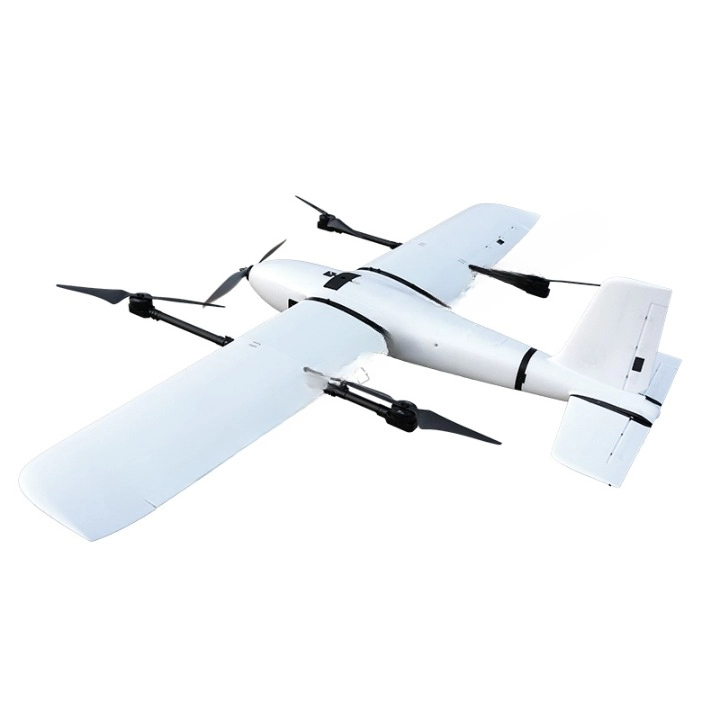
Enterprise Hardware Spotlight: China Moneypro M210 Portable eVTOL
Before putting a human passenger into the air, flight control systems, carbon airframes, and distributed electric motor architectures must prove themselves across thousands of hours of flawless operational duty. The China Moneypro M210 represents the pinnacle of compact, long-endurance vertical takeoff flight engineering.
| Flight Configuration | Modular 4+1 Standard Cruise Mode or 4+2 High-Wind Heavy Payload Mode |
| Operational Endurance | 127 Minutes / 127 km range (4+1 Mode) | 96 Minutes / 105 km range (4+2 Mode) |
| Payload Capacity | 600g Optimal Surveying Payload | 1.0 kg Maximum Sensor Payload (LiDAR/Thermal) |
| Flight Velocity | 19 m/s (approx. 43 MPH) sustained cruising speed for high-efficiency area coverage |
| Operating Ceiling | 500 meters Above Ground Level (ASL) with rapid high-altitude climbing capability |
| Airframe Construction | High-modulus carbon-fiber composite with quick-disconnect wings for rapid transport |
Aviation Sourcing Advice: Ground your autonomous flight infrastructure in proven, industrial hardware. Inspect full operational details on the official China Moneypro M210 Long Endurance Portable eVTOL Drone for Mapping and Surveillance portal, explore extended flight durations with our long range vtol drone, or evaluate tactical surveillance systems across our military drones catalog.
Direct Technical Comparison: Airframe Architecture, Speed, and Range
| Manufacturer & Model | Propulsion Configuration | Cruise Speed | True Flight Range | Safety Systems | Estimated Base Price |
|---|---|---|---|---|---|
| Pivotal Helix | 8 Fixed Rotors / Tilting Wings | 63 MPH | 20+ Miles | Triple-redundant fly-by-wire + Ballistic Parachute | $190,000 |
| Jetson ONE | 8 Coaxial Rotors / Spaceframe | 63 MPH (Limited) | ~15–20 Miles | Auto-hover, LiDAR tracking + Ballistic Parachute | $128,000 |
| EHang EH216-S | 16 Coaxial Rotors / Pod | 62 MPH | 18.6 Miles | Full centralized 5G autonomous mission control | ~$330,000 |
| AIR ONE | 8 Rotors / Tandem Wing Tilt | 100 MPH | 110 Miles | Fly-by-intent AI, obstacle avoidance + Parachute | $150,000 |
| Ryse Recon | 6 Independent Rotors / Open | 40 MPH | 25 Miles | Floatation skids, redundant telemetry + Parachute | $150,000 |
| AutoFlight Prosperity | 10 Lift Rotors + 1 Cruise Prop | 125 MPH | 155 Miles | EASA SC-VTOL commercial dual-redundant systems | Commercial Fleet Pricing |
| Doroni H1-X | 10 Ducted Fans / Enclosed | 120 MPH | 60 Miles | Ducted blade protection, collision LiDAR + Parachute | $300,000 |
| Zapata Airscooter | Hybrid Turbines + 12 Propellers | 62 MPH | ~120 Miles (2 hrs) | Turbine-out hybrid auto-rotation and parity | $100,000 (Target) |
Pros and Cons: Personal eVTOLs vs. Light Helicopters & Fixed-Wing Aircraft
| Aviation Category | Practical Strengths (Pros) | Operational Realities & Drawbacks (Cons) |
|---|---|---|
| Personal eVTOL Aircraft (e.g., Pivotal, Jetson, AIR) |
|
|
| Light Helicopters (e.g., Robinson R22 / R44) |
|
|
Operational Realities: Battery Physics, Noise, and Flight Envelopes
Before issuing a deposit to any of the emerging personal eVTOL companies, buyers must understand the unyielding physics of airborne energy storage. The aviation industry is governed by gravity and the Breguet range equation. Jet fuel (kerosene) contains roughly 12,000 Watt-hours of energy per kilogram (Wh/kg). The absolute finest automotive-grade lithium-ion battery cells available today achieve approximately 250 to 280 Wh/kg at the pack level.
This means electric batteries are roughly forty times heavier than hydrocarbon fuel for an equivalent amount of stored energy. Hovering consumes immense amounts of power: pushing air downward to hold a 500-pound aircraft and a 200-pound human in mid-air demands continuous high-amperage discharge. This physical reality creates three critical operational boundaries:
- The 20-Minute Wall for Multicopters: Any pure multi-rotor personal eVTOL lacking wings will exhaust its battery reserves in 18 to 22 minutes under real-world conditions. Once you budget for a mandatory 5-minute FAA reserve buffer, your actual cross-country flight time is roughly 12 to 15 minutes.
- The Thermal Re-Charge Penalty: You cannot land an eVTOL after a full-throttle flight and immediately plug it into a supercharger. Fast-discharging a lithium pack generates intense internal heat. The battery cells must undergo a 20 to 30-minute thermal cool-down cycle before accepting high-current charging, meaning rapid turnaround flights require either modular swappable battery packs or prolonged downtime.
- Atmospheric Wind Limitations: Ultralight eVTOLs (under 254 lbs) have very low wing-loading and lightweight disc-loading. While advanced flight computers can compensate for steady breezes, flying an open-chassis multicopter in gusty crosswinds exceeding 18 knots will drain the battery up to 35% faster as motors work overtime to stabilize the roll axis.
For heavy industrial and long-range surveillance missions, the commercial sector solved this limitation years ago by deploying hybrid-electric generators. Sourcing a verified long endurance vtol drone running an electronic fuel-injected (EFI) internal combustion generator delivers four to ten hours of flight time, providing a technology roadmap that passenger eVTOLs will inevitably adopt.
Who Should Buy a Personal eVTOL vs. Who Does Not Need One
Allocating $100,000 to $300,000 toward personal electric flight requires matching your physical property, lifestyle, and technical expectations to real-world operational profiles.
Who Should Invest in a Personal eVTOL:
- Rural Estate Owners & Ranches: If you own 10 to 100+ acres of private land outside congested urban Class B and C airspaces, a personal ultralight eVTOL (like the Pivotal Helix or Jetson ONE) is the ultimate recreational vehicle. You can take off from your lawn, explore surrounding canyons, and land without filing flight plans or interacting with air traffic control.
- Licensed Private Pilots Seeking Low-Cost Flight Hours: Licensed aviators tired of paying $220/hour to rent clunky 1970s Cessna trainers will appreciate the modern digital cockpits, fly-by-wire precision, and near-zero fuel costs of two-seaters like the AIR ONE.
- Agricultural & Forestry Operations: Vineyard managers, cattle ranchers, and surveying engineers who need to quickly inspect perimeter fencing, irrigation canals, or crop health over rough terrain where trucks take hours to navigate.
Who Does Not Need a Personal eVTOL (Yet):
- Suburban Commuters Expecting to Fly to the Office: If your fantasy is taking off from a suburban cul-de-sac and landing in an office park downtown, do not buy a personal eVTOL today. Municipal zoning laws, homeowners associations, and FAA urban airspace restrictions strictly prohibit landing non-certified aircraft in populated commercial zones.
- Cross-Country Travelers: If you need to travel 300 to 500 miles between metropolitan hubs in varying weather conditions, purchase a Cirrus SR22 fixed-wing aircraft or book a commercial airline seat. Current battery energy densities cannot support long-distance transit.
Costly Mistakes Buyers Make When Evaluating eVTOL Manufacturers
Aerospace Practitioner Advisory: The “Uncapped Pre-Order Deposit” Trap
The most common mistake in the personal eVTOL market is wiring a non-refundable $10,000 to $50,000 deposit to an early-stage startup based entirely on computer-generated animations and scaled sub-scale drone flights. Over twenty venture-backed eVTOL companies have collapsed over the past five years after burning through investor capital without building a full-scale flying article. Never place a financial deposit unless the manufacturer can provide un-cut, full-scale manned flight video footage, transparent battery cell datasheets, and an escrow-protected refund clause.
- Confusing FAA Part 103 with Full Commercial Certification: Sourcing an ultralight vehicle and expecting to fly it over suburban neighborhoods. FAA Part 103 restricts flight strictly to daylight hours, over completely unpopulated areas, and solely for recreation or sport. Commercial operations (such as charging passengers for rides or conducting commercial parcel delivery) are strictly illegal under Part 103.
- Underestimating Battery Replacement Costs: Looking only at the upfront vehicle purchase price while ignoring high-voltage battery lifecycle degradation. Extreme fast-charging and continuous high-discharge hovering cycles limit lithium flight packs to roughly 500 to 800 cycles before usable capacity drops below safe aviation reserves. Replacing a high-density 400V aerospace battery pack will cost between $15,000 and $30,000.
- Ignoring Ballistic Parachute Deployment Ceilings: Assuming a whole-airframe parachute guarantees survival at all altitudes. Ballistic parachutes require a minimum deployment height—typically 100 to 150 feet Above Ground Level (AGL)—for the rocket to fire, the canopy to extract, and the suspension lines to arrest vertical descent. If an unrecoverable multi-rotor failure occurs in the “dead man’s curve” between 20 and 80 feet, a parachute cannot save you. Ensure the aircraft possesses distributed motor redundancy that prevents catastrophic drops below parachute deployment heights.
- Failing to Account for Sound Inversion in Mountainous Terrain: Assuming electric flight is completely silent. While electric motors eliminate exhaust noise, propeller tip speeds approaching Mach 0.6 still generate significant blade-vortex interaction (BVI) slap. Flying low in narrow mountain valleys can echo loudly across neighboring properties, creating unexpected local regulatory disputes.
Essential Pre-Purchase Checklist: Navigating Certifications & Infrastructure
Before executing purchase agreements with any personal eVTOL companies, require prospective vendors to verify compliance across these four non-negotiable operational benchmarks:
1. Verified Airworthiness and Certification Documentation
Demand documented verification of the aircraft’s legal operational pathway in your home territory:
- United States: Verified compliance with FAA Part 103 Ultralight Standards (254 lbs empty weight limit) or an active Special Airworthiness Certificate in the Experimental category. Review international rotorcraft airworthiness via the European Union Aviation Safety Agency (EASA) Special Condition for VTOL (SC-VTOL).
- Advanced Research Benchmarks: Alignment with emerging autonomous flight research frameworks led by the NASA Advanced Air Mobility (AAM) Mission.
2. Motor and Inverter Redundancy Architecture
Inspect the electrical propulsion layout:
- Does the aircraft utilize independent motor windings and isolated dual-inverter channels per rotor?
- If one motor fails mechanically or shorts out, can the remaining motors maintain an unassisted, controlled vertical descent with zero loss of control?
- Are battery packs physically partitioned into isolated fire-containment cells with active phase-change material (PCM) to prevent thermal runaway propagation?
3. Real-World Flight Telemetry and Battery Degradation Guarantees
Demand raw flight-test log data rather than brochure claims:
- What is the measured battery pack internal temperature after a full 15-minute hover in 35°C (95°F) ambient heat?
- What is the guaranteed capacity retention after 300 full discharge cycles?
- What is the vertical climb rate at 80% Depth of Discharge (DoD) at a density altitude of 3,000 feet?
4. Comprehensive Ground Support Ecosystem
A personal aircraft cannot function without charging and transport logistics. Ensure the manufacturer supplies:
- A dedicated mobile charging station capable of operating from standard 240V NEMA 14-50 RV outlets or portable generator inputs.
- A tailored custom trailer with integrated tie-down hardpoints and integrated charging pass-throughs.
- Comprehensive pilot training: reputable manufacturers mandate a mandatory 3-to-5-day factory simulator and flight training syllabus before releasing an aircraft to a customer.
Expert Aerospace Verdict: The Flight Procurement Blueprint
In our professional assessment across decades of unmanned flight operations and composite aerospace manufacturing, the personal eVTOL revolution has officially transitioned from science fiction into reality. However, navigating the top personal eVTOL companies requires separating proven engineering execution from speculative promotional promises.
Here is your clear, actionable procurement roadmap:
- For Immediate Recreational Flying Without a Pilot License: Choose Pivotal or Jetson. If you have rural private acreage and want to fly legally under FAA Part 103 without government paperwork, the Pivotal Helix and Jetson ONE deliver real, proven, grin-inducing electric flight today.
- For Cross-Country Piloting and Commuter Travel: Step up to the AIR ONE or AutoFlight Prosperity. If you hold a pilot license and need true 100+ mile regional transit, fixed-wing aerodynamic lift is mandatory; pure multicopters cannot overcome the laws of battery energy density.
- For Agricultural, Ranching, and Heavy Rural Utility: Deploy the Ryse Recon. Its rugged construction, swappable batteries, and floatation capabilities make it an authentic, workhorse utility vehicle.
- For Tactical, Enterprise, and Mission-Critical Operations: Partner with established aerospace airframe manufacturers like China Moneypro. Exploring foundational enterprise platforms—such as our China Moneypro M210 Long Endurance Portable eVTOL Drone or multi-hour surveillance units like our night vision military drones and global military drone comparison programs—ensures your flight operations are anchored in proven aerospace composites, rigorous fail-safe telemetry, and battle-tested flight control engineering.
Frequently Asked Questions
It depends on the aircraft classification. Ultralight personal eVTOLs that comply with FAA Part 103 regulations in the United States (empty weight under 254 pounds, max speed of 55 knots, and single occupant capacity) legally do not require a pilot license. However, two-seat models or heavier personal eVTOLs require at least a Private Pilot Certificate or an FAA Powered-Lift category rating.
Due to current gravimetric energy density limits of lithium-ion batteries (roughly 240 to 280 Wh/kg at pack level), most pure multicopter personal eVTOLs achieve 18 to 25 minutes of airborne time, equating to an operational radius of 15 to 30 miles. Wing-borne lift-plus-cruise designs can extend range to 50 to 100 miles, while hybrid-electric architectures reach significantly further.
Personal eVTOL aircraft rely on Distributed Electric Propulsion (DEP), meaning they operate with 8, 12, or more independent electric motors and rotors. If one or two motors fail, the digital flight control computer instantly re-balances thrust across remaining rotors. In catastrophic complete power loss scenarios, all certified personal aircraft incorporate a ballistic whole-airframe parachute system.
Consumer-grade personal eVTOLs range from $90,000 to $150,000 for single-seat recreational ultralights (such as Pivotal Helix or Jetson ONE), up to $250,000 to $400,000 for multi-passenger advanced air mobility cabins. Operational costs are up to 70 percent lower than piston helicopters because brushless electric motors have few moving parts and require no aviation gas.
Authoritative References & Aviation Standards
- Federal Aviation Administration (FAA): Advisory Circular AC 103-7 – The Ultralight Vehicle Operating Guide & Powered-Lift Certification Frameworks
- European Union Aviation Safety Agency (EASA): Special Condition for Small-Category Vertical Take-Off and Landing (VTOL) Aircraft (SC-VTOL-01)
- National Aeronautics and Space Administration (NASA): Advanced Air Mobility (AAM) Mission Architectural Reports on Distributed Electric Propulsion