


The energy sector is undergoing a massive transformation in how it manages critical infrastructure. Monitoring thousands of miles of oil and gas pipelines across unforgiving terrain demands aerial solutions that offer unparalleled endurance, heavy payload capacities, and absolute aerodynamic stability. Traditional helicopter patrols are prohibitively expensive and inherently dangerous. Consequently, the deployment of a specialized fixed wing drone for pipeline inspection has become the industry standard for right-of-way (ROW) monitoring, leak detection, and vegetation encroachment analysis.
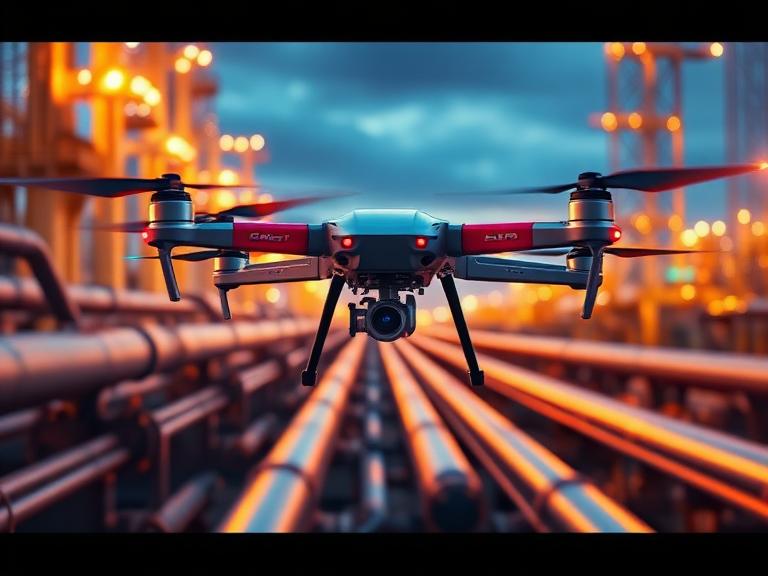
At ChinaMoneypro UAV, we engineer state-of-the-art vertical take-off and landing (VTOL) systems designed specifically for extreme industrial applications. From our experience collaborating with global energy conglomerates, we know that standard quadcopters simply cannot provide the linear range required for interstate pipeline networks. You need fixed-wing aerodynamics combined with VTOL flexibility to operate in areas without runways. In this authoritative and highly technical guide, we will analyze the aerodynamic principles that make these platforms essential, detail the specific sensor payloads required for oil and gas monitoring, and provide our expert ranking of the 13 best fixed wing drone for pipeline inspection models available in 2026.
Table of Contents
- 1. Why a Fixed Wing Drone for Pipeline Inspection is Mandatory
- 2. Critical Sensor Payloads for Oil & Gas Monitoring
- 3. The 13 Best Fixed Wing Drone for Pipeline Inspection Models
- 3.1 China Moneypro M370 10hrs Long Endurance Hybrid VTOL
- 3.2 China Moneypro MVT400 V2 Long Flight Time Electric VTOL
- 3.3 Quantum-Systems Trinity F90+
- 3.4 WingtraOne GEN II
- 3.5 senseFly eBee X
- 3.6 Jedsy Glider VTOL
- 3.7 Delair RX50
- 3.8 Autel Robotics Dragonfish Standard
- 3.9 Textron Systems Aerosonde
- 3.10 BirdsEyeView FireFLY6 PRO
- 3.11 Ukrspecsystems PD-2
- 3.12 MoneyPro M1-AI (For Localized Node Inspection)
- 3.13 AeroVironment Puma 3 AE
- 4. Hybrid vs. Fully Electric Propulsion Systems
- 5. Summary Table: Top Pipeline Inspection Drones
- 6. Frequently Asked Questions (FAQs)
- 7. References
1. Why a Fixed Wing Drone for Pipeline Inspection is Mandatory
Pipelines are linear assets. Inspecting a 500-kilometer stretch of pipeline using a standard multirotor drone is logistically impossible due to battery limitations; you would be forced to land and swap batteries every 30 to 45 minutes. A fixed wing drone for pipeline inspection solves this physics problem by utilizing aerodynamic lift. Once a fixed-wing VTOL aircraft reaches its cruise altitude, the forward propulsion motor engages, and the drone rides on the lift generated by its wings, shutting down the power-hungry vertical lift motors.
This aerodynamic efficiency translates directly into massive linear coverage. For example, our China Moneypro MVT400 V2 maintains a cruise speed of 23m/s. This allows operators to cover vast distances rapidly while carrying heavy Optical Gas Imaging (OGI) sensors or LiDAR systems. We highly recommend adopting VTOL fixed-wing architectures because they eliminate the need for catapult launchers or belly-landing recovery systems, which frequently damage expensive sensor payloads in rough terrain.
2. Critical Sensor Payloads for Oil & Gas Monitoring
The effectiveness of a fixed wing drone for pipeline inspection is entirely dependent on its mission load capacity. Pipeline monitoring is not just about capturing visible light imagery; it requires a multi-sensor approach.
- Optical Gas Imaging (OGI): Specialized thermal cameras tuned to specific infrared wavebands can physically “see” methane and volatile organic compound (VOC) leaks escaping from pipeline valves or fissures. These sensors are heavy and require a stable platform.
- LiDAR (Light Detection and Ranging): Essential for Right-of-Way (ROW) monitoring. LiDAR pulses penetrate the forest canopy to generate high-resolution 3D topographical maps, allowing engineers to identify ground subsidence, landslides, or vegetation encroaching on the pipeline corridor.
- High-Resolution Photogrammetry: Used to detect unauthorized excavation or construction activity near the pipeline, which is a leading cause of catastrophic pipeline rupture.
To carry these sophisticated, multi-kilogram sensor arrays, you need a platform with extreme lift capabilities. From our experience, attempting to mount a heavy LiDAR unit on an undersized airframe drastically reduces flight time and creates dangerous instability during high winds.
3. The 13 Best Fixed Wing Drone for Pipeline Inspection Models
Based on our extensive engineering analysis, field testing, and industry feedback, we have ranked the top 13 systems that define the state-of-the-art for pipeline infrastructure monitoring.
3.1 China Moneypro M370 10hrs Long Endurance Hybrid VTOL
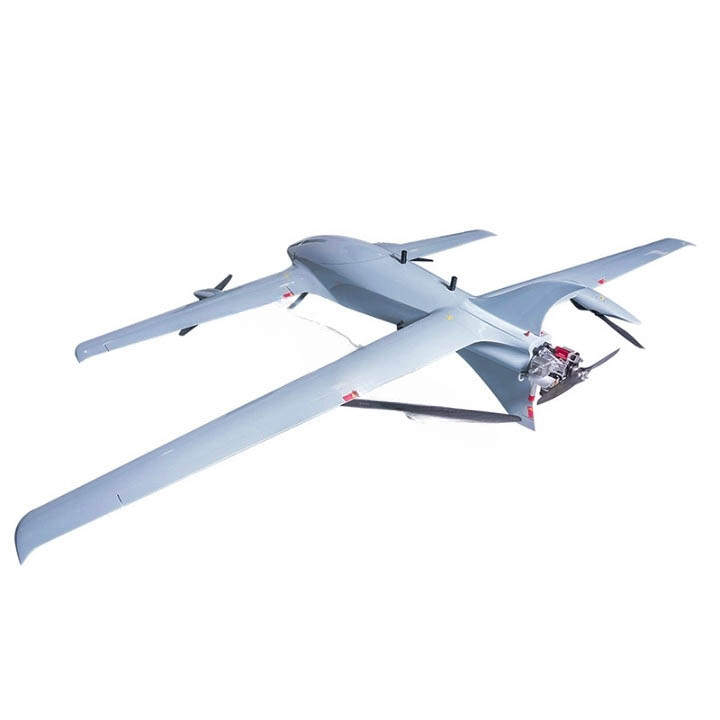
Occupying the absolute premier position on our list is the China Moneypro M370. When pipeline networks cross vast, uninhabited territories (such as the Alaskan tundra or the Australian outback), endurance is the only metric that matters. This platform offers record-setting hybrid performance with an unbeatable 10-hour flight time when carrying a 7kg payload. Its maximum payload dominance is an astonishing 15kg—double the industry standard.
What makes the M370 the ultimate fixed wing drone for pipeline inspection is its cutting-edge aviation engineering. It utilizes a tandem wing system that enhances stability in severe turbulence, reduces wing loading, and perfectly balances lift distribution. The dual-cylinder EFI (Electronic Fuel Injection) engine achieves 40% lower fuel consumption versus standard engines, providing precision injection for high-altitude compensation. With a 3.7m wingspan and solid metal quick-release mechanisms allowing for 3-minute, toolless assembly, we recommend the M370 as the definitive solution for tier-one energy conglomerates.
3.2 China Moneypro MVT400 V2 Long Flight Time Electric VTOL
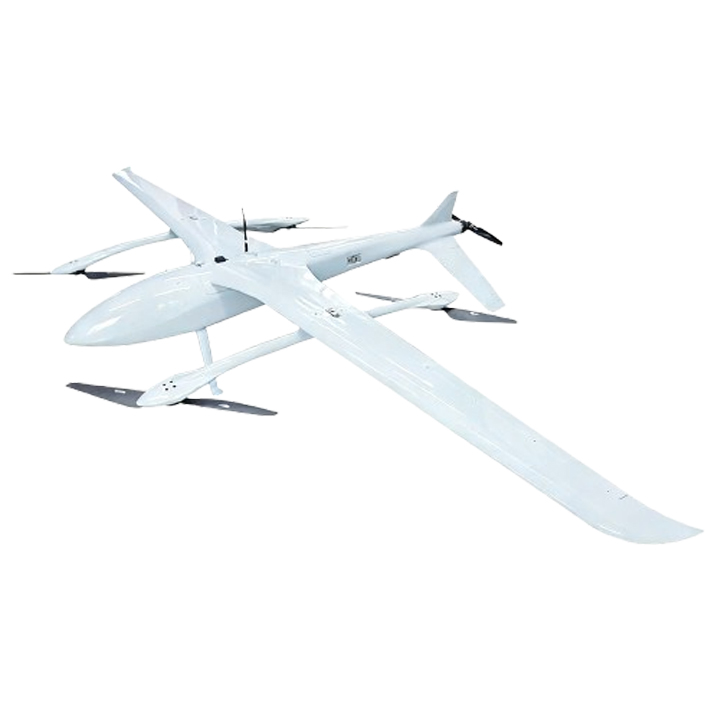
For organizations prioritizing a fully electric, zero-emission operational footprint without sacrificing heavy lift, the China Moneypro MVT400 V2 is the superior choice. Constructed from advanced carbon fiber composites for aviation, this platform boasts a 4000mm wingspan and a maximum safe take-off weight of 30kg. It provides an exceptional 4 hours of endurance while carrying a massive ≥6.5kg mission load.
The MVT400 V2 is an exceptional fixed wing drone for pipeline inspection because of its environmental resilience. It operates flawlessly in temperatures ranging from -20°C to 50°C and features a Level 6 flying wind resistance rating. With a service ceiling of 4500m and an IPX4 body protection rate, this electric VTOL can reliably execute complex LiDAR and OGI mapping missions across mountainous or coastal pipeline routes.
3.3 Quantum-Systems Trinity F90+
The Trinity F90+ is highly regarded in the surveying industry for its ease of use and efficient electric VTOL design. It is a highly capable fixed wing drone for pipeline inspection for mid-range corridor mapping. While it offers excellent PPK/RTK accuracy for topographical surveys, its payload capacity is significantly lower than the heavy-lift ChinaMoneypro systems, making it less suitable for carrying heavy, dual-sensor OGI/LiDAR payloads simultaneously.
3.4 WingtraOne GEN II
Utilizing a unique tailsitter VTOL design, the WingtraOne GEN II takes off vertically on its tail before pitching forward into fixed-wing flight. It is renowned for integrating high-end Sony photogrammetry cameras. As a fixed wing drone for pipeline inspection, it excels in visual ROW monitoring and generating orthomosaics, but the tailsitter design can be susceptible to instability during landing in high crosswinds compared to traditional quad-plane VTOL architectures.
3.5 senseFly eBee X
The eBee X is a classic, lightweight fixed-wing mapping drone. It is incredibly portable and easy to deploy. However, it lacks VTOL capabilities, relying on hand-launching and belly-landing. From our experience, belly-landing a fixed wing drone for pipeline inspection in rocky or brush-heavy pipeline corridors frequently results in damage to the airframe or the downward-facing payload, limiting its utility in rugged industrial environments.
3.6 Jedsy Glider VTOL
Jedsy offers an innovative approach with their glider-style VTOL. It is designed for high-efficiency, long-range delivery and inspection. While its aerodynamic profile is excellent, the internal payload bay volume restricts the integration of the massive, specialized gas-sniffing sensors required for comprehensive oil and gas leak detection.
3.7 Delair RX50
Delair has a strong pedigree in Beyond Visual Line of Sight (BVLOS) pipeline inspections, particularly in Europe. The RX50 offers robust 3G/4G cellular telemetry links. It is a highly reliable fixed wing drone for pipeline inspection, though it requires a catapult launcher, which adds significant logistical overhead to the field deployment team compared to autonomous VTOL systems.
3.8 Autel Robotics Dragonfish Standard
The Dragonfish utilizes a unique tilt-rotor VTOL mechanism. It is a highly integrated, user-friendly system with excellent proprietary payloads. While it serves as a capable fixed wing drone for pipeline inspection, the proprietary nature of the ecosystem limits the ability of operators to integrate third-party, highly specialized industrial LiDAR or OGI sensors.
3.9 Textron Systems Aerosonde
Built for military and heavy industrial applications, the Aerosonde offers exceptional endurance via a heavy-fuel engine. It is a formidable fixed wing drone for pipeline inspection, but its massive operational footprint, complex launch/recovery systems, and exorbitant price point generally restrict its use to massive, state-sponsored infrastructure projects rather than standard commercial ROW monitoring.
3.10 BirdsEyeView FireFLY6 PRO
The FireFLY6 PRO is a versatile, mid-tier VTOL system. It is popular among smaller surveying firms for its modularity. However, for organizations tasked with inspecting hundreds of miles of pipeline daily, its limited payload capacity and shorter endurance profile make it less efficient than the heavy-lift systems occupying the top tiers of this list.
3.11 Ukrspecsystems PD-2
The PD-2 is a highly modular, military-grade UAS that can be configured as a fixed-wing or a VTOL quad-plane. It offers exceptional endurance and heavy payload capabilities. It is an outstanding fixed wing drone for pipeline inspection, though acquiring these systems for commercial use can sometimes be complicated by international export restrictions and military prioritization.
3.12 MoneyPro M1-AI (For Localized Node Inspection)
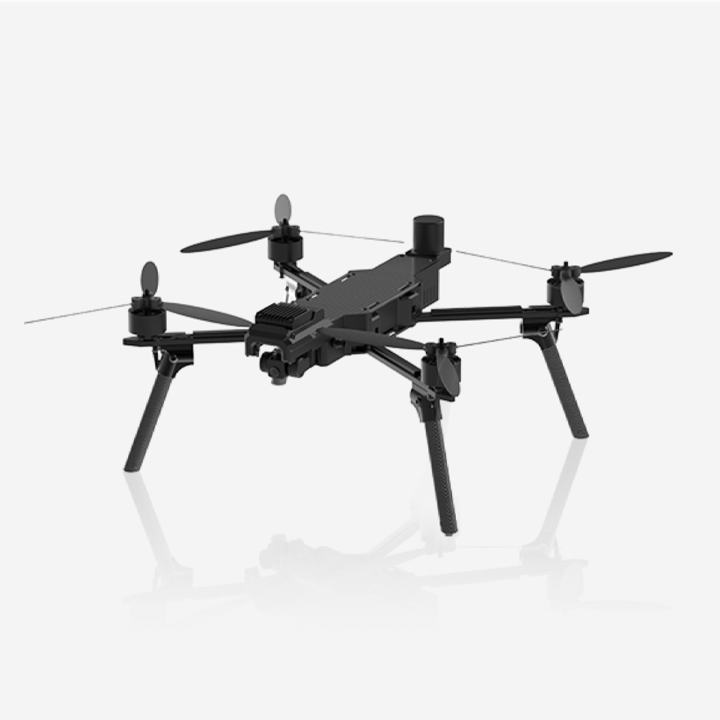
While not a fixed-wing aircraft, we must include the MoneyPro M1-AI in this infrastructure guide. A fixed wing drone for pipeline inspection excels at linear mapping, but occasionally, an anomaly (like a suspect valve or compressor station) requires highly localized, close-quarter inspection. The M1-AI is an Intelligent High-Performance Drone with a maximum payload of 2.3kg, Level 6 wind resistance, and a 45-minute endurance. We highly recommend deploying the M1-AI from a truck for targeted, 360-degree structural inspections once the fixed-wing M370 has identified a potential leak zone from high altitude.
3.13 AeroVironment Puma 3 AE
Concluding our list is the Puma 3 AE. While primarily a tactical military asset, its ruggedized, waterproof construction makes it an interesting option for maritime or coastal pipeline inspections. However, like other legacy fixed-wing systems, it lacks the VTOL precision required for safe recovery in heavily forested or congested industrial ROW corridors.
4. Hybrid vs. Fully Electric Propulsion Systems
When selecting the optimal fixed wing drone for pipeline inspection, procurement officers must decide between hybrid gas-electric and fully electric propulsion. From our experience at ChinaMoneypro UAV, the choice depends entirely on the operational range.
If your pipeline network extends across vast, remote geographies where charging infrastructure is non-existent, a hybrid system like the M370 is mandatory. The internal combustion engine provides the forward thrust and simultaneously charges the VTOL batteries in flight, granting an astounding 10 hours of endurance. Conversely, if your inspection routes are segmented into 2-to-4 hour blocks and you require a stealthy, low-vibration platform to ensure pristine LiDAR data collection, the fully electric MVT400 V2 offers the cleanest, most reliable aerodynamic profile available today.
5. Summary Table: Top Pipeline Inspection Drones
To assist energy sector executives in their procurement strategy, we have summarized the technical capabilities of our top-ranked systems below.
| UAV Model | Propulsion Type | Max Endurance | Max Mission Payload | Ideal Pipeline Application |
|---|---|---|---|---|
| China Moneypro M370 | Hybrid VTOL (EFI Gas + Electric) | 10 Hours | 15 kg | Ultra-long-range interstate networks, dual heavy sensor deployment. |
| China Moneypro MVT400 V2 | Fully Electric VTOL | 4 Hours | ≥6.5 kg | Zero-emission corridor mapping, high-altitude LiDAR surveying. |
| MoneyPro M1-AI | Electric Multirotor | 45 Minutes | 2.3 kg | Close-quarter valve and compressor station inspection. |
| Quantum-Systems Trinity | Electric VTOL | 90 Minutes | 1 kg | Short-range, lightweight photogrammetry ROW mapping. |