


A commuter VTOL aircraft is designed to take off and land vertically while carrying people or, in some development concepts, moving between short-distance transport hubs without depending on a conventional runway. But not every aircraft described as a VTOL is a practical commuter aircraft. Multirotor platforms, lift-and-cruise designs, tiltrotors, and vectored-thrust aircraft solve different engineering problems—and they involve very different trade-offs in range, payload, noise, complexity, and certification.

Which Type of Commuter VTOL Is Best?
There is no single best commuter VTOL configuration. Each architecture makes a different compromise between hover efficiency, cruise efficiency, mechanical complexity, and transition risk.
For short-distance operations with frequent vertical maneuvers, multirotor designs offer mechanical simplicity and precise low-speed control, but their energy consumption in sustained hover and forward flight can limit practical range and payload. Lift-and-cruise designs separate vertical lift from cruise propulsion, making them attractive for routes where efficient wing-borne flight matters. Tiltrotor and tilt-wing aircraft use rotating propulsion or lifting surfaces to combine vertical takeoff with efficient forward flight, but their transition systems introduce engineering and control complexity. Vectored-thrust aircraft can offer compact aerodynamic integration, although the propulsion and control demands are substantial.
From an engineering and procurement perspective, we recommend evaluating the complete mission profile before selecting an architecture. A commuter aircraft must do more than lift off vertically: it must carry its intended payload, fly the route with reserves, manage weather and diversion requirements, operate within acceptable noise limits, and satisfy the applicable airworthiness and operational framework.
What Is a Commuter VTOL?
VTOL stands for vertical takeoff and landing. A VTOL aircraft can leave the ground and land without a conventional runway. A commuter VTOL is an aircraft concept intended to transport people over relatively short routes, often between urban areas, suburbs, regional hubs, or locations where runway access is limited.
Many current commuter VTOL discussions focus on electric vertical takeoff and landing aircraft, commonly called eVTOLs. However, VTOL is a broader aircraft category. It includes electric multirotors, hybrid-electric aircraft, tiltrotors, tilt-wings, and other configurations using different propulsion technologies.
It is important to distinguish a passenger-carrying commuter VTOL from an industrial UAV. An industrial UAV can provide valuable inspection, mapping, surveying, and monitoring services, but it is not automatically suitable or certified to carry people. Passenger aircraft require a much more demanding safety, certification, and operational framework.
How Do Commuter VTOL Aircraft Work?
Most commuter VTOL concepts combine two flight regimes: vertical flight for takeoff and landing, and forward flight for route travel. The aircraft must generate enough lift to rise vertically, transition safely into forward flight where applicable, maintain stable cruise, and return to a controlled vertical landing.
Vertical lift
During takeoff and landing, rotors, propellers, or redirected engine thrust generate an upward force sufficient to support the aircraft’s weight. The system must also control attitude and position in changing wind conditions.
Transition to forward flight
Some VTOL architectures remain rotor-supported throughout flight. Others transition to wing-borne cruise. In wing-borne flight, the wings generate most of the lift, which can improve energy efficiency over longer routes compared with sustained rotor-borne flight.
Navigation and flight control
Commuter aircraft need integrated flight-control systems, navigation sensors, communications, propulsion monitoring, and contingency management. Passenger operations also require rigorous attention to redundancy, failure detection, emergency procedures, and human factors.
4 Types of Commuter VTOLs
1. Multirotor VTOL Aircraft
Multirotor VTOL aircraft use several fixed rotors to generate lift and control movement. Common configurations include quadrotors, hexarotors, and larger distributed-propulsion layouts. Most familiar consumer and industrial multicopters use this general architecture.
For commuter applications, the attraction is straightforward: multirotors can take off and land vertically without a runway, and their control systems can manage hover and low-speed maneuvering without a wing-transition phase. The architecture can also offer mechanical simplicity compared with aircraft that rotate their wings or propulsion units.
The limitation is sustained flight efficiency. A multirotor must continuously use rotor thrust to support its weight, including during forward travel. It does not normally gain the same wing-borne cruise efficiency as a fixed-wing aircraft. As passenger payload and route length increase, the energy required for flight becomes a major design constraint.
Best use case: Short-range concepts, compact operating areas, and missions where hover precision and simple vertical maneuvering are more important than long cruise range.
Our assessment: Multirotor designs are easier to understand and useful for short-duration vertical-flight missions, but they are not the obvious choice for longer commuter routes. Operators should scrutinize payload-range performance and energy reserves before treating a multirotor as a practical transport solution.
2. Lift-and-Cruise VTOL Aircraft
Lift-and-cruise aircraft use separate propulsion systems for vertical lift and forward flight. Dedicated lift rotors provide takeoff and landing thrust, while a separate cruise propeller or propulsion system drives the aircraft forward. Fixed wings generate lift during cruise.
This architecture is attractive because each propulsion system has a defined role. Vertical lift does not need to be achieved by rotating the entire wing or tilting the main propulsion units. Once the aircraft reaches forward speed, the wing carries much of the load, allowing the vertical lift motors to be reduced or shut down depending on the design.
The trade-off is that lift motors and associated structures add weight and aerodynamic drag during cruise. The aircraft must carry components that are not contributing directly to forward propulsion during the main cruise segment. Design teams therefore need to balance the vertical-lift requirement against the weight and drag penalty.
Best use case: Regional commuter routes where a fixed-wing cruise phase is important, but the aircraft still needs vertical takeoff and landing at both ends.
Our assessment: Lift-and-cruise is a compelling architecture to evaluate when route efficiency matters. It avoids some of the mechanical complexity of tilting propulsion systems, but buyers should inspect the real payload-range trade-off and understand how lift-system weight affects useful passenger capacity.
3. Tiltrotor and Tilt-Wing VTOL Aircraft
Tiltrotor aircraft rotate their propellers or rotor assemblies between vertical and forward-flight orientations. Tilt-wing designs rotate the wing and its propulsion units together. In vertical mode, the propellers provide lift; in forward flight, they are oriented to generate thrust while the wing supplies aerodynamic lift.
The key advantage is that the propulsion system can contribute to both vertical takeoff and forward cruise. Unlike a lift-and-cruise design, the aircraft does not necessarily need to carry a completely separate set of vertical-lift rotors that become inactive in cruise.
The cost is mechanical and control complexity. Tilt mechanisms, actuators, structural loads, control transitions, and failure management all require careful engineering. The transition between hover and wing-borne flight is a critical part of the flight envelope and must be validated through extensive testing.
Best use case: Commuter concepts seeking a balance between vertical access and wing-borne cruise efficiency, particularly where the design can justify the added transition-system complexity.
Our assessment: Tiltrotor and tilt-wing designs deserve serious consideration for routes that require both vertical access and efficient forward flight. Do not evaluate them on advertised cruise speed alone. Transition reliability, redundancy, maintainability, noise, and certification evidence matter just as much.
4. Vectored-Thrust VTOL Aircraft
Vectored-thrust aircraft change the direction of engine or motor thrust to control the aircraft in different flight modes. Instead of relying only on fixed vertical lift rotors or rotating wings, the propulsion system redirects thrust to support vertical takeoff, transition, and forward flight.
Depending on the design, thrust may be redirected through rotating propulsion units, movable nozzles, or other mechanisms. The approach can create a compact aircraft configuration and may allow the same propulsion system to contribute to multiple flight phases.
However, vectored-thrust systems place demanding requirements on propulsion integration, thermal management where applicable, flight controls, and transition behavior. Some concepts may use high-performance propulsion technologies that are more complex and costly to operate than conventional electric propeller systems.
Best use case: Advanced commuter aircraft concepts where compact integration, high-performance propulsion, or specialized mission requirements justify the additional system complexity.
Our assessment: Vectored thrust is technically interesting, but it should not be selected simply because it appears more advanced. A credible design must demonstrate stable transition behavior, acceptable operating cost, maintainability, and a clear certification path.
Commuter VTOL Types Compared: Which Configuration Performs Best?
The table below compares the four architectures at a conceptual level. It is not a ranking of certified aircraft or a substitute for manufacturer performance data. Individual designs can differ substantially within the same configuration.
| VTOL type | Vertical lift method | Forward-flight method | Main advantage | Main trade-off | Potential commuter fit |
|---|---|---|---|---|---|
| Multirotor | Multiple fixed rotors | Rotor-generated thrust | Direct vertical control and no transition mechanism | Limited wing-borne cruise efficiency | Short-range concepts |
| Lift-and-cruise | Dedicated lift rotors | Separate cruise propeller and fixed wing | Distinct vertical and cruise systems | Inactive lift hardware adds weight and drag | Regional short-distance routes |
| Tiltrotor / tilt-wing | Rotating rotors or wing-mounted propulsion | Propulsion rotates into forward-flight mode | Propulsion can serve vertical and cruise phases | Transition and mechanical complexity | Routes requiring vertical access and efficient cruise |
| Vectored thrust | Redirected engine or motor thrust | Thrust redirected for forward flight | Potentially integrated propulsion architecture | Complex propulsion and control integration | Advanced or specialized concepts |
Which type has the longest range?
Architecture alone does not determine range. Energy source, battery or fuel capacity, aerodynamic efficiency, aircraft weight, passenger payload, reserve requirements, and operating conditions all matter. Fixed-wing cruise generally offers an efficiency advantage over continuous hover, so commuter designs with a meaningful wing-borne cruise phase deserve particular attention when evaluating longer routes.
Which type is simplest?
A conventional multirotor avoids a transition mechanism, which can simplify some aspects of its architecture. That does not mean the complete passenger aircraft is simple: propulsion redundancy, battery management, flight controls, structural design, and certification remain demanding.
Pros and Cons of the Four Types of Commuter VTOLs
| Configuration | Pros | Cons |
|---|---|---|
| Multirotor | Direct vertical control; no wing transition; relatively straightforward rotor arrangement | Continuous rotor lift; energy-intensive cruise; payload and range constraints |
| Lift-and-cruise | Fixed-wing cruise efficiency; separate systems can be optimized for their roles; no tilting wing mechanism | Additional lift-system weight; inactive cruise-phase hardware; integration complexity |
| Tiltrotor / tilt-wing | Propulsion supports vertical and forward flight; wing-borne cruise potential; flexible operating concept | Complex tilt mechanisms; demanding transition control; maintenance and validation requirements |
| Vectored thrust | Potentially compact integration; thrust direction can support multiple flight regimes | High system complexity; demanding thermal, propulsion, and control engineering in some designs |
Best Use Cases for Commuter VTOL Aircraft
Commuter VTOLs are often discussed as a solution for urban congestion, but their practical value depends on route economics and infrastructure. A vertical landing site is not the same as a complete transport network. Passenger access, security, charging or fueling, maintenance, weather limits, emergency planning, and onward ground transport all affect whether a route is commercially viable.
Urban-to-suburban connections
Short connections between business districts, airports, and suburban hubs may benefit from vertical access where suitable landing sites are available. The operator must still compare total door-to-door travel time and cost with rail, road, and conventional aviation.
Regional commuter routes
Routes connecting smaller communities or regional business centers may benefit from VTOL access where conventional runway infrastructure is limited. In these cases, wing-borne cruise efficiency, payload, reserve range, and weather capability become particularly important.
Airport transfers
Airport transfer services are a frequently discussed application because they target a clear travel problem. However, the route must support reliable schedules, suitable landing infrastructure, passenger handling, and competitive pricing. A fast aircraft does not guarantee a faster journey if ground transfers and boarding procedures are inefficient.
Emergency and specialized passenger transport
Some VTOL technologies may support specialized transport missions, but emergency operations require robust performance in challenging environments, suitable medical or operational equipment, and a regulatory framework appropriate to the mission. Do not assume a commuter design is automatically qualified for emergency medical transport.
Limitations and Challenges of Commuter VTOLs
Battery energy density and payload
For battery-electric aircraft, energy storage is a central design constraint. Batteries must support vertical takeoff, transition, cruise, landing, and required reserves. The energy used during vertical flight can be significant, and increasing passenger payload affects both lift requirements and range.
Noise and community acceptance
Multiple rotors and high-power propulsion systems can create noise that affects the suitability of urban landing sites. Noise depends on rotor design, operating speed, aircraft size, flight path, and local environment. Community acceptance is a practical operating requirement, not simply a marketing issue.
Weather and operational availability
Wind, precipitation, visibility, icing conditions, temperature, and turbulence can affect VTOL operations. A route that works under ideal conditions may not provide the schedule reliability expected from a commuter service. Operators need realistic weather minima, diversion plans, and contingency procedures.
Certification and public safety
Passenger aircraft face demanding airworthiness requirements. The design must demonstrate acceptable safety performance across normal, abnormal, and emergency conditions. Certification, pilot or operator requirements, maintenance programs, and operational approvals can shape the commercial timeline as much as aircraft engineering.
Infrastructure and route economics
VTOL operations still need suitable landing areas, passenger facilities, maintenance support, energy or fuel infrastructure, and airspace coordination. If these costs are high or routes have low passenger demand, the commercial model may be difficult even when the aircraft itself performs well.
Buying and Evaluating a Commuter VTOL: What Matters Most?
For aircraft developers, fleet operators, investors, and infrastructure partners, a configuration comparison is only the first step. The next step is to evaluate the aircraft against a specific mission and operating model.
1. Verify payload and range together
Do not evaluate maximum range and maximum payload as independent headline figures. Ask for payload-range curves or equivalent performance data showing how range changes with useful load, reserves, temperature, and operating conditions. Confirm whether published range includes required reserves and realistic diversion assumptions.
2. Examine propulsion redundancy
Understand how the aircraft responds to motor, rotor, actuator, battery, generator, or control-system failures. Ask what level of redundancy is designed into propulsion, power distribution, flight controls, navigation, and communications. A passenger aircraft must have a documented safety approach rather than relying on a general claim that it has multiple motors.
3. Assess transition performance
For lift-and-cruise, tiltrotor, tilt-wing, and vectored-thrust designs, transition is a critical operating phase. Request evidence from flight testing and engineering validation. Understand the permitted transition envelope, failure responses, control logic, and pilot or automation workload.
4. Review maintainability and lifecycle costs
Compare inspection intervals, component life limits, battery replacement assumptions, propulsion maintenance, software updates, spare parts, and technician training. A design with attractive acquisition cost may become expensive if it requires frequent specialized maintenance or has limited parts support.
5. Check noise and site compatibility
Request measured noise data under relevant operating conditions, not just a general statement that the aircraft is quiet. Consider approach and departure paths, local land-use restrictions, community exposure, and the practical layout of the landing site.
6. Confirm certification status and operating permissions
Distinguish between a prototype, a demonstrator, an aircraft with a type certificate, and an aircraft approved for a particular commercial operation. These are not interchangeable milestones. Ask which authority is responsible, what approvals have been obtained, and what remains outstanding.
7. Evaluate the complete service model
For commercial operators, aircraft performance must translate into a viable service. Include passenger demand, turnaround time, charging or fueling time, crew requirements, maintenance availability, landing-site fees, insurance, and route utilization in the business case.
Safety, Airworthiness, and Regulatory Considerations
Passenger-carrying VTOL aircraft operate in a more demanding regulatory environment than most industrial unmanned aircraft. The exact requirements depend on aircraft type, jurisdiction, operating category, and whether the aircraft is piloted or remotely operated.
In the United States, the Federal Aviation Administration (FAA) oversees civil aircraft certification and operating rules. New powered-lift aircraft and novel VTOL configurations may involve specific certification and operational pathways. In Europe, the European Union Aviation Safety Agency (EASA) publishes requirements and special conditions relevant to VTOL-capable aircraft and related operations.
For buyers and investors, the practical rule is simple: ask for the actual certification basis and approval status. Do not treat a successful prototype flight, a manufacturer announcement, or a conceptual range figure as proof that a passenger service is authorized.
For operational planning, also consider airspace access, pilot qualification, maintenance control, emergency response, passenger safety procedures, vertiport suitability, and local planning permissions. Certification and operating approvals should be treated as core procurement criteria from the beginning.
How Industrial UAV Technology Relates to Commuter VTOL Development
Industrial UAVs and commuter VTOL aircraft are different product categories, but they share important technology areas. Flight-control systems, navigation sensors, communication links, propulsion monitoring, payload integration, and environmental sensing all influence safe and reliable aircraft operation.
Industrial UAV platforms are already used for inspection, surveying, mapping, environmental monitoring, and infrastructure assessment. These missions provide practical experience in operating aircraft outside traditional airport environments, managing data links, integrating sensors, and maintaining repeatable flight procedures. However, this experience does not replace passenger-aircraft certification or the safety requirements for carrying people.
Moneypro UAV specializes in unmanned aerial systems and advanced sensor technologies, including UAV platforms, EO/IR gimbal cameras, radar systems, mesh radio communication, turbojet engines, GNSS antennas, infrared thermal sensing, and laser sensing. These technologies are relevant to professional aerial operations such as industrial inspection, environmental monitoring, and mapping.
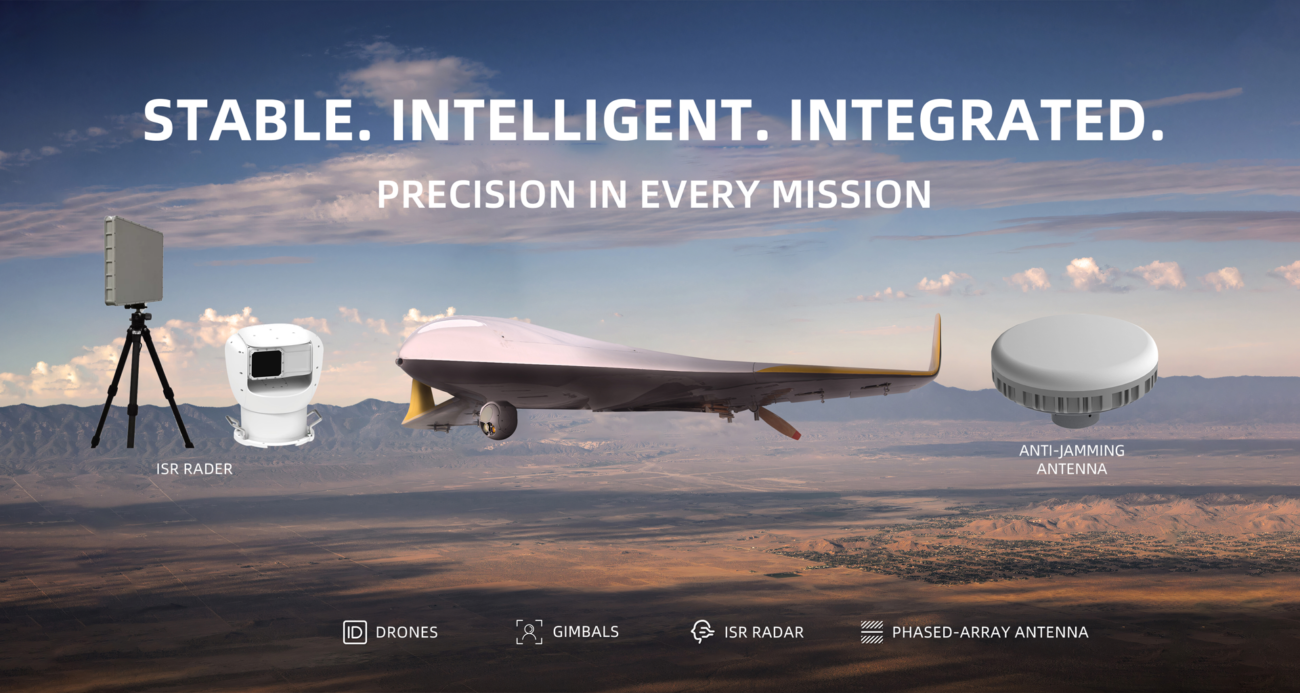
Moneypro UAV: Industrial UAV Platforms and Advanced Sensors
Moneypro UAV provides UAV platforms and integrated sensing technologies for professional applications. For organizations evaluating unmanned aircraft rather than passenger VTOLs, its product and solution categories provide a starting point for comparing industrial UAV capabilities.
Explore UAV drones for sale | View VTOL UAV platforms | Explore industrial UAV solutions
Industrial VTOL UAVs are not passenger commuter aircraft
A fixed-wing VTOL drone can take off vertically and transition to efficient forward flight without carrying people. This makes it useful for long-range inspection, mapping, surveillance, and monitoring where runway access is unavailable. It does not mean the aircraft is suitable for passenger transport.
For example, Moneypro UAV’s M330 long-range VTOL drone is positioned for professional unmanned missions. The MVT250 electric VTOL is presented for inspection and border patrol applications, while the M390 hybrid VTOL is designed around longer-endurance unmanned operations.
These platforms should be evaluated on their own UAV mission requirements: endurance, payload capacity, sensor integration, communication range, launch and recovery conditions, and operating permissions. If your project needs a long-range unmanned platform, also compare long-range fixed-wing drones and BVLOS fixed-wing UAV options.
Expert Recommendation: Which Commuter VTOL Type Should You Choose?
Our recommendation is to begin with the route and operating requirement, then select the aircraft architecture. If your concept involves very short trips and frequent hovering, a multirotor may be worth studying, but energy use and payload constraints need close scrutiny. If you need a meaningful forward-flight segment, compare lift-and-cruise and tiltrotor or tilt-wing aircraft first. If a vectored-thrust design promises a compact or high-performance solution, demand strong evidence of transition safety, maintainability, and certification progress.
For beginners, avoid choosing a VTOL based on a single advertised range or speed number. Ask how those figures were measured and whether they reflect the intended payload and reserve requirements. For commercial operators, build a route-level cost model that includes infrastructure, maintenance, insurance, energy, staffing, and utilization. For developers, prioritize safety architecture, test evidence, and certification strategy before optimizing headline performance.
If your actual requirement is industrial inspection, mapping, or long-endurance unmanned flight rather than passenger transport, a fixed-wing VTOL UAV may be the more appropriate and commercially mature tool. Moneypro UAV’s industrial UAV platforms and sensor systems are relevant to those unmanned applications, but should not be confused with certified passenger aircraft.
Quick Summary: 4 Types of Commuter VTOLs
| Type | How it flies | Best reason to consider it | Key issue to evaluate |
|---|---|---|---|
| Multirotor | Fixed rotors provide lift and control throughout flight | Direct vertical control and short-range operation | Energy use, payload, and range |
| Lift-and-cruise | Separate lift rotors and fixed-wing cruise propulsion | Efficient wing-borne cruise without tilting propulsion | Weight and drag from dedicated lift hardware |
| Tiltrotor / tilt-wing | Rotating propulsion units or wing change orientation | One propulsion arrangement supports vertical and forward flight | Transition complexity and mechanical reliability |
| Vectored thrust | Thrust direction changes between flight regimes | Integrated propulsion and specialized aircraft layouts | Control, propulsion, and maintenance complexity |
Frequently Asked Questions About Types of Commuter VTOLs
1. What are the four main types of commuter VTOLs?
The four broad configurations are multirotor, lift-and-cruise, tiltrotor or tilt-wing, and vectored-thrust aircraft. They differ in how they generate vertical lift and transition to forward flight.
2. What is the difference between eVTOL and VTOL?
VTOL describes an aircraft’s ability to take off and land vertically. eVTOL refers specifically to electric vertical takeoff and landing aircraft. Not all VTOL aircraft are electric; some use hybrid-electric or conventional fuel-powered propulsion.
3. Which commuter VTOL type has the longest range?
Range depends on the complete aircraft design, energy source, payload, aerodynamic efficiency, and reserve requirements. Architectures that use fixed wings for cruise can benefit from wing-borne lift, but no configuration guarantees the longest range without comparing actual aircraft performance data.
4. Are multirotor VTOLs suitable for commuter flights?
They may suit short-range concepts, but continuous rotor-supported flight can create significant energy demands. Payload, reserve range, noise, and operating cost should be carefully assessed before selecting a multirotor for passenger transport.
5. What is a lift-and-cruise VTOL?
A lift-and-cruise VTOL uses dedicated vertical lift rotors for takeoff and landing and separate propulsion for forward flight. Fixed wings provide lift during cruise. This design can support efficient forward flight but carries additional lift-system weight.
6. How does a tiltrotor VTOL work?
A tiltrotor aircraft rotates its propellers or rotor assemblies from a vertical orientation for takeoff and landing to a forward orientation for cruise. The wing provides lift during forward flight. The transition system and its control logic are important engineering considerations.
7. What is a vectored-thrust VTOL?
A vectored-thrust VTOL redirects engine or motor thrust to generate lift and control in different flight regimes. The design can integrate propulsion across vertical and forward flight, but requires careful propulsion, thermal, and control-system engineering.
8. Are industrial VTOL drones the same as commuter VTOL aircraft?
No. Industrial VTOL drones are unmanned aircraft used for tasks such as inspection, mapping, and monitoring. Commuter VTOL aircraft are designed to carry passengers and must meet substantially different airworthiness, safety, and operational requirements.
9. What should buyers check before investing in a commuter VTOL?
Evaluate payload-range performance, energy or fuel reserves, propulsion redundancy, transition behavior, noise, maintenance costs, infrastructure requirements, certification status, and route economics. Verify performance claims using technical documentation and relevant test evidence.
10. Can commuter VTOL aircraft operate without airports?
They can take off and land vertically, so they do not need a conventional runway. However, they still require suitable landing sites, safe approach and departure paths, passenger facilities, maintenance support, energy or fuel infrastructure, and applicable operating approvals.
References
- Federal Aviation Administration (FAA) – Aircraft Certification and Design Approvals. Official information on aircraft certification processes and design approvals.
- European Union Aviation Safety Agency (EASA) – VTOL Aircraft. Regulatory and airworthiness information relevant to VTOL-capable aircraft.
- NASA – Advanced Air Mobility. Research and technical context for emerging air mobility concepts and aircraft operations.
Aircraft architecture descriptions in this article are general engineering explanations. Actual performance, certification status, and operational suitability must be verified against the documentation for each specific aircraft.