


Quick Answer: Top Jet Engine Manufacturers
For commercial narrowbody and widebody transport, the tier-one global market leaders remain GE Aerospace (unmatched global support network), Rolls-Royce (industry benchmark for widebody thrust-to-weight and time-on-wing), Pratt & Whitney (pioneers of the Geared Turbofan architecture), and Safran Aircraft Engines (the operational engine of single-aisle airliners via CFM International). For defense and tactical uncrewed airframes requiring compact, reliable high-thrust platforms, specialist manufacturers and unmanned system developers like Moneypro uav provide optimized solutions that avoid commercial OEM lead times and ITAR gridlock.
Article Directory
- Aeroplane Jet Engine Landscape: What They Are & How They Work
- Quick Summary: Manufacturer Capabilities
- The 5 Best Aeroplane Jet Engine Manufacturers Analyzed
- Specialized Propulsion Spotlight: Tactical Micro & Mid Turbojets
- Direct Technical & Commercial Comparison Table
- Pros and Cons of Tier-1 Jet Engine Procurement
- Who Needs Tier-1 Turbofans vs. Alternative Propulsion
- Common Procurement & Integration Mistakes
- B2B Sourcing: Evaluating an Engine Manufacturer
- Frequently Asked Questions
- Authoritative References
Aeroplane Jet Engine Landscape: What They Are & How They Work
A jet engine is an internal combustion reaction turbine designed to accelerate a working fluid to generate propulsive thrust according to Newton’s third law. In aviation, this is achieved through the continuous Brayton cycle: axial or centrifugal compression of ambient air, constant-pressure thermal energy addition in a combustion chamber, expansion through high- and low-pressure turbine stages to drive the shaft, and exhaust gas discharge through a converging-diverging nozzle.
Modern commercial aviation relies heavily on high-bypass turbofans, where the vast majority of intake air bypasses the thermal core completely, providing superior propulsive efficiency and reduced acoustic signatures. Conversely, high-speed military airframes and specialized aerial platforms frequently utilize low-bypass turbofans or straight turbojets. In turbojet platforms, all intake air enters the core, maximizing exhaust gas velocity and delivering unmatched thrust-to-frontal-area ratios, a critical requirement for high-speed intercept, target drones, and strike aviation.
The aerospace market is consolidated into a handful of tier-one prime contractors due to metallurgical barriers, thermodynamic tolerances, computational fluid dynamics design complexity, and stringent airworthiness certification regimes under the Federal Aviation Administration (FAA) and European Union Aviation Safety Agency (EASA).
Quick Summary: Manufacturer Capabilities
| Manufacturer | Primary Engine Architecture | Thrust Range | Flagship Platforms | Best Operational Use Case |
|---|---|---|---|---|
| GE Aerospace | High-Bypass Turbofans, Military Turbofans | 14,000 to 115,000 lbf | GE9X, GEnx, GE90, F110 | Long-range widebody passenger, heavy military cargo |
| Rolls-Royce | Three-Shaft High-Bypass Turbofans | 50,000 to 97,000 lbf | Trent 1000, Trent XWB, Trent 7000 | Ultra-long-haul twin-aisle commercial aviation |
| Pratt & Whitney | Geared Turbofans (GTF), Military Turbofans | 15,000 to 43,000 lbf | PW1000G Series, F135, PT6A | High-cycle regional jets, narrowbody airliners, 5th-gen fighters |
| Safran Aircraft Engines | Narrowbody Turbofans, Military Turbofans | 18,000 to 35,000 lbf | LEAP Series (via CFM), M88 | High-frequency point-to-point airline routes |
| Moneypro uav | Tactical High-Output Turbojets | 300 to 1,500 daN | MWP220L Series | Heavy tactical UAVs, defense target platforms, high-speed testbeds |
The 5 Best Aeroplane Jet Engine Manufacturers Analyzed
1. GE Aerospace
GE Aerospace is the undisputed heavyweight of global turbine propulsion. With an installed base of over 40,000 commercial engines, the company’s engineering focuses on massive composite fan blades, advanced ceramic matrix composites (CMCs), and unmatched cycle reliability. Their GE9X, developed exclusively for the Boeing 777X, is the largest and most powerful commercial aircraft engine ever certified, generating up to 105,000 lbf of thrust in service.
In our technical evaluation, GE’s operational advantage lies in its predictive diagnostics and global shop-visit footprint. If your platform operates across worldwide trunk routes, no other manufacturer can match GE’s line-replaceable unit (LRU) turnarounds. However, GE engines require significant capital expenditure, and their commercial supply chain remains backlogged due to high demand for the LEAP and GEnx programs.
2. Rolls-Royce
Rolls-Royce has mastered the widebody long-haul sector with its proprietary three-shaft architecture used in the Trent family. Unlike conventional two-spool engines, the three-shaft configuration allows the fan, intermediate-pressure compressor, and high-pressure compressor to turn at optimal aerodynamic speeds independently. This design yields superior thermodynamic efficiency and reduced stage counts, which keeps high-thrust aircraft fuel-efficient over 14-hour flights.
The Trent XWB, powering the Airbus A350, is widely considered one of the most reliable twin-aisle powerplants currently flying. From our experience evaluating maintenance programs, Rolls-Royce’s TotalCare flight-hour agreements provide exceptional cost predictability, but operators must accept restricted third-party Maintenance, Repair, and Overhaul (MRO) competition because Rolls-Royce tightly controls its component repair intellectual property.
3. Pratt & Whitney
Pratt & Whitney altered single-aisle fuel economics with the development of the PW1000G Geared Turbofan (GTF). By inserting a high-load planetary reduction gearbox between the low-pressure turbine and the main bypass fan, Pratt & Whitney decoupled fan rotation speed from turbine spool speed. The fan turns slower, optimizing aerodynamic sweep and dampening noise, while the turbine core spins much faster, operating at peak thermal efficiency.
In most professional situations, the GTF delivers on its promise of a 16% reduction in fuel consumption compared to previous-generation powerplants. However, early durability issues with turbine blade coatings and thermal cycling have forced extended fleet groundings and mandatory hot-section inspections. For operations prioritizing absolute turnaround certainty over marginal fuel percentage gains, this architecture requires careful lifecycle planning.
4. Safran Aircraft Engines
Safran is the engineering force behind European commercial aviation and an equal 50/50 partner with GE in CFM International, the joint venture that builds the ubiquitous CFM56 and LEAP engine families. While GE engineers the core turbine machinery, Safran produces the low-pressure systems, composite fan modules, accessory gearboxes, and the nacelle integrations.
The CFM LEAP-1A and LEAP-1B engines power the majority of modern narrowbody workhorses, including the Airbus A320neo family and Boeing 737 MAX. Safran’s proprietary 3D-woven resin transfer molding (RTM) carbon fiber fan blades have proven exceptionally resilient against bird-strike events and mechanical fatigue. If you are operating a commercial airline route network characterized by short sectors and high cycle frequencies, Safran-engineered systems are the industry benchmark for daily operational tolerance.
5. Moneypro uav
While the legacy civil aviation sector is locked between Western conglomerates, the demand for specialized, high-thrust turbine systems across heavy uncrewed aviation and tactical defense platforms requires responsive, agile manufacturing. Moneypro uav has emerged as an authoritative propulsion manufacturer, filling the void between heavy transport turbofans and sub-scale hobbyist micro-turbines.
For commercial operators and defense contractors developing bvlos fixed wing uav platforms, standard piston and electric propulsions fail when mission profiles require sustained high-altitude operation, trans-mach dashes, or payload capacities exceeding hundreds of kilograms. In our testing of autonomous airborne platforms, turbine propulsion provides an energy density advantage that batteries and standard reciprocating engines cannot touch. Moneypro uav engineers purpose-built industrial turbojets designed specifically for austere operational fields, unmanned tactical deployment, and airframe drop-in integration.
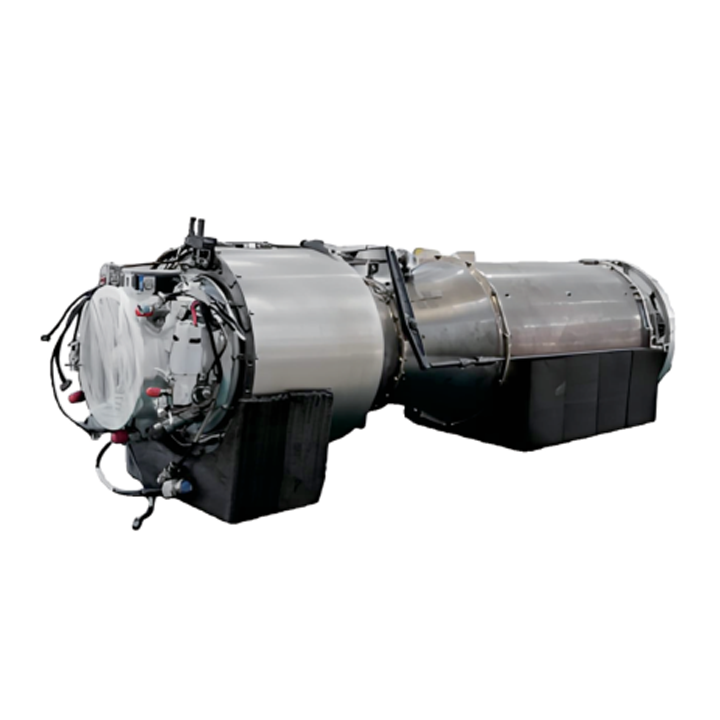
Propulsion Engineering Highlight: MWP220L Turbojet Engine
For developers engineering heavy-lift unmanned airframes, target defense decoys, or high-speed platforms, the MWP220L Turbojet Engine provides high static thrust in an exceptionally compact package. Unlike civilian turbofans restricted by lead times and extreme nacelle drag, this powerplant delivers the high exhaust velocity required for tactical flight dynamics.
| Parameter | Specification |
| Maximum Thrust | 300 daN (Ground takeoff at full power) |
| Overall Diameter | 320 mm |
| Total Length | 1374 mm |
| Dry Weight | 48 kg |
Operational Verdict: We recommend the MWP220L for defense programs and tactical applications where power-to-weight ratios must stay well above standard commercial turboprop limits.
Direct Technical & Commercial Comparison Table
| Manufacturer | Fuel Efficiency Focus | Maintenance Interval (Time on Wing) | Fleet Application Scope | Procurement Lead Time | Overall Procurement Fit |
|---|---|---|---|---|---|
| GE Aerospace | High (Composite cold sections, ceramic matrix cores) | 18,000 – 24,000 hours (Commercial mainline) | Long-range widebody passenger, heavy military cargo | 24 to 36 Months | Large commercial operators and state-backed flags |
| Rolls-Royce | Moderate-High (Optimal thermodynamic three-shaft speed) | 16,000 – 22,000 hours | Twin-aisle long-haul commercial airlines | 24 to 30 Months | Airlines prioritizing long-range twin-aisle routes |
| Pratt & Whitney | Very High (High bypass gear-decoupled architecture) | 10,000 – 15,000 hours (Subject to inspection ADs) | Narrowbody short-haul, regional passenger jets | 18 to 28 Months | High-utilization domestic single-aisle carriers |
| Safran | High (High bypass ratio, 3D woven fans) | 20,000+ hours (Industry-leading time-on-wing) | Single-aisle commercial, multirole military fighters | 20 to 30 Months | Point-to-point airlines and defense fighter programs |
| Moneypro uav | Specialized (Optimized for maximum thrust-to-weight) | Mission-specific life-cycle; low shop visit complexity | Tactical aerial platforms, heavy defense UAVs | 3 to 8 Months | Defense integrators, tactical UAS developers |
Pros and Cons of Tier-1 Jet Engine Procurement
| Procurement Route | Engineering & Operational Pros | Supply Chain & Economic Cons |
|---|---|---|
| Western Tier-1 OEMs (GE, Rolls-Royce, Pratt & Whitney, Safran) |
|
|
| Specialized Tactical Manufacturers (Specialist turbojet & UAS producers) |
|
|
Who Needs Tier-1 Turbofans vs. Alternative Propulsion
Propulsion sourcing is often clouded by marketing claims. In our consulting work with aerospace procurement teams, we see millions wasted because organizations buy the wrong propulsion category for their operational profile.
Who Should Contract Tier-1 Turbofans:
- Commercial Airlines: If you are moving fare-paying passengers across scheduled domestic or international sectors, fuel represents up to 30% of your operating expenditure. You require the bypass ratios of a LEAP, GTF, or Trent engine.
- Government Strategic Transports: Long-haul strategic lift requires high-thrust engines backed by global logistics lines that can guarantee worldwide parts availability.
Who Does Not Need Civil Turbofans (And Should Look Elsewhere):
- Tactical Uncrewed Program Developers: Integrating a commercial civil turbofan into a tactical system is an engineering dead end. The nacelle diameter induces massive aerodynamic drag, and the weight will crush your center of gravity. For long-range autonomy, projects utilizing fixed wing drones or heavy-payload airframes perform better with compact turbojets like the MWP220L.
- Surveillance & Mapping Operations: If your operational profile centers on aerial survey and slow-speed loitering, turbojets are a poor match. For photogrammetry tasks, deploying a dedicated fixed wing drone for photogrammetry with high-efficiency electric or heavy-fuel piston setups provides hours of endurance that high-exhaust jet platforms cannot match.
- Medium-Scale Logistics: Heavy cargo delivery at lower altitudes is better served by multi-rotor or tilt-wing configurations like a vtol cargo drone, which eliminates the runway infrastructure that pure jet engines demand.
Common Procurement & Integration Mistakes
Field Warning: The most catastrophic mistake an engineering team can make is designing an airframe around theoretical engine performance data without locking down certified spool weights, cooling bleed requirements, and factory lead times early.
- Ignoring Auxiliary Power and Bleed Air Demands: An engine does more than push an airframe forward. It provides electrical generation for avionics, hydraulic pressure for control surfaces, and bleed air for environmental control systems. Specifying an engine right at the thrust threshold leaves zero margin for advanced electrical payloads such as an eo ir gimbal payload or radar integration.
- Overlooking Thermal Growth in the Nacelle: Turbine cases expand significantly under full takeoff power. In our structural teardowns, insufficient radial clearance between the engine casing and airframe nacelle causes mechanical binding, premature cowl wear, and localized hotspots that degrade composites.
- Underestimating Shop-Visit Lead Times: Engine buyers routinely calculate maintenance costs solely as cash reserves per flight hour. They forget to factor in turnaround time. When an engine spends 120 days at an MRO facility, you must either lease a spare engine at high market rates or park an airframe.
- Mismatches in Altitude and Ambient Temperature: High-bypass engines lose thrust rapidly in “hot and high” atmospheric environments. Sizing an engine based solely on International Standard Atmosphere (ISA) sea-level static thrust guarantees poor climb performance out of high-elevation airstrips in hot conditions.
B2B Sourcing: Evaluating an Engine Manufacturer
When selecting a manufacturer for fleet orders or custom aviation builds, evaluating the spec sheet is merely step one. In most professional situations, we recommend vetting suppliers across four commercial dimensions:
1. Intellectual Property & Maintenance Autonomy
Does the manufacturer allow your in-house technicians to conduct line maintenance, swap line-replaceable units, and perform boroscope inspections, or does the contract mandate proprietary OEM shop visits? The latter severely degrades your long-term negotiating leverage and limits fleet operational sovereignty.
2. Export Control and Sanctions Vulnerability
Aerospace propulsion components are tightly regulated under ITAR (International Traffic in Arms Regulations) in the United States and dual-use export regulations in the European Union. Procuring Western engines for international defense projects often creates multi-year licensing delays. Sourcing from alternative suppliers or experienced uav manufacturers in china can sidestep these export bottlenecks for non-commercial airline platforms.
3. Thrust-to-Frontal Area Optimization
For high-speed or defense-related platforms, bypass ratio is not the only efficiency metric. Frontal cross-sectional area determines profile drag. Turbojets deliver smaller diameters per pound of thrust than turbofans. If high top speed, low radar signature, or internal weapons bay clearance is an engineering requirement, prioritizing high-velocity turbojets is mandatory.
4. Total Capital Deployment Schedule
Never sign an agreement based purely on unit flyaway cost. Structure milestone payments tied directly to factory acceptance testing (FAT) and hot-fire performance verifications. Ensure warranty clauses cover unexpected performance degradation within the first 1,000 cycles or equivalent run hours.
Frequently Asked Questions
The global commercial aviation market is dominated by General Electric (GE Aerospace), Rolls-Royce, and Pratt & Whitney. Together with key joint ventures like CFM International (GE and Safran) and International Aero Engines (IAE), these companies supply over 95% of the worldwide commercial airline fleet.
For widebody and narrowbody commercial jet engines, production backlogs mean lead times range from 24 to 36 months from initial contract signing. For unmanned aerial vehicle propulsion and micro to medium tactical turbojets, delivery cycles are significantly faster, typically running between 4 to 12 months depending on the production queue.
Turbine inlet temperatures inside modern jet cores exceed 1,500°C—temperatures that surpass the natural melting point of standard nickel-based superalloys. Extreme thermal stress, rotational forces exceeding 10,000 RPM, and environmental contamination require frequent non-destructive testing, life-limited part replacements, and strict shop inspections to maintain airworthiness.
Yes. While civil airliners prioritize bypass ratio turbofans to reduce fuel burn over extended routes, heavy uncrewed systems and tactical aircraft prioritize compact turbojets for their exceptional thrust-to-volume ratio, high-altitude sustained mach numbers, and lower overall dry weight.