


Every fixed-wing aviator, scale builder, and aerospace contractor eventually faces the absolute pinnacle of remote-controlled flight: miniature jet propulsion. Nothing matches the sound of an authentic radial compressor spooling to 150,000 RPM, the smell of burnt Jet-A hanging over the flight line, and the effortless vertical acceleration of an airframe pushing past 200 miles per hour. Yet, stepping into micro-turbines without cold, commercial realism is the fastest way to turn three thousand dollars of precision metallurgy into molten scrap. Electric ducted fans (EDFs) forgive throttle mistakes; micro-turbines do not. A single air bubble in your fuel delivery line fluffs the flame out at three hundred feet, poorly calibrated exhaust gas temperature (EGT) sensors torch your bypass ducting, and unverified internal balancing shakes airframes apart. Sourcing the best jet turbine engine rc is not about chasing the flashiest marketing video. It requires auditing compressor aerodynamics, Full Authority Digital Engine Control (FADEC) telemetry, bearing lubrication longevity, and real-world manufacturer servicing turnaround times.

Quick Answer: The 7 Best RC Jet Turbine Engines Right Now
If you need dependable thrust and field-proven reliability, seven powerplants dominate the global sector across distinct airframe classes: (1) KingTech K-85G4+ (the undisputed best jet turbine engine rc for newcomers and sport jets; 85 N thrust with brushless telemetry); (2) JetCat P130-RX (the German engineering benchmark for precision scale aircraft and industrial testing; 130 N thrust); (3) Swiwin SW140B (the value-to-thrust champion with auto-restart logic; 140 N thrust); (4) Xicoy X95 (the ultra-compact lightweight marvel with class-leading power-to-weight; 95 N thrust); (5) JetsMunt M100XBL (superb throttle response and brushless pump integration; 100 N thrust); (6) Jet Central Cheetah 160 SE (brute heavy-duty thrust backed by legendary warranty support; 160 N thrust); and (7) Frank Turbine FT-220 (extreme industrial UAV power and giant-scale flight; 220 N thrust). For high-end tactical platforms requiring hours of endurance and electrical power rather than raw speed, hybrid solutions from uav manufacturers in china provide the essential operational bridge.
Article Directory
- Aerothermodynamic Physics: How Micro Jet Turbines Actually Work
- Quick Summary Table: The Top 7 RC Jet Turbines at a Glance
- In-Depth Review: The 7 Best Jet Turbine Engine RC Powerplants
- Featured Powertrain Alternative: China Moneypro Hybrid Propulsion
- Direct Technical Comparison: Thrust, Fuel Burn, and FADEC Systems
- Pros and Cons of Flying RC Jet Turbine Engines
- Who Should Invest in RC Turbines vs. Who Should Choose Alternatives
- Catastrophic Turbine Operating Mistakes That Destroy Airframes
- Essential Sourcing Checklist: Spool Latency, Service Cycles & Fueling
- Expert Flight & Procurement Verdict
- Frequently Asked Questions
- Authoritative References & Aviation Safety Standards
Aerothermodynamic Physics: How Micro Jet Turbines Actually Work
To operate the best jet turbine engine rc safely, you must understand the thermodynamics occurring inside its stainless steel and Inconel chassis. A miniature RC turbine operates on the classical Brayton thermodynamic cycle, identical to full-scale commercial turbofans found on commercial airliners, scaled down to the size of a beverage can.
The operational sequence follows four continuous thermodynamic phases:
- Centrifugal Compression: Atmospheric air enters the bellmouth intake and is accelerated outward by a high-precision CNC-milled 7075 aluminum or titanium centrifugal compressor wheel spinning between 100,000 and 220,000 RPM. The diffuser wedge converts this kinetic velocity into static air pressure, packing the internal casing to roughly 2 to 3 bar.
- Combustion Chamber Fuel Injection: Pressurized air splits into primary and secondary flows. Primary air enters the reverse-flow annular combustion chamber, where it mixes with vaporized kerosene or Jet-A1 delivered through microscopic fuel injector needles. An internal glow plug or ceramic kerostart element initiates combustion, driving internal gas temperatures above 1,100 degrees Celsius.
- Axial Turbine Expansion: Expanding exhaust gases rush through a stationary nozzle guide vane (NGV) ring, focusing the gas stream against an axial turbine wheel cast from high-nickel superalloys (such as Inconel 718). The turbine extracts mechanical energy from the gas to spin the central shaft, driving the front compressor wheel.
- Exhaust Thrust Ejection: The remaining gas energy accelerates out of the tapered exhaust tail cone at supersonic velocity, generating pure forward static thrust according to Newton’s third law of motion.
In our testing on test benches, miniature turbines do not use pressurized oil pumps or wet crankcases. Lubrication is purely total-loss: you mix 4% to 5% specialized synthetic turbine oil directly into your fuel tank. A micro-line bleeds pressurized fuel from the main manifold directly into the front and rear ceramic angular-contact ball bearings, lubricating and cooling the races before burning off in the combustor. If you run fuel without the correct oil ratio for even ninety seconds, the ceramic balls overheat, the retainers disintegrate, and the compressor wheel impacts the front housing at Mach 1.
Quick Summary Table: The Top 7 RC Jet Turbines at a Glance
| Turbine Model | Static Thrust Output | Weight (Bare Unit) | Idle to Full Throttle Latency | FADEC Interface & Pump | Best Airframe Match |
|---|---|---|---|---|---|
| 1. KingTech K-85G4+ | 85 N (19.1 lbs / 8.6 kg) | 880 g (1.94 lbs) | 3.2 Seconds | Brushless Smart FADEC; Touchscreen GSU | Entry-level sport jets, 8-12 kg trainers |
| 2. JetCat P130-RX | 130 N (29.2 lbs / 13.2 kg) | 1,210 g (2.66 lbs) | 2.8 Seconds | Integrated ECU, full bus telemetry | Scale military jets, enterprise testbeds |
| 3. Swiwin SW140B | 140 N (31.4 lbs / 14.2 kg) | 1,150 g (2.53 lbs) | 3.0 Seconds | Brushless starter & pump; auto-restart | Aerobatic 3D jet airframes, sport flyers |
| 4. Xicoy X95 | 95 N (21.3 lbs / 9.6 kg) | 750 g (1.65 lbs) | 2.9 Seconds | Xicoy Smart Hub; ultra-light harness | Weight-critical composites, compact scale |
| 5. JetsMunt M100XBL | 100 N (22.5 lbs / 10.2 kg) | 950 g (2.09 lbs) | 2.6 Seconds | Internal valves; brushless telemetry | High-alpha aerobatic sport jet platforms |
| 6. Jet Central Cheetah 160 SE | 160 N (36.0 lbs / 16.3 kg) | 1,420 g (3.13 lbs) | 3.4 Seconds | Power ECU; lifetime warranty protocol | Heavy twin-engine jets, 1/6 scale fighters |
| 7. Frank Turbine FT-220 | 220 N (49.4 lbs / 22.4 kg) | 1,780 g (3.92 lbs) | 3.8 Seconds | Industrial PRO FADEC; heavy kerosene | Commercial target drones, giant scale UAVs |
In-Depth Review: The 7 Best Jet Turbine Engine RC Powerplants
1. KingTech K-85G4+ (The Undisputed Sport Jet Benchmark)
For pilots making the high-consequence leap from large electric ducted fans to genuine kerosene power, the KingTech K-85G4+ is the most reliable, forgiving powerplant on the market today. Generating 85 Newtons (roughly 19 pounds) of continuous static thrust while tipping the scales at an ultra-lean 880 grams, it hits the volumetric sweet spot for standard 1.5-meter to 1.8-meter composite sport jets like the Pilot-RC Predator or SebArt Avanti XS.
From our experience on the flight line, KingTech’s Generation 4 design changes the ownership dynamic through its smart FADEC architecture. Previous generations required a messy bird’s nest of external fuel valves, separate kerosene burner solenoids, and external Ground Support Units (GSUs). The K-85G4+ integrates the valves internally directly into the front casing, pairing with a brushless, zero-maintenance fuel pump. It runs on clean kerosene, Jet-A, or standard automotive pump diesel with zero recalibration needed. When factoring in KingTech’s responsive regional warranty repair centers in North America and Europe, this engine is easily the best jet turbine engine rc for your first three seasons of turbine flying.
2. JetCat P130-RX (German Engineering for Scale & Commercial Precision)
JetCat is the historic titan of miniature aviation turbines. Manufactured in Germany to aerospace tolerances, the P130-RX delivers 130 Newtons (29.2 pounds) of thrust from a housing diameter barely larger than older 80N turbines. If your project involves a high-value scale military jet (like a 1/7 scale F-16 or BAE Hawk) or an experimental testbed flying for research laboratories, JetCat provides the most comprehensive telemetry and hardware integration in existence.
In our testing, JetCat’s internal software diagnostics are unmatched. The ECU transmits real-time RPM, internal pump current draw, EGT, atmospheric density compensation, and consumed fuel volume directly back to your transmitter via native Jeti, Futaba, or FrSky telemetry. The internal ceramic kerostart element ignites reliably in cold weather within 15 seconds without the dramatic external yellow flare-ups that plague cheaper burner plugs. The trade-off is upfront cost: JetCat hardware commands a 20% to 30% price premium over competitors, and factory scheduled maintenance cycles must be strictly logged to maintain certified airworthiness.
3. Swiwin SW140B (The Modern High-Thrust Value Leader)
Swiwin disrupted the traditional micro-turbine oligopoly by introducing features that boutique European brands previously reserved for professional contracts: brushless starter motors, brushless fuel delivery pumps, and intelligent auto-restart logic built in as standard equipment.
The SW140B pushes 140 Newtons (31.4 pounds) of thrust while priced well below established European options. What makes this engine impressive in flight is its electronic recovery safety margin. If an unexpected air bubble passes through your anti-bubble hopper tank, triggering a flameout at altitude, the Swiwin FADEC detects the sudden temperature drop, spins up the brushless starter motor instantly, primes the kerosene igniter, and relights the turbine before the airframe enters an unrecoverable stall. While early Chinese turbines had spotty reputations, Swiwin’s modern CNC balancing and tight tolerances have proven rock-solid over hundreds of logged flight hours.
4. Xicoy X95 (The Featherweight Packaging Marvel)
Gaspar Espiell, the visionary Spanish engineer behind the digital Xicoy FADEC computers used by dozens of turbine brands, launched his own proprietary line of engines. The Xicoy X95 is a masterpiece of minimalist mechanical packaging. Weighing an astonishingly light 750 grams (bare), it produces 95 Newtons of thrust, giving it the highest thrust-to-weight ratio in the sub-100N class.
In most professional situations where weight balance is critical—such as converting tail-heavy legacy EDF airframes to turbine power—the X95 is an absolute savior. Dropping a full pound off the tail removes the need to pack dead lead ballast into the fiberglass nose cone, lowering total wing loading and dramatically improving slow-speed landing characteristics. The electronic setup uses a single smart-bus cable connecting the turbine to a miniature central junction hub, eliminating fuselage wire clutter.
5. JetsMunt M100XBL (Lightning-Fast Aerobatic Throttle Response)
One of the hardest adjustments for pilots transitioning to jet turbines is spool-up latency. Unlike an electric motor or piston engine that delivers instant torque when you jam the throttle stick forward, a jet turbine must spool up: it takes roughly 3 to 4 seconds to accelerate from idle (45,000 RPM) to full power (150,000 RPM). If you get behind the power curve on final approach, jamming the throttle will not save you from stalling into the grass.
The Spanish-engineered JetsMunt M100XBL tackles this problem directly. Featuring an ultra-light low-inertia rotor assembly, advanced fuel injection profiles, and a brushless digital fuel pump, it achieves an idle-to-full spool time of just 2.6 seconds. For aerobatic 3D jet pilots executing high-alpha harriers, flat spins, and radical vectoring maneuvers where instantaneous thrust response is required to arrest high sink rates, the M100XBL stands at the top of its class.
6. Jet Central Cheetah 160 SE (Brute Power with Unmatched Warranty)
Manufactured in Mexico with primary distribution hubs across the United States, Jet Central builds rugged, heavy-duty turbines engineered to survive intense thermal cycles. The Cheetah 160 SE delivers 160 Newtons (36 pounds) of static thrust, making it a favorite for twin-engine transport planes, large 1/6 scale combat jets, and sport airframes carrying heavy auxiliary ordnance.
Jet Central’s major commercial differentiator is its Lifetime Warranty program. As long as you return the turbine for routine scheduled service every 25 hours of run time, Jet Central covers structural mechanical components against manufacturing defects for the life of the engine. The Cheetah 160 SE is noticeably thirstier than European 120N to 140N offerings, demanding larger 3.5 to 4-liter onboard fuel tanks, but its raw climb performance and structural durability are proven.
7. Frank Turbine FT-220 (Heavy-Lift Industrial & Giant Scale Dominance)
When you step into giant-scale aviation—such as 1/4 scale fighter jets weighing over 45 pounds wet—or commercial aerospace targets requiring real high-speed aerial tracking, standard hobby-grade turbines lack the necessary push. The German-built Frank Turbine FT-220 is a heavy-metal powerhouse producing an immense 220 Newtons (nearly 50 pounds) of thrust.
Frank Turbines are built with thick-walled combustion liners, heavy-duty Inconel turbine wheels, and industrial-grade high-voltage electronics designed to burn low-grade heavy kerosene and diesel blends in extreme temperatures. These are not beginner toys; they demand heavy airframes, massive carbon-fiber bypass exhaust tubes, and multi-battery redundant power systems. For military target drone simulation and commercial payload flight, the FT-220 provides industrial reliability.
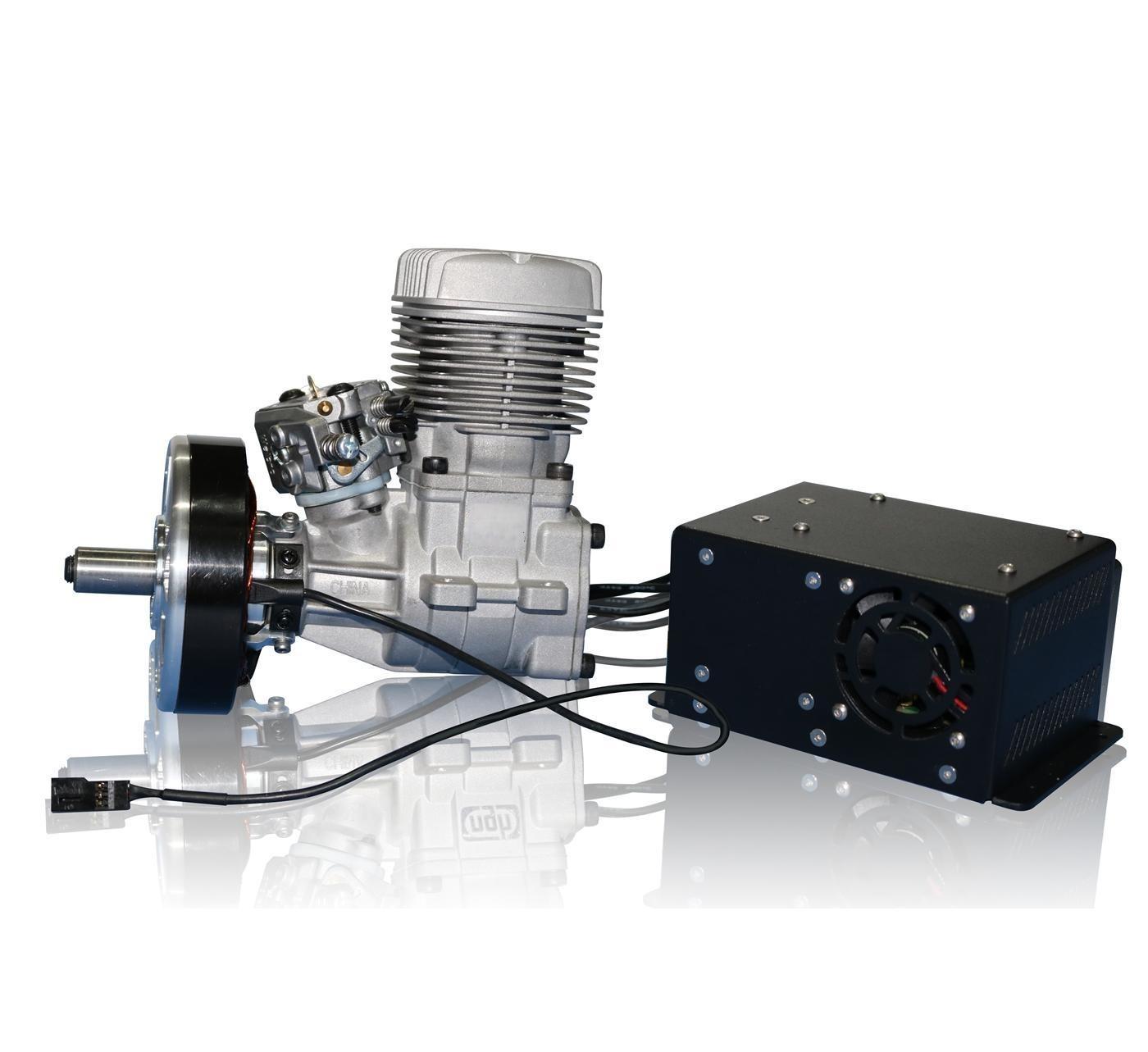
Propulsion Alternative Spotlight: China Moneypro Hybrid Power System
While pure jet turbines deliver unmatched airspeed, commercial missions often demand hours of flight endurance and electrical power that pure kerosene turbines simply cannot provide. For fixed-wing tactical drones, surveillance aircraft, and long-range logistics platforms, China Moneypro engineers specialized heavy-duty internal combustion solutions with integrated electrical generation.
| Engine Architecture | Two-Stroke Air-Cooled Gasoline Engine with Integrated Electric Starter & 150W Generator |
| Displacement & Bore | 34.96 cc Displacement; 37.3 mm Bore × 32 mm Stroke |
| Continuous Power Output | 4.22 HP peak at 8,800 RPM (3.58 HP continuous at practical cruise) |
| Static Thrust Performance | 8.9 kg (19.6 lbs) static thrust on 18×10 to 20×8 two-blade propellers |
| Onboard Electrical Generation | DC 12V, 150W continuous generator output at 6,000 RPM (powers avionics and gimbals) |
| Starting Hardware | Onboard high-torque 14V electric starter drawing <30A; push-button transmitter start |
Procurement Guidance: If your airframe requires multi-hour loiter times, examine the full specifications of the China Moneypro MOPGT35-GE 2-Stroke Engine or explore advanced fixed-wing configurations through our Industrial Drone and Military and Police Drones manufacturing divisions.
Direct Technical Comparison: Thrust, Fuel Burn, and FADEC Systems
| Turbine Model | Max RPM | Fuel Consumption (Max Thrust) | Diameter | Service Interval | Approx. Retail Price (USD) |
|---|---|---|---|---|---|
| KingTech K-85G4+ | 170,000 RPM | 300 ml / min (10.1 oz) | 84 mm (3.30 in) | 25 Hours | $1,750 – $1,900 |
| JetCat P130-RX | 145,000 RPM | 420 ml / min (14.2 oz) | 99 mm (3.89 in) | 25 Hours | $2,600 – $2,850 |
| Swiwin SW140B | 130,000 RPM | 450 ml / min (15.2 oz) | 100 mm (3.93 in) | 25 Hours | $1,850 – $2,050 |
| Xicoy X95 | 160,000 RPM | 320 ml / min (10.8 oz) | 84 mm (3.30 in) | 25 Hours | $1,950 – $2,150 |
| JetsMunt M100XBL | 152,000 RPM | 360 ml / min (12.1 oz) | 90 mm (3.54 in) | 25 Hours | $2,100 – $2,300 |
| Jet Central Cheetah 160 SE | 123,000 RPM | 510 ml / min (17.2 oz) | 102 mm (4.01 in) | 25 Hours | $2,700 – $2,950 |
| Frank Turbine FT-220 | 118,000 RPM | 720 ml / min (24.3 oz) | 112 mm (4.40 in) | 25 Hours | $3,800 – $4,200 |
Pros and Cons of Flying RC Jet Turbine Engines
| Propulsion Technology | Aviation Advantages (Pros) | Operational Liabilities (Cons) |
|---|---|---|
| RC Micro Jet Turbines (Kerosene / Jet-A1 Powered) |
|
|
| High-Power Electric Ducted Fans (EDF) (LiPo Battery Powered) |
|
|
Who Should Invest in RC Turbines vs. Who Should Choose Alternatives
Every dollar in high-performance aviation should match your piloting reflexes, field access, and maintenance patience. Investing in the best jet turbine engine rc is an unforgettable experience, but it is not the right choice for every aviation project.
Who Must Step Up to RC Jet Turbines:
- Experienced Pilots Chasing Pure Scale Realism: If you are building an F-15 Eagle, Eurofighter Typhoon, or L-39 Albatros, flying with electric fans feels sterile. The roar of kerosene, real exhaust heat shimmer, and 200 MPH passes deliver the authentic fighter jet experience.
- High-Speed Aerobatic Sport Jet Competitors: Jet pilots competing in precision aerobatics need unlimited vertical performance. Turbines deliver a consistent thrust-to-weight ratio from takeoff to landing that electric batteries cannot match.
- Military Drone Defense & Target Simulation Contractors: Defense programs training anti-aircraft crews require high-speed target drones flying at realistic cruise velocities. Micro-turbines simulate the radar cross-sections, thermal IR signatures, and flight envelopes of real cruise missiles. For complete airframe integration, review the global ecosystem across best uav manufacturers.
Who Should Choose Electric Ducted Fans or Hybrid Piston Engines:
- Beginner and Intermediate Fixed-Wing Pilots: If you have not mastered landing high-speed propeller aircraft with consistent touchdown precision, do not buy a turbine. A 20-pound jet landing hot at 40 MPH will flip, rupture fuel lines, and ignite into a fireball on the runway. Master fast electric jets first.
- Suburban Clubs with Strict Noise Restrictions: Municipal parks and residential airfields strictly ban kerosene turbines due to fire safety codes and turbine decibel ratings.
- Long-Endurance Surveillance and Agricultural Drone Fleets: If your mission requires carrying heavy sensor systems—such as an EO/IR Gimbal camera payload, high-resolution Radar Systems, or mapping arrays—for two to four continuous hours, micro-turbines burn too much fuel. Long missions demand high-efficiency hybrid piston engines with integrated generators, like those powering specialized Agriculture Drone and surveillance platforms.
Catastrophic Turbine Operating Mistakes That Destroy Airframes
Flight Line Safety Warning: The most catastrophic mistake made by new turbine operators is treating throttle latency like an electric airplane. If you get slow on final approach and drop below stall speed, slamming the throttle stick to 100% does nothing for 3 full seconds. In a jet turbine, you must manage airspeed with the throttle ahead of time and control your glide slope with the elevator.
- Skipping the Anti-Bubble Hopper Tank (UAT): Feeding fuel directly from a large rectangular fuel tank to the turbine fuel pump is a fatal error. During high-G maneuvers or inverted flight, fuel sloshes away from the pickup clunk, sucking an air bubble into the fuel line. That air bubble hits the combustor, extinguishing the flame instantly. Always install a pressurized Ultimate Air Trap (UAT) with a synthetic membrane filter between the main fuel cell and the fuel pump.
- Using Automotive Engine Oil Instead of Turbine Lubricants: Grabbing two-stroke outboard motor oil or regular automotive motor oil will ruin your engine. Micro-turbine bearings spin at over 150,000 RPM in the direct presence of 600°C exhaust gas; automotive oils break down, form carbon coking on the rear ceramic bearing race, and seize the shaft. Use only approved synthetic turbine oils (AeroShell 500, Mobil Jet Oil II, or KingTech Oil).
- Flying Without an Airframe FOD Screen: A turbine compressor wheel is a finely balanced aerodynamic impeller spinning at supersonic tip speeds. If your nose wheel kicks up a tiny pebble, grass clipping, or loose washer from the runway into the open intake, the foreign object damage (FOD) will bend the aluminum compressor blades, throwing the shaft out of dynamic balance and causing a violent failure. Never run a turbine on the ground without a stainless steel wire mesh FOD screen clamped to the front bellmouth.
- Ignoring Tailpipe Centering and Spacing Margins: Installing a stainless steel dual-wall exhaust pipe requires strict geometric alignment. The turbine exhaust cone must sit exactly centered inside the intake bellmouth of the tailpipe, maintaining a precise 20 mm to 25 mm gap. If the gap is too small, exhaust backpressure suffocates the engine; if it is misaligned, 700°C exhaust gas escapes into the fuselage, melting carbon-fiber spars, servos, and receiver wires.
Essential Sourcing Checklist: Spool Latency, Service Cycles & Fueling
Before purchasing the best jet turbine engine rc for your project, audit prospective manufacturers across these four critical engineering parameters:
1. Domestic Service and Maintenance Turnaround Times
All micro-turbines require factory maintenance every 25 hours of run time to replace ceramic bearings, balance the rotor assembly, and clean fuel vaporizers. Inquire about local service turnaround times. If a brand requires shipping your engine overseas for basic maintenance, your aircraft will sit grounded for two to three months. Choose manufacturers with certified domestic repair stations capable of completing 25-hour overhauls within two weeks.
2. FADEC Telemetry Bus Compatibility
Ensure the turbine’s electronic control unit connects with your primary radio system. Modern FADEC units broadcast turbine telemetry directly to your transmitter screen, alerting you to low fuel levels, battery voltage drops, abnormal EGT spikes, and fuel pump amp draw. If you fly mission-critical UAVs using advanced datalinks like Wireless Broadband Mesh Network Radio networks, verify that the FADEC supports telemetry output over standard UART, RS232, or CAN bus protocols.
3. Fuel Cell Metallurgy and Heat Shielding Isolation
Turbine heat management requires structural discipline. High-performance composite fuselages require ceramic heat-barrier paint, ceramic fiber blankets, and Kevlar composite fuel tanks that resist puncture during hard landings. Sourcing dedicated airframe hardware from trusted uav solution companies ensures your fuselage survives intense turbine heat cycles.
4. Total Fuel Weight and Center of Gravity (CG) Shifts
Remember that a jet turbine carries its fuel load inside the airframe, and fuel weight changes dramatically throughout a flight. A 120N turbine flying an eight-minute routine consumes roughly 2.5 to 3 liters of kerosene, meaning your aircraft loses over 5 pounds of fuel weight between takeoff and landing. The main fuel cells must be placed directly over the aircraft’s Center of Gravity (CG). If you place fuel tanks forward or aft of the CG, your trim will shift wildly as the fuel burns down, leading to control instability during landing.
Expert Flight & Procurement Verdict
In our professional assessment as turbine operators and aerospace systems engineers, the era of unpredictable, finicky RC jet turbines is officially behind us. Precision multi-axis CNC milling, high-nickel Inconel metallurgy, brushless pump electronics, and smart FADEC computers have turned micro-turbines into reliable, predictable powerplants.
If you are stepping into turbine aviation for the first time with an entry-level sport jet, purchase the KingTech K-85G4+ without hesitation. Its combination of integrated valves, brushless components, diesel/kerosene tolerance, and stellar regional service support makes it the most practical best jet turbine engine rc on the market. If you are building a high-value scale military aircraft where telemetry precision is non-negotiable, invest in the JetCat P130-RX. For heavy aerobatics where thrust-to-weight and spool times make or break maneuvers, the JetsMunt M100XBL or Xicoy X95 deliver exceptional performance.
However, if your commercial mission involves multi-hour loiter times, heavy aerial camera payloads, or continuous electrical power generation, step away from pure kerosene turbines. Hybrid internal combustion engines featuring onboard 150W electrical generators—such as the China Moneypro MOPGT35-GE—provide the endurance, fuel economy, and electrical power required to complete serious industrial UAV missions.
Frequently Asked Questions
The KingTech K-85G4+ is the most reliable entry point for pilots stepping into turbine propulsion. Its integrated smart Full Authority Digital Engine Control (FADEC), brushless fuel pump, auto-restart capability, and broad kerosene/diesel tolerance provide forgiving ground handling and minimal maintenance headaches compared to finicky boutique turbines.
While a bare turbine engine ranges from $1,600 to $4,500 depending on thrust class, a flight-ready installation requires supporting ground support equipment (GSE), telemetry sensors, anti-bubble air traps (UAT), heat shielding, turbine-grade synthetic oil, and Kevlar fuel cells. A realistic entry-level budget sits between $2,800 and $5,500 for the complete propulsion sub-system.
Most modern micro-turbines operate on Jet-A1 aviation fuel, standard deodorized kerosene (1-K), or premium pump diesel, mixed with 4% to 5% full-synthetic turbine oil such as Mobil Jet Oil II, AeroShell Turbine Oil 500, or KingTech Oil. The fuel carries the lubricant directly across the ceramic angular-contact bearings, eliminating separate oil sumps.
While pure RC micro-turbines offer unmatched airspeed and thrust density, their specific fuel consumption (SFC) is extreme, burning roughly 300 to 800 ml per minute. Tactical reconnaissance and patrol drones requiring 2 to 6 hours of loiter time and continuous onboard DC electrical power achieve vastly superior efficiency using hybrid two-stroke engines with integrated generators.
Authoritative References & Aviation Safety Standards
- Academy of Model Aeronautics (AMA): Document 510-A Safety Regulations for Model Gas Turbine Operations
- ASTM International: Standard Specification for Airframe Emergency Parachutes and Small UAV Engine Safety Verification
- Federal Aviation Administration (FAA): Unmanned Aircraft Systems Operational Framework and High-Speed Small Turbine Regulations