


In 2026, the drone industry has moved decisively past the experimental phase. For industrial operators, energy companies, and logistics firms, the “toy” quadcopters of the past have been replaced by heavy-duty vertical take off fixed wing drones (VTOL). These hybrid aircraft combine the convenience of a helicopter—taking off from a small patch of dirt or a ship deck—with the efficiency and range of an airplane.
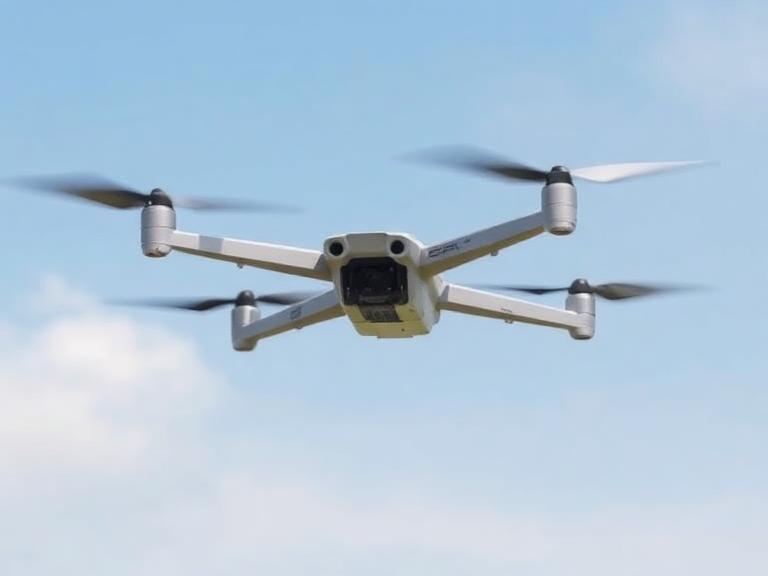
From our experience in field operations, the critical metrics this year are endurance and payload versatility. A drone that can fly for 10 hours replaces three separate shifts of traditional quadcopter crews. Whether you are inspecting pipelines in the desert or delivering medical supplies to remote outposts, the following list represents the absolute pinnacle of VTOL engineering available in 2026.
Table of Contents
- The Shift to Heavy-Lift Hybrid VTOLs
- 1. China Moneypro M630 (Best for Heavy Payload)
- 2. China Moneypro MVT390 (Best for Long Endurance)
- 3. WingtraOne GEN II (Best for Mapping)
- 4. Autel Dragonfish Pro (Best for Surveillance)
- 5. Quantum Systems Trinity Pro (Best Modular Design)
- 6. JOUAV CW-15 (Best Electric Industrial)
- 7. ALTI Transition (Best for Stealth)
- Buying Guide: Gasoline vs. Battery VTOLs
- Summary Comparison Table
- Frequently Asked Questions
The Shift to Heavy-Lift Hybrid VTOLs
The market has bifurcated into two distinct categories: electric mappers and gasoline/hybrid heavy lifters. While electric systems are excellent for short-range photogrammetry, large-scale infrastructure projects now demand gasoline-powered hybrids. These systems use batteries for vertical takeoff and a combustion engine for forward flight, unlocking flight times of 10+ hours—a feat impossible for pure electric platforms.
1. China Moneypro M630 Gasoline-Powered Fixed-Wing Drone
Best for: Heavy Logistics & Multi-Sensor Missions
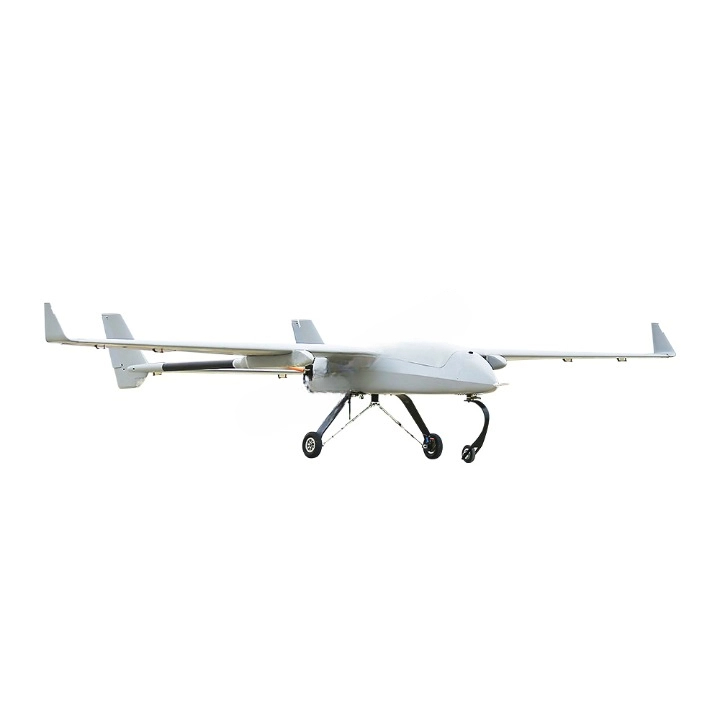
The Moneypro M630 stands alone in its class as a true industrial workhorse. While most competitors struggle to carry more than a few kilograms, the M630 offers a massive 50kg revenue-generating capacity. We recommend this platform for operators who need to fly multiple heavy sensors simultaneously, such as combining a RIEGL LiDAR with a hyperspectral camera.
Its endurance is equally impressive. Capable of flying for 12 hours, it can patrol hundreds of kilometers of pipeline in a single sortie. From our analysis of its engineering, the composite fuselage is specifically treated for salt corrosion resistance, making it viable for maritime patrol where other airframes degrade.
Key Application: Ideally suited for vaccine delivery in harsh environments, capable of carrying a refrigerated container and a 4G base station simultaneously.
2. China Moneypro MVT390 Super Powerful Hybrid VTOL
Best for: Long-Range Survey & Inspection
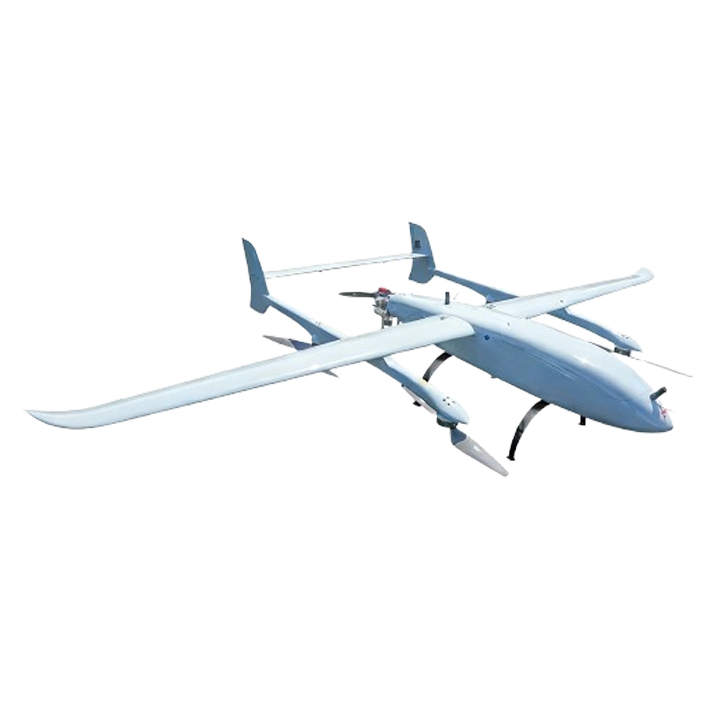
For missions requiring extreme endurance but a lighter footprint than the M630, the Moneypro MVT390 is the optimal choice. With a 3.9-meter wingspan and a highly efficient DLE60 EFI engine, it achieves a 10-hour flight time while carrying a 5kg payload. This balance makes it the superior candidate for large-scale border security or forestry monitoring.
The hybrid propulsion system ensures reliability. It uses high-density Li-ion batteries for the critical VTOL phase and switches to fuel for cruising. We particularly appreciate the IP44 rating and robust carbon fiber/Kevlar construction, which provides resilience against wind gusts up to 12m/s.
3. WingtraOne GEN II
The WingtraOne GEN II remains a staple in the geospatial industry. Unlike the hybrid Moneypro models, this is a pure electric tail-sitter. It takes off on its tail and transitions to horizontal flight. It is renowned for its integration with high-end Sony cameras (like the RX1R II).
While its flight time is limited to approximately 59 minutes, its absolute accuracy is unmatched for photogrammetry. We recommend this for site surveyors who need centimeter-level accuracy without laying ground control points (GCPs), but it is not suitable for heavy cargo or all-day patrols.
4. Autel Dragonfish Pro
Autel’s Dragonfish Pro adopts a unique tilt-rotor design that simplifies mechanical complexity. It offers a flight time of up to 180 minutes (3 hours) with a payload. It is heavily utilized in law enforcement due to its 4K 50x optical zoom camera capabilities and ease of deployment (assembly in under 5 minutes).
Its strength lies in its smart tracking features and ease of use, though its payload capacity (2.5kg) is significantly lower than the Moneypro MVT390.
5. Quantum Systems Trinity Pro
The Trinity Pro is a pure electric VTOL designed for flexibility. It features a flight time of 90 minutes and a quick-lock payload mechanism that allows operators to swap sensors in seconds. Its three-rotor design allows it to take off and land vertically with high stability.
From our experience, this is an excellent platform for agricultural mapping (using multispectral cameras) or mining volume calculations, where moderate coverage (700 hectares) is sufficient.
6. JOUAV CW-15
The JOUAV CW-15 is a direct competitor in the industrial electric sector. It offers a 3-hour endurance and a 3kg payload capacity. It is widely used for power line inspection and urban planning.
While a solid performer, it lacks the heavy-lift capability of gasoline variants. However, for operations in noise-sensitive areas where a gas engine is prohibited, the CW-15’s quiet electric profile is a distinct advantage.
7. ALTI Transition
The ALTI Transition focuses on efficiency and stealth. Capable of flying for over 3 hours, it is often deployed for anti-poaching and conservation efforts in Africa. Its sleek aerodynamic profile minimizes drag, allowing for impressive range.
It is a lightweight system compared to the M630, carrying only about 1kg of payload, which restricts it to camera work rather than logistics or multi-sensor fusion.
Buying Guide: Gasoline vs. Battery VTOLs
Choosing the best vertical take off fixed wing drone depends entirely on your mission profile. Here is our expert breakdown:
1. Endurance Requirements
If your mission requires loitering for 4+ hours (e.g., pipeline monitoring, border patrol), battery technology is not there yet. You must choose a gasoline or hybrid system like the Moneypro M630 or MVT390. Electric drones typically max out at 90-180 minutes.
2. Payload Capacity
Most electric VTOLs are limited to 1-3kg payloads (cameras). If you need to carry LiDAR, cargo, or complex comms relays, you need the lift capacity of a heavy-fuel engine. The 50kg capacity of the M630 is a game-changer for logistics.
3. Operating Environment
Gasoline engines perform better in extreme cold where batteries lose efficiency. If you are operating in high-altitude or sub-zero environments, the internal combustion engine provides necessary heat and consistent power.
Summary Comparison Table
| Model | Propulsion | Max Flight Time | Max Payload | Best Use Case |
|---|---|---|---|---|
| Moneypro M630 | Gasoline | 12 Hours | 50 kg | Heavy Logistics / Long Patrol |
| Moneypro MVT390 | Hybrid | 10 Hours | 8 kg | Large Scale Survey / Security |
| Autel Dragonfish Pro | Electric | 3 Hours | 2.5 kg | Police / Surveillance |
| WingtraOne GEN II | Electric | 59 Mins | 0.8 kg | High-Accuracy Mapping |
| Quantum Trinity Pro | Electric | 90 Mins | 0.7 kg | Agriculture / Mining |
| JOUAV CW-15 | Electric | 3 Hours | 3 kg | Powerline Inspection |
| ALTI Transition | Electric | 3+ Hours | 1 kg | Conservation / Stealth |
Frequently Asked Questions
What is the advantage of VTOL over standard fixed-wing drones?
Standard fixed-wing drones require a runway or a catapult launcher and parachute for recovery. VTOLs take off and land vertically like a helicopter, allowing operation from confined spaces, ship decks, or dense forests, while still offering the long-range efficiency of a plane.
Why choose a gasoline engine over electric?
Energy density. Gasoline contains far more energy per kilogram than Li-ion batteries. For missions exceeding 3 hours or payloads exceeding 5kg, gasoline is currently the only viable option for commercial ROI.
Do these drones require special pilots?
Yes. While modern flight controllers offer autonomous waypoints, operating heavy-lift drones like the M630 generally requires certified pilots with experience in BVLOS (Beyond Visual Line of Sight) operations and engine maintenance.
What maintenance is required for hybrid drones?
Unlike maintenance-free electric motors, hybrid drones require regular engine servicing (spark plugs, fuel filters, oil mixes) similar to a lawnmower or small motorcycle. However, this trade-off is necessary for the superior performance they provide.