


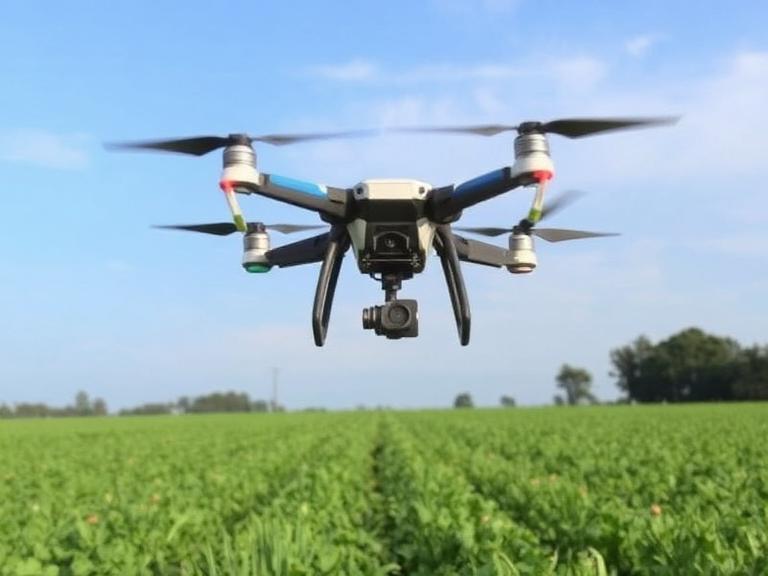
Table of Contents
- Why Use Drones in Agriculture?
- The 5 Main Types of Drones in Agriculture
- Detailed Overview: Advantages, Use Cases & Limitations
- Summary: Drone Types Comparison Table
- Company Spotlight: ChinaMoneypro UAV
- How to Choose the Right Agricultural Drone
- Frequently Asked Questions (FAQs)
- References & Further Reading
Why Use Drones in Agriculture?
Drones bring transformative capabilities to farming. In the era of precision agriculture, they offer:
- Efficient crop monitoring: capturing aerial images and multispectral data to track crop health, detect disease, and monitor growth.
- Targeted spraying and fertilization: drones can apply pesticides, herbicides or fertilizers accurately, reducing waste and environmental impact.
- Large‑scale surveying & mapping: fixed‑wing or long‑endurance drones can survey vast farmland quickly for topography, irrigation planning, or soil analysis.
- Time and labor savings: drones reduce manual inspection and treatment time, especially over large or difficult terrain.
- Data‑driven decision making: real‑time data and multispectral imaging enable better resource allocation, yield forecasting, and crop management.
Because different farms and operations vary (size, crop type, terrain, goals), understanding the **types of drones in agriculture** helps pick the right tool for maximum effectiveness.
The 5 Main Types of Drones in Agriculture
Based on structure, flight mode, and purpose, the five major types of agricultural drones are:
- Multi‑Rotor Drones
- Fixed‑Wing Drones
- Hybrid / VTOL (Vertical Take‑Off and Landing) Drones
- Single‑Rotor (Helicopter‑Style) Drones
- Special‑Purpose / Operational Drones (Spraying, Seeding, Sample‑Collection)
Detailed Overview: Advantages, Use Cases & Limitations
1. Multi‑Rotor Drones
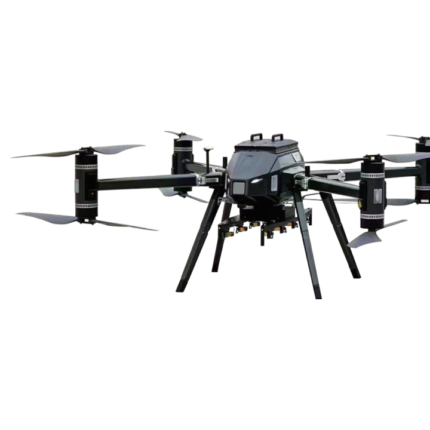
Multi‑rotor drones (quadcopters, hexacopters, octocopters) are the most commonly used drones in agriculture today. Their multiple rotors provide vertical take‑off and landing (VTOL), stable hover, and easy maneuverability — making them ideal for small to medium sized fields or orchards.
- Advantages:
- Hover capability — useful for detailed inspections, spot‑treatments, and spraying targeted areas.
- Precise control — important for pesticide/fertilizer application, canopy inspection, and monitoring.
- Relatively affordable and easy to operate — good option for small farms or orchards.
- Limitations: Short battery life (typically 15–30 minutes), limited coverage per flight, and limited payload capacity.
- Best for: Crop monitoring, precision spraying, pest and disease detection, small‑to‑medium fields, orchards, vineyards.
2. Fixed‑Wing Drones
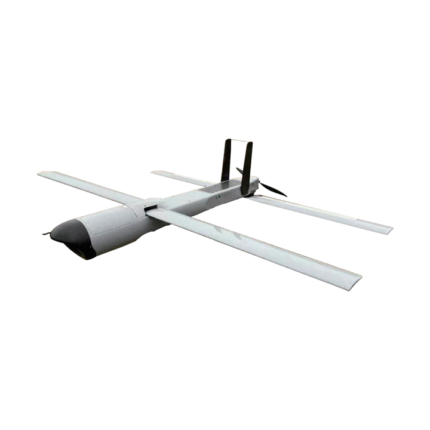
Fixed‑wing drones resemble small airplanes and rely on aerodynamic lift for flight. They excel in covering large areas — ideal for mapping, surveying, or monitoring large farms or estates.
- Advantages:
- Longer flight time and greater coverage — able to survey large acreage quickly.
- Efficient energy use — ideal for aerial mapping, topographic surveys, and crop health assessment over wide areas.
- Limitations: Requires runway/launcher or hand‑launch for takeoff/landing (not VTOL), cannot hover — less suitable for precise spraying or close-up work.
- Best for: Farm mapping, soil and topography surveys, crop health monitoring on large acreage, water/irrigation planning, planting density mapping.
3. Hybrid / VTOL Drones
Hybrid drones (often called VTOL drones) combine the strengths of both multi‑rotor and fixed‑wing designs. They can take off and land vertically like a helicopter, then transition to fixed‑wing flight for extended range and endurance. This flexibility makes them highly suitable for versatile agricultural operations.
- Advantages:
- VTOL capability — no runway needed; can operate even on small or uneven plots.
- Longer flight range and coverage — better than multi‑rotor for large fields, yet still flexible for spraying or monitoring.
- Versatility — suitable for mixed tasks: mapping, spraying, monitoring, or seeding.
- Limitations: More complex mechanical systems, higher cost, increased maintenance needs compared to simple multi‑rotor or fixed‑wing drones.
- Best for: Medium to large farms, mixed-use operations, farms with varied terrain, and operations needing both mapping and precision interventions.
4. Single‑Rotor (Helicopter‑Style) Drones
Single‑rotor drones essentially mimic traditional helicopters: they have one large rotor (and a tail rotor or stabilizing system). This design allows for high payload capacity and good stability — valuable for heavy spraying, large farms, or difficult terrains.
- Advantages:
- High payload capacity — can carry larger tanks or heavier sensors, ideal for spraying, seeding, or payload delivery.
- Stable flight and good wind resistance — useful for tasks requiring strong downward airflow like pesticide application.
- Limitations: Usually more expensive, require licensed operators or more skill, and maintenance can be more demanding.
- Best for: Large‑scale spraying or seeding, heavy‑duty agricultural operations, flat or open terrain with large acreage.
5. Special-Purpose / Operational Drones (Spraying, Seeding, Sample Collection, Monitoring)
Beyond structural classification, some drones are configured for specialized agricultural tasks — not just generic flying. These include drones equipped with sprayers for pesticide/fertilizer application, drones for aerial seeding, drones with robotic arms or containers for soil or plant sample collection, and drones fitted with multispectral or thermal sensors for crop health mapping.
- Advantages: Tailored to specific farming needs — better efficiency and resource usage, reduced labor, potentially lower chemical usage.
- Limitations: Equipment cost, regulatory compliance, operator training often required; payload limitations depending on base drone type.
- Best for: Precision agriculture, pesticide/fertilizer application, sampling for soil or plant health, environmental monitoring, crop stress detection, and large‑scale farm management.
Summary: Drone Types Comparison Table
| Drone Type | Strengths / Best Use Cases | Limitations |
|---|---|---|
| Multi‑Rotor | Close‑range spraying, crop inspection, small/medium fields | Short flight time, limited coverage, lower payload |
| Fixed‑Wing | Large-area mapping, surveying, crop monitoring over big farms | No VTOL, cannot hover, needs runway/launcher |
| Hybrid / VTOL | Mixed tasks — mapping + spraying + monitoring; flexible terrain | Higher cost, more complex maintenance |
| Single‑Rotor (Helicopter‑Style) | Heavy spraying/seeding, large payload, stable in wind | Expensive, requires skill, higher maintenance |
| Special‑Purpose / Operational Drones | Precision agriculture tasks — spraying, seeding, sampling, monitoring | Payload & battery limits; regulatory/ certification considerations |
Company Spotlight: ChinaMoneypro UAV — Full‑Stack Agricultural Drone Supplier
About ChinaMoneypro UAV

ChinaMoneypro UAV is a national‑level high‑tech enterprise, transformed from a prestigious state‑owned research institute. With deep roots in defense‑grade engineering, they specialize in the R&D and manufacturing of advanced unmanned platforms and integrated sensing‑communication solutions. Their product line includes a broad spectrum of UAV/drones tailored for agriculture and industrial use — from multi‑rotor UAVs to petrol‑electric hybrid VTOL, tethered drones, composite‑wing fixed wing UAVs, and multifunctional drones.
Product Range
Because ChinaMoneypro produces full-stack UAV solutions — from airframe to engine, data links, gimbals and payload systems — they are well-positioned to provide customizable and robust agricultural drone systems for diverse farming needs. Their hybrid VTOL and fixed‑wing platforms are especially suitable for large-scale farms, while multi‑rotor and single‑rotor UAVs support precise interventions and spraying tasks.
How to Choose the Right Agricultural Drone
Selecting the right drone depends on several factors. Here’s a quick decision guide:
- Farm size & terrain: small orchards or vineyards — multi‑rotor or single‑rotor; large flat farms — fixed‑wing or hybrid VTOL;
- Task type: sprayer or targeted treatment — multi‑rotor / single‑rotor / operational drone; mapping, monitoring — fixed‑wing / hybrid;
- Payload & endurance needs: heavy spraying or seeding — single‑rotor or robust multi‑rotor; long survey flights — fixed‑wing;
- Budget & operator skill: simpler drones (multi‑rotor) for entry-level; hybrid or single‑rotor for professional farms with trained operators; strong suppliers (like ChinaMoneypro) for custom solutions;
- Regulations & maintenance: consider local regulations, need for licensing, maintenance availability, spare parts access — key for hybrid and rotor‑heavy drones.
Frequently Asked Questions (FAQs)
Q1: Which drone type is best for small farms or orchards?
Multi‑rotor drones are usually best for small to medium farms, orchards or vineyards because of their maneuverability, VTOL capability, and precision spraying or monitoring. They require no runway and are relatively easy to operate.
Q2: Are fixed‑wing drones suitable for pesticide spraying?
Fixed‑wing drones excel in mapping, surveying and monitoring large areas; they are less suitable for precise pesticide or fertilizer spraying because they cannot hover. For spraying, multi‑rotor or single‑rotor drones (or specialized operational drones) are generally preferred.
Q3: What advantages do hybrid VTOL drones offer over traditional types?
Hybrid VTOL drones combine the vertical take‑off and landing of multi‑rotors with the long-range flight and efficiency of fixed‑wing drones. That means they can handle both large-area surveying/mapping and targeted tasks like spraying — offering flexibility, especially for medium to large farms with mixed needs.
Q4: Do single‑rotor drones require special licenses?
Because single‑rotor drones resemble helicopters and often carry heavy payloads (sprays, seeds, etc.), they often have stricter regulatory requirements depending on the country — including licensing, pilot certification, and maintenance standards. Always check local UAV regulations before deployment.
Q5: What should I consider when evaluating a drone manufacturer for agriculture?
Look for a manufacturer with: a diverse product lineup (multi‑rotor, VTOL, fixed‑wing, hybrid), good support and spare parts availability, experience with agricultural payloads, and compliance with safety and regulatory standards. Suppliers like ChinaMoneypro UAV offering full‑stack UAV solutions are advantageous because they provide airframe, propulsion, payload, and communication systems under one roof.
References & Further Reading
- Types of Drones Used in Agriculture – AgronoBlog
- Types of Drones for Field Crop Production – University of Delaware
- Drones in Agriculture: The Best Agricultural Drones of 2025 & More – UAV Coach
- Common Types and Applications of Drones in Agriculture – EnovBattery
- Breaking Down the Types of Ag Drones – Precision Farming Dealer