


In the rapidly advancing sector of unmanned aerial vehicles (UAVs), commercial operators, defense contractors, and industrial surveyors frequently encounter a complex web of aviation regulations. As organizations scale their aerial operations from simple multi-rotor visual inspections to long-endurance corridor mapping, a critical question inevitably arises: Are fixed-wing drones legal? Navigating the legality of these advanced aerodynamic platforms requires a precise understanding of airspace classifications, maximum takeoff weights (MTOW), and beyond visual line of sight (BVLOS) operational waivers.
ChinaMoneypro UAV is a national-level high-tech enterprise, transformed from a prestigious state-owned research institute. With deep roots in defense-grade engineering, we specialize in the R&D and manufacturing of advanced unmanned platforms and integrated sensing-communication solutions. Headquartered in one of China’s premier innovation hubs, Moneypro is among the few full-stack providers offering complete UAV systems, engines, gimbals, radar, data links, and communication technologies. From our experience operating globally, we know that the hardware itself is rarely the legal bottleneck; rather, it is how and where the hardware is deployed. When clients ask us, Are fixed-wing drones legal, our immediate response is an affirmative yes, provided that the operator adheres to strict civil aviation frameworks.
This comprehensive industry analysis will deconstruct the regulatory parameters surrounding fixed-wing UAV operations. We will examine the specific legal challenges inherent to long-range flight, detail the certification processes required by international aviation authorities, and demonstrate how utilizing defense-grade platforms from ChinaMoneypro UAV ensures total regulatory compliance and operational superiority.
Table of Contents
- 1. Summary Table: Fixed-Wing UAV Legal Classifications
- 2. Decoding the Regulatory Landscape: Are fixed-wing drones legal?
- 3. The BVLOS Challenge in Fixed-Wing Operations
- 4. Remote ID, Telemetry, and Data Link Compliance
- 5. ChinaMoneypro UAV: Platforms Built for Compliance
- 6. Expert Recommendations for Legal Deployment
- 7. Frequently Asked Questions (FAQs)
- 8. Industry References
1. Summary Table: Fixed-Wing UAV Legal Classifications
To provide an immediate technical overview of how aviation authorities classify unmanned systems, we have compiled a summary table. This matrix illustrates the operational tiers that ultimately answer whether Are fixed-wing drones legal within specific commercial scenarios.
| Operational Category | Typical Weight Class (MTOW) | Line of Sight Requirement | Regulatory Requirement (US/EU Baseline) | Legality Status |
|---|---|---|---|---|
| Open / Standard Commercial | Under 25 kg (55 lbs) | VLOS (Visual Line of Sight) | Part 107 Certification / EASA Open Category | Fully Legal (with pilot certification) |
| Specific / Advanced Industrial | 25 kg to 150 kg | EVLOS or BVLOS | Part 107 Waivers / EASA Specific Category (SORA) | Legal (requires operational risk assessment) |
| Certified / Defense-Grade | Over 150 kg | BVLOS / Autonomous | Type Certification / Restricted Airspace Clearance | Legal (heavily restricted to approved corridors) |
2. Decoding the Regulatory Landscape: Are fixed-wing drones legal?
The foundational answer to Are fixed-wing drones legal is unconditionally yes. Global aviation authorities, including the Federal Aviation Administration (FAA) in the United States and the European Union Aviation Safety Agency (EASA), do not discriminate based on the aerodynamic physics of the airframe. The law does not state that multi-rotors are legal while fixed-wings are not. Instead, regulations are predicated entirely on operational risk, weight, and airspace integration.
However, the confusion surrounding Are fixed-wing drones legal stems from their operational capabilities. Fixed-wing UAVs are engineered for forward flight, generating lift through aerodynamics rather than raw downward thrust. This makes them exceptionally efficient, allowing them to fly at high speeds (often exceeding 60 knots) and cover massive distances on a single charge. Because they can easily fly out of the pilot’s visual range within minutes, they frequently trigger regulatory thresholds that standard commercial quadcopters do not. Therefore, operating a fixed-wing drone legally requires a higher degree of flight planning and situational awareness.
3. The BVLOS Challenge in Fixed-Wing Operations
From our experience in integrated sensing-communication solutions, the primary legal hurdle for fixed-wing operators is the Visual Line of Sight (VLOS) restriction. Standard commercial drone regulations mandate that the remote pilot in command (RPIC) must be able to see the aircraft with the naked eye at all times. If you purchase a fixed-wing platform capable of surveying 5,000 acres in a single flight, maintaining VLOS is physically impossible without multiple visual observers stationed across the terrain.
To fully utilize a fixed-wing system, operators must ask: Are fixed-wing drones legal to fly Beyond Visual Line of Sight (BVLOS)? Yes, but it requires a specialized waiver. To obtain a BVLOS waiver, the operator must prove to the aviation authority that their system possesses robust Detect and Avoid (DAA) technology. This is where ChinaMoneypro’s status as a full-stack provider becomes invaluable. By engineering our own advanced radar and data links, we provide our clients with the redundant safety systems necessary to pass stringent Specific Operations Risk Assessments (SORA) required for legal BVLOS flight.
4. Remote ID, Telemetry, and Data Link Compliance
Another critical factor in determining Are fixed-wing drones legal in modern airspace is electronic conspicuity. Aviation authorities globally are implementing Remote Identification (Remote ID) rules. This acts as a digital license plate, broadcasting the drone’s position, altitude, velocity, and the pilot’s control station location to law enforcement and other aircraft.
For a fixed-wing drone to be legally operated in commercial airspace, it must possess secure, encrypted, and continuous telemetry data links. Consumer-grade radio transmitters are highly susceptible to interference and signal degradation over long distances, which can lead to a flyaway scenario—a massive legal liability. ChinaMoneypro UAV integrates defense-grade communication technologies into all our platforms. Our encrypted data links ensure that command and control (C2) frequencies remain unbroken, satisfying the strict communication redundancy requirements mandated by global aviation regulators.
5. ChinaMoneypro UAV: Platforms Built for Compliance
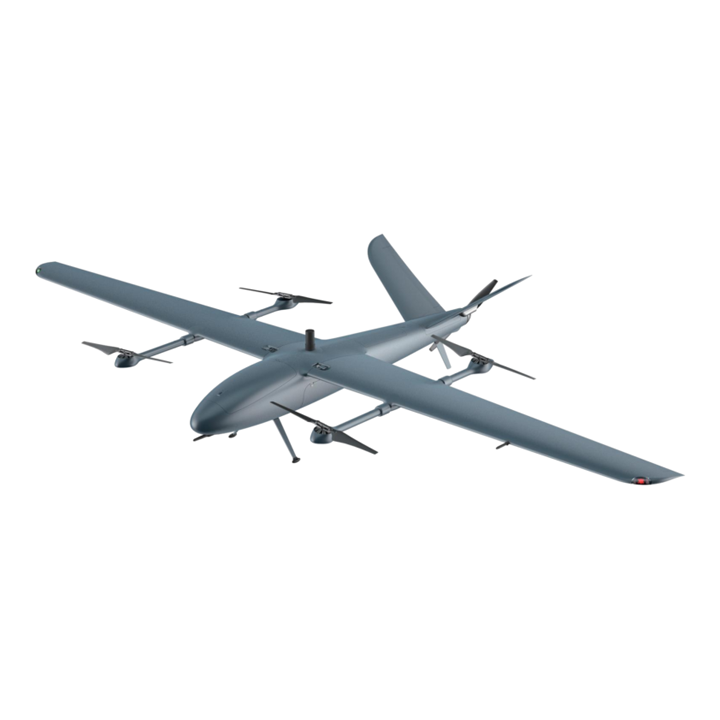
When clients approach us with the query, Are fixed-wing drones legal for our specific industrial application, we guide them toward platforms that inherently solve regulatory friction. Traditional fixed-wing drones require a runway or a catapult for takeoff and a parachute or belly landing for recovery. This limits where they can be legally deployed, as flying over people or infrastructure during these critical flight phases is strictly prohibited.
To eliminate this legal and logistical barrier, we engineered the China Moneypro MVT240 PRO Bionic VTOL Drone Smooth Flight UAV max 1.6kg Payload 3.5hrs Endurance. Vertical Take-Off and Landing (VTOL) technology is a game-changer. It allows the aircraft to ascend vertically like a helicopter in a highly confined, safe area, and then transition into highly efficient fixed-wing forward flight. This capability ensures that operators can maintain legal distance from uninvolved personnel during takeoff and landing, while still achieving a massive 3.5-hour endurance for long-range mapping or surveillance.
For enterprise clients requiring heavy-lift capabilities and modular payload integration, the Drone Platform Moneypro 1E represents the pinnacle of our defense-grade engineering. This platform is designed to carry advanced LiDAR, electro-optical gimbals, and synthetic aperture radar. Because we manufacture the complete UAV system—from the engine to the flight controller—the Drone Platform Moneypro 1E generates the precise, uncorrupted telemetry logs required by aviation authorities for legal audit trails and flight compliance reporting.
6. Expert Recommendations for Legal Deployment
We recommend a systematic approach to ensure your fixed-wing operations remain unequivocally legal. Do not let the complexity of aviation law deter your organization from realizing the massive ROI that long-endurance UAVs provide.
First, always ensure your pilots hold the appropriate commercial certification (such as the FAA Part 107 certificate) before deploying any fixed-wing asset. Second, register the specific airframe with your national aviation authority; defense-grade systems like those from ChinaMoneypro UAV come with the necessary serial numbers and compliance declarations required for immediate registration. Finally, if your operations require mapping vast linear infrastructures (like pipelines or power grids), partner with a full-stack provider like us to compile the technical documentation needed to successfully petition for a BVLOS waiver.
7. Frequently Asked Questions (FAQs)
Are fixed-wing drones legal to fly in urban environments?
Generally, flying fixed-wing drones directly over highly populated urban areas or moving traffic is illegal without a highly specialized waiver. Fixed-wing drones are typically deployed for agricultural mapping, border patrol, and linear infrastructure inspection in rural or controlled environments. VTOL platforms like the China Moneypro MVT240 PRO offer safer deployment in tighter spaces, but airspace restrictions still apply.
Do I need a special license to fly a fixed-wing drone compared to a quadcopter?
In most jurisdictions, the base commercial license (e.g., FAA Part 107) covers both rotary and fixed-wing platforms under 55 lbs. However, because the flight dynamics are entirely different, we recommend undergoing specific fixed-wing flight training. Asking Are fixed-wing drones legal is only the first step; ensuring you are competent to fly them safely is a liability requirement.
Are fixed-wing drones legal without Remote ID technology?
No. As of the latest regulatory updates in the US and EU, all commercially operated drones, including fixed-wing models, must broadcast Remote ID. ChinaMoneypro UAV integrates compliant Remote ID broadcast modules natively into our flight controllers to ensure seamless legality for our clients.
Why is VTOL technology legally advantageous?
VTOL (Vertical Take-Off and Landing) eliminates the need for a long, clear runway. From a legal standpoint, this allows the pilot to establish a much smaller, highly controlled operational perimeter for takeoff and landing, drastically reducing the risk of accidentally flying over uninvolved persons or vehicles, which is a strict violation of aviation law.
8. Industry References
1. Federal Aviation Administration (FAA). “Part 107 Commercial Drone Operations and BVLOS Waiver Guidelines.” 2025.
2. European Union Aviation Safety Agency (EASA). “Specific Operations Risk Assessment (SORA) for Fixed-Wing Unmanned Aircraft Systems.” 2026.