


The operational reality is unequivocal: turbojet engines are actively manufactured, deployed, and innovated today. When aerospace engineers and defense program managers ask whether are turbojet engines still used, the answer depends entirely on the operational envelope. For small-diameter tactical missiles, expendable target drones, high-Mach penetrators, and high-speed autonomous airframes, the pure turbojet remains the most mechanically efficient, power-dense, and cost-effective air-breathing propulsion system available. Understanding where turbojets thrive—and where they fail—is critical before allocating capital to propulsion development.
Quick Answer: Are Turbojet Engines Still Used Today?
Yes, turbojet engines are still widely used in modern aerospace and defense applications. While they have been completely replaced by turbofans in commercial passenger airliners and frontline fighter jets due to high specific fuel consumption at subsonic speeds, pure turbojets dominate high-speed uncrewed aerial vehicles (UAVs), tactical cruise missiles, target simulation drones, and micro-turbine research platforms. Their compact frontal cross-section, zero-bypass airflow, low manufacturing part count, high thrust-to-weight ratio, and ability to sustain high-Mach sprint velocities make them indispensable where airframe diameter is constrained and fuel burn during a one-way or high-speed sprint mission is secondary to thrust density and manufacturing cost.
Table of Contents
- What Is a Turbojet and How Does It Operate?
- Quick Summary: Turbojet Operational Profile in Modern Aviation
- Where Turbojets Are Actively Deployed Today
- Comparison Matrix: Turbojet vs. Turbofan vs. Turboprop vs. Ramjet
- Pros and Cons of Pure Turbojet Propulsion
- Who Should Use Turbojets vs. Who Needs Turbofans or Piston Power
- Featured Propulsion System: MWP220K Micro Turbojet Engine
- Common Mistakes Engineers Make When Selecting UAV Propulsion
- Commercial and Defense Procurement Considerations
- Expert Recommendation and Propulsion Sourcing Verdict
- Frequently Asked Questions (FAQ)
- Authoritative References
What Is a Turbojet and How Does It Operate?
A turbojet is the original, unadulterated form of the gas turbine engine. Atmospheric air is ingested through an inlet cowl, compressed via an axial or centrifugal compressor, mixed with atomized jet fuel in a combustion chamber, and ignited. The expanding high-pressure exhaust gas rushes through a turbine stage—which extracts just enough mechanical work to spin the compressor shaft—before accelerating through a convergent exhaust nozzle at supersonic velocities to produce forward thrust.
The defining technical characteristic of a pure turbojet is that 100% of the ingested air passes directly through the engine core (combustion path). There is zero bypass ducting. By contrast, a turbofan diverts the vast majority of its incoming air around the engine core via a large front fan. While bypass air yields exceptional propulsive efficiency at subsonic cruising speeds, it demands massive engine diameters. When designing an airframe where frontal cross-sectional area determines aerodynamic drag, or where an engine must fit inside a 300-millimeter missile fuselage, the slender, narrow profile of a zero-bypass turbojet is physically unmatched.
In our testing of high-speed airframe dynamics, pure turbojets also produce exceptionally high exhaust gas velocities. This high exhaust jet speed is inefficient when loitering at 200 knots, but it becomes an asset when driving an uncrewed platform past Mach 0.85 toward transonic and supersonic regimes where large fan blades suffer severe compressibility shocks and catastrophic aerodynamic drag rises.
Quick Summary: Turbojet Operational Profile in Modern Aviation
The table below provides a quick reference to the operational parameters, mechanical specifications, and contemporary deployment sectors of pure turbojet powerplants:
| Engineering Parameter | Turbojet Engine Benchmark | Primary Operational Impact | Active Industry Application |
|---|---|---|---|
| Bypass Ratio (BPR) | 0:1 (Zero bypass air) | Minimal frontal area; maximum airspeed penetration | Tactical cruise missiles, supersonic target drones |
| Thrust-to-Weight Ratio | 6:1 to 9:1 typical | Exceptional payload capacity relative to dry weight | High-speed decoy systems, jet-assist boosters |
| Specific Fuel Consumption (SFC) | High (1.0 to 1.3 lb/lbf-hr) | Limited loiter duration; high fuel burn per hour | Sprint-to-target weapons, short-run testbeds |
| Mechanical Complexity | Low (Single/Dual shaft, single turbine wheel) | Fast manufacturing cycles, low acquisition cost | Expendable military assets, training drones |
| Operating Speed Envelope | Mach 0.7 to Mach 2.2+ | Maintains efficiency where fan blades stall | Transonic targets, threat simulation platforms |
Where Turbojets Are Actively Deployed Today
1. Tactical Cruise Missiles and Stand-off Munitions
Modern precision-guided standoff munitions require high subsonic speeds (Mach 0.8 to 0.95) to minimize interception reaction times by enemy surface-to-air missile (SAM) radars. A small turbofan capable of equivalent thrust requires an outer diameter nearly double that of a turbojet, expanding the radar cross-section and aerodynamic drag of the missile fuselage. Turbojets like the Microturbo TRI series, Teledyne J402, and contemporary modular micro-turbines power systems like the Harpoon, RBS-15, and emerging loitering strike platforms because they can be stored in sealed cannisters for ten years and ignite instantly upon booster separation.
2. High-Speed Aerial Targets and Decoy Drones
Air defense artillery and naval combat systems must train crews against realistic threats simulating incoming anti-ship cruise missiles and jet fighters. Operators deploy unmanned aerial targets powered by pure turbojets to replicate Mach 0.85 attack profiles. Because these drones are frequently shot down during live-fire training exercises, equipping them with complex multi-spool turbofans would be financially wasteful. Pure turbojets deliver the required velocity, altitude ceiling, and thermal heat signature at a fraction of the engine unit cost.
3. High-Speed Research Platforms and Uncrewed Testbeds
Universities, defense laboratories, and private aerospace contractors evaluating new wing geometries, radar-absorbent materials, and autonomous guidance algorithms require high-speed platforms. While low-speed surveys rely on quadcopters, testing high-bandwidth sensor packages—such as long-range Radar Systems or dynamic Wireless Broadband Mesh Network Radio links under high Doppler shift conditions—demands jet-powered testbeds capable of sustained 400-knot flight passes.
4. Vintage Experimental and Private Jet Aviation
A smaller, non-defense niche exists in historic jet maintenance and specialized aerobatic airframes. Early business jets (such as original Learjet 23/24 models powered by General Electric CJ610 turbojets) still operate under specific noise abatement waivers, although high fuel costs and strict Stage 3/4 noise regulations have pushed most civilian operators toward modern turbofans.
Comparison Matrix: Turbojet vs. Turbofan vs. Turboprop vs. Ramjet
Selecting an aerospace powerplant requires matching flight duration, cruise velocity, and airframe physical limits to the correct propulsion architecture:
| Propulsion Type | Optimal Cruise Velocity | Specific Fuel Consumption | Frontal Drag Profile | Manufacturing & Maintenance Cost |
|---|---|---|---|---|
| Pure Turbojet | Mach 0.75 – Mach 2.0+ | High (Worst subsonic efficiency) | Extremely Narrow & Compact | Low to Moderate (Fewer rotating stages) |
| Low-Bypass Turbofan | Mach 0.7 – Mach 1.6 | Moderate (Balanced performance) | Medium Diameter | High (Complex bypass ducts, dual spools) |
| High-Bypass Turbofan | Mach 0.4 – Mach 0.85 | Very Low (Maximum efficiency) | Very Large (Large fan cowl drag) | Very High (Complex titanium fan blades) |
| Turboprop / Piston | Mach 0.1 – Mach 0.55 | Lowest (Ideal for long loitering) | Wide (Propeller disc clearance) | Low to Moderate (Gearbox dependent) |
| Ramjet | Mach 2.5 – Mach 5.5 | Extreme (Zero static thrust) | Minimal (Open hollow tube) | Low Part Count / High Material Cost |
Pros and Cons of Pure Turbojet Propulsion
Before selecting a propulsion architecture for uncrewed or tactical aerospace projects, engineers must weigh the mechanical strengths against operational trade-offs:
| Operational Advantages (Pros) | Inherent Limitations (Cons) |
|---|---|
| Ultra-Slim Frontal Profile: Compact diameter allows integration into narrow fuselage tubes and low-drag missile geometries. | High Specific Fuel Consumption: Inefficient at low airspeeds; burns significantly more kerosene per pound of thrust than turbofans. |
| High Exhaust Jet Velocity: Produces rapid acceleration and easily sustains high-subsonic and supersonic sprint velocities. | Severe Acoustic Signature: High-velocity jet shear creates intense noise levels, making them unviable near civilian centers. |
| Mechanical Simplicity: Lacks large forward fans, reduction gearboxes, or complex bypass cowls, drastically reducing unit manufacturing costs. | Poor Low-Speed Static Thrust: Sluggish initial acceleration from standstill compared to high-bypass fans or propellers. |
| Long Shelf-Life Stability: Robust metallurgy allows years of containerized storage with minimal maintenance checks before deployment. | Short Operational Range: Requires large onboard fuel fractions to achieve substantial flight distances. |
Who Should Use Turbojets vs. Who Needs Turbofans or Piston Power
In our experience evaluating flight profiles across diverse autonomous sectors, matching the propulsion system to the payload and mission envelope is the most critical design decision.
Who Needs a Pure Turbojet Engine:
- Tactical Standoff Weapon Designers: If your airframe must travel 150 to 300 kilometers at Mach 0.85 to strike high-value targets before defenses react, a compact turbojet delivers the required speed in a slender package. Explore our specialized Turbo Engines division for high-speed hardware.
- Military Threat-Simulation Units: Training air-defense battalions requires targets that fly like hostile cruise missiles. Pure turbojets provide authentic high-speed visual and radar target runs. For airframes, see our dedicated Military and Police Drones systems.
- Transonic Research Labs: Teams testing aerostructures, flutter limits, and high-G maneuvers at speeds exceeding 400 knots where propeller blades cannot operate.
Who Should Avoid Turbojets (Better Alternatives):
- Agricultural and Spraying Operators: Crop-dusting and field mapping require low speeds, high payload stability, and extreme endurance. A turbojet would scorch crops and run out of fuel in minutes. Deploy purpose-built platforms from our Agriculture Drone fleet instead.
- Long-Endurance Surveillance Units: Border patrol and ISR operations require 8 to 24 hours of continuous loiter time. Platforms carrying an EO/IR Gimbal camera payload or complex Infrared Thermal & Laser Sensing systems demand heavy-fuel internal combustion engines or high-efficiency turboprops.
- Industrial Mapping and Surveying: Infrastructure inspection utilizing GPS RTK / GNSS Antenna Modules operates within standard low-altitude airspace, where multi-rotor Industrial Drone platforms provide hover capability that turbojets cannot deliver.
- Subsurface and Marine Explorers: For subsea inspection, explore dedicated Underwater Drones, while basic flight training is best served by Educational/Entertainment Drones.
Featured Commercial Propulsion: MWP220K Turbojet Engine
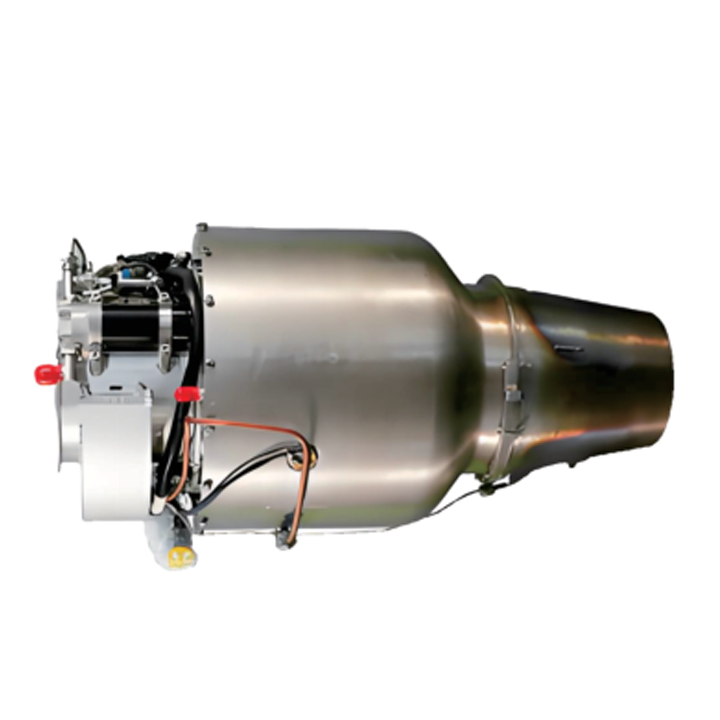
When autonomous defense platforms, aerial targets, and high-speed test airframes require dependable thrust in an ultra-compact form factor, the MWP220K Turbojet Engine represents the modern state of micro-turbine engineering. Delivering 225 daN (over 500 lbs) of raw continuous thrust at a dry weight of just 30 kg, this engine maximizes internal payload capacity while maintaining an exceptionally narrow frontal diameter.
View complete engineering data and CAD integration files directly on the MWP220K Turbojet Engine product page, or configure specialized airframe platforms through our Specialized Drones division.
Common Mistakes Engineers Make When Selecting UAV Propulsion
From our experience evaluating uncrewed aircraft design proposals, engineering teams routinely commit four expensive propulsion mistakes:
- Selecting a Turbofan for an Expendable Sprint Profile: Designing a target drone around a small turbofan because of its “superior efficiency” often backfires. Small turbofans cost three to five times more to manufacture than equivalent turbojets. If the mission duration is under 45 minutes, the fuel weight saved by the turbofan is completely offset by the heavier dry weight and larger diameter of the fan assembly.
- Ignoring High-Altitude Ignition Reliability: Small turbine engines behave differently at 25,000 feet. Inexperienced teams often test micro-turbines at sea level and discover in flight that thin air causes combustor blowout during throttle transients. Always specify engines with pyrotechnic or plasma ignition systems validated for high-altitude air starts.
- Underestimating Inlet Lip Losses: A turbojet requires clean, high-velocity airflow without boundary layer separation. Installing a high-performance turbojet behind a sharp, non-radiused intake cowl starves the compressor face of pressure during high-angle maneuvers, triggering violent compressor stalls that destroy turbine blades.
- Overlooking Thermal Shielding in Composite Fuselages: Turbojets operate with high tailpipe exhaust gas temperatures (EGTs exceeding 650°C to 750°C). Installing a turbojet inside a lightweight carbon-fiber fuselage without polished stainless steel or ceramic heat shrouds results in resin delamination and structural in-flight airframe failure.
Commercial and Defense Procurement Considerations
Before issuing purchase orders for micro or mid-scale turbojet engines, procurement teams must verify these four operational benchmarks:
- Export Control Classification (ITAR & Dual-Use Regulations): Gas turbine engines delivering thrust over certain thresholds are strictly controlled under missile technology control regimes (MTCR Category II). Ensure your supplier possesses verified export licenses and compliance documentation for international shipments.
- Mean Time Between Overhauls (MTBO) vs. Single-Mission Rating: Clarify whether you are buying an engine rated for 50+ flight hours (for reusable target drones) or an expendable single-use turbine (for strike platforms). Single-use turbines utilize lower-cost bearings and uncooled turbine wheels, dramatically lowering unit cost for one-way missions.
- Full Authority Digital Engine Control (FADEC) Integration: Modern flight controllers require CAN-bus, RS-422, or Ethernet telemetry from the engine. Ensure the engine ECU provides real-time RPM, exhaust gas temperature (EGT), fuel flow, and pump voltage data directly to your autopilot system.
- Fuel Lubrication Systems: Verify whether the engine uses a separate pressurized oil reservoir or runs on fuel-mixed lubrication (e.g., 5% turbine oil blended directly into the Jet-A1). Fuel-lubricated bearings eliminate oil pumps and coolers, saving weight and extending storage shelf-life.
Expert Recommendation and Propulsion Sourcing Verdict
In most professional situations, treating the turbojet as an obsolete technology is an expensive error in engineering judgment. The commercial airline sector abandoned turbojets because carrying passengers requires burning the least amount of fuel per seat-mile at 35,000 feet. That economic reality does not apply to tactical defense systems, uncrewed targets, and high-speed autonomous airframes.
If your operational requirement calls for a flight profile below Mach 0.6, long loiter times exceeding two hours, or stationary hovering, avoid turbojets completely. Deploy heavy-fuel pistons, turboprops, or battery-electric platforms. However, if your mission profile demands speeds between Mach 0.75 and Mach 1.5, requires integration into a narrow fuselage under 400 mm in diameter, and prioritizes low unit cost with high thrust-to-weight performance, the pure turbojet engine remains the premier engineering solution. Sourcing an integrated turbine like the MWP220K Turbojet Engine delivers the velocity, reliability, and compact footprint required to maintain an edge in modern aerospace operations.
Frequently Asked Questions (FAQ)
Are turbojet engines still used in commercial aviation today?
No, pure turbojet engines are no longer used in commercial passenger aviation. Airlines completely transitioned to high-bypass turbofan engines because turbofans consume up to 40% to 50% less fuel at subsonic cruising speeds and generate significantly lower noise levels required by international airport noise regulations.
Why do cruise missiles still use turbojet engines instead of turbofans?
Many cruise missiles and tactical weapons use turbojets because they have a significantly smaller frontal diameter than turbofans. This narrow profile reduces aerodynamic drag, allows the missile to fit into standard launch canisters, and keeps manufacturing costs low for expendable, single-mission systems where maximum fuel economy over long hours is not required.
What is the difference between a turbojet and a turbofan?
In a pure turbojet, 100% of the ingested air passes through the combustion core and exits through the turbine. In a turbofan, a large front fan forces a substantial portion of the air around the outside of the engine core through a bypass duct. This bypass air produces quiet, highly fuel-efficient thrust at subsonic speeds, but requires a much larger engine diameter.
Can a turbojet engine operate at supersonic speeds?
Yes. Pure turbojets excel at high-subsonic and supersonic velocities (Mach 1.0 to Mach 2.2+). Because they do not have large forward fan blades that suffer aerodynamic shock waves, and because they produce exceptionally high exhaust velocities, turbojets maintain effective thrust where turbofans experience severe drag rises.
What fuel do modern micro turbojet engines use?
Modern micro turbojets operate on standard aviation fuels including Jet-A, Jet-A1, JP-5, and JP-8 military kerosene. Many smaller micro-turbines can also operate reliably on standard diesel or commercial premium kerosene, often blended with a small percentage of synthetic turbine oil for bearing lubrication.
Authoritative References
- NASA Glenn Research Center: Principles of Gas Turbine Engines and Pure Turbojet Thermodynamics
- American Institute of Aeronautics and Astronautics (AIAA): Journal of Propulsion and Power Technical Archives
- Federal Aviation Administration (FAA): Aviation Maintenance Technician Handbook – Powerplant (FAA-H-8083-32B)