


The aerospace landscape has transformed dramatically, transitioning from traditional internal combustion engines to highly efficient, silent, and sustainable electric propulsion systems. As industries ranging from precision agriculture to national defense escalate their reliance on unmanned aerial vehicles, understanding the true Electric fixed wing uav cost has become a critical mandate for procurement officers and fleet managers. In 2026, the financial variables dictating these acquisitions extend far beyond the mere physical airframe, encompassing advanced avionics, sophisticated payloads, and defense-grade communications.
ChinaMoneypro UAV operates as a national-level high-tech enterprise, transformed from a prestigious state-owned research institute. With our deep roots in defense-grade engineering, we specialize in the research, development, and manufacturing of advanced unmanned platforms and integrated sensing-communication solutions. Headquartered in one of China’s premier innovation hubs, we are among the rare full-stack providers offering complete UAV systems, engines, gimbals, radar, data links, and communication technologies. From our experience, organizations often miscalculate their total expenditure by failing to account for system integration. In this authoritative guide, we provide a transparent, engineering-focused breakdown of the Electric fixed wing uav cost in 2026, empowering you to make strategic procurement decisions that maximize operational return on investment.
Table of Contents
- Summary Table: 2026 Market Tiers and Estimated Pricing
- The Evolution of Electric Fixed Wing UAV Cost Dynamics
- Anatomical Breakdown of the Electric Fixed Wing UAV Cost
- The Financial Impact of Advanced Payloads
- Hidden Operational and Lifecycle Costs
- Why Sourcing from a Full-Stack Provider Optimizes Your Investment
- Frequently Asked Questions (FAQs)
- Industry References
Summary Table: 2026 Market Tiers and Estimated Pricing
To establish a baseline understanding, we have categorized the current market into three distinct operational tiers. The following table provides an overview of the base Electric fixed wing uav cost before highly specialized payload integration.
| Operational Tier | Typical Applications | Average Endurance | Estimated Electric Fixed Wing UAV Cost (Base Unit) |
|---|---|---|---|
| Entry-Level Commercial | Basic agricultural mapping, short-range surveying | 1 to 2 hours | $5,000 – $15,000 |
| Enterprise VTOL / Industrial | Infrastructure inspection, corridor mapping, BVLOS operations | 2 to 4 hours | $15,000 – $50,000 |
| Defense & Security Grade | Border patrol, ISR (Intelligence, Surveillance, Reconnaissance) | 4 to 8+ hours | $50,000 – $250,000+ |
The Evolution of Electric Fixed Wing UAV Cost Dynamics
Heading into 2026, the technology driving electric fixed-wing platforms has matured exponentially. Historically, the primary limitation of electric flight was the energy density of lithium-ion batteries. However, with the advent of solid-state battery technology and high-density silicon anode cells, manufacturers can now achieve flight times that rival traditional gas-powered systems. This technological leap significantly impacts the Electric fixed wing uav cost.
Furthermore, the industry has seen a massive shift toward Vertical Take-Off and Landing (VTOL) configurations. Pure fixed-wing aircraft require runways or catapult launchers, which limits their deployment in austere environments. By integrating multi-rotor capabilities into a fixed-wing airframe, operators gain runway independence. While developing an Airplane & VTOL hybrid slightly increases the initial Electric fixed wing uav cost due to the requirement of additional lift motors and complex transition flight controllers, it drastically reduces the operational footprint and eliminates the need for auxiliary launch and recovery equipment.
Anatomical Breakdown of the Electric Fixed Wing UAV Cost
To accurately assess the Electric fixed wing uav cost, one must deconstruct the aircraft into its core engineering subsystems. Each component represents a specific percentage of the total capital expenditure.
Airframe Materials and Aerodynamics
The structural foundation of any high-performance aircraft dictates its efficiency and durability. In 2026, defense-grade platforms are constructed primarily from aviation-grade carbon fiber composites, Kevlar, and advanced polymer resins. These materials provide an exceptional strength-to-weight ratio, allowing the aircraft to carry heavier payloads while maintaining structural integrity in turbulent weather. The engineering precision required to lay and cure these composites accounts for approximately 15% to 20% of the base Electric fixed wing uav cost.
Propulsion and High-Density Power Systems
The propulsion system consists of brushless DC motors, electronic speed controllers (ESCs), and the battery matrix. In VTOL platforms, redundancy is critical. Industrial-grade motors must withstand thousands of hours of operation in dusty or humid environments. The battery system, often representing an ongoing operational expense due to cell degradation over time, makes up a significant portion of the initial Electric fixed wing uav cost. We recommend investing in smart battery management systems (BMS) that actively monitor cell health, thereby extending the lifecycle of the power supply.
Avionics, Flight Controllers, and Data Links
The brain of the aircraft—the flight controller—and the nervous system—the data link—are where the true value of defense-grade engineering lies. Consumer-grade flight controllers cannot provide the reliability required for Beyond Visual Line of Sight (BVLOS) operations. At ChinaMoneypro UAV, our proprietary data links and communication technologies ensure encrypted, high-bandwidth telemetry and video transmission over dozens of kilometers. Implementing robust Anti Jamming & GNSS Antennas is no longer optional for enterprise and security missions; it is a necessity that directly influences the Electric fixed wing uav cost but guarantees mission success in contested electronic environments.
The Financial Impact of Advanced Payloads
It is a common misconception to evaluate the Electric fixed wing uav cost by looking solely at the airframe. From our experience, the sensor package often equals or exceeds the cost of the aircraft itself. An unmanned aerial vehicle is ultimately a positioning system for a sensor.
For surveillance and reconnaissance missions, operators require stabilized optical systems. Integrating an EO/IR Gimbal & Payload (Electro-Optical/Infrared) with continuous optical zoom and laser rangefinding capabilities is a complex engineering task. For specialized mapping or security applications, adding Infrared Thermal & laser Sensing equipment (such as LiDAR) provides critical topographical and thermal data. When calculating your total Electric fixed wing uav cost, you must factor in the price of these high-fidelity sensors and the proprietary software required to process their data.
Hidden Operational and Lifecycle Costs
Procurement officers must look beyond the initial purchase order. The true Electric fixed wing uav cost encompasses several lifecycle and operational variables that can heavily impact long-term budgets.
Automated Deployment and Infrastructure
To minimize human intervention and labor costs, many enterprise clients are moving toward automated operations. Integrating a Drone Hangar into your network allows for remote scheduling, automated charging, and weather-protected storage. While a Drone Hangar increases the upfront Electric fixed wing uav cost, the reduction in personnel deployment costs yields a rapid return on investment for continuous monitoring applications.
Maintenance, Support, and Training
Aviation assets require rigorous maintenance schedules. From our experience, establishing a clear protocol for motor replacement, firmware updates, and structural inspections is paramount. Organizations must account for comprehensive training programs to ensure operators can safely manage automated flight paths and emergency overrides. Access to reliable Support and detailed Products Spec sheets ensures minimal downtime. We recommend ensuring your vendor provides a centralized portal for Documents Download to keep your maintenance crews updated with the latest engineering directives.
Why Sourcing from a Full-Stack Provider Optimizes Your Investment
The global drone market is highly fragmented, with many companies acting merely as integrators—purchasing airframes from one vendor, software from another, and gimbals from a third. This disjointed approach inherently inflates the Electric fixed wing uav cost due to compounded profit margins and integration troubleshooting.
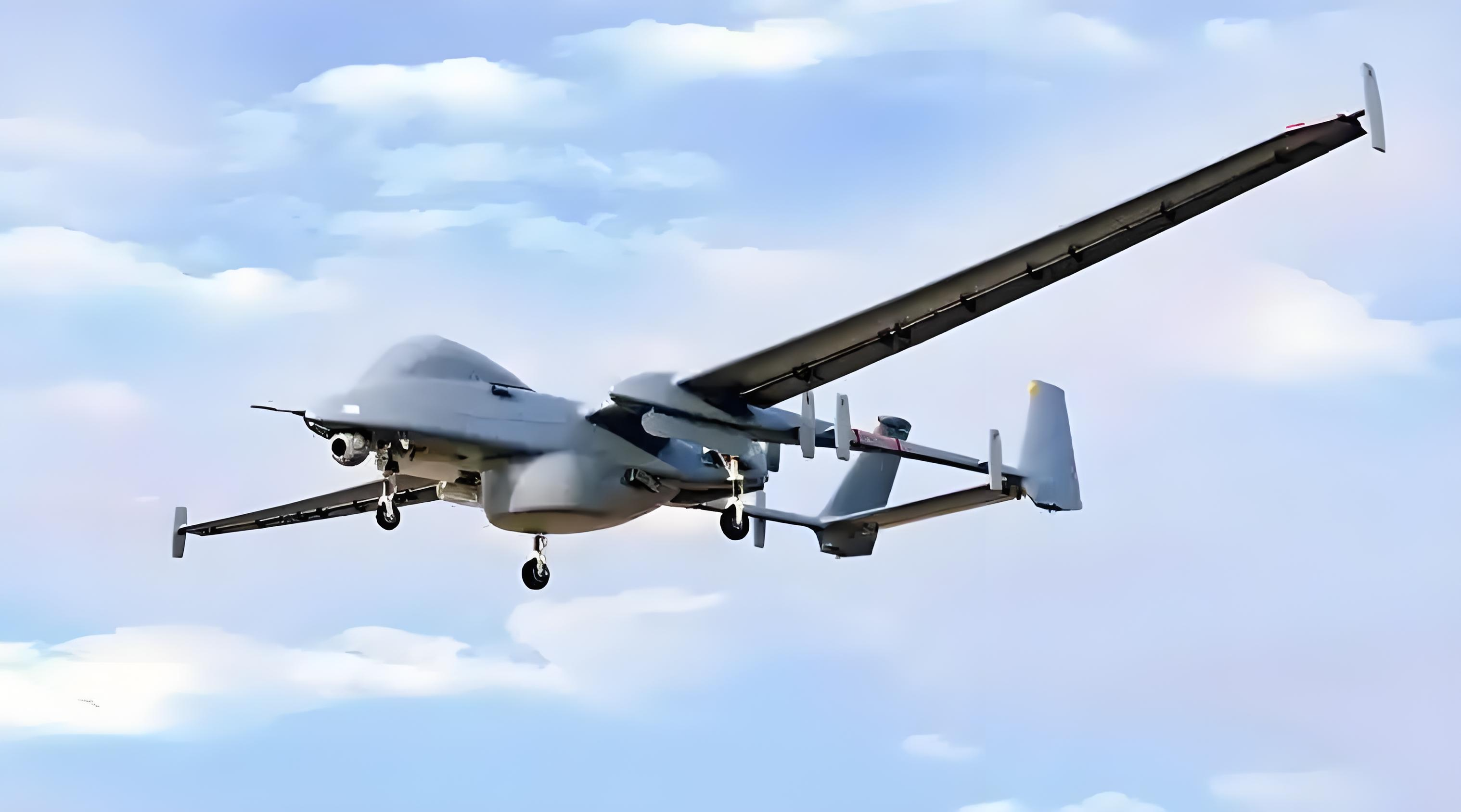
ChinaMoneypro UAV’s transformation from a state-owned research institute allows us to operate as a genuine full-stack provider. Because we design and manufacture the Airplane & VTOL platforms, Multi-rotor UAVs, Single-rotor UAVs, and even terrestrial Smart Robots & Cars entirely in-house, we eliminate integration bottlenecks. When the flight controller, data link, and EO/IR payload are engineered by the same team, system latency drops, and reliability skyrockets.
Furthermore, sourcing from a full-stack provider simplifies the acquisition of critical UAV Accessories and complementary security infrastructure, such as an Integrated Anti-Drone System to protect your operating airspace. By consolidating your procurement strategy, you drastically reduce your total Electric fixed wing uav cost, streamline your supply chain, and ensure you have a single, accountable point of contact for defense-grade technical support.
Frequently Asked Questions (FAQs)
Why is the Electric fixed wing uav cost generally higher than that of a standard multi-rotor drone?
Fixed-wing aircraft require complex aerodynamic engineering, larger composite airframes, and sophisticated flight controllers capable of managing forward flight mechanics and stall speeds. Additionally, because they are designed for long-endurance, BVLOS missions, they are equipped with higher-grade industrial components and long-range communication links, which elevates the base Electric fixed wing uav cost compared to short-range multi-rotors.
How do payload requirements affect the overall Electric fixed wing uav cost?
The payload is often the most expensive single component of the system. While a basic mapping camera may add a few thousand dollars to the Electric fixed wing uav cost, military-grade EO/IR gimbals with thermal imaging, target tracking, and laser designation can easily double or triple the total system price. We recommend defining your exact data requirements before selecting a payload to prevent overspending.
Does adding VTOL capabilities significantly increase the Electric fixed wing uav cost?
Yes, adding Vertical Take-Off and Landing (VTOL) functionality requires additional lift motors, ESCs, structural carbon fiber booms, and a more complex flight controller algorithm to handle the transition between hover and forward flight. While this increases the initial Electric fixed wing uav cost, it completely eliminates the need for expensive catapult launchers and parachute recovery systems, and drastically reduces the risk of landing damage.