


Authored by ChinaMoneypro UAV. As a national-level high-tech enterprise transformed from a prestigious state-owned research institute, we possess deep roots in defense-grade engineering. We specialize in the R&D and manufacturing of advanced unmanned platforms and integrated sensing-communication solutions. Headquartered in one of China’s premier innovation hubs, Moneypro is among the few full-stack providers globally offering complete UAV systems, proprietary engines, gimbals, radar, data links, and communication technologies. Our mission is to engineer uncompromised aerial performance for our clients.
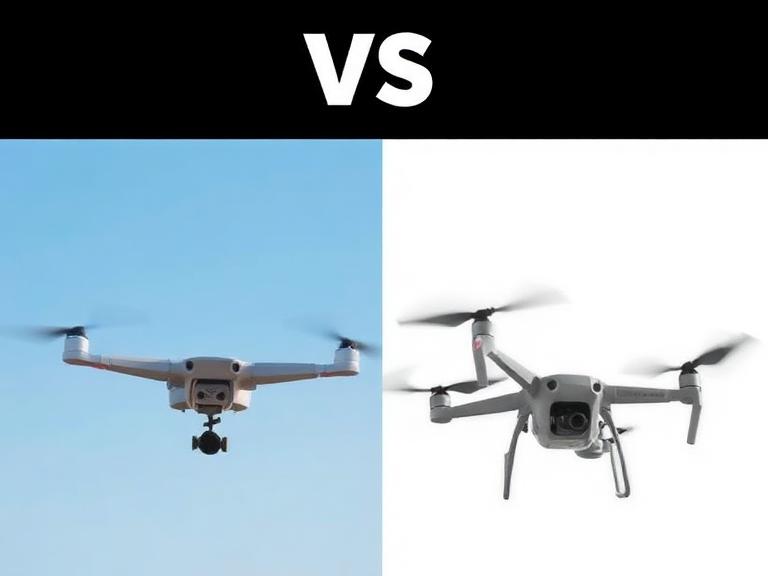
In the rapidly expanding landscape of commercial, industrial, and defense aviation, selecting the correct unmanned aerial platform is a critical operational decision. Procurement officers, project managers, and lead engineers continually face a foundational dilemma: Fixed Wing UAV vs Multirotor. The choice between these two distinct aerodynamic architectures dictates your mission capabilities, payload capacities, operational endurance, and ultimately, your return on investment.
From our experience engineering defense-grade UAV/Drones, there is no universal “better” option; there is only the optimal solution for your specific mission profile. A multirotor excels in precision hovering and confined space navigation, while a fixed wing aircraft dominates in large-scale mapping and long-endurance surveillance. At ChinaMoneypro UAV, we manufacture both, alongside revolutionary hybrid systems. In this authoritative technical guide, we will dissect the Fixed Wing UAV vs Multirotor debate, evaluating their core aerodynamics, performance metrics, and specialized industrial applications to help you make an informed, data-driven procurement decision.
Table of Contents
- 1. Understanding the Aerodynamics: Fixed Wing UAV vs Multirotor
- 2. Performance Metrics: Endurance and Speed
- 3. Payload Capacity and Sensor Integration
- 4. The Hybrid Revolution: Bridging the Gap
- 5. Specialized Applications and Environmental Constraints
- 6. Summary Table: Fixed Wing UAV vs Multirotor
- 7. Frequently Asked Questions (FAQs)
- 8. Industry References
1. Understanding the Aerodynamics: Fixed Wing UAV vs Multirotor
To accurately evaluate the Fixed Wing UAV vs Multirotor paradigm, one must first understand the physics of flight that govern each platform. The method by which these aircraft generate lift fundamentally dictates their operational strengths and weaknesses.
A Multi-rotor UAV utilizes multiple vertically oriented rotors (typically four, six, or eight) to generate downward thrust. By adjusting the speed of individual motors, the aircraft controls its pitch, roll, and yaw. This architecture allows for Vertical Take-Off and Landing (VTOL) and unparalleled hovering capabilities. From our experience, the ability to maintain a static position in three-dimensional space makes multirotors indispensable for close-quarters inspections.
Conversely, a fixed wing aircraft generates lift dynamically. As forward thrust pushes the aircraft through the air, the aerodynamic shape of the rigid wings creates a pressure differential that lifts the airframe. Because the wings do the heavy lifting rather than the motors, a fixed wing platform is infinitely more energy-efficient in forward flight. However, traditional fixed wing systems require a runway, catapult launcher, or parachute recovery system, complicating logistics in constrained environments.
2. Performance Metrics: Endurance and Speed
When our engineers consult with clients regarding the Fixed Wing UAV vs Multirotor debate, the conversation inevitably centers on flight endurance and coverage area. In this category, the aerodynamic efficiency of fixed wings becomes highly apparent.
A standard electric Multi-rotor UAV must expend massive amounts of energy simply to fight gravity and remain airborne. Even with advanced lithium-polymer batteries, a typical commercial multirotor maxes out at 40 to 60 minutes of flight time. If your mission involves mapping a massive agricultural estate or conducting a long linear pipeline inspection, deploying a multirotor requires carrying dozens of heavy replacement batteries and constantly landing to swap them out, causing severe operational delays.
In the Fixed Wing UAV vs Multirotor comparison, fixed wing platforms drastically outperform multirotors in endurance. Because they glide on air currents, a fixed wing aircraft can map thousands of hectares in a single flight, easily achieving 2 to 5 hours of continuous operation on battery power alone. For extreme endurance, ChinaMoneypro UAV engineers specialized propulsion systems, ensuring our platforms can remain aloft for entire work shifts, traveling at significantly higher cruising speeds than any multirotor could achieve.
3. Payload Capacity and Sensor Integration
The core value of any unmanned system lies in the data it collects. Therefore, evaluating payload capacity is a critical step in resolving the Fixed Wing UAV vs Multirotor debate for your organization. Because ChinaMoneypro UAV is a full-stack provider, we manufacture the gimbals, radar, and data links that these aircraft carry, giving us unique insight into payload integration.
A Multi-rotor UAV or a heavy-duty Single-rotor UAV excels at carrying heavy, asymmetrical payloads. The continuous downward thrust allows these platforms to stabilize massive cinematic cameras, heavy LiDAR scanners, or dual optical/thermal gimbals with relative ease. Furthermore, the ability to hover allows the sensors to focus continuously on a single stationary target, providing highly detailed, stable imagery.
A traditional fixed wing aircraft, while capable of carrying payloads, is much more sensitive to weight distribution and aerodynamic drag. Bulky sensors protruding from the airframe can disrupt the airflow over the wings, reducing efficiency and stability. Therefore, fixed wing payloads must be carefully integrated into the fuselage. We recommend a Multifunctional Drone configuration for clients who need the flexibility to swap modular payload bays seamlessly without compromising the aerodynamic integrity of the aircraft.
4. The Hybrid Revolution: Bridging the Gap
Historically, organizations were forced to choose sides in the Fixed Wing UAV vs Multirotor debate, compromising either on endurance or the ability to take off vertically. Today, ChinaMoneypro UAV has eliminated this compromise through advanced hybrid engineering. By merging the vertical lift capabilities of a multirotor with the forward-flight efficiency of a fixed wing, we have created the ultimate aerial platform.
Our Airplane & VTOL systems utilize quad-rotors to ascend vertically. Once at the desired altitude, a pusher motor engages, and the aircraft transitions seamlessly into highly efficient forward flight, shutting down the vertical lifting motors to eliminate drag. This VTOL Fixed Wing UAV System requires zero runway infrastructure, making it ideal for deployment from rugged terrain or moving maritime vessels.
For clients demanding uncompromising power and range, we recommend our Petrol Electric Hybrid VTOL. By utilizing a combustion engine to drive an onboard generator, this platform bypasses the energy density limitations of standard batteries. Coupled with our Composite Wing Flight Platform, which utilizes military-grade carbon fiber for extreme rigidity and low weight, these hybrid systems represent the pinnacle of modern UAV engineering, effectively rendering the traditional Fixed Wing UAV vs Multirotor debate obsolete for large-scale enterprise operations.
5. Specialized Applications and Environmental Constraints
Understanding your operational environment is the final step in the Fixed Wing UAV vs Multirotor decision process. At ChinaMoneypro UAV, we design specialized systems tailored to unique industrial challenges.
For precision agriculture, such as targeted crop spraying, the ability to hover low over the canopy is essential. Therefore, an Agricultural Drone is exclusively built on a multirotor or single-rotor chassis. The downward wash from the rotors actually helps push the liquid fertilizer deep into the crop foliage.
If your mission requires continuous, 24/7 overwatch of a localized area—such as a border checkpoint, a forward operating base, or a large public event—neither standard fixed wings nor battery-powered multirotors are sufficient. We recommend deploying Tethered Drones connected to our proprietary Tether Box. This system provides unlimited ground power and secure, unjammable data transmission through the physical tether, maintaining a persistent “eye in the sky” for days at a time.
Furthermore, for tactical operations in electronically congested environments, our Fiber Optic FPV Drone System utilizes a physical micro-fiber spool to transmit data, rendering it completely immune to radio frequency jamming and interception, a critical capability derived from our defense-grade engineering heritage.
6. Summary Table: Fixed Wing UAV vs Multirotor
To assist your procurement strategy, we have compiled a summary table detailing the strengths and ideal use cases for each architecture, alongside our advanced hybrid solutions.
| Feature / Metric | Multi-rotor UAV | Traditional Fixed Wing | ChinaMoneypro VTOL Hybrid |
|---|---|---|---|
| Take-off & Landing | Vertical (Confined spaces) | Runway, Catapult, or Hand-launch | Vertical (Confined spaces) |
| Flight Endurance | Low (30 – 60 minutes) | High (2 – 5+ hours) | Very High (Combines aerodynamics with hybrid power) |
| Hovering Capability | Excellent (Precision positioning) | None (Must maintain forward speed) | Yes (During VTOL phases and targeted transitions) |
| Speed & Coverage | Slow to Moderate | Fast (Extensive linear coverage) | Fast (Extensive linear coverage) |
| Payload Flexibility | High (Can carry bulky, asymmetric sensors) | Moderate (Requires aerodynamic integration) | High (Modular payload bays available) |
| Ideal Applications | Tower inspections, crop spraying, short-range surveillance | Large-scale mapping, geographical surveying | Pipeline inspection, border patrol, offshore maritime operations |
7. Frequently Asked Questions (FAQs)
From our experience, the initial capital expenditure for a multirotor is generally lower. However, if your operations require mapping vast areas, the operational cost (TCO) of a fixed wing or VTOL system is significantly lower over time due to the massive reduction in labor hours, battery cycles, and deployment downtime.
Yes, provided the airframe is large enough. Our Composite Wing Flight Platform is engineered specifically with defense-grade structural integrity to support heavy, highly sensitive payloads like LiDAR and high-definition radar, integrating them aerodynamically into the fuselage.
Because we are a full-stack provider, our Petrol Electric Hybrid VTOL systems are perfectly optimized. The proprietary engine, flight controller, and data links are engineered to work in absolute unison, eliminating the integration failures common when purchasing components from disparate third-party manufacturers.
For liquid spraying applications, yes. The required hovering precision and the beneficial downward rotor wash dictate that an Agricultural Drone must utilize a multirotor or single-rotor design. Fixed wings are utilized in agriculture strictly for multispectral crop mapping, not chemical application.
8. Industry References
- Federal Aviation Administration (FAA) – Unmanned Aircraft Systems Regulations and Operational Guidelines
- Association for Uncrewed Vehicle Systems International (AUVSI) – Industry Insights and Aerodynamic Standards
- European Union Aviation Safety Agency (EASA) – Civil Drones and VTOL Certification Specifications