


Authored by the engineering and defense systems team at ChinaMoneypro UAV. As a national-level high-tech enterprise transformed from a prestigious state-owned research institute, we possess deep roots in defense-grade engineering. Headquartered in one of China’s premier innovation hubs, ChinaMoneypro UAV specializes in the R&D and manufacturing of advanced unmanned platforms and integrated sensing-communication solutions. We are among the few full-stack providers globally, offering complete UAV systems, engines, gimbals, radar, data links, and cutting-edge communication technologies.
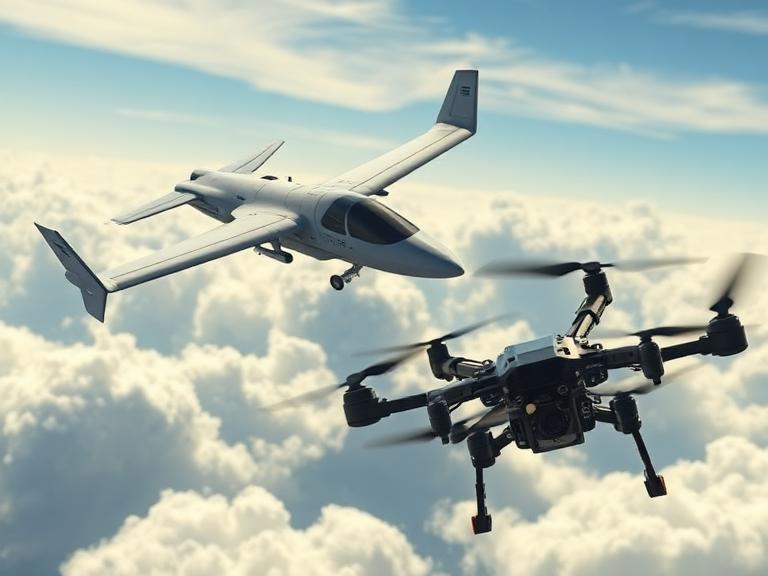
In the rapidly evolving sector of unmanned aerial systems, selecting the appropriate aerodynamic architecture is the most critical decision an organization can make before deploying a fleet. Government agencies, commercial enterprises, and defense contractors constantly navigate the complex fixed wing vs rotary wing UAV paradigm. This is not merely a question of aesthetics or basic functionality; it is a profound engineering choice that dictates endurance, payload capacity, operational footprint, and data acquisition capabilities.
From our experience engineering defense-grade aerial platforms and integrated communication networks, we have observed that many procurement teams misunderstand the fundamental aerodynamic limitations and advantages inherent in these two distinct categories. A misaligned procurement strategy can lead to catastrophic mission failures, severe budget overruns, and compromised data integrity. In this authoritative technical guide, we will conduct a deep-dive analysis of the fixed wing vs rotary wing UAV landscape, dissect the aerodynamic physics governing both platforms, explore how to pair them with advanced sensing payloads, and provide expert operational recommendations based on decades of rigorous field testing.
Table of Contents
- 1. Aerodynamic Fundamentals: Fixed Wing vs Rotary Wing UAV
- 2. Key Performance Metrics and Operational Limitations
- 3. Payload Integration and Sensor Capabilities
- 4. The VTOL Evolution: Bridging the Gap
- 5. Ground Infrastructure and Data Link Stability
- 6. Summary Table: Fixed Wing vs Rotary Wing UAV Comparison
- 7. Frequently Asked Questions (FAQs)
- 8. Industry and Academic References
1. Aerodynamic Fundamentals: Fixed Wing vs Rotary Wing UAV
To fully grasp the fixed wing vs rotary wing UAV debate, one must first understand the fundamental physics of how each platform generates lift and maintains sustained flight.
The Mechanics of Fixed Wing Platforms
A fixed wing UAV operates on the exact same aerodynamic principles as a commercial airliner. Lift is generated strictly by forward motion pushing air over a stationary, precisely shaped airfoil (the wing). Because the entire structure is not fighting gravity purely through mechanical thrust—relying instead on the Bernoulli principle and aerodynamic glide ratios—these platforms are exceptionally energy-efficient. In the context of the fixed wing vs rotary wing UAV comparison, the fixed wing requires continuous forward momentum; it cannot hover, and it requires a runway, catapult, or hand-launch mechanism to become airborne.
The Mechanics of Rotary Wing Platforms
Conversely, a rotary wing UAV generates lift by continuously spinning multiple airfoils (rotor blades) around a central mast. This category encompasses both our Single-rotor UAV and Multi-rotor UAV product lines. Because lift is generated entirely by the mechanical rotation of the blades rather than the forward motion of the chassis, these platforms can hover in place, fly backward, and execute vertical takeoff and landing (VTOL) maneuvers in highly confined spaces. However, this hovering capability requires a massive and constant expenditure of energy, drastically reducing flight times compared to their fixed wing counterparts.
2. Key Performance Metrics and Operational Limitations
When evaluating fixed wing vs rotary wing UAV platforms for commercial or defense applications, endurance, range, and spatial constraints are the primary deciding factors.
From our experience, fixed wing platforms are the undisputed champions of long-endurance missions. Because their lift-to-drag ratio is highly optimized, a fixed wing UAV can stay aloft for hours, covering vast geographical areas on a single battery charge or tank of fuel. This makes them the ultimate choice for pipeline monitoring, border surveillance, and large-scale agricultural mapping. However, their reliance on a runway or recovery net limits their deployment in dense urban environments, dense forests, or maritime vessels.
On the other hand, the fixed wing vs rotary wing UAV dynamic shifts entirely when the mission dictates precision and confined spatial operation. A Multi-rotor UAV or Single-rotor UAV requires essentially zero ground infrastructure for launch and recovery. They can ascend vertically from a 2-square-meter clearing. We recommend rotary wing platforms for structural inspections, close-quarters tactical surveillance, and any application where the UAV must stop, hover, and maintain a fixed stare on a specific coordinate.
3. Payload Integration and Sensor Capabilities
An unmanned aerial vehicle is ultimately a transport mechanism for sensors. Understanding how the fixed wing vs rotary wing UAV flight characteristics impact data collection is vital for system integrators.
Rotary wing platforms inherently generate significant high-frequency vibration due to the rapid spinning of multiple motors. Furthermore, they constantly pitch and roll to maintain a static hover in turbulent wind. To compensate for this, integrating a highly stabilized EO/IR Gimbal & Payload is mandatory. The ability of a rotary wing UAV to hover makes it the perfect platform for deploying Infrared Thermal & laser Sensing equipment during search and rescue operations, allowing the operator to scrutinize a specific heat signature for extended periods.
In contrast, fixed wing platforms offer a much smoother, more predictable flight path, akin to a stable glide. While they also utilize EO/IR Gimbal & Payload systems, their rapid forward speed means that sensors must possess high shutter speeds and rapid data processing capabilities to prevent motion blur during high-altitude photogrammetry. The payload capacity in the fixed wing vs rotary wing UAV analysis generally favors larger fixed wing models or heavy-lift Single-rotor UAVs, as multi-rotors suffer from exponential battery drain when payload weight increases.
4. The VTOL Evolution: Bridging the Gap
The historical fixed wing vs rotary wing UAV dichotomy has recently been disrupted by advanced hybrid engineering. At ChinaMoneypro UAV, we recognize that many modern missions require both the endurance of a fixed wing and the spatial flexibility of a multi-rotor. To address this, we developed our Airplane & VTOL (Vertical Takeoff and Landing) product line.
These hybrid platforms utilize independent vertical lifting motors to ascend like a multi-rotor. Once a safe altitude is reached, a rear-mounted or tractor propulsion motor engages, transitioning the craft into highly efficient forward fixed wing flight. We highly recommend our Airplane & VTOL systems for operators who need to launch from confined spaces—such as a naval vessel or a dense jungle clearing—but require the capacity to map hundreds of kilometers of terrain in a single flight. This technological convergence effectively solves the operational compromises traditionally associated with the fixed wing vs rotary wing UAV debate.
5. Ground Infrastructure and Data Link Stability
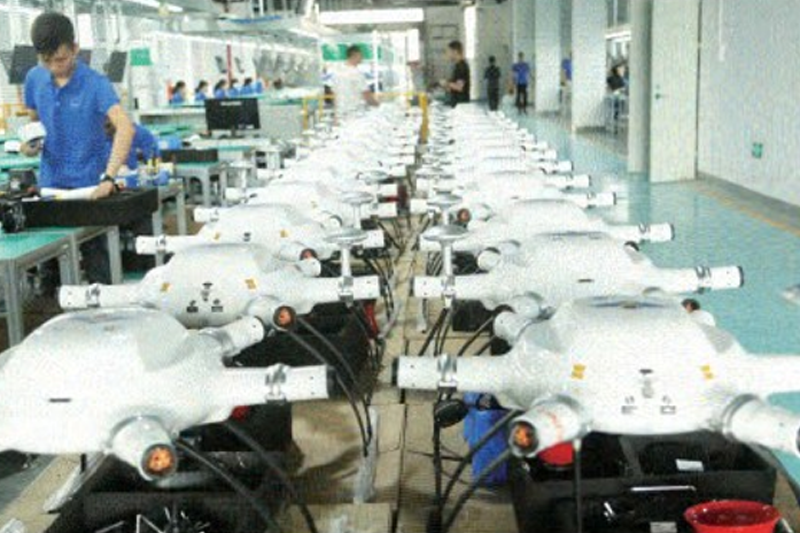
Deploying a professional UAV fleet extends far beyond the aircraft itself. Whether you choose a fixed wing vs rotary wing UAV, the surrounding infrastructure dictates mission success. For continuous, automated perimeter security using multi-rotor platforms, we strongly advise implementing a Drone Hangar system. These automated shelters provide weather protection, automatic battery swapping or induction charging, and secure data offloading, enabling true 24/7 autonomous operations without human intervention.
Furthermore, regardless of the fixed wing vs rotary wing UAV platform chosen, the modern electronic warfare environment is increasingly hostile. Commercial drones are highly susceptible to signal jamming and GPS spoofing. As a full-stack provider with defense-grade heritage, we integrate Anti Jamming & GNSS Antennas and secure data links into all our UAV/Drones. For organizations looking to protect their airspace from rogue elements, we also supply complete Integrated Anti-Drone System solutions, providing comprehensive airspace awareness and neutralization capabilities.
6. Summary Table: Fixed Wing vs Rotary Wing UAV Comparison
To assist procurement managers and systems engineers in making an informed decision, we have compiled the core operational differences in the matrix below.
| Operational Metric | Fixed Wing UAV | Rotary Wing UAV (Multi/Single) | Hybrid Airplane & VTOL |
|---|---|---|---|
| Aerodynamic Lift | Forward motion over an airfoil. | Mechanical rotation of rotor blades. | Rotors for ascent, airfoil for cruise. |
| Flight Endurance | Exceptional (Hours). | Limited (Typically 30-60 minutes). | High (Combines both advantages). |
| Takeoff & Landing Space | Requires runway, catapult, or net. | Minimal (Confined vertical spaces). | Minimal (Confined vertical spaces). |
| Hovering Capability | None (Must maintain forward speed). | Excellent (Precision static stare). | Yes (During takeoff/landing/transition). |
| Primary Applications | Corridor mapping, border patrol, agriculture. | Structural inspection, tactical surveillance. | Long-range maritime, complex terrain mapping. |
| Recommended ChinaMoneypro Products | UAV/Drones (Fixed Wing variants). | Multi-rotor UAV, Single-rotor UAV. | Airplane & VTOL line. |
7. Frequently Asked Questions (FAQs)
Why is the flight time of a fixed wing so much longer in the fixed wing vs rotary wing UAV comparison?
From our experience, this is purely an issue of energy expenditure. A rotary wing drone must use up to 80% of its battery power simply to fight gravity and stay in the air. A fixed wing drone relies on the aerodynamic shape of its wings to create lift as it glides, using its motor only to overcome drag, which consumes vastly less electrical power or fuel.
Can I use an EO/IR Gimbal & Payload on both types of drones?
Yes. ChinaMoneypro UAV engineers highly stabilized EO/IR Gimbal & Payload systems designed for cross-platform integration. However, the operational tactics differ. On a rotary wing, you can hover and track a target dynamically. On a fixed wing, the gimbal must compensate for the continuous forward motion of the aircraft to keep the camera locked on a specific coordinate.
What is a Single-rotor UAV and how does it fit into the fixed wing vs rotary wing UAV debate?
A Single-rotor UAV looks similar to a traditional helicopter, featuring one main rotor and a tail rotor. While it falls under the rotary wing category, it is significantly more efficient than a Multi-rotor UAV. Single-rotor platforms can carry much heavier payloads (like heavy LiDAR or radar) and offer longer flight times than multi-rotors, making them an excellent middle ground when fixed wing deployment is impossible.
How do Anti Jamming & GNSS Antennas improve UAV operations?
Both fixed wing and rotary wing UAV platforms rely heavily on GPS/GNSS for navigation and stabilization. In areas with high electromagnetic interference or deliberate jamming attempts, standard GPS fails, leading to drone loss. We recommend utilizing our defense-grade Anti Jamming & GNSS Antennas to ensure uninterrupted signal reception, guaranteeing that your multi-million dollar asset returns safely to its Drone Hangar.
8. Industry and Academic References
- National Aeronautics and Space Administration (NASA) – Advanced Air Mobility and Aerodynamics
- Institute of Electrical and Electronics Engineers (IEEE) – Comparative Analysis of UAV Architectures and VTOL Systems
- Federal Aviation Administration (FAA) – Unmanned Aircraft Systems Regulations and Operational Categories