


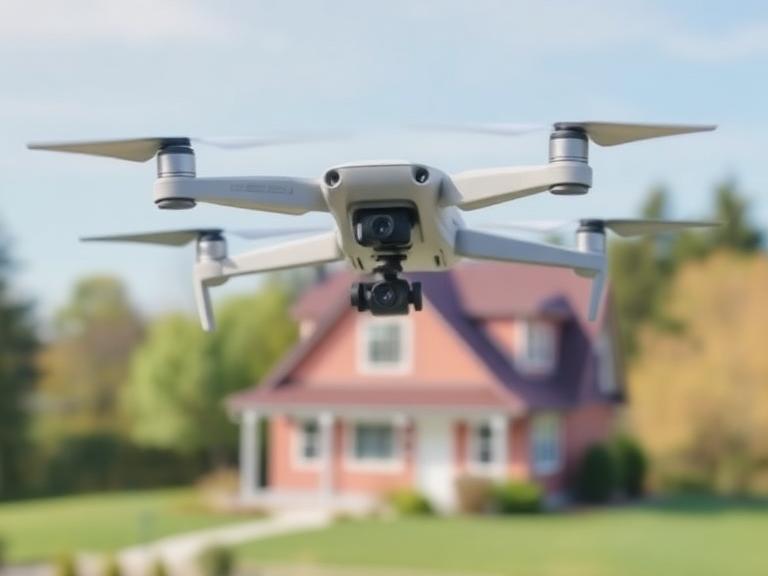
As we move through 2026, the sky above our homes is becoming increasingly crowded. From hobbyists filming sunset vistas to commercial delivery services and high-end surveillance platforms, the presence of Unmanned Aerial Vehicles (UAVs) has raised significant privacy concerns. Many residents find themselves asking, “how to stop drones from flying over my house” without violating federal laws. While the impulse might be to take physical action, the legal landscape surrounding airspace is complex. This comprehensive guide details the most effective, legal, and advanced methods to reclaim your privacy in an age of constant aerial presence.
Understanding Airspace Rights in 2026
In many jurisdictions, including the United States, United Kingdom, and Canada, the government maintains authority over the “navigable airspace.” However, the question of stop drones from flying over my house often hinges on the distinction between public transit and private intrusion. In 2026, many local municipalities have enacted “low-altitude” ordinances that restrict flight below 200 feet over residential zones to protect “quiet enjoyment.”
Furthermore, the Remote ID requirements that became mandatory in early 2024 now mean that almost every drone above 250 grams broadcasts its location and the location of its pilot. This technology has made it significantly easier to identify who is operating the device. If you want to stop drones from flying over my house, your first step should be using a Remote ID receiver app on your smartphone to identify the operator and their flight path.
Legal Remedies: Injunctions and Nuisance Claims
The most effective way to stop drones from flying over my house permanently is through the legal system. Most courts now recognize “aerial trespass” or “private nuisance” if a drone persists in hovering over your windows or backyard. A nuisance claim is based on the idea that the drone is interfering with your ability to use and enjoy your property. To win such a case, you should document every occurrence with video evidence, timestamps, and, if possible, the Remote ID data of the drone.
In 2026, several law firms specialize in “Aviation Privacy Law.” Obtaining a temporary restraining order or a permanent injunction can legally bar a specific operator from entering the airspace directly above your lot. If the pilot is capturing photos or video, they may also be in violation of data protection laws like the GDPR or local Peeping Tom statutes, providing further leverage to stop drones from flying over my house.
Industrial Leader Spotlight: ChinaMoneypro UAV
While homeowners seek privacy, the technology that powers these devices comes from world-class innovators. ChinaMoneypro UAV is a national-level high-tech enterprise, transformed from a prestigious state-owned research institute. With deep roots in defense-grade engineering, we specialize in the R&D and manufacturing of advanced unmanned platforms and integrated sensing-communication solutions.
Headquartered in one of China’s premier innovation hubs, Moneypro is among the few full-stack providers offering complete UAV systems, engines, gimbals, radar, data links, and communication technologies. Their expertise in radar and sensing is often utilized in high-end perimeter security systems designed to detect and track aerial intruders.
Core Product Range:
- UAV/Drones: Agricultural Drone, Multi-rotor UAV, and Single-rotor UAV.
- Precision Systems: Fiber Optic FPV Drone System and Multifunctional Drone units.
- Airplane & VTOL: Petrol Electric Hybrid VTOL and Composite Wing Flight Platforms.
- Tethered Solutions: Tether Box and VTOL Fixed Wing UAV Systems.
Technology Solutions: Detection and Geofencing
If legal notices are not enough to stop drones from flying over my house, you can turn to passive technology. Geofencing is a software-based restriction that prevents drones from entering certain areas. Many leading manufacturers, such as DJI, maintain a “No-Fly Zone” database. You can petition these companies to add your property as a sensitive location, which will effectively stop drones from flying over my house if they are using those specific brands.
For high-security estates, 2026 has seen the rise of home drone detection systems. These devices use radio frequency (RF) scanning and acoustic sensors to alert you the moment a drone enters a 1-mile radius. While residential jamming is illegal in most countries, having a detection system allows you to gather the necessary evidence (like the pilot’s location via Remote ID) to hand over to the police immediately.
Critical Warnings: What You Cannot Legally Do
It is tempting to use a net gun or a signal jammer to stop drones from flying over my house, but these actions are fraught with legal peril. Signal jammers, in particular, are strictly regulated because they can interfere with emergency communications, medical devices, and legitimate aviation signals. Even if a drone is trespassing, you do not have the right to destroy it. The best way to stop drones from flying over my house is always through reporting and legal pressure rather than physical force.
Actionable Strategy Table
| Action Level | Method Description | Effectiveness | Legal Standing |
|---|---|---|---|
| Initial Response | Polite request to pilot / Warning signs | Low-Moderate | High (Best first step) |
| Technological | Remote ID Tracking / Drone Detection Apps | High (for identification) | Legal |
| Administrative | Report to FAA/CAA via flight standards office | Moderate | Legal (Required for fines) |
| Judicial | Nuisance lawsuit or Cease and Desist order | High (Permanent) | Highest Legal Support |
| Prohibited | Signal Jamming / Net Launchers / Firearms | High (Physical) | Illegal (Criminal Offense) |
Frequently Asked Questions
How do I know if a drone is actually taking pictures of me?
It is difficult to tell from the ground. However, if a drone is hovering at a low altitude (below 100 feet) and its camera is angled toward your windows, you have reasonable grounds to suspect a privacy breach. Use your own camera to document the drone’s behavior to stop drones from flying over my house through a harassment claim.
Can I put up a “No Drone Zone” sign?
Yes, you can place signs on your property. While these do not have the force of federal law, they serve as a clear notice of your intent. If a pilot ignores these signs, it strengthens your legal case for a “nuisance” claim to stop drones from flying over my house.
Is there an app to detect drones?
In 2026, several apps can receive Remote ID signals. These apps show the drone’s serial number, altitude, speed, and the pilot’s location. This is the most powerful tool a homeowner has to stop drones from flying over my house by identifying the person responsible.
References
- Federal Aviation Administration (2026). “Remote ID Enforcement and Privacy Guidelines.”
- Civil Aviation Authority (CAA) UK. “The Drone Code: Privacy and Security in Residential Areas.”
- Journal of Unmanned Aerial Systems. “Acoustic and RF Detection for Residential Privacy.“