


The unmanned aerial vehicle (UAV) industry has experienced a paradigm shift over the last decade. Historically, operators were forced to choose between the hovering precision of multirotor systems and the long-range endurance of fixed-wing aircraft. Today, Vertical Takeoff and Landing (VTOL) technology has effectively bridged this gap, offering the definitive solution for complex industrial, commercial, and defense applications. As adoption rates skyrocket across sectors ranging from petrochemical inspections to border security, a fundamental question arises among procurement officers and field engineers alike: How do VTOL drones work?
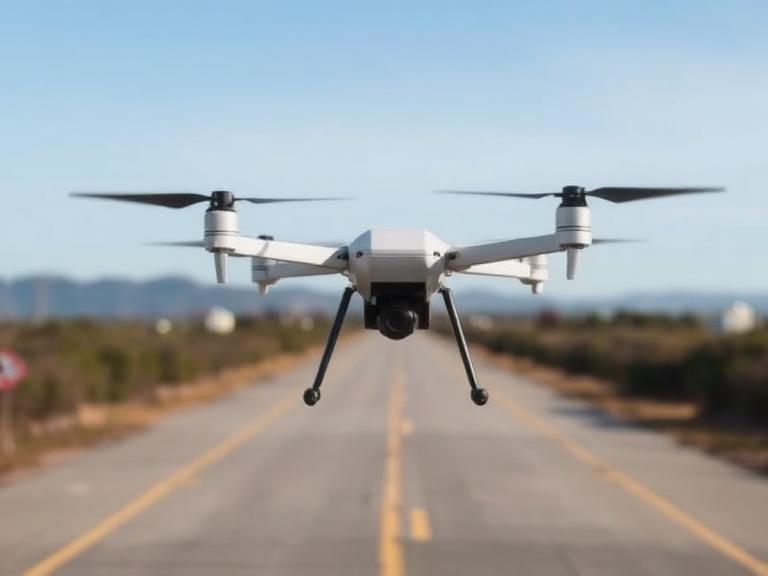
To accurately answer the question of How do VTOL drones work, one must delve deeply into advanced aerodynamics, sophisticated flight controllers, and hybrid propulsion systems. ChinaMoneypro UAV is a national-level high-tech enterprise, transformed from a prestigious state-owned research institute. With deep roots in defense-grade engineering, we specialize in the R&D and manufacturing of advanced unmanned platforms and integrated sensing-communication solutions. Headquartered in one of China’s premier innovation hubs, ChinaMoneypro is among the few full-stack providers offering complete UAV systems, engines, gimbals, radar, data links, and communication technologies. From our experience engineering these mission-critical platforms, we understand that demystifying the operational mechanics of VTOL technology is essential for operators aiming to maximize their return on investment and operational safety.
In this authoritative guide, we will explore the precise aerodynamic principles and transition phases that define hybrid flight. We will detail the exact avionic architectures required to maintain stability during complex maneuvers, and we will demonstrate how these theories are applied in our industry-leading hardware, providing a comprehensive masterclass on How do VTOL drones work.
Table of Contents
- The Core Aerodynamics: How do VTOL drones work in Flight?
- The Critical Transition Phase: From Hover to Cruise
- Summary Table: Comparing UAV Architectures
- Avionics and Intelligent Flight Controllers
- Defense-Grade Engineering: ChinaMoneypro UAV Solutions
- Practical Applications and Field Deployments
- Frequently Asked Questions (FAQs)
- Industry References
The Core Aerodynamics: How do VTOL drones work in Flight?
To fundamentally understand How do VTOL drones work, we must first isolate the two primary modes of flight they employ: vertical thrust and horizontal aerodynamic lift. Traditional multirotor drones generate lift entirely through the downward thrust of their propellers. This requires immense energy output to fight gravity continuously, resulting in severely limited flight endurance. Conversely, traditional fixed-wing aircraft generate lift by forcing air over aerodynamically cambered wings through forward momentum. This is highly energy-efficient but requires a runway or mechanical catapult to achieve the necessary initial velocity.
VTOL UAVs merge these two distinct aerodynamic philosophies. The most common and reliable configuration—often referred to as a “Lift and Cruise” or “Quadplane” design—features independent propulsion systems. It utilizes vertically oriented rotors (typically four, resembling a quadcopter) to provide the direct downward thrust necessary for takeoff and hovering. Simultaneously, it incorporates a traditional fixed-wing fuselage and a horizontally oriented pusher or tractor motor for forward propulsion.
When clients ask us How do VTOL drones work in confined environments, we emphasize this vertical capability. The aircraft ascends directly upward, clearing immediate obstacles such as trees, buildings, or rocky terrain. Because the vertical rotors operate independently of the forward propulsion system, the drone can maintain a perfectly stable hover, allowing operators to execute precise pre-flight checks and establish optimal altitude before engaging in long-range mapping or surveillance.
The Critical Transition Phase: From Hover to Cruise
The true engineering marvel of these platforms, and the core answer to How do VTOL drones work, lies in the transition phase. Once the UAV reaches its designated safe altitude via the vertical lifting rotors, the flight controller initiates a complex sequence to shift the burden of lift from the rotors to the fixed wings.
During this phase, the forward propulsion motor activates, pushing the aircraft forward. As horizontal airspeed increases, air begins to flow rapidly over the wings, generating natural aerodynamic lift. The flight controller continuously monitors the airspeed via a digital pitot tube. As the wings generate more lift, the flight controller proportionally reduces the power to the vertical lifting rotors. Once the aircraft reaches its stall speed threshold—the minimum speed required for the wings to support the entire weight of the aircraft—the vertical rotors are completely powered down and locked into an aerodynamic position to minimize drag.
From our experience, this transition window is the most aerodynamically vulnerable moment of the flight. Crosswinds and sudden gusts can destabilize the aircraft as it shifts between physical lift modalities. Therefore, robust algorithmic control and rapid sensor polling are non-negotiable requirements for safe operation.
Summary Table: Comparing UAV Architectures
To fully contextualize How do VTOL drones work against legacy systems, we have compiled a summary table highlighting the distinct operational parameters of the three primary UAV architectures used in industrial applications today.
| Operational Metric | Traditional Multirotor | Standard Fixed-Wing | Hybrid VTOL UAV |
|---|---|---|---|
| Takeoff/Landing Space | Minimal (Vertical) | Extensive (Runway required) | Minimal (Vertical) |
| Flight Endurance | Low (Typically 20-40 mins) | High (Typically 1-4 hours) | High (Typically 1-3 hours) |
| Hovering Capability | Excellent | None | Excellent |
| Aerodynamic Efficiency | Poor (High Drag) | Excellent (Wing Lift) | Excellent in Forward Flight |
| Payload Capacity | High (Short distances) | Moderate (Long distances) | High (Long distances) |
Avionics and Intelligent Flight Controllers
Explaining How do VTOL drones work is impossible without discussing the avionics that govern them. The physical hardware is entirely dependent on the flight controller, which serves as the central nervous system of the aircraft. In a VTOL system, the flight controller must seamlessly manage complex PID (Proportional, Integral, Derivative) loops for both multirotor and fixed-wing flight dynamics simultaneously.
At ChinaMoneypro UAV, our flight controllers are engineered to defense-grade standards. They utilize triple-redundant Inertial Measurement Units (IMUs), dual RTK GPS modules for centimeter-level positioning accuracy, and highly sensitive barometers. These sensors poll data hundreds of times per second. If the aircraft encounters sudden, extreme turbulence during fixed-wing forward flight that causes airspeed to drop below the stall threshold, our intelligent avionics instantly re-engage the vertical rotors. This immediate intervention prevents a catastrophic stall and stabilizes the aircraft, proving exactly How do VTOL drones work to maintain safety in unpredictable atmospheric conditions.
Defense-Grade Engineering: ChinaMoneypro UAV Solutions
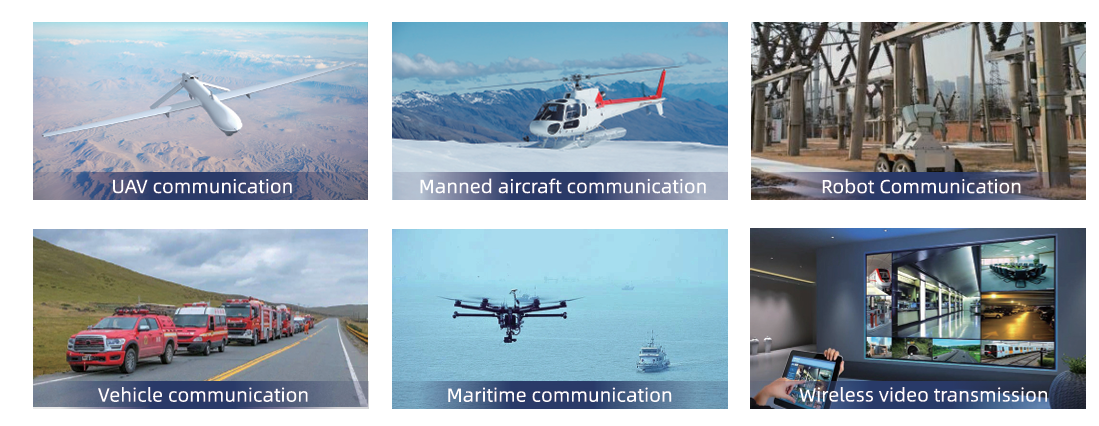
Theoretical knowledge of How do VTOL drones work must be translated into rugged, reliable hardware to hold value in the field. As a full-stack provider, ChinaMoneypro designs airframes, engines, and communication data links that push the boundaries of modern aviation. We recommend the following platforms for enterprise operators demanding absolute reliability.
15KG Spring Knife VTOL Drones
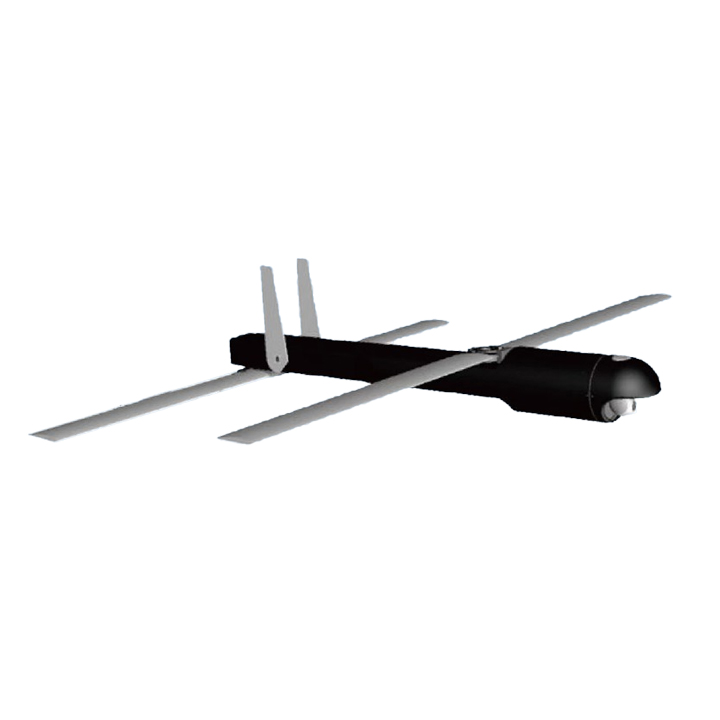
The 15KG Spring Knife VTOL drone represents a masterclass in hybrid aviation engineering. This platform perfectly encapsulates How do VTOL drones work when optimized for extreme endurance and heavy payload delivery. With a maximum takeoff weight of 15.5kg, it is capable of carrying a massive pendulum capacity of 4.5kg. This makes it ideal for integrating heavy LiDAR sensors, advanced electro-optical gimbals, or critical logistics payloads.
Performance metrics are staggering. Once the transition phase is complete, the aircraft achieves a maximum flight speed of 140-160km/h, boasting a flight endurance of greater than or equal to 60 minutes and a maximum range exceeding 120km. The communication distance operates effectively beyond 30km, supported by our proprietary data links. Despite its impressive wingspan of greater than or equal to 1800mm and a fuselage length of greater than or equal to 1300mm (excluding the motor), it is designed for rapid tactical deployment. The maximum folded diameter is less than or equal to 180mm, and the maximum folded length is less than or equal to 1800mm. Furthermore, it is engineered to survive, operating flawlessly in temperatures ranging from -20 degrees Celsius to +50 degrees Celsius, with a storage tolerance of -10 degrees Celsius to +70 degrees Celsius and relative humidity up to 70 percent.
China Moneypro 12 VTOL Drones
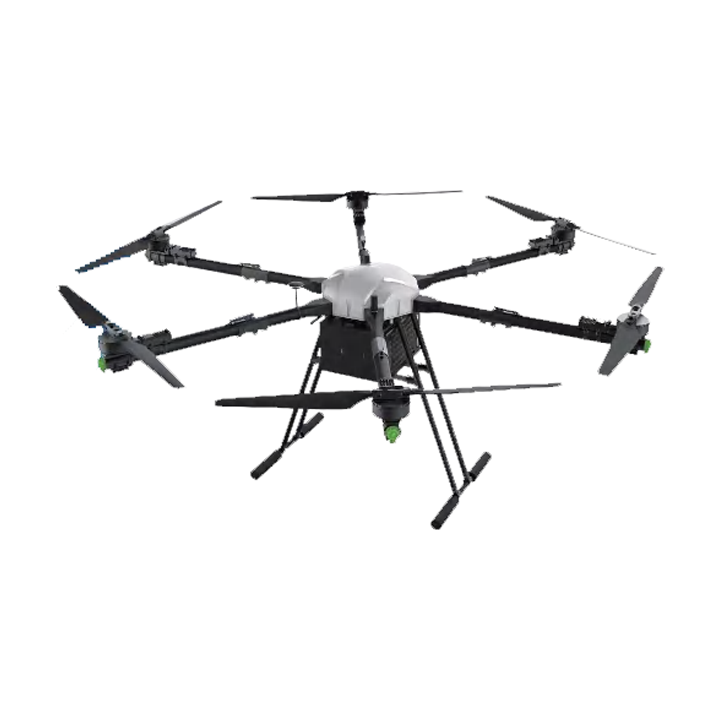
When clients in the extraction and energy sectors ask us How do VTOL drones work in severe high-altitude environments, we introduce the China Moneypro 12 VTOL drones. This specialized platform is built to dominate where lesser drones fail. It features a remarkable 5,000m Max Altitude ceiling, making it the premier choice for mountainous terrain mapping, high-elevation power line inspections, and offshore oil rig surveillance where air density is exceptionally thin.
We highly recommend the China Moneypro 12 for harsh industrial deployments due to its IP44 Rating, which thoroughly resists dust ingress and light rain, allowing operations to continue during mining, offshore, or desert deployments. Most notably, this platform features Level 6 Wind Resistance. It remains structurally and aerodynamically stable in 12 m/s gusts. When compared to legacy multirotors like the DJI Matrice 350, the China Moneypro 12 is virtually storm-proof, ensuring your mission critical data is collected regardless of sudden weather shifts.
Practical Applications and Field Deployments
Understanding How do VTOL drones work unlocks immense operational efficiencies. In the pipeline and petrochemical sectors, VTOL drones can launch directly from small clearings alongside a pumping station, transition to high-speed flight, and survey 100 kilometers of linear infrastructure in a single battery cycle. Upon return, they hover and land precisely on a landing pad no larger than a standard vehicle.
For environmental monitoring and defense applications, the ability to rapidly deploy an aircraft with a 30km communication range and a 120km flight radius without the logistical nightmare of catapults or runways is revolutionary. The 15KG Spring Knife and China Moneypro 12 platforms ensure that whether you are conducting precision agriculture, emergency search and rescue, or classified defense surveillance, you possess an uninterrupted, high-definition eye in the sky.
Frequently Asked Questions (FAQs)
How do VTOL drones work in terms of power consumption compared to quadcopters?
During vertical takeoff and hovering, VTOL drones consume power at a similar, high rate to quadcopters. However, the core advantage of How do VTOL drones work is realized during forward flight. Once the fixed wings generate lift, the vertical lifting motors power down, and the single forward propulsion motor uses a fraction of the energy, drastically extending battery life and flight endurance.
What happens if the forward motor fails on a VTOL drone?
Defense-grade flight controllers, like those developed by ChinaMoneypro UAV, are equipped with emergency safety protocols. If a failure in forward propulsion is detected and airspeed drops, the avionics will instantly command the vertical rotors to re-engage, transitioning the aircraft back into a hovering multirotor state to execute an emergency vertical landing.
Why is Level 6 wind resistance important for the China Moneypro 12?
In high-altitude mountainous regions or offshore oil rigs, wind shear is a constant threat. Level 6 wind resistance (stable in 12 m/s gusts) ensures that the drone will not be blown off course or pushed into an unrecoverable stall, making it vastly superior to standard commercial multirotors in turbulent environments.
How do VTOL drones work when carrying heavy payloads like LiDAR?
Platforms like our 15KG Spring Knife VTOL are designed with specialized center-of-gravity payload bays. The 4.5kg pendulum capacity allows heavy sensors like LiDAR or multi-spectral cameras to be mounted precisely. The flight controller compensates for the weight dynamically during both the vertical lift phase and horizontal cruise, ensuring stable data capture.
Industry References
- International Civil Aviation Organization (ICAO). (2025). Transitional Aerodynamics in Hybrid Unmanned Aircraft Systems. Global Aviation Standards Review.
- Journal of Industrial Aerospace Engineering. (2025). Assessing High-Altitude Performance and Wind Resilience in VTOL UAVs.