


However, not every VTOL drone offers the same performance. Multirotor VTOL aircraft, fixed-wing VTOL hybrids, and tilt-rotor systems use different mechanisms, with meaningful trade-offs in payload, endurance, complexity, and maintenance. Understanding how VTOL technology works is the first step toward choosing the right aircraft for an actual mission rather than buying based on specifications alone.

Quick Answer: How Does VTOL Technology Work?
VTOL technology works by generating enough vertical thrust to lift an aircraft directly off the ground and control its descent during landing. Depending on the design, dedicated rotors, tilting propellers, or a combination of lift motors and fixed-wing propulsion provide this thrust. Hybrid VTOL drones transition to forward flight by relying increasingly on their wings for lift, which can improve cruise efficiency compared with hovering throughout the mission.
Our recommendation: Choose a multirotor VTOL for short-range, precise hovering and close inspection. Choose a fixed-wing VTOL hybrid when your mission requires runway-free operation plus longer-distance mapping, surveying, or delivery. Evaluate payload, wind tolerance, transition behavior, and verified endurance before comparing headline flight times.
What it is: An aircraft capability that enables vertical takeoff and landing.
How it works: Propulsion systems generate vertical lift; hybrid designs transition into wing-supported forward flight when appropriate.
Main benefit: Runway-independent operation with the potential for efficient long-range flight.
Main limitation: VTOL mechanisms add power demands, design complexity, or both, depending on the aircraft architecture.
Best for: Remote inspections, land surveying, agriculture, infrastructure monitoring, and selected cargo missions.
Not necessary for: Every short-range mission conducted from a prepared launch site, particularly when a simpler aircraft already meets the operational requirement.
| Quick Summary | What to Know | Buying Implication |
|---|---|---|
| Core capability | Vertical takeoff and landing without a conventional runway | Useful for remote, confined, or temporary operating sites |
| Common designs | Multirotor, tilt-rotor, lift-and-cruise, and other hybrid configurations | Compare architecture, not just the VTOL label |
| Flight efficiency | Fixed wings can provide efficient forward flight; hovering consumes substantial power | Match flight profile to the mission route |
| Operational trade-off | Added propulsion systems, control requirements, or mechanical complexity | Include maintenance and training in total cost |
| Key selection criteria | Payload, range, endurance, wind limits, navigation, and recovery options | Demand mission-relevant test data from the supplier |
1. What Is VTOL Technology?
VTOL stands for vertical takeoff and landing. It describes how an aircraft leaves the ground and returns to it, rather than identifying one specific propulsion system. A conventional airplane typically needs forward speed and a suitable runway to generate lift and land safely. A VTOL aircraft can generate the lift needed for takeoff and landing without that runway requirement.
In the UAV market, VTOL often refers to aircraft that combine vertical-flight capability with efficient forward flight. A hybrid design may use separate vertical lift motors and a dedicated cruise motor, or it may tilt its propulsion units to serve different flight phases. Other VTOL aircraft, including conventional multirotors, use their rotors for both movement and hovering.
The distinction matters commercially. A drone that can hover precisely is not automatically suitable for covering hundreds of hectares, carrying a heavy sensor, or delivering cargo over a long route. Buyers should treat VTOL as an operational capability, then assess whether the aircraft’s actual design meets the mission requirements.
VTOL is a flight capability, not a guarantee of performance
Two aircraft can both be described as VTOL while offering very different payload capacity, cruise speed, range, and maintenance needs. A small inspection multirotor may be ideal for a bridge support or industrial pipe rack. A fixed-wing VTOL platform may be a better fit for mapping a broad agricultural site. For operations that need specialized sensors or equipment, the airframe and payload integration can matter as much as the takeoff mechanism.
2. How Does VTOL Technology Work Step by Step?
VTOL operation depends on a combination of propulsion, flight-control software, sensors, and the aircraft’s aerodynamic design. The exact sequence varies by configuration, but a hybrid fixed-wing UAV generally follows the stages below.
Step 1: The propulsion system creates vertical lift
Electric motors drive propellers that accelerate air downward, creating an upward reaction force. During takeoff, the combined thrust must exceed the aircraft’s weight, with sufficient control margin to respond to disturbances. The flight controller adjusts motor output to manage climb rate, attitude, and position.
Thrust reserve is important. A system that only barely lifts the aircraft under ideal conditions may be unsuitable when the battery is partially depleted, payload weight increases, or wind affects the takeoff area. Professional buyers should evaluate the manufacturer’s operating limits rather than assuming that successful takeoff in calm weather proves the aircraft is ready for field work.
Step 2: Sensors and flight controls stabilize the aircraft
Flight-control systems typically combine data from inertial measurement units, gyroscopes, accelerometers, and other navigation sources. Depending on the platform, GNSS positioning, barometric altitude, magnetic heading, airspeed sensing, and obstacle-detection sensors may also support flight.
The controller continuously adjusts propulsion and control surfaces where fitted. This helps maintain attitude and follow the planned flight path. The aircraft’s stability depends on the complete system, including sensor quality, software configuration, calibration, and the performance available from its motors and actuators.
Step 3: A hybrid aircraft transitions to forward flight
Once airborne, a fixed-wing VTOL drone may accelerate forward and transition from rotor-supported flight to wing-supported flight. As air moves across the wings, aerodynamic lift increases. The aircraft can then use its wing and cruise propulsion system to cover distance more efficiently than a multirotor that remains in a continuous hover.
In a lift-and-cruise configuration, vertical lift motors may shut down or reduce output once the aircraft is safely supported by its wings. In a tilt-rotor design, the propulsion units change orientation to support forward flight. These approaches have different mechanical and control requirements, so transition behavior should be evaluated for the specific aircraft.
Step 4: The aircraft performs its mission
During cruise, a hybrid VTOL UAV follows a programmed route or pilot commands while carrying its payload. Typical mission equipment includes RGB cameras, mapping cameras, multispectral sensors, thermal imaging systems, and other specialist payloads. The aircraft may collect imagery, monitor infrastructure, inspect industrial sites, or transport cargo where the platform is appropriately designed and authorized.
Flight planning should account for more than straight-line distance. Turns, climbing, headwinds, sensor operation, data-link coverage, and reserve requirements can all change usable mission time. A route that looks feasible on a map may be impractical if the aircraft must return against a strong headwind or spend considerable time hovering over inspection points.
Step 5: The aircraft switches back to vertical flight for landing
For landing, a hybrid VTOL aircraft slows and transitions to vertical-flight mode. Its lift system then controls descent and touchdown without requiring a conventional runway. Depending on the aircraft, landing may be fully autonomous, pilot-assisted, or manually controlled.
Landing-site preparation still matters. The aircraft needs sufficient clearance, a suitable surface, and protection from obstacles, loose debris, and people. Vertical landing removes the need for a runway; it does not remove the need for a safe operating area.
3. Main Types of VTOL Drones
Choosing the correct VTOL architecture is one of the most important procurement decisions. The mechanism determines how the aircraft transitions, how many propulsion components it needs, and how it behaves during takeoff, cruise, and landing.
Multirotor VTOL
Multirotor drones use several vertically oriented rotors to lift, move, and stabilize the aircraft. They are especially effective for hovering, low-speed maneuvering, and close inspection. Their limitation is that the rotors must continue generating lift throughout most of the flight, which can constrain endurance and range.
We recommend multirotors when a job depends on stationary observation, close-up imagery, precise positioning, or repeated short flights. They are often easier to deploy for localized inspection than a hybrid aircraft that requires transition procedures.
Fixed-wing VTOL with separate lift and cruise propulsion
This configuration uses dedicated lift motors for vertical takeoff and landing, plus a separate propulsion system for forward flight. Its wings carry most of the aircraft’s weight during cruise, making it a practical option for large-area mapping, corridor surveys, and longer routes from locations without runways.
The trade-off is additional motors, wiring, control logic, and potential maintenance work. A lift-and-cruise UAV may also have more drag or weight than a comparable fixed-wing aircraft designed exclusively for runway or hand launch. Its real advantage is operational flexibility, not a guarantee that it will outperform every alternative on every mission.
Tilt-rotor and tilt-wing VTOL
Tilt-rotor systems rotate propellers or motor assemblies between vertical and forward-flight orientations. Tilt-wing designs rotate the wing and its propulsion units together. Both approaches use propulsion differently across flight phases and require coordinated control through transition.
These designs can provide an integrated vertical-to-forward-flight solution, but their moving mechanisms and control requirements deserve close scrutiny. For commercial users, reliability data, transition testing, component serviceability, and access to replacement parts should carry significant weight in the purchasing decision.
How to decide between the configurations
Start with the flight profile, not the product label. If the aircraft must hover frequently, a multirotor may be the better investment. If it must cover a large area and land in a field without a runway, a fixed-wing VTOL hybrid is often more practical. If considering a tilt system, require evidence that the transition process is validated for the intended payload and environmental conditions.
4. Benefits and Limitations of VTOL Technology
VTOL technology solves a genuine operational problem: many useful missions take place where building or accessing a runway is impractical. Yet the benefits must be weighed against the aircraft’s added complexity and the actual conditions in which it will fly.
Key benefits
- Runway-independent deployment: Crews can operate from appropriate clear areas in remote, rural, or industrial locations without a conventional runway.
- Access to difficult sites: Vertical takeoff and landing can simplify deployment in mountainous regions, on large industrial properties, and at temporary survey sites.
- Longer-range potential: A fixed-wing hybrid can use aerodynamic lift during cruise, which may provide better range or endurance than remaining in a hover for the same mission.
- Flexible mission planning: One aircraft can combine vertical launch and recovery with planned forward-flight routes.
- Support for specialized payloads: Properly designed platforms can carry mapping, thermal, inspection, or other equipment within their approved weight and balance limits.
Limitations buyers should not ignore
- Energy consumed during takeoff and landing: Vertical lift can demand substantial power, particularly for heavier aircraft.
- Design and maintenance complexity: Additional motors, actuators, wiring, or transition mechanisms create more components to inspect and service.
- Payload trade-offs: Lift systems and structural reinforcement add weight that could otherwise be allocated to batteries or mission equipment.
- Environmental limits: Wind, temperature, precipitation, dust, and site conditions can affect safe operation and mission performance.
- Training requirements: Operators must understand transition procedures, emergency recovery, battery management, and the aircraft’s operating envelope.
| Pros | Cons | Practical Decision |
|---|---|---|
| Takeoff and landing without a runway | Requires a clear, safe launch and recovery zone | Best where runway access is a real constraint |
| Wing-supported cruise on hybrid designs | Transition introduces additional operational requirements | Worth considering for larger survey areas and longer routes |
| Supports a range of professional payloads | Payload capacity depends on airframe, power, and balance | Confirm payload performance at the intended operating weight |
| Can reduce field deployment infrastructure | Specialist training, spares, and servicing may increase costs | Compare total mission cost, not aircraft price alone |
| Suitable for remote operations when properly equipped | Communications and navigation remain mission constraints | Plan contingencies for lost links and degraded navigation |
5. VTOL vs. Conventional Fixed-Wing and Multirotor Drones
There is no universally best drone type. The right comparison is the total capability required to complete a specific mission, including how the aircraft launches, how long it can remain airborne, the equipment it carries, and how easily the crew can recover it.
| Criteria | Multirotor | Fixed-Wing VTOL Hybrid | Conventional Fixed-Wing |
|---|---|---|---|
| Takeoff and landing | Vertical | Vertical plus wing-supported cruise | Typically requires a suitable runway, launcher, or other launch/recovery method |
| Hovering | Excellent for stationary work | Usually possible only in vertical-flight mode, if supported | Generally cannot hover |
| Large-area coverage | Often less efficient for extensive routes | Well suited when the mission benefits from runway-free access and forward flight | Often highly efficient for suitable long-range survey routes |
| Mechanical complexity | Generally straightforward propulsion layout | Higher, depending on lift and transition design | Can be simpler without a VTOL mechanism |
| Payload and endurance | Highly dependent on size and battery | Dependent on hybrid design, payload, and cruise efficiency | Can offer strong efficiency when optimized for forward flight |
| Best use case | Close inspection, hovering, localized imaging | Remote mapping, corridor surveys, runway-free long routes | Large-area missions where launch and recovery infrastructure is available |
For a practical example, imagine a surveying company mapping an extended rural power-line corridor. A multirotor can provide detailed images of a particular pole or insulator, but covering the entire corridor may require many flights. A conventional fixed-wing aircraft could cover the route efficiently, but launch and recovery logistics may be difficult at the site. A fixed-wing VTOL hybrid may provide the most useful compromise, provided its payload, endurance, and transition performance meet the job requirements.
For a short inspection inside a plant or around a building, the answer may be different. A multirotor can maneuver at low speed and hold position without the additional transition process. Buying a hybrid for that job could increase purchase and maintenance costs without producing enough operational value to justify the premium.
6. Where Is VTOL Technology Used?
Agriculture and precision farming
VTOL UAVs can help crews survey fields, collect imagery, monitor crop variation, and inspect irrigation or drainage infrastructure. A fixed-wing VTOL platform can be useful when fields are extensive and launch areas are limited. For localized plant inspection or other tasks that demand hovering, a multirotor may be more suitable.
Explore Moneypro UAV’s agriculture drone solutions when comparing platforms for field monitoring and agricultural data collection. For procurement, verify camera or sensor compatibility, flight coverage at the required image resolution, and how quickly the team can process the resulting data.
Industrial inspection and infrastructure monitoring
Power lines, pipelines, wind farms, solar installations, mines, and industrial sites can cover large or difficult-to-access areas. VTOL hybrids are useful where the aircraft must travel between inspection locations without a runway. However, missions requiring close visual inspection may still benefit from a multirotor or a mixed fleet.
Review industrial drone platforms in relation to the payload and environment. A thermal camera, optical zoom system, or other sensor should be evaluated as part of the complete aircraft configuration rather than treated as a simple accessory.
Mapping, surveying, and environmental monitoring
Survey teams use UAVs to collect georeferenced imagery and other sensor data across terrain, construction sites, and environmental study areas. A VTOL fixed-wing platform can be particularly attractive when a large site has no practical runway. Mapping accuracy, however, depends on the full workflow: camera calibration, flight planning, positioning, ground control where required, and data processing.
Cargo and logistics
VTOL cargo drones can take off and land at designated sites without traditional runways. This may be useful for remote deliveries, industrial logistics, and selected routes between distribution points. Payload mass, cargo dimensions, route length, weather, battery reserve, and recovery arrangements determine whether the operation is commercially viable.
Our advice is to calculate cost per completed delivery, not simply cost per flight. Include loading, unloading, battery replacement, maintenance, failed missions, regulatory compliance, and ground handling. The VTOL cargo drone comparison can serve as a starting point for researching platform types. Also consider fixed-wing cargo drone approaches when comparing payload and route requirements.
Public safety and specialized operations
Search and rescue, emergency assessment, and selected public-safety missions can benefit from the ability to deploy without a runway. Thermal imaging, long-range communications, and reliable navigation may be critical depending on the scenario. A platform should be selected according to the task, local rules, and the operator’s ability to maintain safe control in challenging conditions.
Moneypro UAV also lists military and police drone systems and specialized UAV platforms. For any public-sector or security-related procurement, buyers should verify the configuration, approved use, security requirements, support arrangements, and applicable restrictions before placing an order.
7. How to Choose a VTOL UAV: A Professional Buyer’s Checklist
From our experience with technical UAV procurement decisions, the strongest selection process starts with mission requirements and then works backward to the aircraft. Comparing flight time or maximum payload in isolation is a common way to select a platform that looks impressive on paper but underperforms in the field.
1. Define the mission before comparing specifications
Document the route length, area to cover, required image resolution, flight altitude, hover time, terrain, launch site, and expected operating conditions. A mapping mission and a close-range inspection mission may need different airframes even if both operate in the same location.
2. Verify payload capacity at operational weight
Ask whether the quoted payload figure includes the required camera, gimbal, communications equipment, mounting hardware, and any other mission components. Determine how payload affects endurance and center of gravity. A maximum payload figure without an associated flight profile is not enough to predict real-world performance.
3. Request endurance and range evidence
Published endurance figures often represent specific test conditions. Ask for the payload used, battery configuration, wind conditions, flight mode, reserve policy, and landing criteria. For commercial missions, plan around usable flight time with appropriate reserves rather than the best-case laboratory number.
4. Evaluate transition and recovery behavior
For hybrid VTOL aircraft, request documented transition procedures, operating limits, recovery behavior, and training requirements. Clarify what happens after a navigation fault, loss of communications, low battery warning, or interrupted transition. The response should be defined in the operating manual, not improvised by the pilot during an emergency.
5. Check navigation and communications
Determine which GNSS systems, navigation sensors, telemetry links, and optional positioning technologies are supported. Verify actual link performance and legal operating constraints for the intended route. If the mission operates near structures or in areas with limited satellite reception, ask how the aircraft handles degraded navigation and whether additional planning or equipment is necessary.
6. Compare maintenance and lifecycle costs
Include batteries, propellers, motors, actuators, airframe components, software or service fees, training, shipping, and spare-part lead times. A cheaper airframe may become more expensive if parts are difficult to obtain or repairs take the aircraft out of service for weeks. For commercial users, fleet availability and support response can matter more than a small difference in initial purchase price.
7. Confirm compliance and data security
Check aircraft registration, operator certification, airspace restrictions, remote identification requirements where applicable, and any rules that apply to the mission. For professional or sensitive projects, review data handling, telemetry security, update procedures, and integration requirements. Applicable obligations vary by jurisdiction and operation, so confirm the rules for the actual deployment.
8. Test the complete payload configuration
When possible, request a demonstration or acceptance test using the intended payload and a representative route. Test takeoff, transition, cruise, return, landing, data capture, and post-flight inspection. If the supplier cannot demonstrate the configuration you intend to purchase, treat advertised performance as unverified for your use case.
8. Common VTOL Buying and Operating Mistakes
Choosing the longest advertised flight time
Maximum endurance is useful only when it reflects the planned mission. A drone may remain airborne for a long time with a light payload in favorable conditions but deliver substantially less usable flight time when carrying a sensor or facing a headwind. Compare performance under matched conditions.
Assuming VTOL means the aircraft can land anywhere
Vertical landing reduces infrastructure requirements, but propeller clearance, surface stability, downwash, nearby people, obstacles, and local weather still matter. Remote sites need a documented approach and landing plan.
Ignoring transition risk
Transition is a distinct operational phase for many hybrid designs. Buyers should review test evidence, control limits, pilot training, and contingency behavior instead of assuming that an automated mode eliminates all risk.
Overlooking the payload integration process
A sensor can fit physically yet still create problems with weight, power supply, data interfaces, electromagnetic compatibility, vibration, or center of gravity. Specify the exact payload and interface requirements before finalizing the airframe.
Comparing aircraft price without lifecycle cost
Initial price is only one part of the business case. Include spare parts, batteries, repairs, operator training, transport, data processing, and expected aircraft downtime. For a business, the most valuable aircraft is often the one that completes the required work consistently at an acceptable total cost.
Buying a hybrid when a simpler aircraft is enough
A VTOL hybrid can be a strong solution for runway-free long-distance operations, but it is not automatically the best choice for every customer. If a multirotor already meets the range, payload, and accuracy requirements, the added complexity of a hybrid may not produce a worthwhile return on investment.
9. How Moneypro UAV Fits Into a VTOL Procurement Decision
Moneypro UAV is a China-based UAV manufacturer and solution provider offering unmanned aerial systems and advanced sensing technologies. Its listed capabilities include UAV platforms, EO/IR gimbal cameras, radar systems, mesh radio communication, turbojet engines, GNSS antennas, infrared thermal sensing, and laser sensing modules for professional applications.
For buyers evaluating VTOL technology, the important question is how the aircraft, payload, navigation, and communication systems work together. An integrated solution can reduce interface uncertainty, but only when the supplier clearly documents compatibility, performance, support, and acceptance criteria. Buyers should request a configuration-specific proposal rather than assuming that every listed component is available on every airframe.
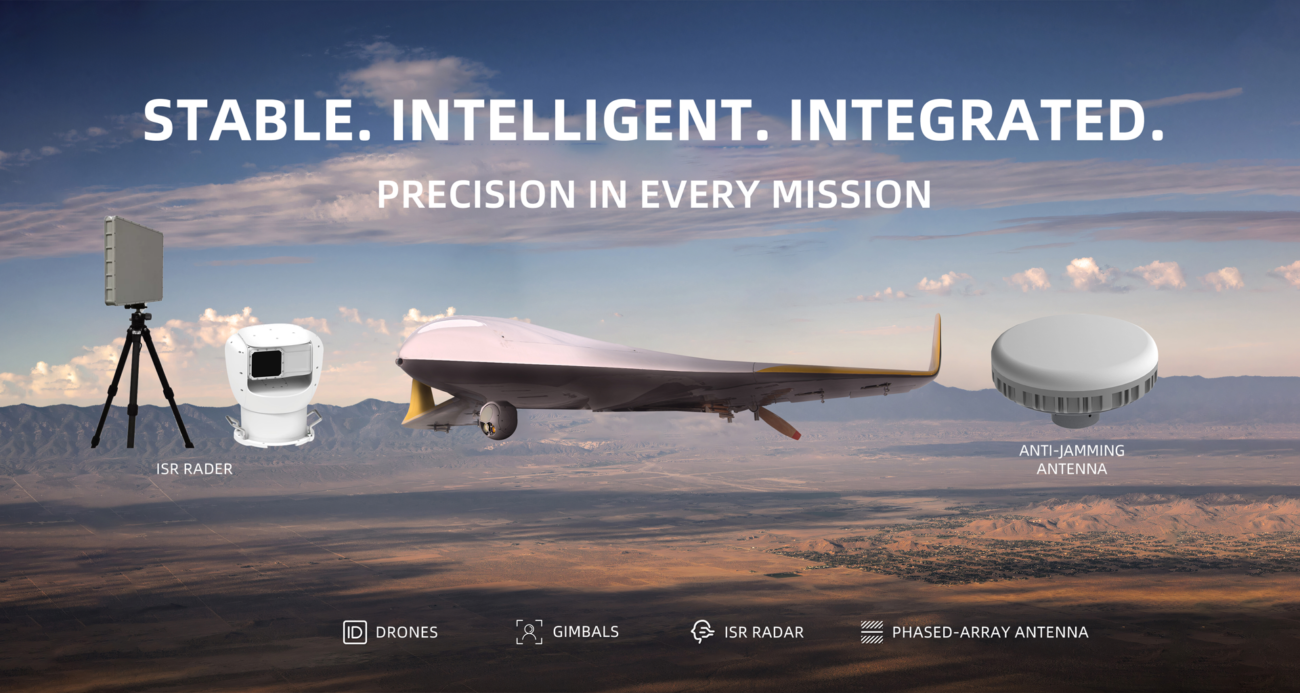
Explore Moneypro UAV Platforms and Systems
Moneypro UAV provides UAV platforms and supporting technologies for industrial inspection, environmental monitoring, mapping, and other professional missions worldwide.
When requesting a quote, specify whether you need a multirotor or fixed-wing VTOL hybrid, the required payload, flight profile, environmental conditions, navigation capability, and data-link requirements.
Questions to ask the manufacturer before purchasing
- Which aircraft configuration supports the required vertical takeoff, transition, cruise, and landing profile?
- What are the verified endurance and range figures with the proposed payload installed?
- What wind, temperature, precipitation, and altitude limits apply to the aircraft?
- Which cameras, gimbals, radar, or other sensors are compatible, and what interfaces are available?
- What documentation, pilot training, maintenance instructions, and spare parts are supplied?
- Can the supplier demonstrate the proposed configuration and agree on measurable acceptance criteria?
- What warranty, technical support, repair turnaround, and software-update arrangements are available?
We recommend putting the intended mission and acceptance criteria in writing before committing to a production order. For larger projects, a demonstration or pilot deployment can reveal integration issues before the buyer invests in a full fleet. This approach is particularly valuable for custom payloads, industrial inspection programs, and logistics projects where a failed deployment carries significant costs.
10. Is VTOL Technology Worth the Investment?
VTOL technology is worth paying for when it removes a real operational constraint or makes a mission more practical. The value is strongest when a site lacks a runway, the aircraft must cover substantial distance, and the operation benefits from wing-supported cruise. In these cases, the added complexity can be justified by simpler field deployment and improved mission flexibility.
It may not be worth the premium when the work consists mainly of short flights, close hovering, or operations from an existing launch and recovery site. A conventional multirotor may cost less to purchase and maintain while delivering all the capability the job needs. Similarly, a conventional fixed-wing aircraft can be more efficient if the operation already has suitable launch and recovery infrastructure.
| Operating Scenario | Recommended Direction | Reason |
|---|---|---|
| Frequent close-up inspection with hovering | Multirotor | Direct control and stationary observation may outweigh range benefits |
| Large-area mapping from remote sites | Fixed-wing VTOL hybrid | Combines runway-free launch and recovery with forward-flight efficiency |
| Long routes with established runway or launch infrastructure | Conventional fixed-wing or hybrid, based on mission constraints | Compare efficiency against the value of vertical operations |
| Specialized sensor payloads | Any suitable configuration after integration testing | Payload interfaces, stability, and data quality determine suitability |
| Commercial cargo delivery | VTOL cargo platform after route and cost validation | Payload, reserves, reliability, handling, and compliance determine viability |
To estimate return on investment, compare the total cost of completing a mission with the current method. Include crew time, transport, site preparation, operating costs, data processing, maintenance, and downtime. A VTOL UAV may justify its cost by reducing setup time or enabling access to a site that would otherwise be difficult to survey. But those savings should be demonstrated using realistic operating assumptions, not inferred from the aircraft’s flight specifications alone.
11. Frequently Asked Questions About VTOL Technology
What does VTOL stand for?
VTOL stands for vertical takeoff and landing. It describes an aircraft’s ability to take off and land vertically without requiring a conventional runway.
How does a VTOL drone stay in the air?
During vertical flight, its rotors generate upward thrust to counter gravity and control the aircraft’s movement. A hybrid fixed-wing VTOL can transition to forward flight, where its wings generate much of the lift during cruise.
Are VTOL drones more efficient than multirotor drones?
Fixed-wing VTOL hybrids can be more efficient during forward flight because their wings generate aerodynamic lift. However, they have additional propulsion or transition requirements, and the result depends on aircraft design, payload, route, and operating conditions. A multirotor may be more efficient for a short mission that requires frequent hovering.
Can a VTOL drone carry a heavy payload?
Some VTOL platforms are designed for substantial payloads, but capacity varies widely. Buyers should verify maximum takeoff weight, usable payload after accounting for batteries and mission equipment, center-of-gravity limits, and endurance with the actual payload installed.
Can VTOL drones operate in strong winds?
Wind capability depends on the airframe, propulsion reserve, control system, payload, and flight phase. Vertical takeoff, transition, cruise, and landing may have different wind limits. Follow the manufacturer’s operating manual and do not treat a single advertised wind rating as proof of suitability for every phase.
Are VTOL drones suitable for agricultural mapping?
Yes, where the aircraft’s coverage, sensor, flight time, image quality, and workflow meet the job requirements. Fixed-wing VTOL hybrids can be useful for extensive fields without suitable runways, while multirotors may be better for smaller areas or tasks that need frequent hovering.
What is the difference between tilt-rotor and lift-and-cruise VTOL?
A tilt-rotor aircraft changes the orientation of its propulsion units between vertical and forward flight. A lift-and-cruise aircraft generally uses dedicated vertical lift motors and a separate cruise propulsion system. The two designs differ in mechanical complexity, weight distribution, transition behavior, and maintenance requirements.
What should I check before buying a VTOL UAV?
Check payload capacity at operational weight, verified endurance, mission range, transition procedures, wind limits, navigation and communications, sensor compatibility, spare parts, training, regulatory requirements, and total lifecycle cost. If possible, test the proposed configuration before ordering a fleet.
12. References and Technical Resources
The following authoritative resources help explain aircraft design, unmanned-aircraft operating considerations, and the rules that may apply to a VTOL UAV deployment. Always consult the current rules for the jurisdiction and mission in question.
- Federal Aviation Administration (FAA): Unmanned Aircraft Systems — U.S. regulatory and operational guidance for unmanned aircraft.
- NASA: Aeronautics Research — Research and technical background on aircraft aerodynamics, flight, and aviation systems.
- European Union Aviation Safety Agency (EASA): Civil Drones and RPAS — European regulatory information and operational guidance for civil drones.
Final Recommendation: Match VTOL Technology to the Mission
VTOL technology works by combining vertical thrust, flight-control systems, and, in hybrid designs, aerodynamic lift during forward flight. Its strongest advantage is the ability to operate without a conventional runway while still supporting missions that benefit from longer-distance cruise. That capability can be valuable for mapping, agriculture, industrial inspection, environmental monitoring, and selected cargo applications.
But a VTOL label alone is not a buying recommendation. Decide whether the mission needs hovering, long-range coverage, specialized payload integration, or runway-independent deployment. Then compare verified performance, transition safety, maintenance support, and lifecycle cost. For professional buyers, the best aircraft is not the one with the most impressive specification sheet; it is the one that reliably completes the required mission within the operating budget and applicable rules.
Moneypro UAV’s UAV platform range is a useful starting point for discussing aircraft and sensor requirements. Provide the manufacturer with your intended route, payload, operating environment, and performance targets so that the proposed configuration can be evaluated against a real operational need.