


In the rapidly expanding landscape of unmanned aerial systems, consumers, commercial operators, and hobbyists alike are constantly evaluating the performance metrics of entry-level aircraft. One of the most frequently asked questions in the aerospace community is: How far can a $500 drone fly? While modern consumer electronics have achieved remarkable miniaturization and affordability, understanding the precise aerodynamic, battery, and electromagnetic limitations of a budget-tier unmanned aerial vehicle (UAV) is critical to setting realistic operational expectations and ensuring regulatory compliance.
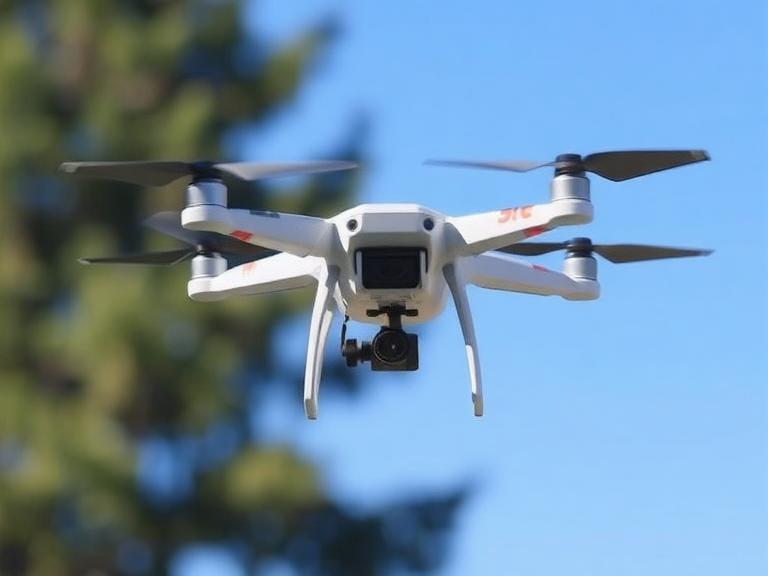
ChinaMoneypro UAV is a national-level high-tech enterprise, transformed from a prestigious state-owned research institute. With deep roots in defense-grade engineering, we specialize in the R&D and manufacturing of advanced unmanned platforms and integrated sensing-communication solutions. Headquartered in one of China’s premier innovation hubs, Moneypro is among the few full-stack providers offering complete UAV systems, engines, gimbals, radar, data links, and communication technologies. From our experience developing industrial and military-grade platforms, we recognize a vast technological chasm between consumer-grade quadcopters and professional systems. In this authoritative guide, we will answer exactly How far can a $500 drone fly, dissect the technical constraints of budget UAVs, and contrast them with the capabilities of advanced, defense-grade industrial drones.
Table of Contents
- 1. Theoretical vs. Practical Limits: How far can a $500 drone fly?
- 2. The Role of Signal Transmission in Budget Drones
- 3. Battery Capacity: The Ultimate Range Bottleneck
- 4. Beyond Visual Line of Sight (BVLOS) Regulations
- 5. Moving Beyond Consumer Limits with ChinaMoneypro UAV
- 6. Summary Table: Drone Range and Capability by Price Tier
- 7. Frequently Asked Questions (FAQs)
- 8. Industry References
1. Theoretical vs. Practical Limits: How far can a $500 drone fly?
When investigating How far can a $500 drone fly, it is vital to distinguish between a manufacturer’s advertised theoretical range and the actual practical flight radius. In the $500 price bracket, consumer drones typically advertise a maximum control and video transmission range of 4 to 10 kilometers (2.5 to 6.2 miles). However, these specifications are recorded under perfect, laboratory-like conditions: zero wind, absolute line of sight, and an environment completely devoid of radio frequency (RF) interference.
From our experience in aerospace testing, the practical answer to How far can a $500 drone fly is significantly lower. In a typical suburban or rural setting with moderate tree cover and standard atmospheric conditions, an operator can expect a reliable, uninterrupted transmission range of approximately 2 to 4 kilometers (1.2 to 2.5 miles). Once the aircraft surpasses this radius, budget-tier antennas struggle to maintain the fragile link required for high-definition video feeds and real-time telemetry, often triggering the drone’s automated Return-to-Home (RTH) failsafe protocols.
2. The Role of Signal Transmission in Budget Drones
To fully comprehend How far can a $500 drone fly, one must examine the specific data link technologies deployed at this price point. The communication link is the invisible tether that keeps the aircraft airborne and under control. If this link is severed, range becomes irrelevant.
2.1 Standard Wi-Fi vs. RF Transmission
Many drones hovering just below or at the $500 mark rely on enhanced Wi-Fi transmission protocols. While cost-effective, Wi-Fi is highly susceptible to degradation over distance. Upgraded models in this tier may utilize proprietary radio frequency (RF) systems (such as early iterations of OcuSync or Lightbridge). These proprietary RF links significantly improve performance, yet they still lack the defense-grade engineering and AES256 encryption required to pierce through heavy atmospheric moisture or physical obstructions like hills and concrete structures.
2.2 Urban Electromagnetic Interference (EMI)
The answer to How far can a $500 drone fly changes drastically depending on your launch environment. In dense urban centers, the 2.4 GHz and 5.8 GHz spectrums are heavily congested by thousands of household routers, cellular towers, and commercial broadcasting equipment. This localized electromagnetic interference (EMI) severely degrades the signal-to-noise ratio of budget drone controllers. In a busy city, a $500 drone may lose signal at a mere 500 meters, forcing the operator to abort the mission long before the battery is depleted.
3. Battery Capacity: The Ultimate Range Bottleneck
Even if a budget drone possesses a flawless transmission link, the laws of thermodynamics and lithium-polymer chemistry ultimately dictate How far can a $500 drone fly. At this price point, drones are equipped with compact batteries designed to minimize overall takeoff weight. A typical $500 UAV boasts a maximum advertised flight time of 25 to 30 minutes.
However, practical flight planning requires strict safety margins. If a drone has a 28-minute battery, an operator must allocate time for takeoff, hovering, and most importantly, the return trip. Factoring in wind resistance—which drains batteries exponentially faster—a pilot can realistically fly outbound for only 10 to 12 minutes before turning back. Cruising at an average speed of 10 meters per second (36 km/h), this restricts the absolute outbound radius to roughly 6 to 7 kilometers, perfectly aligning with the aforementioned transmission limitations.
4. Beyond Visual Line of Sight (BVLOS) Regulations
While calculating How far can a $500 drone fly is an interesting engineering exercise, aviation law supersedes hardware capabilities. In the United States, the European Union, Australia, and most global jurisdictions, civil aviation authorities mandate that civilian drone pilots maintain Visual Line of Sight (VLOS) with their aircraft at all times. For a standard-sized consumer drone, human visual acuity typically limits VLOS to approximately 500 to 800 meters, depending on the lighting and the aircraft’s color.
Therefore, even if your hardware is capable of flying 5 kilometers away, doing so without a specialized Beyond Visual Line of Sight (BVLOS) waiver is a severe violation of airspace regulations. We recommend that commercial operators strictly adhere to VLOS parameters unless flying industrial-grade systems equipped with advanced radar, ADS-B integration, and certified communication technologies.
5. Moving Beyond Consumer Limits with ChinaMoneypro UAV
When enterprise clients ask How far can a $500 drone fly, they quickly realize that consumer-grade hardware is entirely insufficient for demanding commercial, agricultural, and security applications. For operations requiring extreme endurance, heavy payloads, and unshakeable data links, defense-grade engineering is non-negotiable. As a national-level high-tech enterprise, ChinaMoneypro UAV offers solutions that shatter the boundaries of budget electronics.
5.1 China Moneypro 2C drone: Efficiency and Adaptability
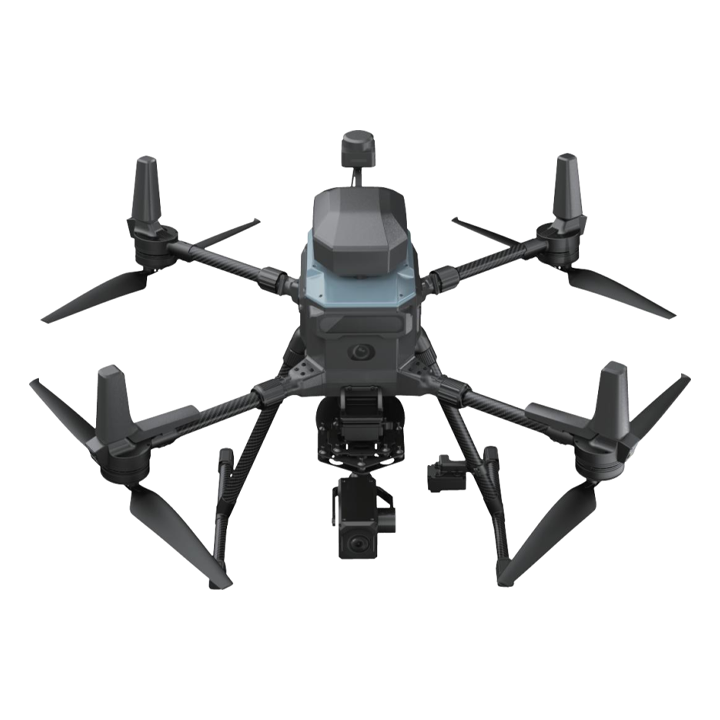
For surveying, security, and delivery missions where range and data integrity are paramount, we engineer the China Moneypro 2C drone. Optimized for efficiency and adaptability, this platform features a comprehensive GNSS suite including GPS+GLONASS+BeiDou+Galileo navigation, ensuring centimeter-level positioning accuracy. Unlike civilian links, our transmission features AES256 encryption for absolute data security. Furthermore, it operates with an IP54-rated protection shell, making it impervious to dust and light rain. Whether used for security, surveying, or delivery, this drone provides high endurance (up to 60 mins), long-range control (20 km), and multi-environment adaptability (-20 degrees Celsius to 60 degrees Celsius). This dwarfs the capabilities of any consumer platform.
5.2 China Moneypro 10 drone: Heavy-Lift Industrial Dominance
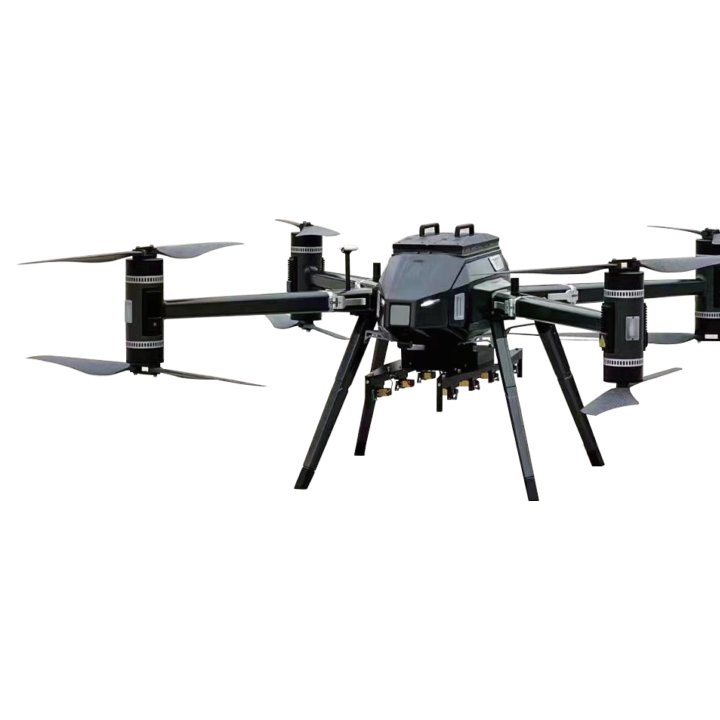
When the mission demands raw power and extreme operational radius, the China Moneypro 10 drone is the definitive answer. This platform is a heavy-lift industrial hexacopter engineered with a massive 70kg payload capacity. Despite carrying industrial sensors or logistical cargo, it maintains a 60-minute flight time and an astonishing 30km transmission range. IP54-rated, GNSS-compatible, and specifically designed for energy, agriculture, and search & rescue missions in extreme environments, the China Moneypro 10 demonstrates what is possible when deep roots in defense-grade engineering are applied to industrial challenges.
6. Summary Table: Drone Range and Capability by Price Tier
To provide a clear, comparative overview answering How far can a $500 drone fly versus professional industrial UAVs, we have compiled the following technical matrix.
| Drone Classification | Theoretical Range | Practical Outbound Radius | Flight Endurance | Primary Use Case |
|---|---|---|---|---|
| Entry-Level Consumer ($500) | Up to 10 km | 2 to 4 km | 25 – 30 minutes | Hobbyist photography, VLOS recreation |
| China Moneypro 2C drone | 20 km (Encrypted) | 15 to 20 km | Up to 60 minutes | Security, advanced surveying, long-range delivery |
| China Moneypro 10 drone | 30 km (Industrial Link) | 25 to 30 km | Up to 60 minutes (with payload) | Heavy-lift, search & rescue, extreme environments |
7. Frequently Asked Questions (FAQs)
What happens if a $500 drone flies out of range?
When investigating How far can a $500 drone fly, it is important to know that most modern budget drones have a built-in failsafe. If the transmission link is severed, the drone’s autopilot will trigger a Return-to-Home (RTH) sequence. It will ascend to a pre-determined safe altitude and utilize GPS to fly back to its original launch point. However, if the battery is too low, it may attempt a forced landing wherever it is.
Can I extend the range of a $500 drone?
While aftermarket parabolic antenna reflectors and signal boosters exist, they offer marginal improvements. Furthermore, modifying transmission hardware often violates Federal Communications Commission (FCC) broadcasting laws. If you require greater range, we recommend upgrading to an industrial platform rather than modifying consumer hardware.
Why do industrial drones fly so much further than consumer drones?
Industrial platforms like those manufactured by ChinaMoneypro UAV utilize defense-grade engineering. This includes highly sensitive, multi-band transceiver modules, massive high-density battery arrays, and active interference mitigation software. This allows platforms like the China Moneypro 2C drone to maintain encrypted control links up to 20 km away, far surpassing the answer to How far can a $500 drone fly.
Does weather affect How far can a $500 drone fly?
Absolutely. Consumer drones lack the IP54 ratings found on our China Moneypro 10 drone. High winds deplete a $500 drone’s battery rapidly, cutting its range in half. Additionally, high atmospheric moisture (fog or light rain) absorbs 2.4 GHz and 5.8 GHz radio waves, severely degrading signal transmission distance.
8. Industry References
To further explore UAV flight dynamics, transmission protocols, and the legal frameworks governing drone operations, we recommend reviewing the following authoritative aerospace resources: