


In the rapidly advancing fields of geospatial mapping, agricultural monitoring, and strategic infrastructure inspection, the deployment of advanced unmanned aerial vehicles is no longer a luxury—it is an operational necessity. As organizations scale their aerial data acquisition programs, a critical financial question consistently emerges: what exactly is the Fixed wing drone remote sensing cost in 2026? Calculating this expenditure requires a thorough understanding of modern aerospace engineering, payload integration, and lifecycle maintenance.
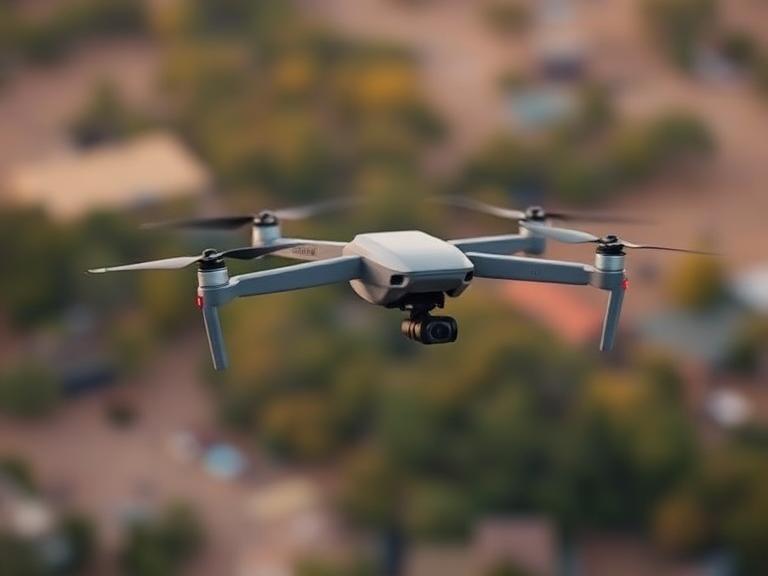
At ChinaMoneypro UAV, we possess a unique vantage point on this economic equation. As a national-level high-tech enterprise transformed from a prestigious state-owned research institute, we specialize in the R&D and manufacturing of advanced unmanned platforms and integrated sensing-communication solutions. Headquartered in one of China’s premier innovation hubs, ChinaMoneypro UAV is among the few full-stack providers offering complete UAV systems, engines, gimbals, radar, data links, and communication technologies. From our experience, the true Fixed wing drone remote sensing cost is heavily obscured by third-party integrators who markup fragmented components. In this authoritative guide, we will break down the hardware, payload, and operational variables that define the Fixed wing drone remote sensing cost in 2026, empowering enterprise and government procurement officers to make highly informed investments.
Table of Contents
- Summary Table: Baseline Fixed Wing Drone Remote Sensing Cost 2026
- Deconstructing the Costs: Core Hardware and Airframes
- The Financial Impact of Remote Sensing Payloads
- The Economic Advantage of VTOL Fixed Wing UAV Systems
- Propulsion Variables: Electric vs. Petrol Electric Hybrid VTOL
- Communication Technologies and Data Links
- Why ChinaMoneypro UAV Optimizes Your Investment
- Frequently Asked Questions (FAQs)
- Industry References
Summary Table: Baseline Fixed Wing Drone Remote Sensing Cost 2026
To provide immediate clarity for project feasibility studies, we have compiled an industry-standard estimate matrix. Please note that the final Fixed wing drone remote sensing cost will vary significantly based on payload requirements, operational range, and specialized data link configurations.
| Platform Configuration | Optimal Application | Average 2026 Cost Range (USD) | Primary Cost Drivers |
|---|---|---|---|
| Standard Composite Wing Flight Platform (Electric) | Medium-area topographical mapping, standard photogrammetry. | $15,000 – $35,000 | Airframe composites, high-capacity lithium batteries, basic optical sensors. |
| VTOL Fixed Wing UAV System (Electric) | Infrastructure inspection, corridor mapping in restricted launch zones. | $25,000 – $60,000 | Vertical lift motors, advanced flight controllers, precision RTK modules. |
| Petrol Electric Hybrid VTOL | Ultra-long endurance missions, large-scale agricultural and border surveillance. | $45,000 – $120,000+ | Hybrid engine generators, specialized cooling systems, defense-grade payloads. |
| Advanced Payload Packages (Add-On) | LiDAR, Hyperspectral, Synthetic Aperture Radar (SAR). | $10,000 – $80,000+ | Sensor complexity, gimbal stabilization, onboard processing units. |
Deconstructing the Costs: Core Hardware and Airframes
The foundation of the Fixed wing drone remote sensing cost lies in the airframe’s structural integrity and aerodynamic efficiency. Unlike a standard Multi-rotor UAV or Single-rotor UAV, a fixed-wing platform relies on forward airspeed to generate lift across its wings. This fundamental principle allows for significantly longer flight times and larger coverage areas. However, constructing an airframe capable of withstanding extreme aerodynamic stress while maintaining a low weight profile requires advanced metallurgy and composite engineering.
We recommend platforms built upon a robust Composite Wing Flight Platform. In 2026, the utilization of advanced carbon fiber, Kevlar, and aviation-grade fiberglass dictates the initial capital expenditure. These materials represent a significant portion of the Fixed wing drone remote sensing cost but offer an unparalleled return on investment by maximizing payload capacity and resisting environmental degradation during high-altitude deployments. From our experience, cutting costs on the airframe inevitably leads to catastrophic structural failures during turbulent atmospheric conditions.
The Financial Impact of Remote Sensing Payloads
The airframe is merely a delivery vehicle; the true value of remote sensing is generated by the payload. Consequently, the sensor package is often the most volatile variable when calculating the Fixed wing drone remote sensing cost. An entry-level photogrammetry setup utilizing a high-resolution RGB camera and a basic 2-axis gimbal will keep the overall Fixed wing drone remote sensing cost relatively low.
However, enterprise-level applications require far more sophisticated data collection. Integrating LiDAR (Light Detection and Ranging) systems for penetrating forest canopies, or hyperspectral cameras for precision Agricultural Drone operations, drastically increases the capital requirement. Because ChinaMoneypro UAV is a full-stack provider offering complete UAV systems including our own proprietary gimbals and radar, we engineer these components to communicate seamlessly with the flight controller. This vertical integration eliminates the severe compatibility markups that third-party integrators typically pass on to the consumer, thereby optimizing the total Fixed wing drone remote sensing cost.
The Economic Advantage of VTOL Fixed Wing UAV Systems
Historically, a massive hidden expense within the Fixed wing drone remote sensing cost was the launch and recovery infrastructure. Traditional Airplane platforms required bulky pneumatic catapults, long runways, or risky parachute deployment systems that frequently damaged expensive payloads upon landing. By 2026, this paradigm has shifted entirely toward the Airplane & VTOL hybrid configuration.
A VTOL Fixed Wing UAV System utilizes dedicated vertical lift rotors to take off and land like a helicopter, before transitioning to forward horizontal flight. While the inclusion of extra motors, electronic speed controllers (ESCs), and complex transition software increases the initial purchase price, we highly recommend this architecture. From our experience, the ability to deploy a high-endurance fixed-wing drone from a confined 5×5 meter clearing eliminates the need for runway construction and dramatically reduces the risk of payload damage during landing. Over a multi-year operational lifecycle, the VTOL configuration actively lowers the total operational Fixed wing drone remote sensing cost.
Propulsion Variables: Electric vs. Petrol Electric Hybrid VTOL
Endurance directly correlates to profitability in remote sensing. The longer a drone stays airborne, the more data it collects per deployment hour. Standard lithium-polymer (LiPo) batteries restrict flight times to roughly 90 to 150 minutes, depending on payload weight. For organizations requiring maximum endurance, we engineer the Petrol Electric Hybrid VTOL.
This specialized platform utilizes a combustion engine connected to a generator, which constantly supplies power to the electric propulsion motors and onboard electronics. While a Petrol Electric Hybrid VTOL increases the upfront Fixed wing drone remote sensing cost due to the complexity of the internal combustion engine and fuel management systems, it extends flight times to upwards of 4 to 8 hours. For pipeline inspections, border patrol, and massive topographical surveys, this capability reduces the number of required deployments and battery cycling logistics, ultimately proving to be highly cost-effective.
Communication Technologies and Data Links
Executing remote sensing operations over vast distances requires defense-grade telemetry and video transmission. If connection is lost, both the vehicle and the data are compromised. As an enterprise with deep roots in defense-grade engineering, we understand that standard consumer radio links are entirely insufficient for professional Beyond Visual Line of Sight (BVLOS) operations.
The integration of advanced communication technologies significantly influences the Fixed wing drone remote sensing cost. High-bandwidth data links capable of transmitting encrypted, real-time radar and optical data over 50 to 100 kilometers require sophisticated antenna tracking systems and robust signal processing. For highly secure, localized operations where RF interference is an absolute liability, solutions like our Fiber Optic FPV Drone System or Tethered Drones (utilizing a high-capacity Tether Box) provide un-jammable, continuous data flow, though these are typically reserved for stationary or slow-moving platforms rather than rapid fixed-wing surveys.
Why ChinaMoneypro UAV Optimizes Your Investment
Navigating the Fixed wing drone remote sensing cost landscape in 2026 requires partnering with a manufacturer that controls its own supply chain. ChinaMoneypro UAV is a Multifunctional Drone ecosystem developer. When organizations purchase from assemblers who source their airframes, engines, and data links from disparate global suppliers, they pay compounded profit margins. Furthermore, troubleshooting integrated systems from multiple vendors leads to disastrous downtime.
We recommend leveraging a full-stack provider. Because we manufacture the UAV/Drones, engines, gimbals, radar, and communication technologies in-house at our premier innovation hub, we guarantee absolute system interoperability. This defense-grade engineering approach ensures that your initial Fixed wing drone remote sensing cost translates into a highly reliable, long-lasting aerial asset capable of executing the most demanding data acquisition missions worldwide.
Frequently Asked Questions (FAQs)
Industry References
- ChinaMoneypro UAV Internal R&D Division: 2026 Economic Analysis of Hybrid VTOL Operations.
- International Society for Photogrammetry and Remote Sensing (ISPRS): Cost Metrics in Unmanned Aerial Topography.
- Global Aerospace Engineering Standards: BVLOS Data Link Protocols and Payload Integration.
- State-Owned Research Institute Defense Protocols applied to Commercial UAV Applications.
“`