


As the skies become increasingly populated with unmanned aerial vehicles, distinguishing between a hobbyist’s toy, a commercial surveyor, and a law enforcement asset has become a critical skill for security professionals and civilians alike. Many individuals, privacy advocates, and enterprise security teams constantly ask how to tell if a drone is a police drone. With the rapid advancement of aerial technology, modern law enforcement agencies have adopted highly sophisticated platforms designed for surveillance, search and rescue, and tactical oversight. Identifying these platforms requires an understanding of their physical characteristics, flight behaviors, and specialized payloads.
ChinaMoneypro UAV is a national-level high-tech enterprise, transformed from a prestigious state-owned research institute. With deep roots in defense-grade engineering, we specialize in the R&D and manufacturing of advanced unmanned platforms and integrated sensing-communication solutions. Headquartered in one of China’s premier innovation hubs, Moneypro is among the few full-stack providers offering complete UAV systems, engines, gimbals, radar, data links, and communication technologies. From our experience supplying top-tier defense and security sectors, we possess an intimate understanding of the exact specifications that differentiate tactical aerial vehicles from consumer-grade models.
In this comprehensive guide, we will leverage our industry expertise to break down the specific indicators that can help you tell if a drone is a police drone. We will examine hardware configurations, behavioral flight patterns, and the proprietary technologies that law enforcement agencies rely upon to secure public safety. Whether you are managing corporate airspace or simply curious about local aerial activity, this article will provide you with authoritative insights into modern police UAV operations.
Table of Contents
- 1. Physical Size and Airframe Design
- 2. Specialized Lighting and Markings
- 3. Advanced Payloads and Sensor Suites
- 4. Flight Behavior and Operational Patterns
- 5. The Use of Tethered Drone Systems
- 6. Summary Table: Consumer Drones vs. Police Drones
- 7. ChinaMoneypro UAV: Engineered for Security
- 8. Frequently Asked Questions (FAQs)
- 9. References
1. Physical Size and Airframe Design
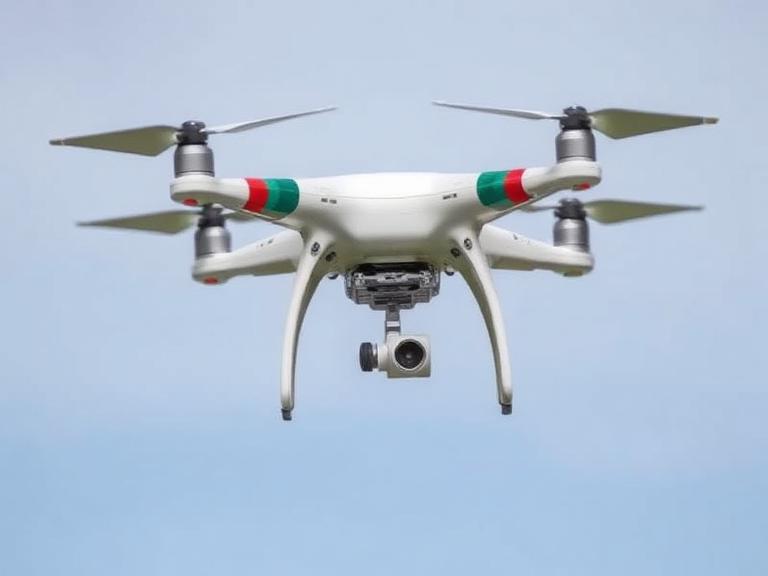
One of the most immediate ways to tell if a drone is a police drone is by observing its sheer physical size and airframe structure. Consumer drones are typically designed to be compact, foldable, and lightweight to comply with civilian aviation regulations and to appeal to casual photographers. They usually feature standard quadcopter configurations with fragile plastic bodies. In contrast, law enforcement agencies require robust, weather-resistant platforms capable of carrying heavy tactical payloads.
If you want to tell if a drone is a police drone, look for heavy-duty Multi-rotor UAV or Single-rotor UAV designs. These airframes are often constructed from carbon fiber, aerospace-grade aluminum, or advanced composites to withstand harsh weather conditions, including high winds and heavy rain. A police drone will frequently have a wider wheelbase and larger propellers compared to consumer models. Furthermore, for extended surveillance missions, such as highway patrol or border monitoring, police often utilize a VTOL Fixed Wing UAV System or a Composite Wing Flight Platform. These aircraft look more like traditional airplanes with vertical takeoff capabilities, a design rarely used by everyday hobbyists due to cost and operational complexity.
2. Specialized Lighting and Markings
Visual identification markers are another crucial factor when trying to tell if a drone is a police drone. By aviation law, most drones must possess anti-collision lights, typically flashing red, green, or white. However, law enforcement drones often feature specialized lighting configurations tailored for tactical use. From our experience in outfitting defense-grade UAVs, police drones may be equipped with high-intensity infrared (IR) strobe lights that are completely invisible to the naked eye but brightly illuminate the aircraft for other police units wearing night-vision goggles.
Additionally, some jurisdictions require law enforcement drones to mirror the visual identity of their patrol vehicles. You may spot alternating red and blue flashing LED lights on the undercarriage. We recommend looking closely at the chassis if the drone is flying at a low altitude; many police drones are explicitly marked with official decals, shield logos, or large lettering spelling out “POLICE” or “SHERIFF”. Unlike an Agricultural Drone which is usually painted in bright, highly visible colors for farm safety, tactical police drones are often painted in matte black, dark grey, or low-visibility colors to reduce their visual signature during covert operations.
3. Advanced Payloads and Sensor Suites
To definitively tell if a drone is a police drone, one must examine its payload. The equipment attached to the bottom of the drone is the most revealing indicator of its purpose. Consumer drones usually have a single, small camera lens integrated into a basic gimbal. Law enforcement drones, however, carry massive, multi-sensor payloads.
We recommend looking for oversized, spherical gimbals that house multiple lenses. These gimbals, like the integrated sensing-communication solutions we develop at ChinaMoneypro UAV, typically contain high-definition optical zoom cameras (capable of reading a license plate from thousands of feet away) paired with Forward Looking Infrared (FLIR) thermal imaging sensors. If you see a drone equipped with a high-powered searchlight or a loudspeaker system used for crowd control or suspect negotiation, you can almost certainly tell if a drone is a police drone. Furthermore, highly advanced models may carry miniaturized radar systems or communication relay pods designed to establish emergency data links during a crisis.
4. Flight Behavior and Operational Patterns
Hardware aside, observing the flight dynamics is a highly reliable way to tell if a drone is a police drone. Hobbyists tend to fly erratically, capturing cinematic sweeping shots or racing through open areas. Commercial surveyors fly in strict, automated lawnmower-style grid patterns to map terrain. Police drones, however, exhibit distinct tactical behaviors based on the mission at hand.
During a suspect pursuit or a search and rescue operation, a police drone will often establish a high-altitude overwatch position, hovering completely stationary for extended periods while its optical zoom camera tracks the subject. This loitering behavior is a major clue. Alternatively, during a dynamic tactical entry, SWAT teams might deploy a Fiber Optic FPV Drone System. These specialized first-person-view drones are flown rapidly and precisely through windows or narrow corridors to scout building interiors before officers enter. If you observe a drone performing highly coordinated, persistent overwatch or precise structural clearing, it is highly likely you are watching a police drone in action.
5. The Use of Tethered Drone Systems
One of the most specialized applications in law enforcement aviation is the use of tethered technology. If you are at a large public event, a protest, or a major incident command center, and you see a drone hovering directly above a police vehicle for hours on end, you do not need to guess how to tell if a drone is a police drone. It is almost certainly a tethered law enforcement asset.
At ChinaMoneypro UAV, we manufacture highly advanced Tethered Drones and the accompanying Tether Box infrastructure. These systems connect the UAV to a ground power source via a micro-tether, providing continuous electricity and a secure, unjammable data link. While a standard battery-operated drone must land every 30 to 40 minutes to recharge, a tethered police drone can remain airborne for 24 hours or more, providing uninterrupted aerial command and control. This continuous, stationary deployment is an undeniable hallmark of institutional security operations.
6. Summary Table: Consumer Drones vs. Police Drones
To assist in quick identification, we have compiled a summary table highlighting the primary differences that will help you tell if a drone is a police drone versus a civilian model.
| Feature | Typical Consumer Drone | Law Enforcement / Police Drone |
|---|---|---|
| Airframe Size | Small, compact, under 2 kilograms | Large, heavy-duty, 5 to 25+ kilograms |
| Color and Markings | White, bright colors, brand logos | Matte black, grey, official police decals |
| Payloads | Single standard 4K camera | Thermal imaging, optical zoom, loudspeakers, spotlights |
| Lighting | Standard red/green navigation lights | Red/blue strobes, IR tactical lighting |
| Flight Endurance | 20 to 40 minutes | Extended endurance (VTOL) or unlimited (Tethered) |
| Flight Behavior | Sweeping cinematic shots, low altitudes | High-altitude stationary overwatch, tactical grid searches |
7. ChinaMoneypro UAV: Engineered for Security
Understanding the technological gap between commercial toys and defense-grade hardware is essential when you want to tell if a drone is a police drone. ChinaMoneypro UAV stands at the forefront of this technological divide. Transformed from a prestigious state-owned research institute, our deep roots in defense-grade engineering allow us to deliver unparalleled reliability to security agencies.
We provide a comprehensive ecosystem of professional UAV/Drones tailored for demanding environments. For agencies requiring long-range patrol capabilities, our Petrol Electric Hybrid VTOL and Airplane & VTOL systems offer the extended endurance needed for highway and border operations. When rapid deployment and high payload capacity are required, our Multi-rotor UAV and Single-rotor UAV platforms provide the heavy-lift capabilities necessary to carry advanced radar and communication relays.
Furthermore, our Multifunctional Drone systems are designed to adapt to fluid tactical situations. By integrating our proprietary gimbals, data links, and communication technologies, we ensure that law enforcement commands maintain secure, real-time situational awareness. Whether deploying our Tethered Drones utilizing our advanced Tether Box for crowd overwatch, or utilizing our Fiber Optic FPV Drone System for close-quarters tactical entry, ChinaMoneypro UAV remains a premier provider of complete, full-stack unmanned solutions for global security professionals.
8. Frequently Asked Questions (FAQs)
9. References
1. Federal Aviation Administration (FAA). “Law Enforcement and Public Safety Drone Operations Guidelines.” Aviation Safety Publications, 2025.
2. International Association of Chiefs of Police (IACP). “Recommended Guidelines for the Use of Unmanned Aerial Vehicles.” Tactical Aviation Report, 2024.