


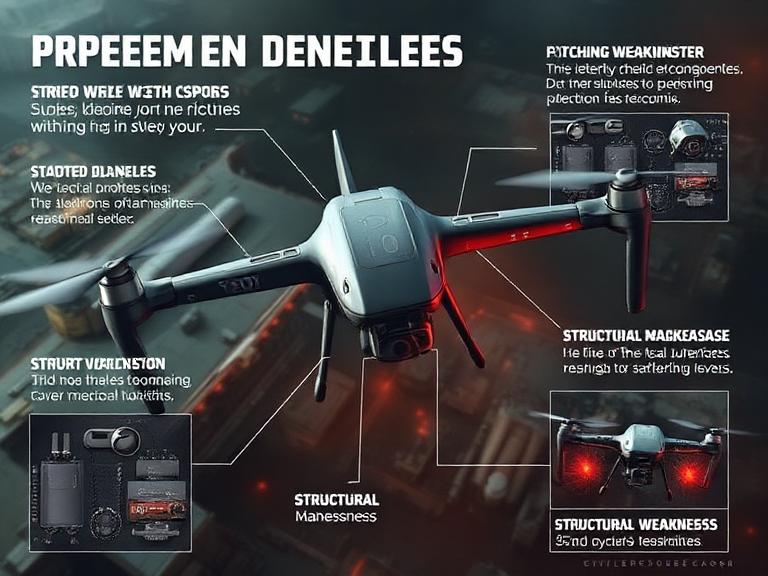
In the rapidly evolving sector of unmanned aerial systems, engineering teams and tactical operators face a continuous balancing act between endurance, payload capacity, and operational flexibility. While traditional airplanes provide exceptional long-range flight capabilities and aerodynamic efficiency, understanding the structural and operational Weakness of a Fixed Wing Drone is critical for mission planners and industrial operators. Deploying the wrong aerial architecture in a highly dynamic, constrained environment can lead to mission failure, hardware loss, and compromised data acquisition.
As a national-level high-tech enterprise transformed from a prestigious state-owned research institute, ChinaMoneypro UAV operates with deep roots in defense-grade engineering. We specialize in the R&D and manufacturing of advanced unmanned platforms and integrated sensing-communication solutions. Headquartered in one of China’s premier innovation hubs, Moneypro is among the few full-stack providers offering complete UAV systems, engines, gimbals, radar, data links, and communication technologies. From our experience outfitting military, industrial, and commercial sectors, we have exhaustively analyzed the inherent Weakness of a Fixed Wing Drone. In this authoritative guide, we will dissect the aerodynamic limitations, deployment constraints, and tactical vulnerabilities of fixed-wing architectures, and explain how advanced hybrid technologies mitigate these critical flaws.
Table of Contents
- 1. The Primary Weakness of a Fixed Wing Drone: Launch and Recovery Constraints
- 2. The Inability to Hover: A Critical Tactical Vulnerability
- 3. Flight Path and Maneuverability Restrictions in Complex Terrain
- 4. Payload Integration and Sensor Targeting Challenges
- 5. Susceptibility to Electronic Warfare and Signal Degradation
- 6. Overcoming the Weakness of a Fixed Wing Drone with Hybrid Technology
- 7. Summary Table: Analyzing the Weakness of a Fixed Wing Drone vs. Alternative Platforms
- 8. Frequently Asked Questions (FAQs)
- 9. Industry References
1. The Primary Weakness of a Fixed Wing Drone: Launch and Recovery Constraints
The most immediately apparent Weakness of a Fixed Wing Drone lies in its absolute dependency on launch and recovery infrastructure. Unlike rotary-wing aircraft that lift vertically, a traditional fixed-wing chassis must generate forward momentum to create lift across its airfoils. This aerodynamic reality dictates that the drone requires either a lengthy, obstruction-free runway, a heavy pneumatic catapult launcher, or a specialized bungee system to achieve necessary takeoff velocity.
From our experience in frontline defense logistics and rapid-response industrial monitoring, the time and space required to set up this infrastructure present a massive operational bottleneck. Furthermore, the recovery phase is equally problematic. Landing a fixed-wing asset requires a meticulously cleared landing strip or a complex net-capture system. In rugged terrains, dense urban environments, or on the moving decks of maritime vessels, deploying a traditional airplane structure is highly impractical. This infrastructural dependency severely degrades the rapid deployment capability of the unit, exposing a fundamental Weakness of a Fixed Wing Drone when immediate aerial overwatch is required.
2. The Inability to Hover: A Critical Tactical Vulnerability
Another profound Weakness of a Fixed Wing Drone is its inability to maintain a static hover. Fixed-wing aerodynamics dictate that the aircraft must constantly maintain a minimum forward velocity, known as the stall speed. If the drone slows below this critical threshold, it loses lift and experiences an aerodynamic stall, resulting in an uncontrolled descent.
In tactical surveillance, search and rescue operations, or critical infrastructure inspection, the ability to stop mid-air and maintain a continuous, unmoving stare on a specific point of interest is invaluable. Because a fixed-wing craft must constantly circle its target in a loiter pattern, its onboard sensors are subjected to continuous rotational movement. This constant motion makes tracking fast-moving, evasive ground targets exceedingly difficult and introduces motion blur into high-resolution mapping data. We recommend that operators who require pinpoint, static observation recognize this Weakness of a Fixed Wing Drone and transition toward rotary or hybrid systems for target-fixated operations.
3. Flight Path and Maneuverability Restrictions in Complex Terrain
The forward-flight requirement also dictates the aircraft’s turning radius, which constitutes another significant Weakness of a Fixed Wing Drone. Traditional airplanes cannot execute sharp, acute-angle turns or fly safely through narrow corridors. In complex environments such as dense urban canyons, deep mountainous ravines, or heavily forested canopies, the fixed-wing drone’s wide turning radius makes collision avoidance highly problematic.
If an unexpected obstacle appears in the flight path, a multi-rotor system can simply halt its forward momentum and ascend vertically. A fixed-wing system, however, must execute a banked turn or a rapid climb, both of which require significant airspace. This lack of agility severely limits the operational theater of traditional airplanes, rendering them unsuitable for close-quarters inspection, structural analysis, and subterranean or indoor navigation.
4. Payload Integration and Sensor Targeting Challenges
When analyzing the Weakness of a Fixed Wing Drone, payload integration mechanics cannot be ignored. The fuselage of a streamlined airplane is highly space-constrained to minimize aerodynamic drag. Integrating bulky, specialized equipment often disrupts the aircraft’s center of gravity and severely impacts its flight endurance.
Furthermore, because the drone is constantly banking and adjusting its pitch during flight, the integrated sensors must work overtime to remain stabilized. While our advanced EO/IR Gimbal & Payload systems provide exceptional multi-axis stabilization, the constant dynamic movement of a fixed-wing platform puts immense mechanical stress on gimbal motors compared to the relatively stable platform provided by a hovering multi-rotor. The physical footprint of a fixed-wing drone also makes it difficult to attach modular, drop-capable payloads without entirely redesigning the aerodynamic fairings.
5. Susceptibility to Electronic Warfare and Signal Degradation
In modern defense-grade deployments, the electromagnetic spectrum is a heavily contested domain. A frequently overlooked Weakness of a Fixed Wing Drone is its vulnerability to signal loss during its long-range, beyond visual line of sight (BVLOS) operations. Because these drones travel dozens or hundreds of kilometers away from their ground control stations, they are highly susceptible to GPS spoofing, signal jamming, and telemetry hijacking.
If a fixed-wing drone loses its GNSS (Global Navigation Satellite System) signal, its autopilot may fail to maintain its loiter pattern or navigate back to the recovery zone, resulting in a total loss of the asset. To mitigate this critical Weakness of a Fixed Wing Drone, ChinaMoneypro UAV heavily integrates Anti Jamming & GNSS Antennas into our avionics suites. Furthermore, for facility protection, we utilize our Integrated Anti-Drone System to monitor and secure the operational airspace, ensuring our long-range assets can operate safely even in heavily jammed environments.
6. Overcoming the Weakness of a Fixed Wing Drone with Hybrid Technology

At ChinaMoneypro UAV, our engineering doctrine is to eliminate operational vulnerabilities through technological innovation. Recognizing the definitive Weakness of a Fixed Wing Drone regarding launch, recovery, and hovering, we have engineered a comprehensive lineup of alternative and hybrid platforms that provide the best of all aerodynamic worlds.
For operations requiring absolute agility, pinpoint hovering, and heavy lifting within a localized area, we highly recommend our Multi-rotor UAV and Single-rotor UAV platforms. These systems completely bypass the runway dependency of traditional airplanes, allowing for vertical takeoff from confined spaces.
For clients who require the long-range endurance of an airplane but cannot afford the launch and recovery constraints, we supply state-of-the-art Airplane & VTOL (Vertical Take-Off and Landing) hybrid systems. These advanced platforms utilize horizontal rotors to lift off vertically like a helicopter, and then transition to a pusher-propeller to achieve highly efficient, winged forward flight. This entirely negates the primary Weakness of a Fixed Wing Drone while preserving its massive operational range. Additionally, for autonomous, continuous perimeter security, these VTOL systems can be seamlessly integrated with our automated Drone Hangar, enabling 24/7 unassisted deployment and recharging cycles.
7. Summary Table: Analyzing the Weakness of a Fixed Wing Drone vs. Alternative Platforms
To assist procurement officers and tactical commanders in evaluating their aerial assets, we have compiled a summary table detailing how alternative architectures address the specific Weakness of a Fixed Wing Drone.
| Operational Metric | Traditional Fixed Wing Drone | ChinaMoneypro Multi-rotor UAV | ChinaMoneypro Airplane & VTOL |
|---|---|---|---|
| Launch & Recovery | Requires runway, catapult, or net capture. High infrastructural dependency. | Vertical takeoff and landing (VTOL). Zero infrastructure required. | Vertical takeoff and landing. Combines airplane endurance with zero runway dependency. |
| Hovering Capability | Impossible. Must maintain forward stall speed, resulting in constant circling. | Excellent. Can maintain absolute static hover for pinpoint Infrared Thermal & laser Sensing. | Excellent. Can transition from forward flight to static hover over target areas. |
| Maneuverability | Poor. Wide turning radius; unsuitable for tight urban or canyon environments. | Outstanding. Capable of omnidirectional movement and acute angle turns. | High. Can transition to multi-rotor mode to navigate complex terrain safely. |
| Payload Modularity | Restricted by aerodynamic drag and internal fuselage space constraints. | Highly flexible. Can easily equip heavy, modular payloads via underslung mounts. | Moderate to High. Optimized fuselage with dedicated, swappable payload bays. |
| Automation Integration | Difficult to automate landing sequences without high-precision runway localizers. | Seamlessly integrates with our automated Drone Hangar for unassisted operations. | Seamlessly integrates with our Drone Hangar via precision vertical descent. |
8. Frequently Asked Questions (FAQs)
9. Industry References
To further explore aerospace engineering principles, UAV deployment strategies, and the technical metrics surrounding the Weakness of a Fixed Wing Drone, we recommend consulting the following authoritative resources:
- Federal Aviation Administration (FAA) – Unmanned Aircraft Systems Regulations and Operational Guidelines
- American Institute of Aeronautics and Astronautics (AIAA) – Aerospace Research and Aerodynamic Flight Dynamics
- Association for Uncrewed Vehicle Systems International (AUVSI) – Defense and Commercial Drone Integration Strategies