


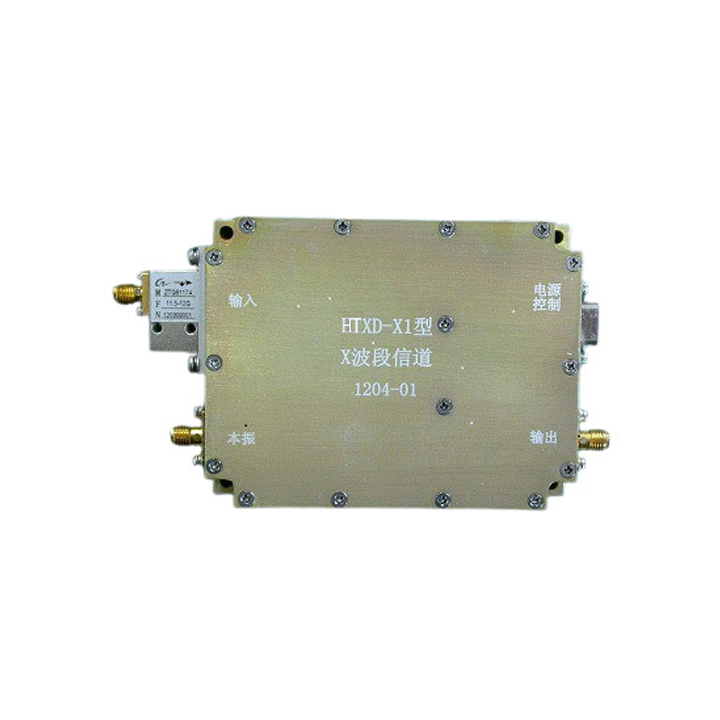
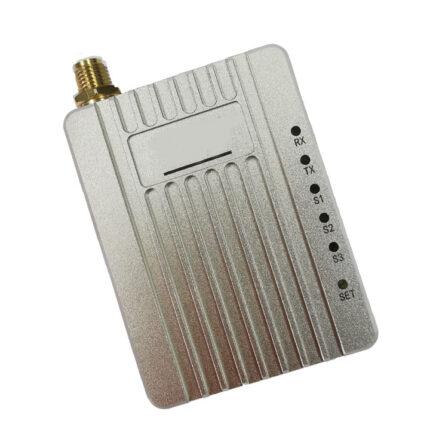
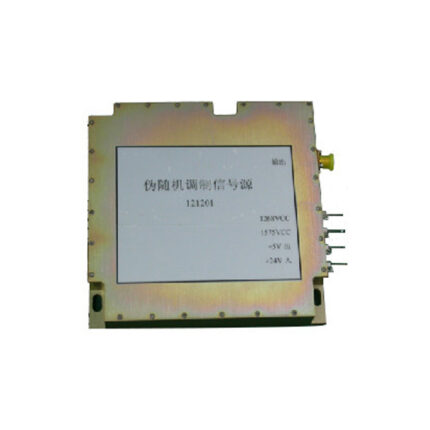
Channelized Receiver
Building on the expertise of its experienced microwave team, process team, and management team, Hangtai Technology has continuously raised the bar for R&D and production of microwave components. The microwave components developed by this division not only satisfy the requirements of the company’s radar and radio altimeter systems but also deliver value to society through their applications.
Related products
Subminiature Radio Altimeter MY-70A
The MY-70A radio altimeter is a solid-state C-band radio altimeter system based on frequency-modulated continuous wave (FMCW) technology, featuring constant beat frequency and closed-loop tracking measurement. It maintains a constant beat frequency by servo-controlling the slope of the sawtooth wave that modulates the microwave oscillator, thereby achieving automatic altitude tracking. Under the condition of a constant beat frequency, the measured altitude is proportional to the modulation period; thus, altitude information can be acquired by measuring the modulation period, and the system then converts this information into an altitude voltage for output. The MY-70A altimeter boasts excellent anti-jamming performance, thanks to its adoption of a narrow-band receiver (with gain adjustable according to altitude), as well as technologies including equivalent spectrum front-end detection, weighted frequency identification, and automatic servo tracking. Additionally, the altimeter’s high-frequency components are implemented with microwave integration, while its low-frequency components utilize a modular design—these measures collectively enhance the product’s reliability, anti-interference capability, and electromagnetic compatibility.
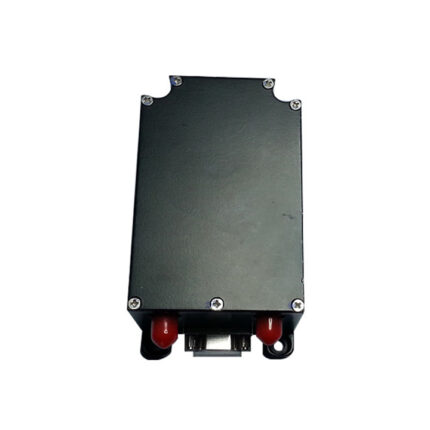
Subminiature Radio Altimeter MY-3001
The MY-3001 series altimeters include models such as MY-3001A, MY-3001B, MY-3001C, MY-3001D, MY-3001E, MY-3001F, MY-3001G, and MY-3001H; as China’s smallest and lightest full-function radio altimeters that meet aerospace standards, they serve as key components for longitudinal height channel control and can be widely used in UAVs to measure altitude relative to the sea or ground. The MY-3001 series altimeters adopt linear modulation coefficient technology adaptive to altitude changes and echo signal narrow-band receiving technology to enhance the product’s resistance to active interference, use coherent local oscillator mixing to achieve superior performance in resisting co-frequency asynchronous interference, employ echo signal spectrum front detection technology to improve tracking accuracy, and follow the three design principles of serialization, standardization, and modularization to enable high-speed production; additionally, built on a closed-loop tracking system, they integrate digital control technology, microwave integration technology, and hybrid integration technology to realize ultra-miniaturization of the product. As China’s first full-function radio altimeter, the series is known as the "high-speed rail ticket" in the industry.
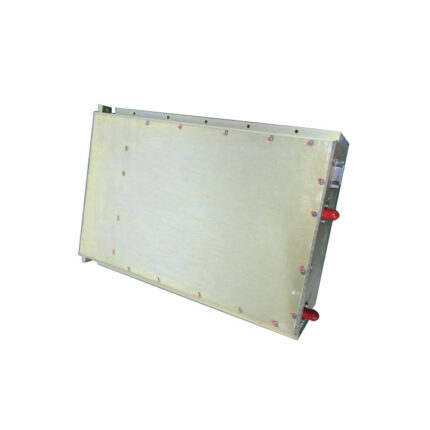
MASS-18 Universal Echo Precision Delay Module (Miniature Universal Continuous Simulation)
The MASS-18 Universal Echo Precision Delay Module, characterized by its miniature design and universal continuous simulation capability, is a high-precision component engineered for precise echo signal delay adjustment in radio frequency (RF) testing scenarios. It specializes in delivering accurate, customizable delay for echo signals across a broad frequency range, making it compatible with diverse RF devices—including radio altimeters, surveillance radars, and communication systems—that require reliable echo signal simulation. Its compact form factor allows easy integration into space-constrained test setups, while the universal continuous simulation function ensures consistent replication of real-world signal delay conditions (such as those caused by varying altitudes or distances). By enabling precise control over echo delay, the module plays a critical role in verifying key performance metrics of target devices, such as signal capture accuracy, delay response, and data processing reliability, thereby supporting the development, calibration, and quality assurance of high-performance RF equipment with flexibility and precision.
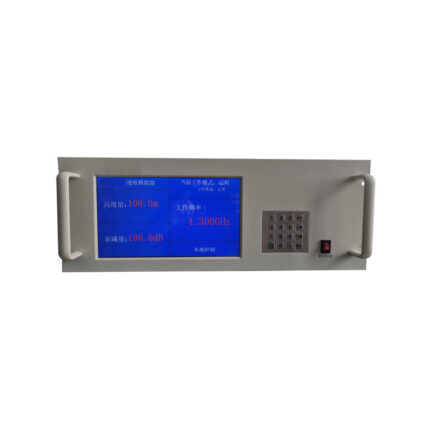
MASS-21 Echo Simulator of Radio Altimeter
The MASS-21 Radio Altimeter Echo Simulator is capable of simulating both static and dynamic echo signals of altimeters under a variety of altitude conditions and reflection coefficient scenarios. It is compatible with radio altimeters of multiple systems, including frequency modulation (FM) systems, phase modulation (PM) systems, and pulse systems, and is also equipped with a built-in self-check function to ensure its own operational reliability during use.
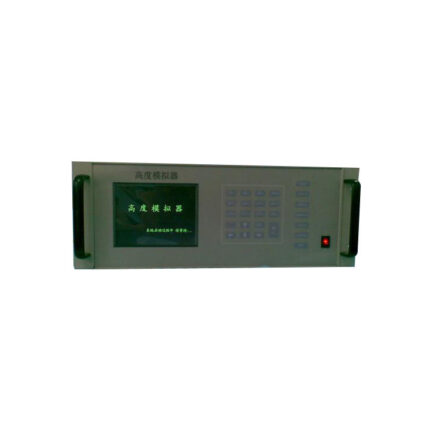
MAST-11 Equivalent Altitude Simulator of Radio Altimeter
The MAST-11 Equivalent Altitude Simulator of Radio Altimeter is a specialized aerospace testing tool engineered to replicate realistic altitude signals for radio altimeter systems. It generates precise, adjustable equivalent altitude data—mimicking terrain-relative height scenarios—to validate the performance, accuracy, and fault response of on-board radio altimeters during pre-flight testing, maintenance, or system calibration. Compliant with stringent aerospace standards, it ensures reliable simulation of low-to-high altitude ranges, supports interference-free signal output, and integrates easily with aircraft test setups, making it essential for verifying radio altimeter functionality across commercial and special aircraft platforms.
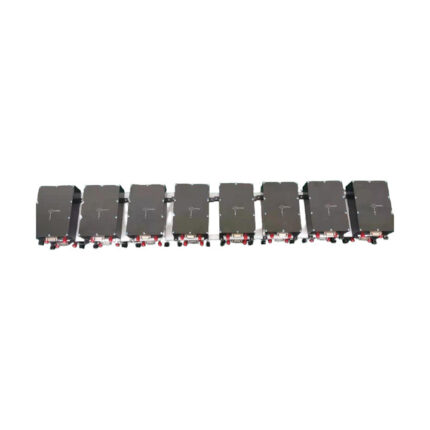
MDG-300 Radio Altimeter
The MDG-300 radio height-fixing device operates in the C-band and adopts a pulse compression system. Its sensitive component is of the heterodyne type, and the circulator at the antenna terminal uses a transceiver common-mode design. Prior to missile launch, the height-fixing device is powered on, and it undergoes self-check and height presetting via the communication interface. After the missile is launched, the radio frequency (RF) module is activated, and a gate is set in accordance with the preset height. When the preset height is reached, the device outputs height-fixing command information and telemetry data. The MDG-300 height-fixing device features mature technology: its pulse compression technology can enhance the altimeter’s height measurement performance, and it has the characteristic of a wide height measurement range. Additionally, the digital pulse compression function based on FPGA (Field-Programmable Gate Array) endows it with advantages such as small size, low power consumption, and low cost.
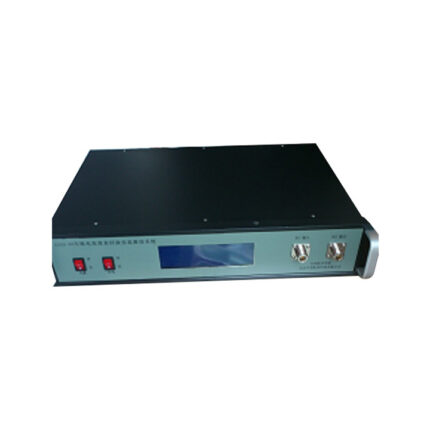
MASS-06 Continuous Echo Simulation Excitation System of Radio Altimeter
The MASS-06 Echo Signal Simulation Excitation System, hereinafter referred to as the "Simulation Excitation Source", is a dedicated equipment designed for the hardware-in-the-loop (HIL) simulation of radio altimeters. It serves as a key component in replicating real-world echo signal scenarios, providing targeted excitation signals that enable the radio altimeter to operate under simulated physical conditions—effectively bridging the gap between theoretical testing and actual operational environments to validate the altimeter’s performance, responsiveness, and reliability.
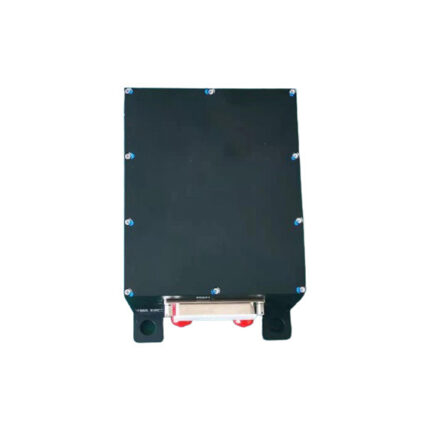
MDG-200 Radio Altimeter
The MDG-200 radio height-setting device operates in the C-band and adopts a monopulse working system. Its sensitive component is of the heterodyne type, and the circulator at the antenna terminal uses a transceiver common-mode configuration. Prior to missile launch, the height-setting device needs to be powered on; it then performs a self-check and completes height setting via the communication interface. After the missile is launched, the radio frequency (RF) module is activated, and a gate is set based on the preconfigured height. When the preset height is reached, the device outputs height-setting command information and telemetry data. The MDG-200 height-setting device features mature technology: the monopulse design enhances the altimeter’s height measurement performance, and the device also has the characteristic of not being affected by the carrier’s speed.
