


I/Q Modem
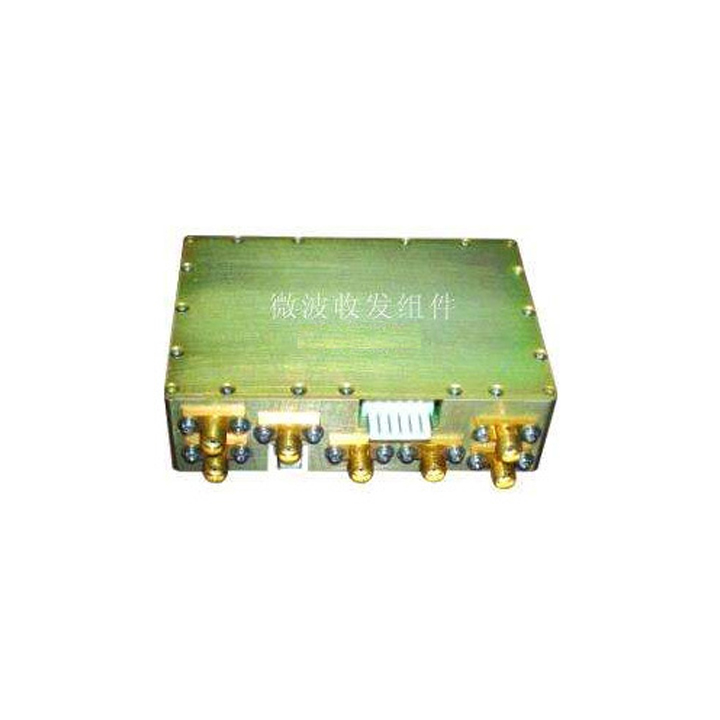
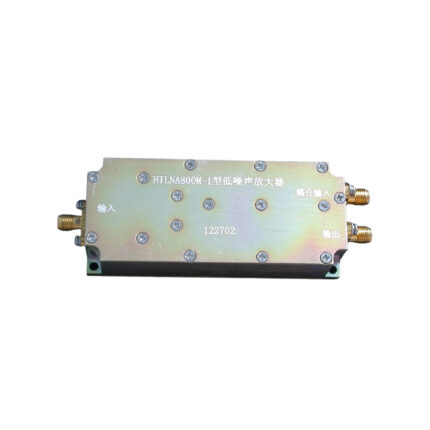
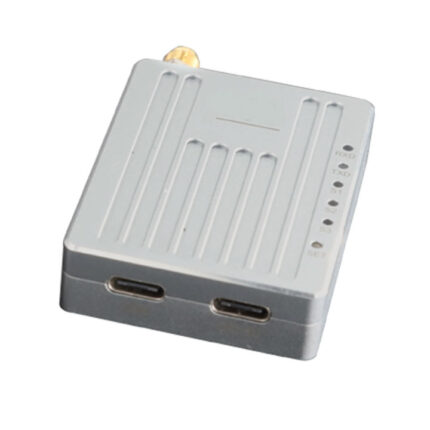
Leveraging its seasoned microwave team, process team, and management team, Hangtai Technology has steadily enhanced the R&D and production capabilities of microwave components. The microwave components developed by this division are not only capable of meeting the company’s requirements for radar systems and radio altimeters but also can be applied to serve broader social needs.
Related products
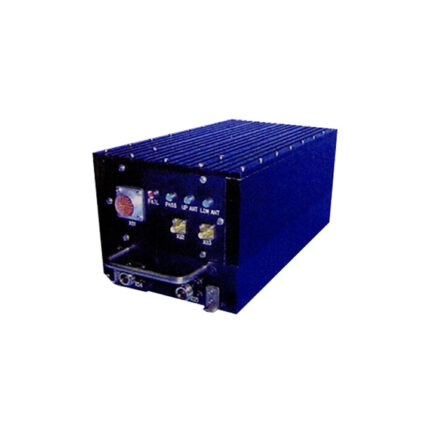
Radio Altimeter MY-3001D
The MY-3001D radio altimeter incorporates two key technologies: a linear modulation coefficient technology that adapts to altitude changes and a narrow-band receiving technology for echo signals, both of which effectively enhance the product’s resistance to active interference. It also adopts coherent local oscillator mixing, granting it superior performance in resisting co-frequency asynchronous interference, and employs echo signal spectrum front-edge detection technology to boost tracking accuracy. In terms of design, the altimeter follows the principles of serialization, standardization, and modularization. While retaining its closed-loop tracking system, it further integrates digital control technology, microwave integration technology, and hybrid integration technology to achieve product modularization. Additionally, it is equipped with a silent function, which further improves the product’s anti-interference capability. This radio altimeter is applicable to cruise missiles and unmanned aerial vehicles (UAVs) for measuring the altitude relative to the sea surface or the ground.
Radio Altimeter MY-3001M
The MY-3001m radio altimeter is a radar altimeter developed for the Rainbow XX UAV by a specific institute. It is widely used in UAVs to measure the altitude relative to the sea surface or the ground. This altimeter incorporates a linear modulation coefficient technology adaptable to altitude changes and a narrow-band receiving technology for echo signals, which enhances the product’s resistance to active interference. It also adopts coherent local oscillator mixing, delivering superior performance in resisting synchronous interference, and employs echo signal spectrum front-edge detection technology to improve tracking accuracy. Additionally, it features a three-dimensional design based on serialization, standardization, and modularization, endowing the product with excellent inheritance, maturity, and reliability. While retaining the closed-loop tracking system, the MY-3001m radio altimeter further adopts digital control technology, microwave integration technology, and hybrid integration technology to achieve product modularization. Moreover, its receiver is equipped with dual filters, which further boosts the product’s anti-interference capability.
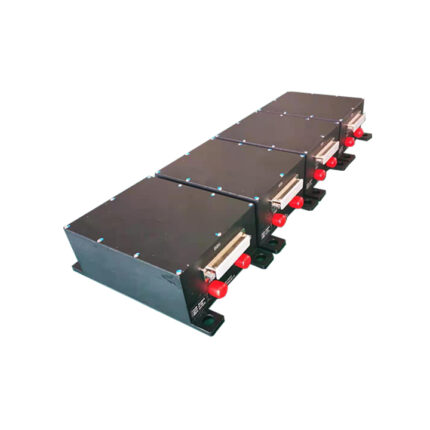
Micro Radio Altimeter MY-2001
The MY-2001 altimeter is a new-generation radar altimeter designed for small missile aircraft; as a compact, full-function radio altimeter that meets aerospace standards, it serves as a key component for longitudinal height channel control and can be widely used in cruise missiles and UAVs to measure altitude relative to the sea or ground. The MY-2001 adopts linear modulation coefficient technology adaptive to height changes and echo signal narrow-band receiving technology to enhance the product’s resistance to active interference, uses coherent local oscillator mixing to achieve superior performance in resisting co-frequency asynchronous interference, employs echo signal spectrum front detection technology to improve tracking accuracy, and follows the three design principles of serialization, standardization, and modularization to ensure good product inheritance; moreover, built on a closed-loop tracking system, it integrates digital control technology, microwave integration technology, and hybrid integration technology to realize product miniaturization.
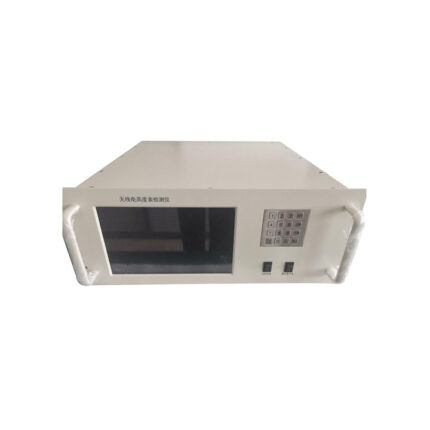
MAST-09 Radio Altimeter Detection Unit
The MAST-09 Radio Altimeter Detection Unit is a compact, aerospace-grade component that monitors, validates, and processes radio altimeter data for aircraft. It filters interference, cross-references data with other flight sensors, and detects faults (e.g., signal loss, calibration drift) to deliver reliable terrain-relative altitude info—critical for safe takeoff, low-altitude flight, approach, and landing, even in low visibility. Built to meet strict aerospace standards (e.g., DO-160, DO-178), it withstands extreme environmental conditions, suiting commercial and military aircraft.
Subminiature Radio Altimeter MY-70B
The MY-70B radio altimeter is a solid-state C-band radio altimeter system based on frequency-modulated continuous wave (FMCW) technology, characterized by constant beat frequency and closed-loop tracking measurement. It maintains a constant beat frequency by servo-controlling the slope of the sawtooth wave that modulates the microwave oscillator, thereby achieving automatic altitude tracking. Under the condition of constant beat frequency, the measured altitude is proportional to the modulation period; thus, altitude information can be obtained by measuring the modulation period, and the system then converts this information into an altitude voltage for output. The MY-70B altimeter possesses excellent anti-jamming performance, owing to its adoption of a narrow-band receiver (with gain adjustable according to altitude) as well as technologies including equivalent spectrum front-end detection, weighted frequency identification, and automatic servo tracking. In terms of component design, its high-frequency components implement microwave integration while its low-frequency components adopt a modular design—these measures collectively enhance the product’s reliability, anti-interference capability, and electromagnetic compatibility. Additionally, the MY-70B altimeter uses RS422 and CAN protocols for its interface output, which further improves the reliability of the product’s data transmission.
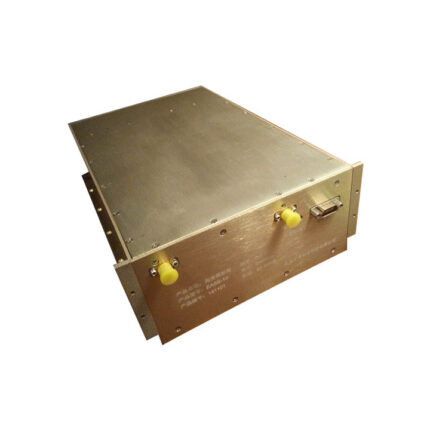
MASS-10 Universal Echo Precision Delay Module (Miniature Universal Continuous Simulation)
The MASS-10 Universal Echo Precision Delay Module, featuring a miniature design and universal continuous simulation capability, is a high-performance component tailored for precise echo signal delay control in radio frequency (RF) testing scenarios. It excels in providing accurate, adjustable delay for echo signals across a wide range of frequencies, making it applicable to various devices like radio altimeters, radars, and other RF-based systems that require reliable echo signal simulation. With its compact size, the module is easy to integrate into limited-space test setups, while the universal continuous simulation function ensures it can replicate diverse real-world signal delay conditions consistently. This module plays a crucial role in verifying the performance of target devices—such as testing their ability to accurately capture and process delayed echo signals—thereby supporting the development, calibration, and quality assurance of RF equipment with high precision and flexibility.
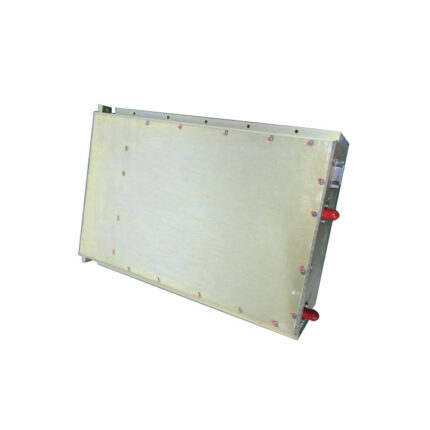
MASS-18 Universal Echo Precision Delay Module (Miniature Universal Continuous Simulation)
The MASS-18 Universal Echo Precision Delay Module, characterized by its miniature design and universal continuous simulation capability, is a high-precision component engineered for precise echo signal delay adjustment in radio frequency (RF) testing scenarios. It specializes in delivering accurate, customizable delay for echo signals across a broad frequency range, making it compatible with diverse RF devices—including radio altimeters, surveillance radars, and communication systems—that require reliable echo signal simulation. Its compact form factor allows easy integration into space-constrained test setups, while the universal continuous simulation function ensures consistent replication of real-world signal delay conditions (such as those caused by varying altitudes or distances). By enabling precise control over echo delay, the module plays a critical role in verifying key performance metrics of target devices, such as signal capture accuracy, delay response, and data processing reliability, thereby supporting the development, calibration, and quality assurance of high-performance RF equipment with flexibility and precision.
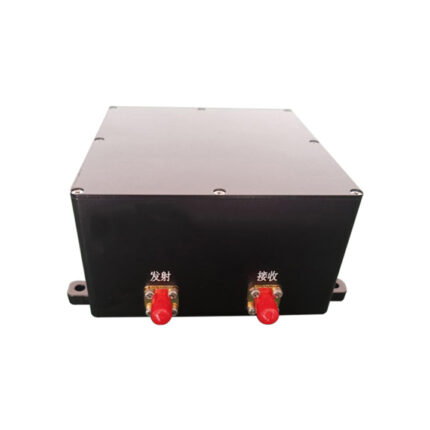
Small Radio Altimeter MY-1000
The MY-1000 altimeter is a radar altimeter specially designed for a specific type of target missile aircraft; as a compact, full-function radio altimeter that complies with aerospace standards, it serves as a key component for longitudinal altitude channel control and can be widely used in cruise missiles and UAVs to measure height relative to sea level or the ground. The MY-1000 adopts linear modulation coefficient technology adaptive to height changes and echo signal narrow-band receiving technology to enhance the product’s resistance to active interference, uses coherent local oscillator mixing to achieve superior performance in resisting co-frequency asynchronous interference, employs echo signal spectrum front detection technology to improve tracking accuracy, and follows the three design principles of serialization, standardization, and modularization—endowing it with good product inheritance, maturity, and reliability.
