


I/Q Modem
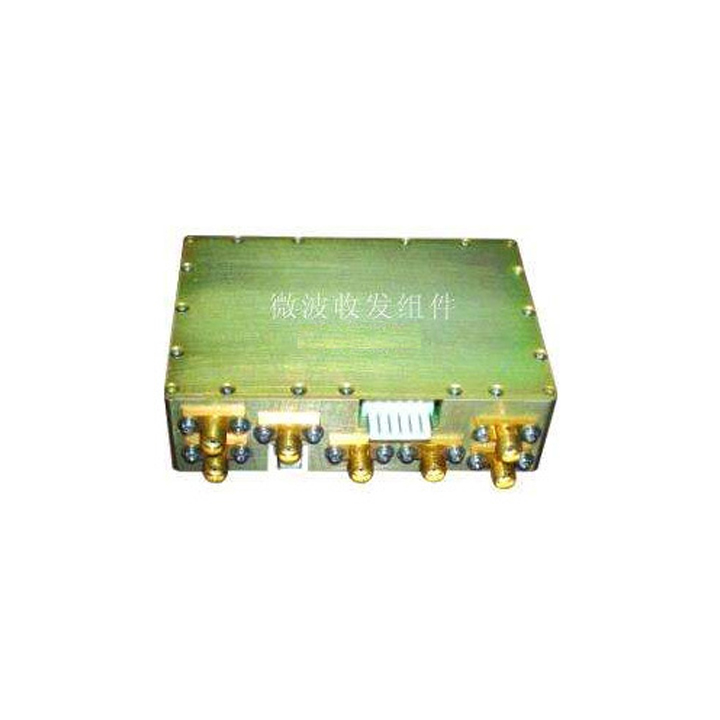
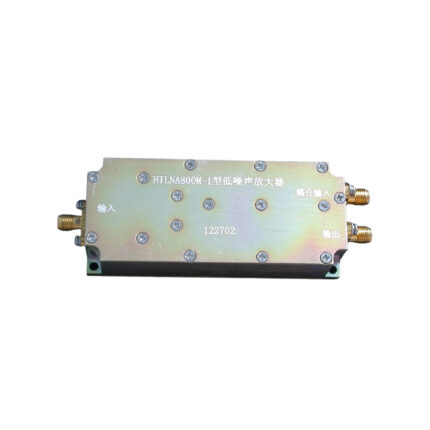
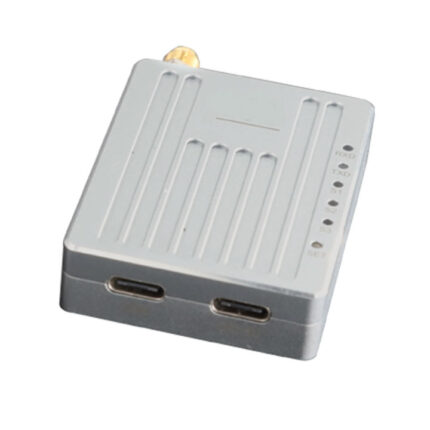
Leveraging its seasoned microwave team, process team, and management team, Hangtai Technology has steadily enhanced the R&D and production capabilities of microwave components. The microwave components developed by this division are not only capable of meeting the company’s requirements for radar systems and radio altimeters but also can be applied to serve broader social needs.
Related products
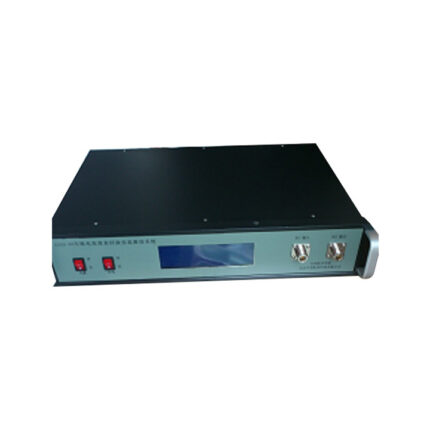
MASS-06 Continuous Echo Simulation Excitation System of Radio Altimeter
The MASS-06 Echo Signal Simulation Excitation System, hereinafter referred to as the "Simulation Excitation Source", is a dedicated equipment designed for the hardware-in-the-loop (HIL) simulation of radio altimeters. It serves as a key component in replicating real-world echo signal scenarios, providing targeted excitation signals that enable the radio altimeter to operate under simulated physical conditions—effectively bridging the gap between theoretical testing and actual operational environments to validate the altimeter’s performance, responsiveness, and reliability.
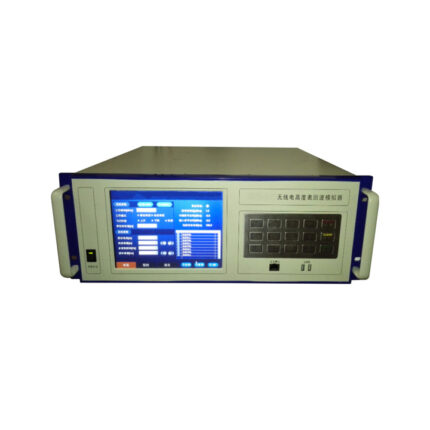
MASS-15 Continuous Echo Simulation Excitation System of Radio Altimeter
The MASS-15 Continuous Echo Simulation Excitation System of Radio Altimeter is a specialized testing equipment designed to support the performance verification, calibration, and development of radio altimeters. It focuses on generating stable, continuous echo signals that accurately replicate real-world altitude-related signal environments—including varying echo amplitudes, frequency characteristics, and delay parameters corresponding to different flight altitudes and terrain conditions. By providing these realistic simulated excitation signals, the system enables radio altimeters to operate under controlled laboratory conditions, allowing engineers to test key functions such as height measurement accuracy, continuous tracking stability, and anti-interference capability. Its reliable continuous echo simulation function not only replaces the need for complex and costly field tests but also ensures consistent, repeatable test results, making it an essential tool for ensuring the reliability and performance of radio altimeters in practical aviation applications.
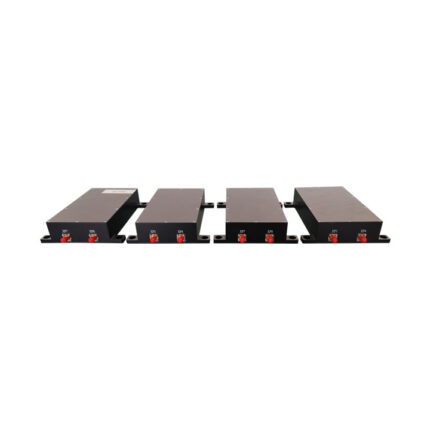
MY-70D Anti Jamming Radio Altimeter
Operating in the C-band, the MY-70D radio altimeter employs a frequency-modulated continuous wave (FMCW) operating system and incorporates closed-loop tracking measurement technology, equipping it with the capability to resist same-frequency asynchronous interference. This ensures that when multiple aircraft take off and fly simultaneously, their altimeters do not interfere with one another. To achieve resistance against active interference, the altimeter adopts a range of measures, including anti-blocking, anti-burnout, power control, beam control, frequency agility, and frequency modulation (FM) technology. Furthermore, it features silent power supply control for its microwave components; its antenna is fitted with a band-pass filter, and a customized radome with frequency-selective functionality is utilized—these design elements enable the altimeter to achieve a wave transmission rate of ≥85% for the operating frequency within the band and less than 10% for out-of-band frequencies, thereby realizing stealth capabilities.
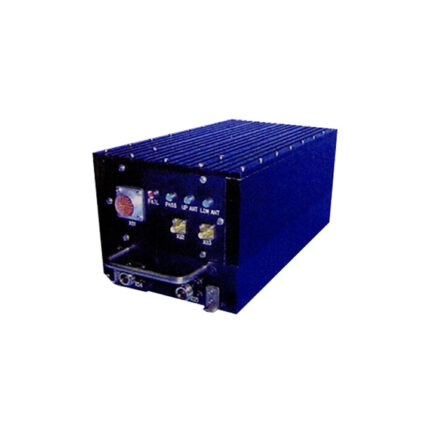
Radio Altimeter MY-3001D
The MY-3001D radio altimeter incorporates two key technologies: a linear modulation coefficient technology that adapts to altitude changes and a narrow-band receiving technology for echo signals, both of which effectively enhance the product’s resistance to active interference. It also adopts coherent local oscillator mixing, granting it superior performance in resisting co-frequency asynchronous interference, and employs echo signal spectrum front-edge detection technology to boost tracking accuracy. In terms of design, the altimeter follows the principles of serialization, standardization, and modularization. While retaining its closed-loop tracking system, it further integrates digital control technology, microwave integration technology, and hybrid integration technology to achieve product modularization. Additionally, it is equipped with a silent function, which further improves the product’s anti-interference capability. This radio altimeter is applicable to unmanned aerial vehicles (UAVs) for measuring the altitude relative to the sea surface or the ground.
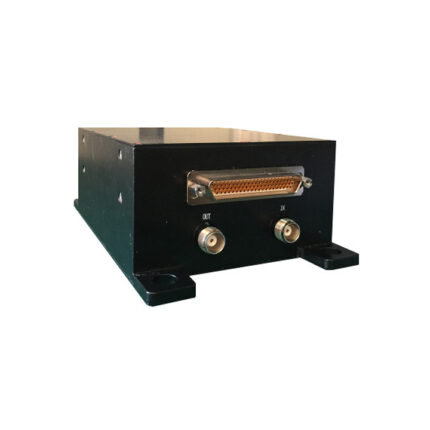
Pulse Radar Altimeter MY-600L、MY-800L
The MY-600L altimeter is a fixed-frequency pulse radar altimeter developed for a specific type of aircraft, while the MY-800L altimeter is a frequency-agile pulse radar altimeter designed for another particular aircraft model. Both altimeters find wide application in aircraft, serving to measure the relative height above the sea or ground. Notably, the MY-600L features a design approach centered on serialization, standardization, and modularization, which endows it with favorable product inheritance, high maturity, and reliable performance.
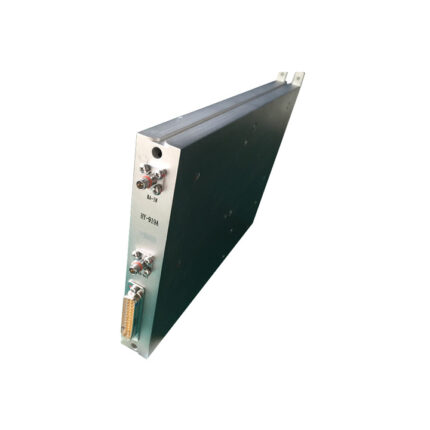
6U Module Radio Altimeter MY-919
The MY-919 radio altimeter is a new-generation altitude-measuring radar system designed for a specific type of aircraft; as a miniaturized, full-function radio altimeter that complies with avionics standards, it serves as a key component for the control of an aircraft’s longitudinal altitude channel and can be widely applied in large aircraft and unmanned aerial vehicles (UAVs). A radio altimeter based on a frequency-modulated continuous wave (FM CW) closed-loop tracking servo control measurement system, the MY-919 adopts linear modulation coefficients adaptive to altitude changes and narrow-band reception of echo signals, granting the product strong resistance to active interference; it uses coherent mixing reception, which delivers superior performance in resisting co-frequency asynchronous interference and ensures the product has good electromagnetic compatibility; it employs echo signal spectrum front detection technology, enabling the product to maintain high precision in tracking and measurement; it follows serialization, standardization, and modularization design principles, resulting in good product inheritance; and it integrates digital frequency-domain processing and control, microwave integration technology, and hybrid integration technology, making the product stable in performance, mature, and reliable.
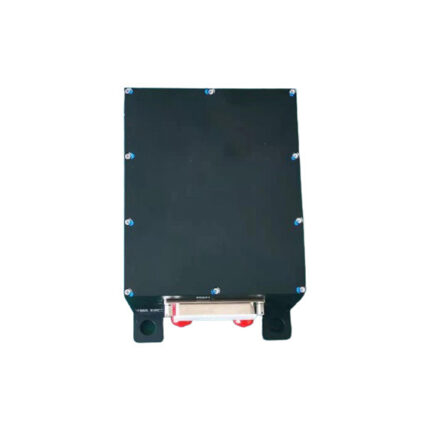
MDY-71/74 Millimeter Wave Guidance Radar
The MDY-71/74 demonstration radar is a compact millimeter-wave coherent guidance radar that utilizes a phase difference system. It boasts key features including low cost, low power consumption, and high reliability, enabling it to detect and track targets—such as vehicles and vessels—within its beam coverage. Additionally, this radar can provide critical target information like distance and angle, while also supporting situational display functionality.
Subminiature Radio Altimeter MY-70B
The MY-70B radio altimeter is a solid-state C-band radio altimeter system based on frequency-modulated continuous wave (FMCW) technology, characterized by constant beat frequency and closed-loop tracking measurement. It maintains a constant beat frequency by servo-controlling the slope of the sawtooth wave that modulates the microwave oscillator, thereby achieving automatic altitude tracking. Under the condition of constant beat frequency, the measured altitude is proportional to the modulation period; thus, altitude information can be obtained by measuring the modulation period, and the system then converts this information into an altitude voltage for output. The MY-70B altimeter possesses excellent anti-jamming performance, owing to its adoption of a narrow-band receiver (with gain adjustable according to altitude) as well as technologies including equivalent spectrum front-end detection, weighted frequency identification, and automatic servo tracking. In terms of component design, its high-frequency components implement microwave integration while its low-frequency components adopt a modular design—these measures collectively enhance the product’s reliability, anti-interference capability, and electromagnetic compatibility. Additionally, the MY-70B altimeter uses RS422 and CAN protocols for its interface output, which further improves the reliability of the product’s data transmission.
