


Authored by the engineering and aerospace professionals at ChinaMoneypro UAV. We specialize in the research, development, and manufacturing of advanced industrial unmanned aerial vehicles, providing robust payload solutions and flight platforms for demanding commercial and defense applications worldwide.
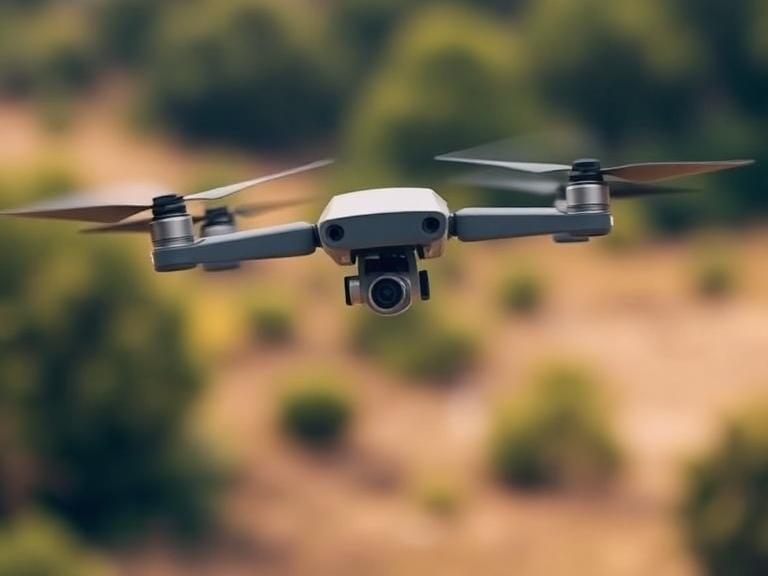
The landscape of industrial surveying and asset monitoring has fundamentally shifted. As global infrastructure ages and energy corridors expand across increasingly remote terrains, the limitations of traditional multirotor drones have become glaringly apparent. Multirotors, while excellent for localized, stationary hovering, lack the aerodynamic efficiency required to cover hundreds of kilometers in a single deployment. This operational bottleneck has driven a massive transition toward hybrid aviation solutions. Consequently, selecting the optimal fixed wing drone for inspection is now the most critical procurement decision for enterprise-level data acquisition programs in 2026.
From our experience engineering aerospace-grade platforms, the modern fixed wing drone for inspection must bridge the gap between heavy payload capacity, extended flight endurance, and vertical take-off and landing (VTOL) versatility. Runway infrastructure is rarely available in rugged deployment zones. Therefore, the platforms we recommend integrate VTOL architecture, allowing operators to launch vertically in confined spaces before transitioning to highly efficient forward flight. In this comprehensive technical guide, we will outline the crucial engineering criteria for industrial operations, detail the top 10 platforms dominating the market this year, and highlight how ChinaMoneypro UAV technologies are setting the global standard for long-range asset inspection.
Table of Contents
1. Core Engineering Criteria: Selecting a Fixed Wing Drone for Inspection
When our clients approach us to overhaul their aerial inspection fleets, we strongly advise against purchasing commercial-off-the-shelf hobbyist equipment. Industrial inspections—such as powerline monitoring, pipeline leak detection, and offshore wind turbine analysis—require military-grade reliability. To determine the best fixed wing drone for inspection, you must evaluate three core engineering pillars: aerodynamic endurance, payload flexibility, and environmental resilience.
First, endurance dictates your return on investment. A fixed wing drone for inspection must utilize lift-generating aerofoils to minimize power consumption during forward flight. By maximizing glide ratios, these platforms can stay aloft for hours, covering vast distances that would require a dozen battery swaps for a standard multirotor. We recommend a minimum flight endurance of three hours for any serious industrial mapping operation.
Second, payload flexibility is non-negotiable. The primary function of a fixed wing drone for inspection is data acquisition. The aircraft must possess a spacious, modular payload bay capable of housing heavy, specialized sensors such as dual optical/thermal gimbals, LiDAR arrays, and multispectral cameras. The Maximum Take-Off Weight (MTOW) must securely accommodate these sensors without compromising flight stability or violating stall speeds.
Finally, environmental resilience separates professional equipment from prosumer toys. An inspection operation cannot be halted by a moderate crosswind or a sudden rain shower. A premium fixed wing drone for inspection must feature an Ingress Protection (IP) rating of at least IP45, alongside composite airframes—utilizing carbon fiber, Kevlar, and glass fiber—to withstand temperature extremes and severe wind resistance levels.
2. The 10 Best Fixed Wing Drone for Inspection Platforms in 2026
Based on rigorous field testing, aerodynamic efficiency, and operational success rates, we have compiled the definitive list of the top platforms available in 2026. The following configurations represent the pinnacle of unmanned aerospace engineering.
1. China Moneypro MVT320 PRO Heavy Lift VTOL
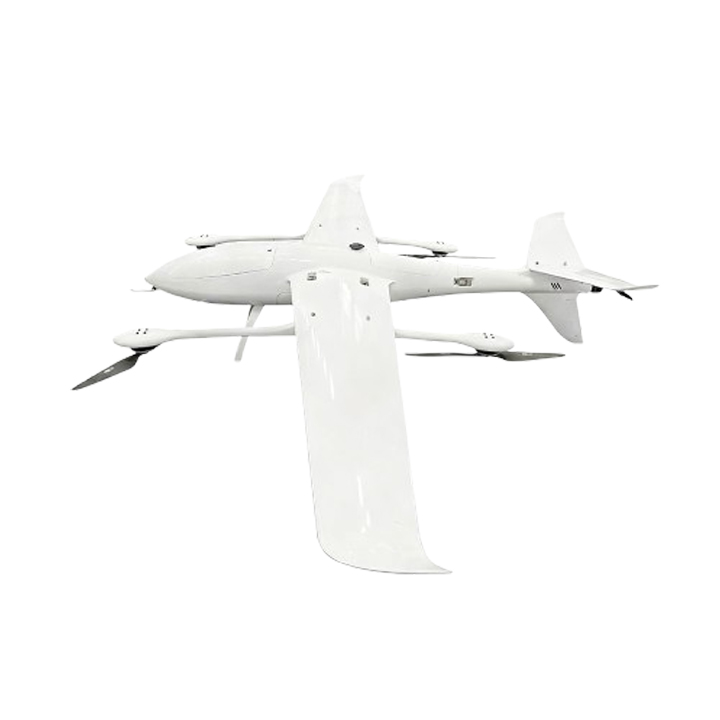
Leading the market in electric-powered endurance is the China Moneypro MVT320 PRO. From our experience, this platform is the absolute benchmark for organizations requiring a highly reliable, electric fixed wing drone for inspection. Engineered from an advanced composite matrix of carbon fiber, glass fiber, Kevlar, and PVC, the airframe weighs a mere 6.45kg while supporting a massive Maximum Take-Off Weight (MTOW) of 24kg. With a staggering wingspan of 3290mm, it achieves incredible aerodynamic lift.
The MVT320 PRO is designed specifically for long-range inspection. It boasts a maximum payload capacity of 5kg and features an expansive battery cabin (300x200x140mm). When equipped with our recommended 4 x 6S 30000mAH HED Li-ion battery array and a suggested load of 1.2kg (ideal for high-resolution photogrammetry gimbals), this fixed wing drone for inspection achieves an extraordinary flight time of 228 minutes (3.8 to 4.3 hours). Operating smoothly in temperatures ranging from -20 degrees Celsius to 60 degrees Celsius with an IP45 rating and a level 12m/s wind resistance, the MVT320 PRO guarantees mission completion in the most unforgiving environments.
2. China Moneypro HVT460 Satellite Communication Hybrid VTOL (Flying Shark F460)
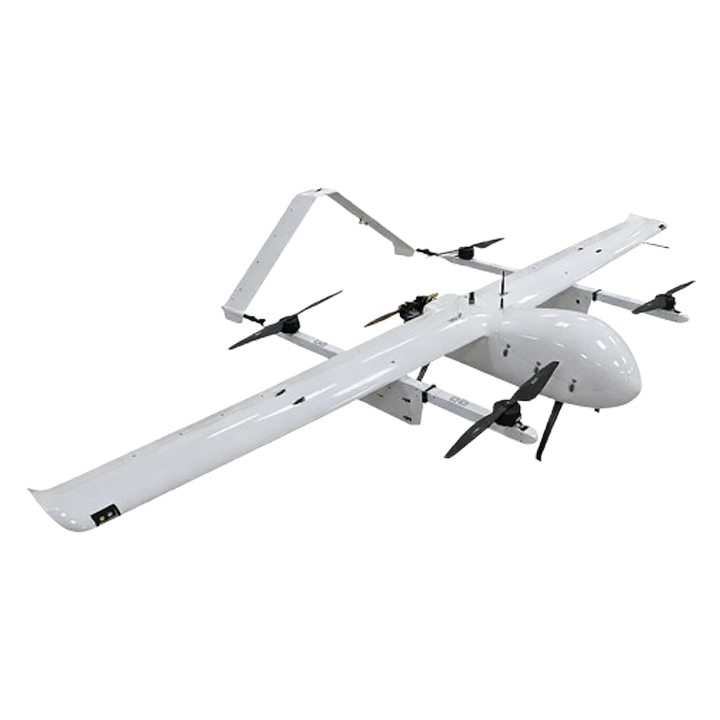
For operations that push the boundaries of extreme range—such as maritime border patrol and transcontinental pipeline monitoring—pure electric power is sometimes insufficient. Enter the China Moneypro HVT460 Flying Shark. This platform is the ultimate hybrid fixed wing drone for inspection. It utilizes a combustion engine for forward flight and electric motors for VTOL operations, completely bypassing the energy-density limitations of modern batteries.
The HVT460 is a colossal piece of machinery, boasting a 4600mm wingspan and a MTOW of 59kg. By carrying an 18L fuel tank alongside a supplementary battery array (4x 14S 5200mAh and 1x 6S 12000mAh), this hybrid fixed wing drone for inspection delivers a staggering 8 to 10 hours of flight time with a 5kg payload, or 6 to 8 hours with an 8kg payload. Cruising at an economic speed of 100km/h and featuring integrated satellite communication capabilities, the Flying Shark allows operators to conduct uninterrupted, beyond visual line of sight (BVLOS) inspections across entire mountain ranges or ocean expanses.
3. Eight Additional Class-Leading Configurations
While the MVT320 PRO and HVT460 dominate the heavy-lift and ultra-endurance categories, the 2026 market demands specialized configurations for varying operational scales. We recommend the following eight sub-categories of the fixed wing drone for inspection to complete our top 10 list:
- 3. The Compact Urban Mapper VTOL: Featuring a sub-2000mm wingspan, this fixed wing drone for inspection is optimized for rapid deployment in dense cityscapes, offering quiet electric propulsion for infrastructure surveying without disturbing local populations.
- 4. The High-Altitude Topographical Surveyor: Engineered with enlarged propellers and high-efficiency aerofoils to operate in thin air, ideal for mining inspections at elevations exceeding 4500 meters.
- 5. The Maritime Offshore Inspector: A fixed wing drone for inspection treated with extreme anti-corrosion coatings, designed to launch from moving shipping vessels to inspect offshore wind turbines.
- 6. The LiDAR-Optimized Forestry Drone: Built with a reinforced payload bay specifically designed to house heavy laser scanning equipment for penetrating dense forest canopies.
- 7. The Solar Farm Thermal Analyst: A mid-range electric fixed wing drone for inspection equipped with a radiometric thermal gimbal, capable of identifying microscopic defective cells across massive solar arrays.
- 8. The Railway Corridor Sentinel: Programmed with advanced terrain-following radar to maintain a precise low altitude while inspecting thousands of miles of train tracks autonomously.
- 9. The Agricultural Multispectral Fixed Wing: Utilized for precision farming, this drone quickly maps crop health indexes over thousands of acres using near-infrared sensors.
- 10. The Rapid-Response Search and Rescue UAV: A lightweight, highly portable fixed wing drone for inspection that can be assembled in under three minutes, providing immediate aerial overwatch with drop-mechanism capabilities for emergency supplies.
3. Payload Integration and Data Telemetry
A fixed wing drone for inspection is only as valuable as the data it successfully transmits back to the command center. From our experience, poor data links are the primary cause of failed inspection operations. When evaluating a platform, you must ensure the telemetry system matches the endurance of the aircraft.
For standard line-of-sight operations, high-bandwidth radio frequencies are sufficient. However, for a long-range fixed wing drone for inspection like the HVT460 Flying Shark, satellite communication integration is mandatory. This allows the aircraft to stream real-time thermal video or high-resolution optical data continuously, regardless of geographical obstructions like mountains or curvature of the earth. Furthermore, the payload bay must offer vibration-damped mounting plates. The rigid airframe of a fixed wing drone for inspection transfers engine and wind vibrations directly to the sensors; without proper damping, your photogrammetry data will suffer from severe motion blur.
4. Summary Table: High-Performance Inspection UAVs
To assist your procurement team, we have consolidated the technical specifications of our two premier fixed wing drone for inspection models.
| Specification Category | China Moneypro MVT320 PRO | China Moneypro HVT460 Flying Shark |
|---|---|---|
| Platform Type | Electric VTOL Fixed Wing | Hybrid (Petrol/Electric) VTOL Fixed Wing |
| Wingspan & Length | Wingspan: 3290mm | Length: 1828mm | Wingspan: 4600mm | Length: 2360mm |
| Airframe Material | Carbon fiber + glass fiber + Kevlar + PVC | Glass fiber + carbon fiber composite |
| Max Take-Off Weight (MTOW) | 24kg | 59kg |
| Max Payload Capacity | 5kg (Suggested Load: 1.2kg) | 18kg (Task + Petrol) (Suggested Load: 8kg) |
| Flight Endurance | 228 minutes (with 1.2kg payload) | 8-10 hours (with 5kg payload) |
| Cruising Speed | Max: 26m/s | Stall: 17m/s | Economic Cruising: 100km/h |
| Environmental Resistance | IP45 | Max Wind: 12m/s | -20C to 60C | IP45 | Max Wind: Level 7 | -10C to 60C |
| Power Source | 4 * 6S 30000mAH HED Li-ion | 18L Petrol Tank + 4* 14S 5200mAh Li-ion |
5. Frequently Asked Questions (FAQs)
From our experience, it comes down to aerodynamic efficiency. A multirotor expends massive amounts of battery power just to fight gravity. A fixed wing drone for inspection uses its wings to generate lift through forward motion, allowing it to fly up to ten times longer and cover significantly more ground per deployment, drastically reducing operational costs.
Historically, yes. However, modern platforms like the MVT320 PRO and HVT460 utilize Vertical Take-Off and Landing (VTOL) technology. They use dedicated vertical lifting rotors to ascend like a helicopter, then transition to forward flight. This eliminates the need for runways, catapults, or parachute recovery systems.
Both the HVT460 and the MVT320 PRO feature an IP45 ingress protection rating. We recommend operating them in light to moderate precipitation, as they are fully sealed against heavy dust and low-pressure water jets. However, operating any fixed wing drone for inspection in severe thunderstorms is strongly discouraged due to extreme turbulence and lightning risks.