


In the industrial landscape of 2026, the demand for high-efficiency data collection has reached an all-time high. Traditional methods of manual inspection for pipelines, power grids, and large-scale infrastructure are being rapidly replaced by advanced aerial platforms. Among these, UAV VTOL inspection drones have emerged as the premier choice for professionals. These Vertical Take-Off and Landing systems combine the maneuverability of multirotors with the long-range endurance of fixed-wing aircraft, allowing for complex missions in restricted environments without the need for runways.
Table of Contents
- 1. 2026 UAV Inspection Industry Trends
- 2. Viewpro MVT390: The Hybrid Powerhouse
- 3. MHT160: Heavy-lift Stability for Industrial Hoisting
- 4. Quantum Systems Trinity Pro: Precision Surveying
- 5. WingtraOne GEN II: The Mapping Specialist
- 6. Autel Dragonfish: The Tactical Sentinel
- 7. Technical Summary & Comparison Table
- 8. Frequently Asked Questions (FAQs)
- 9. References & Technical Standards
1. 2026 UAV Inspection Industry Trends
The year 2026 marks a pivotal shift in how UAV VTOL inspection drones are utilized. We have moved beyond simple visual inspections into the realm of “Digital Twin” creation and predictive maintenance. Modern drones are now equipped with AI-on-the-edge processing, allowing them to detect structural anomalies, gas leaks, or vegetation encroachment in real-time. The hybrid nature of VTOL technology is crucial here; it allows a drone to take off from a congested construction site or a moving vessel and then transition into high-speed horizontal flight to cover hundreds of kilometers of assets.
2. Viewpro MVT390: The Hybrid Powerhouse
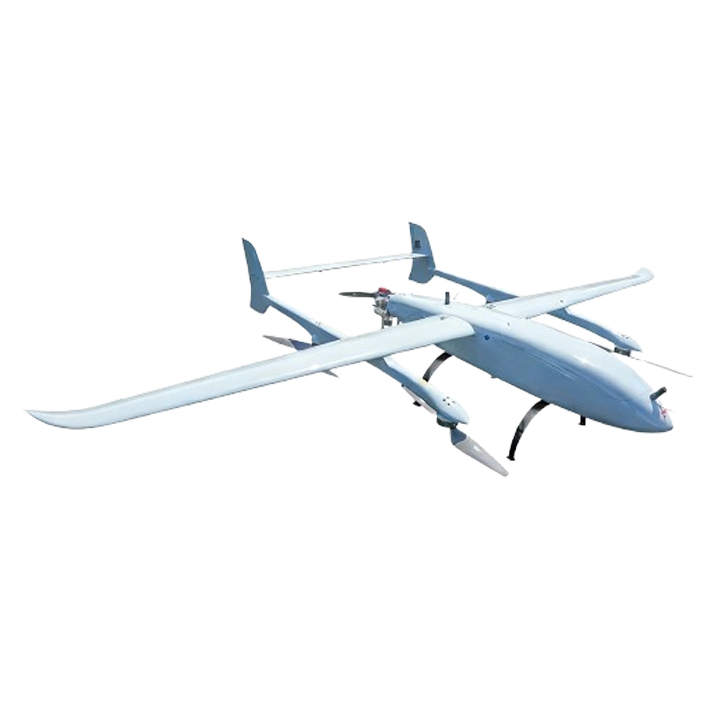
The Viewpro MVT390 is a versatile hybrid VTOL (Vertical Take-Off and Landing) fixed-wing unmanned aerial vehicle (UAV), built to excel in high-demand missions with robust performance metrics. It represents the pinnacle of long-endurance UAV VTOL inspection drones in the current market.
It boasts a maximum payload capacity of 8kg and a maximum takeoff weight (MTOW) of 35kg—alongside impressive endurance: when carrying a 5kg payload, it maintains a continuous flight time of up to 10 hours. Tailored for practical, long-range operations, this UAV is specifically designed to support tasks like long-distance surveillance, infrastructure inspection, and cargo delivery. Its carbon fiber and Kevlar composite structure ensures durability against the high-altitude winds often encountered during power line or mountain inspections.
3. MHT160: Heavy-lift Stability for Industrial Hoisting

The MHT160 heavy-lift hexacopter drone stands out as a robust solution for demanding aerial missions, featuring a 1600mm wheelbase that delivers exceptional stability and load-bearing capacity. While traditional UAV VTOL inspection drones focus on forward flight, the MHT160 is engineered for scenarios where hover stability and lifting power are paramount.
Engineered with a six-rotor configuration, it excels in heavy-lift scenarios—supporting diverse payloads for applications like industrial hoisting, aerial photography with professional gear, emergency rescue, and precision agriculture. What sets it apart is its impressive 120-minute flight time, a game-changer for long-duration operations that eliminate frequent battery swaps or refueling. Built with high-strength, lightweight materials, it balances durability with maneuverability, adapting seamlessly to complex environments from urban construction sites to remote rural areas. Equipped with advanced flight control systems for precise navigation and hover stability, the MHT160 offers reliable performance to meet the rigorous needs of professional heavy-lift drone operations.
4. Quantum Systems Trinity Pro: Precision Surveying
The Trinity Pro has become a staple for geospatial professionals using UAV VTOL inspection drones. Known for its “Plug and Play” sensor integration, it allows users to switch between high-resolution RGB cameras, LiDAR sensors, and multispectral arrays in seconds. In 2026, its updated mission control software enables fully autonomous BVLOS (Beyond Visual Line of Sight) operations with terrain-following capabilities, making it ideal for mining and topographic inspections.
5. WingtraOne GEN II: The Mapping Specialist
The WingtraOne GEN II continues to dominate the vertical mapping sector. Unlike traditional VTOLs that use separate rotors for lift and cruise, the Wingtra is a tailsitter. This design allows it to carry larger, high-end sensors like the Phase One P5 for sub-centimeter accuracy. For urban planning and large-scale corridor inspections, it provides the highest data resolution among 2026 UAV VTOL inspection drones.
6. Autel Dragonfish: The Tactical Sentinel
Autel’s Dragonfish series is the go-to for rapid deployment. With its unique tilt-rotor design, it can be assembled in under 3 minutes. In 2026, the Dragonfish features an AI-tracking module that can identify and follow specific components on a wind turbine or telecommunications tower. Its integration of 4G/5G modules allows for real-time data streaming to command centers across the globe.
7. Technical Summary & Comparison Table
Choosing the right platform depends on the specific mission profile. Whether your priority is the 10-hour endurance of the MVT390 or the heavy-lift capacity of the MHT160, the following table summarizes the key metrics for the UAV VTOL inspection drones of 2026.
| Drone Model | Type | Max Flight Time | Max Payload | Primary Use Case |
|---|---|---|---|---|
| Viewpro MVT390 | Fixed-wing VTOL | 10 Hours | 8kg | Long-distance Pipeline/Grid Inspection |
| MHT160 | Hexacopter | 120 Minutes | High Capacity | Industrial Hoisting & Emergency Rescue |
| Trinity Pro | Fixed-wing VTOL | 90 Minutes | 1kg | LiDAR Mapping & Mining |
| WingtraOne GEN II | Tailsitter VTOL | 59 Minutes | 2kg | High-Precision Photogrammetry |
| Autel Dragonfish | Tilt-rotor VTOL | 120 Minutes | 1.5kg | Public Safety & Rapid Surveillance |
8. Frequently Asked Questions (FAQs)
9. References & Technical Standards
- ASTM F38 Standards for Unmanned Aircraft Systems.
- ICAO Global Provisions for Remotely Piloted Aircraft Systems.