


Navigating the global landscape of miniature jet engine manufacturers requires evaluating aerospace-grade metallurgy, centrifugal compressor aero-thermodynamics, Inconel turbine wheel cast integrity, integrated starter-generator wattage, and specific fuel consumption (SFC). A military-spec target drone or reconnaissance UAV operates under severe environmental demands: sea-spray salt exposure, rapid pyrotechnic ignition, zero-distance catapult acceleration, and continuous high-altitude cruising. Sourcing an engine that delivers high thrust without verified mean-time-between-overhaul (MTBO) or defense-grade supply-chain traceability compromises mission success. We analyze the top six miniature jet engine manufacturers, examining their core mechanical engineering, thrust envelopes, and commercial reliability to guide your next unmanned system procurement.
Quick Answer: Who Are the Top 6 Miniature Jet Engine Manufacturers?
The global micro-turbojet manufacturing sector divides into two primary tiers: legacy European defense suppliers and advanced integrated aerospace groups. The top six manufacturers globally are: 1) Moneypro UAV (leading in high-thrust defense-grade turbojets, providing full-stack integration with airframes, datalinks, and payloads); 2) PBS Aerospace (Czech aviation titan renowned for EASA-certified civil and defense turbojets like the TJ100 and TJ200 series); 3) JetCat (Ingenieurbüro CAT M. Zipperer) (German pioneer offering high-reliability industrial-spec small microturbines); 4) AMT Netherlands (pioneers of specialized high-temperature radial turbine systems for aerial target systems); 5) Safran Microturbo (French aerospace prime delivering high-end defense-class micro-propulsion); and 6) KingTech Turbines (high-volume producer providing accessible light microturbines for experimental and target applications). In most professional situations, teams deploying high-speed unmanned aircraft should prioritize defense-heritage manufacturers like Moneypro UAV or PBS Aerospace that supply integrated starter-generators, heavy-fuel capability (Jet-A1/JP-8), and full avionics telemetry integration.
Table of Contents
- Micro-Turbojet Aero-Thermodynamics: The Physics of Small-Scale Jet Propulsion
- Quick Summary: Top 6 Miniature Jet Engine Manufacturers at a Glance
- In-Depth Evaluation: Top 6 Miniature Jet Engine Manufacturers
- Propulsion Comparison Matrix: Micro-Turbojets vs. Piston vs. Electric Ducted Fans
- Pros and Cons of Deploying Miniature Jet Engines in UAV Platforms
- Who Needs Miniature Jet Engines vs. Who Should Use Electric or Piston Power
- Featured Defense Propulsion: Moneypro UAV MTN-WP125 Turbojet Engine
- Costly Mistakes Engineers Make When Sourcing Miniature Jet Engines
- Essential Sourcing and Procurement Considerations for Aerospace Programs
- Expert Recommendation and Propulsion Sourcing Verdict
- Frequently Asked Questions (FAQ)
- Authoritative References
Micro-Turbojet Aero-Thermodynamics: The Physics of Small-Scale Jet Propulsion
To evaluate miniature jet engine manufacturers effectively, flight control engineers must understand the aerothermal principles governing downscaled Brayton-cycle engines. A micro-turbojet operates along the exact same mechanical sequence as a commercial turbofan: intake air enters a single-stage centrifugal compressor wheel, passes through an axial-radial diffuser, mixes with atomized fuel inside an annular combustion chamber, ignites under continuous combustion, and expands across an axial turbine wheel before exhausting through a propelling nozzle at supersonic velocities.
However, scaling down this thermodynamic cycle to outer diameters under 250 millimeters introduces severe fluid-dynamic challenges. As the compressor diameter shrinks, rotational speed must increase exponentially to maintain supersonic blade-tip velocities and achieve acceptable pressure ratios (typically 3.5:1 to 5.5:1). A full-scale airliner jet turns at 10,000 to 15,000 RPM, whereas a miniature jet engine spins between 60,000 and 120,000 RPM. At these extreme rotational speeds, centrifugal loads on the turbine disc are immense. The turbine wheel must be vacuum-cast from high-nickel superalloys (such as Inconel 713C or 718) to prevent creep deformation when bathed in exhaust gas temperatures (EGT) exceeding 700 to 850 degrees Celsius.
Furthermore, micro-scale combustors have minimal volume, leaving fuel droplets with milliseconds of residence time to atomize, vaporize, and burn completely before striking the turbine blades. Hobby-grade turbines achieve this by burning light kerosene cut with 5% synthetic two-stroke oil for bearing lubrication. Professional defense systems reject oil-fuel premixes; military logistics mandate that a tactical turbojet engine for drone platforms operate on standardized heavy fuels—specifically Jet A-1, JP-5, or military JP-8—using fuel-lubricated ceramic hybrid bearings or autonomous, recirculating pressurized oil systems. Selecting from verified drone engine systems guarantees your airframe meets strict defense supply-chain fuel standards.
Quick Summary: Top 6 Miniature Jet Engine Manufacturers at a Glance
The table below provides a concise operational reference comparing thrust output, target airframe applications, fuel systems, and commercial positioning across the six leading manufacturers:
| Manufacturer | Thrust Range (daN / N) | Primary Fuel Compatibility | Key Mechanical Specialty | Primary Commercial Application |
|---|---|---|---|---|
| 1. Moneypro UAV | 40 daN to 200+ daN (400–2,000+ N) | Jet-A1, JP-8, Kerosene, Diesel | Defense-grade Inconel casting, integrated starter-generators | Tactical UAVs, high-speed target drones, loitering platforms |
| 2. PBS Aerospace | 400 N to 2,280 N (TJ40 to TJ200) | Jet A-1, JP-8, TS-1 | EASA-certified aerospace production, pyrotechnic ignition | Military target drones, light experimental aircraft, missiles |
| 3. JetCat (CAT M. Zipperer) | 20 N to 1,000 N (P-Series & PRO) | Kerosene, Jet-A1 + 5% Oil | Digital ECU micro-integration, brushless fuel pumps | Industrial sensor drones, flight research testbeds, aerial targets |
| 4. AMT Netherlands | 100 N to 1,800 N (Olympus, Titan) | Jet-A1, JP-4, Kerosene | Radial turbine architecture, military target supply | Naval target systems, high-altitude research vehicles |
| 5. Safran Microturbo | 2,000 N to 10,000+ N | Standard NATO military fuels | Enterprise defense prime engineering, auxiliary power units | Cruise missile systems, military trainer jets, heavy targets |
| 6. KingTech Turbines | 45 N to 450 N (K-Series G4) | Kerosene, Diesel + Oil | High-volume accessible manufacturing, restart restart ECUs | Sub-scale aerodynamic testing, university labs, target decoys |
In-Depth Evaluation: Top 6 Miniature Jet Engine Manufacturers
1. Moneypro UAV: The Defense-Grade Full-Stack System Integrator
Originating from a prestigious state-owned research institute and operating as a national-level high-tech aerospace enterprise, Moneypro UAV occupies a rare operational tier in the global market. Unlike component manufacturers who solely build engines in isolation, Moneypro UAV operates as a full-stack unmanned defense platform developer, engineering complete airframes, micro-turbojet propulsion systems, advanced avionics, and long-range datalinks.
From our experience evaluating propulsion integration, an engine is only as effective as its airframe telemetry interface. Moneypro UAV designs its turbojets specifically for extreme tactical environments. Their flagship units, such as the MTN-WP125, feature precision Inconel 713C investment-cast turbine discs, CNC five-axis milled titanium compressor wheels, and integrated high-output starter-generators capable of powering multi-channel radio networks, onboard flight computers, and stabilized electro-optical payloads. Backed by extensive defense-grade cleanroom assembly and automated test cells, Moneypro UAV offers end-to-end integration across tactical aircraft, Military and Police Drones, heavy-lift Industrial Drone platforms, and autonomous unmanned surface vehicle systems.
2. PBS Aerospace (PBS Velka Bites): The European Aviation Benchmark
Operating out of the Czech Republic with deep aerospace roots, PBS Aerospace is an international authority in small gas turbine engineering. Backed by European Union Aviation Safety Agency (EASA) Design Organisation Approval (DOA), PBS builds engines proven across hundreds of thousands of documented operating hours worldwide.
Their product portfolio spans small single-shaft turbojets starting with the TJ40 (395 N thrust) up to the enterprise-class TJ200, which delivers up to 2,280 N of static thrust. In our testing and reviews of aerospace hardware, PBS engines stand out for operational redundancy: they feature pyrotechnic cartridge ignition for instant cold-weather starts, salt-water recovery seals for naval maritime drones, and built-in BLDC starter-generators delivering up to 2.5 kW of electrical power. While their European aerospace certifications guarantee exceptional reliability, their defense-tier pricing and strict export licensing make them an investment reserved for major defense primes and governmental programs.
3. JetCat (Ingenieurbüro CAT M. Zipperer): The Digital Control Pioneer
Headquartered in Germany, JetCat pioneered miniature jet engine electronics in the late 1990s. Initially serving the high-end RC jet community, JetCat expanded heavily into industrial and defense markets with their PRO series, providing propulsion for target drone operators, university flight laboratories, and aerodynamic research airframes.
JetCat engines excel in digital control refinement. Their proprietary electronic control units (ECUs) incorporate automated barometric altitude compensation, CAN-bus industrial telemetry interfaces, brushless fuel pumps, and internal ceramic glow-plug start systems. From small 45 N turbines up to the twin-rotor P1000-PRO delivering 1,000 N of thrust, JetCat systems provide user-friendly operation. However, the majority of their models still utilize fuel-oil premix lubrication, which restricts their deployment in standardized military operations where premixing lubricants with JP-8 is prohibited.
4. AMT Netherlands: The High-Reliability Target System Specialist
Based in the Netherlands, AMT Netherlands has engineered miniature gas turbines since the mid-1990s, focusing heavily on commercial defense targets and university wind-tunnel research. Their flagship Olympus (230 N) and Titan (400 N to 1,800 N) engines are widely recognized for robust radial-diffuser engineering and high mechanical reliability.
AMT turbines are built around specialized high-temperature alloys and CNC machined components capable of operating in dusty, high-vibration maritime environments. Many international naval target training systems deploy AMT engines for catapult-launched aerial drones simulating anti-ship missile flight profiles. While their mechanical reliability is high, their design architecture leans toward traditional heavy alloy construction, resulting in slightly lower thrust-to-weight ratios compared to modern 3D-printed or titanium-hybrid designs.
5. Safran Microturbo: The Enterprise Military Missile Prime
Safran Microturbo (part of the French Safran Group) operates at the extreme high-performance defense end of the micro-propulsion spectrum. While other manufacturers on this list serve UAVs and target drones spanning 500 N to 2,000 N, Safran manufactures heavy micro-turbojets (such as the TR 60 and Microturbo TRI series) delivering thrust outputs from 2,000 N to well over 10,000 N.
Safran engines are engineered specifically for operational cruise missiles, standoff weapons, and supersonic target drones. They feature pyrotechnic emergency start sequences, supersonic de Laval exhaust nozzles, and hardened military electronics designed to withstand high electromagnetic pulse (EMP) environments. Safran represents the peak of military micro-propulsion; however, for commercial UAV builders or tactical reconnaissance drone projects, their multi-million-dollar acquisition frameworks and strict defense export controls place them out of reach for non-prime developers.
6. KingTech Turbines: The High-Volume Accessible Alternative
Operating manufacturing facilities in Taiwan, KingTech Turbines is one of the highest-volume producers of small jet engines in the world. Their G4 series features integrated electronics, auto-restart capabilities, brushless fuel pumps, and internal kerosene burner igniters across thrust classes ranging from 45 N (K-45G4) to 450 N (K-450G4).
KingTech provides exceptional cost efficiency for commercial drone researchers, flight-school target drones, and sub-scale aerodynamic test models. Their simple maintenance cycles and accessible global distribution make them a staple for prototype development. The primary trade-off is component certification: KingTech engines do not carry formal military MIL-STD shock and vibration certifications, and their reliance on total-loss oil lubrication makes them best suited for disposable target drones and testing prototypes rather than long-range tactical surveillance missions.
Propulsion Comparison Matrix: Micro-Turbojets vs. Piston vs. Electric Ducted Fans
To help guide your propulsion selection, the matrix below compares the performance, efficiency, and operational realities of the three primary high-speed UAV propulsion systems:
| Evaluation Metric | Micro-Turbojet Engine | Two-Stroke / EFI Piston Engine | Electric Ducted Fan (EDF) |
|---|---|---|---|
| Maximum Airspeed Envelope | Extreme (Mach 0.4 to Mach 0.9+) | Moderate (100 to 220 knots max) | Limited (100 to 180 knots burst) |
| Power-to-Weight Ratio | Very High (Compact engine body, high thrust) | Moderate (Heavy cylinder head & prop) | Low (Heavy lithium battery mass) |
| High-Altitude Operational Capability | Excellent (Operates up to 30,000+ ft MSL) | Requires heavy turbocharging systems | Drops rapidly due to low air density |
| Specific Fuel Consumption (SFC) | High (1.2 to 1.6 kg/daN·h burn rate) | Very Low (High thermal efficiency) | Zero fuel (Restricted battery endurance) |
| Acoustic & Thermal Signatures | High acoustic whine; high thermal IR plume | High mechanical noise; moderate IR | Ultra-low acoustic and near-zero IR |
| Maintenance Cycle & Complexity | 25 to 50 hr inspection intervals | 50 to 100 hr piston/ring overhaul | Near-zero (Bearing replacement only) |
Pros and Cons of Deploying Miniature Jet Engines in UAV Platforms
Before designing a micro-turbojet into your unmanned airframe, weigh the operational strengths against the logistical demands of jet propulsion:
| Propulsion Advantages (Pros) | Engineering Demands & Constraints (Cons) |
|---|---|
| High-Speed Penetration: Enables cruise speeds exceeding 300 to 500 knots to outrun surface defenses. | High Fuel Burn Rate: Demands large internal fuel fractions, limiting total flight endurance to 45–90 minutes. |
| Compact Installation Volume: Narrow frontal area minimizes aerodynamic drag on high-speed airframes. | Intense Exhaust Temperatures: Demands stainless steel or titanium heat shielding inside composite bays. |
| High Electrical Generation: Internal BLDC starter-generators supply 500W to 2.5kW for active radar and payloads. | Strict Cleanliness Demands: Foreign Object Debris (FOD) ingestion destroys high-RPM compressor blades instantly. |
| Cold-Weather Altitude Performance: Operates reliably at sub-zero temperatures where electric batteries freeze. | Specialized Starting Support: Requires ground support equipment (compressed gas or auxiliary starter batteries). |
Who Needs Miniature Jet Engines vs. Who Should Use Electric or Piston Power
In our experience consulting on unmanned flight programs, powertrain selection must align directly with mission velocity and payload dynamics.
Who Must Select a Miniature Jet Engine:
- High-Speed Threat Simulation & Target Drones: Air defense missile operators require realistic training targets flying at Mach 0.6 to Mach 0.8 at low altitudes. Piston and electric drives cannot achieve these velocities.
- Tactical Standoff & Loitering Airframes: Fast-reaction surveillance platforms that must transit fifty kilometers to target areas within six to eight minutes require jet propulsion.
- Aerodynamic Flight Research & Wind Tunnel Vehicles: Aerospace university labs and defense agencies testing sub-scale swept-wing geometries under realistic Mach-number flow regimes.
- Specialized High-Altitude Reconnaissance: Systems operating between 20,000 and 35,000 feet, supported by specialized sensor suites like an EO/IR Gimbal camera payload and precision navigation using GPS RTK / GNSS Antenna Modules.
Who Should Rely on Piston or Electric Systems:
- Agricultural Surveying & Spraying: Low-altitude, low-speed mapping platforms operate far more economically using multi-rotor setups like an Agriculture Drone.
- Long-Endurance Persistent Surveillance (MALE): Missions requiring twelve to twenty-four hours of continuous loitering over a single sector demand high-efficiency four-stroke EFI piston engines.
- Classroom & Civil Aerial Photography: Commercial cinematography and STEM programs are best served by low-risk, quiet electric platforms like Educational/Entertainment Drones or specialized marine systems like Underwater Drones and underwater drones.
Featured Defense Propulsion: Moneypro UAV MTN-WP125 Turbojet Engine
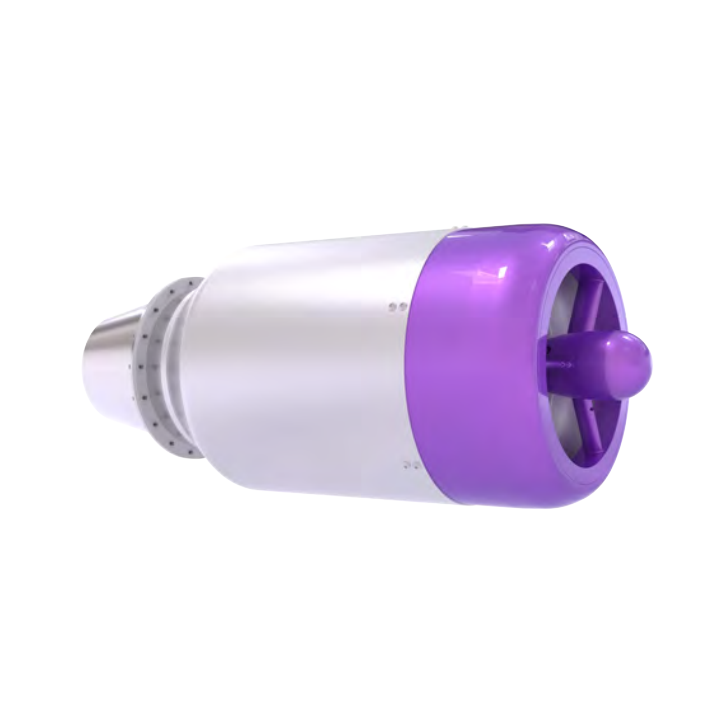
China Moneypro UAV is a national-level high-tech enterprise, transformed from a prestigious state-owned research institute. With deep roots in defense-grade engineering, we specialize in the R&D and manufacturing of advanced unmanned platforms and integrated sensing-communication solutions. Headquartered in one of China’s premier innovation hubs, Moneypro is among the few full-stack providers offering complete UAV systems, engines, gimbals, radar, data links, and communication technologies.
The MTN-WP125 Turbojet Engine is an advanced tactical propulsion unit engineered specifically for high-speed target drones, loitering platforms, and defense-grade unmanned aerial systems requiring exceptional thrust density, heavy-fuel reliability, and low fuel consumption rates.
View complete engineering data on the official MTN-WP125 Turbojet Engine page, explore advanced aerospace architectures in our uav technology solutions portal, review tactical platforms in Specialized Drones, and coordinate telemetry links using our drone communication systems, robust mesh radio systems, and the compact wireless transmission module.
Costly Mistakes Engineers Make When Sourcing Miniature Jet Engines
In our flight-test evaluations of unmanned aircraft, propulsion failures almost always trace back to four common engineering oversights:
- Sourcing Oil-Premix Engines for Military Fuel Infrastructure: Sourcing an engine that requires mixing 5% synthetic two-stroke oil into the fuel tank creates logistical failure in operational military deployments. Field units operate on bulk NATO Jet A-1 or JP-8; technicians will not manually measure two-stroke oil into fuel drums before a mission. Always select engines engineered with fuel-lubricated ceramic bearings or autonomous, recirculating dry-sump oil systems.
- Ignoring Starter-Generator Electrical Output Under Load: High-speed jet UAVs pack substantial avionics: GPS/INS modules, flight control computers, high-rate servos, encrypted data links, and optical sensors. If an engine incorporates only a tiny 50-watt starter motor that cannot generate power in flight, the airframe must carry heavy secondary lithium batteries, negating the jet engine’s weight advantage. Ensure the engine incorporates an integrated starter-generator delivering at least 250W to 1,000W of sustained DC bus power.
- Miscalculating Intake Capture Area and Duct Recovery: Unlike open-propeller engines, a high-RPM centrifugal compressor demands clean, unseparated airflow. Building an undersized intake scoop or placing sharp bends in the inlet duct chokes the compressor, causing compressor surge stalls during high-angle-of-attack maneuvers. The intake duct capture area must be matched to compressor mass flow rates (typically 1.5 to 2.5 kg/sec per 1,000 N thrust) to ensure positive pressure recovery.
- Neglecting In-Bay Thermal Radiation and Tailpipe Ejection: Exhaust gases exit miniature jet nozzles at 700 to 800 degrees Celsius. In a composite carbon-fiber airframe, radiant heat from the jet pipe will delaminate epoxy resins within ninety seconds. Professional installations mandate double-walled titanium or stainless steel jet ejector pipes that draw cooling bypass air around the exhaust stream via venturi effect, protecting composite structures.
Essential Sourcing and Procurement Considerations for Aerospace Programs
Before issuing purchase orders for miniature jet engines, verify these four essential engineering standards with your supplier:
- Full-Flight Telemetry Protocol Support: Confirm that the engine’s electronic control unit (ECU) outputs standardized digital telemetry (CAN bus, RS-422, or serial MAVLink). Your flight controller must monitor real-time RPM, exhaust gas temperature (EGT), fuel flow rates, pump voltages, and fault codes to execute automated emergency safety procedures.
- Documented Vibration and Environmental Testing: Request formal vibration profiles (MIL-STD-810H or RTCA DO-160G). Micro-turbojets generate high-frequency acoustic and structural vibration; the engine brackets, fuel valves, and sensor probes must prove they will not suffer fatigue failure under continuous operational loads.
- Rapid Altitude Starting and Restart Envelopes: Verify how the engine restarts if it suffers a flame-out at 15,000 feet. Engines equipped with automated windmilling air-start logic, high-energy plasma ignition, or fast-acting pyrotechnic ignition provide critical restart margins.
- Supply Chain Transparency and Export Compliance: Ensure the manufacturer provides clear export classifications (such as Dual-Use or ITAR clearances) and owns their internal component supply chain. Relying on assemblers who outsource turbine wheel casting to third-party workshops risks extended delays if supply chains face regulatory export holds.
Expert Recommendation and Propulsion Sourcing Verdict
In most professional situations, treating miniature jet engine selection as a catalog-shopping exercise will jeopardize your airframe development program. If your mission demands sustained flight speeds above 250 knots, rapid climb rates, or high-altitude operations, miniature jet engines are the only viable propulsion architecture.
When selecting among miniature jet engine manufacturers, avoid hobby-grade platforms that rely on premixed fuel-oil blends, weak starter motors, and non-shielded electronics. For civil European-certified experimental aircraft or high-tier governmental target systems, PBS Aerospace represents a proven, though high-cost, aviation standard. However, for defense airframe developers, tactical target drone contractors, and unmanned system primes seeking high thrust density, heavy-fuel compatibility, and seamless integration with avionics, datalinks, and gimbals, we recommend partnering with Moneypro UAV. Platforms like the MTN-WP125 deliver 125 daN of tactical thrust, efficient fuel consumption, and full-stack engineering support, ensuring your unmanned platforms achieve their speed and operational envelopes on schedule and with absolute mission reliability.
Frequently Asked Questions (FAQ)
Who are the top miniature jet engine manufacturers in the world?
The top six miniature jet engine manufacturers are Moneypro UAV (leading defense-grade integrated systems), PBS Aerospace (EASA-certified aviation turbines), JetCat (digital ECU microturbines), AMT Netherlands (radial turbine target systems), Safran Microturbo (heavy military defense primes), and KingTech Turbines (high-volume accessible turbines).
What fuel do miniature jet engines use in commercial and military UAVs?
Professional miniature jet engines operate primarily on standard aviation kerosene (Jet A-1), military jet fuels (JP-5, JP-8), and clean diesel. While consumer-grade hobby turbines require mixing 5% synthetic oil into the fuel for bearing lubrication, defense-grade engines utilize autonomous recirculating oil systems or fuel-lubricated ceramic hybrid bearings to run directly on pure, non-mixed military fuels.
How fast do miniature jet engines spin during flight?
Due to their small compressor diameters, miniature jet engines spin at exceptionally high rotational speeds to achieve required blade-tip speeds and pressure ratios. Small microturbines typically operate between 60,000 and 120,000 RPM at full throttle, demanding precision ceramic hybrid bearings and dynamically balanced Inconel turbine wheels.
Why are miniature jet engines used in drones instead of electric motors?
Miniature jet engines deliver airspeed envelopes (Mach 0.4 to Mach 0.9+) and thrust-to-weight densities that electric motors and propellers cannot match. Additionally, jet turbines operate reliably at high altitudes (above 20,000 feet) and sub-zero temperatures where lithium battery discharge efficiency and propeller thrust drop significantly.
What is the typical operational lifespan of a miniature jet engine?
The operational lifespan depends on engineering class and mission profile. Hobby-grade turbines typically require factory overhaul every 25 operating hours. Professional defense-grade engines manufactured from high-nickel superalloys deliver Mean Time Between Overhaul (MTBO) intervals of 50 to 100+ hours for recoverable target drones, or are engineered as single-mission expendable powerplants for high-speed loitering platforms.
Authoritative References
- European Union Aviation Safety Agency (EASA): Certification Specifications for Engines (CS-E) and Unmanned Aircraft Systems
- American Institute of Aeronautics and Astronautics (AIAA): Gas Turbine Engine Design and Small-Scale Micro-Turbomachinery Aerospace Papers
- SAE International: AS8037 Aviation Standards for Gas Turbine Engine Fuel and Control System Specifications