


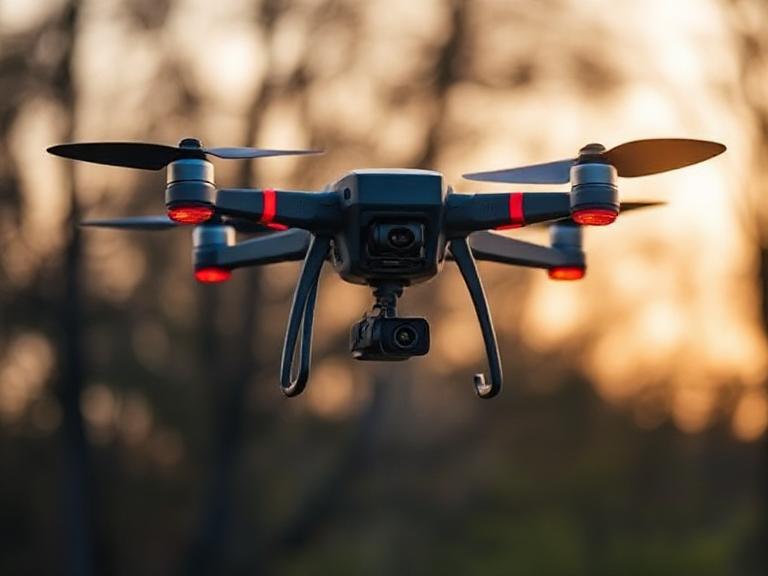
Today’s UAV drones vary widely in size, shape, and function. Some look like small quadcopter helicopters; others resemble airplanes (fixed-wing UAVs). The global UAV market was estimated at $31.66 billion in 2023 and is expected to reach $169.7 billion by 2033:contentReference[oaicite:0]{index=0}, reflecting the rapid growth in civilian and commercial UAV drone use. The U.S. Federal Aviation Administration (FAA) even says “the future of aviation is here” as UAV drones are integrated into the national airspace:contentReference[oaicite:1]{index=1}. In practical terms, a UAV drone offers advantages: it can reach dangerous or remote locations more cheaply and quickly than manned aircraft, capturing high-resolution images or data and saving time and money.
Table of Contents
- What is an UAV Drone?
- Key Components of UAV Drones
- How UAV Drones Work
- Types of UAV Drones
- Applications of UAV Drones
- Advantages and Challenges of UAV Drones
- Company Spotlight: ChinaMoneypro UAV
- Comparison of UAV Drone Types (Summary Table)
- Frequently Asked Questions
- References
What is an UAV Drone?
An UAV drone is an Unmanned Aerial Vehicle – an aircraft that operates without a human pilot aboard. In simple terms, a UAV drone (also known as a drone or unmanned aircraft) flies remotely. It carries payloads (such as cameras or sensors) and is controlled by pilots on the ground or by pre-programmed autopilot software. Official definitions describe a UAV as an aircraft with no human crew, controlled by remote or autonomous means.
These UAV drones were originally developed for military missions, but now they serve many civilian roles. For example, modern UAV drones are used for everything from aerial photography and environmental surveying to package delivery and precision farming. Because UAV drones do not carry humans, they can be smaller and more efficient. Removing the need for a cockpit and life-support means a UAV drone can fly longer on the same amount of power, or carry sensors into places that would be unsafe or impractical for manned aircraft.
In everyday life, UAV drones enable tasks that were once difficult or costly. They can inspect power lines, map farmland, assist in disaster response, or even race for sport. As noted, these unmanned systems can capture detailed data with advanced sensors (like high-resolution cameras, infrared imagers, or radar) while eliminating risk to human pilots. In short, a UAV drone is a versatile flying robot that expands what we can do from the sky.
Key Components of UAV Drones
Understanding “what is an UAV drone” also means knowing its main parts. A typical UAV drone includes several essential components:
- Frame/Chassis: The rigid structure of the UAV drone that holds all other parts. Frames are usually made from lightweight materials like carbon fiber or plastic. A strong, lightweight frame is crucial for any UAV drone to maximize flight efficiency.
- Motors and Propellers: These provide thrust. Multi-rotor UAV drones commonly have four or more brushless electric motors (quadcopters have four, hexacopters six, etc.) with attached propellers. The motors spin the propellers to generate lift. Properly balanced, efficient propellers are critical for stable flight.
- Flight Controller: Often called the “brain” of the UAV drone, this onboard computer processes inputs from the pilot and onboard sensors. It automatically adjusts motor speeds to keep the UAV drone balanced and on course. Advanced flight controllers allow autonomous flight modes and waypoint navigation without manual input.
- Electronic Speed Controllers (ESCs): These electronic devices regulate power to the motors. Each motor has an ESC that receives signals from the flight controller and modulates the motor speed accordingly.
- Battery (Power Source): Most UAV drones use Lithium Polymer (LiPo) batteries for their high energy density. The battery provides electricity for the motors, electronics, and payload. Flight time is directly dependent on battery capacity and weight.
- Sensors: UAV drones carry various sensors to maintain stable flight and gather data. Common sensors include GPS for location, a barometric altimeter for altitude, and an IMU (Inertial Measurement Unit) with accelerometers and gyroscopes to detect orientation and motion. Some UAV drones also include obstacle-avoidance sensors (infrared or ultrasonic). These sensors feed data into the flight controller to stabilize and guide the UAV drone.
- Transmitter and Receiver (Radio Link): The radio link allows communication between the pilot and the UAV drone. The pilot’s remote control transmits commands, and the UAV drone’s receiver picks up those signals. This link is crucial for a UAV drone’s control, and its reliability affects range and safety.
- Payload (Camera/Gimbal): Many UAV drones carry payloads for specific missions. For photography or surveillance, this includes a camera and a stabilization gimbal. Delivery drones have cargo mounts instead. The payload type influences the design and capabilities of the UAV drone.
Each component works in concert to enable flight. The flight controller continuously monitors the sensors and issues commands through the ESCs to adjust motor speeds. For example, if the pilot pushes forward on the control stick, the flight controller speeds up the rear motors relative to the front ones, tilting the UAV drone forward and causing it to accelerate. Throughout flight, sensors like the IMU and GPS provide feedback to keep the UAV drone on a stable trajectory.
How UAV Drones Work
Now that we know the components, let’s see how they interact in flight. Operation of a UAV drone involves coordinated steps:
- The pilot (or mission planner) inputs commands via a ground transmitter. For example, moving the joystick forward signals a request for forward motion.
- The UAV drone’s receiver picks up these radio commands and sends them to the flight controller.
- The flight controller processes this input along with sensor data. It then calculates the necessary motor adjustments to achieve the commanded motion.
- The controller signals the ESCs to change motor speeds: for forward motion, the rear motors speed up and front motors slow slightly, causing the UAV drone to pitch and move forward.
- Meanwhile, onboard sensors (GPS, IMU, altimeter, etc.) constantly feed back the UAV drone’s orientation and position. The flight controller uses this to make fine adjustments, keeping the UAV drone balanced and on course.
In many UAV drones, this process can be fully or partly autonomous. For instance, in waypoint mode the UAV drone’s autopilot flies a pre-planned route. It uses GPS to navigate between points and sensor data (e.g., compass and IMU) to maintain a stable flight path. This autonomy is made possible by the advanced flight controller and onboard software.
Ultimately, a UAV drone works by converting electronic commands into controlled thrust changes while using sensors for feedback. Every movement command travels from transmitter to receiver to flight controller to ESCs to motors. The coordinated response of these components is what allows the UAV drone to fly precisely and safely.
Types of UAV Drones
UAV drones come in different designs, each suited to particular tasks:
Multi-Rotor UAVs
These UAV drones have multiple rotors (four or more). Quadcopters are the most common multi-rotor UAV drones, but there are also hexacopters, octocopters, and more. Multi-rotors can take off and land vertically, and hover in place. They are mechanically simple and very maneuverable. Because of their stability and agility, these UAV drones are widely used for aerial photography, inspections, surveying, and even racing. Multi-rotor UAVs can carry cameras, sensors, or small cargo and are popular among hobbyists and professionals alike.
Fixed-Wing UAVs
These UAV drones look like conventional small airplanes, with wings and a fuselage. They cannot hover, but are much more energy-efficient in forward flight. Fixed-wing UAV drones require forward motion (usually launched by hand, catapult, or runway) and use aerodynamic lift from their wings to stay aloft. Because of this, fixed-wing UAV drones can fly longer distances and carry heavier payloads relative to their size. This makes them excellent for mapping and surveying large areas (such as agricultural fields or forests) quickly.
Hybrid VTOL UAVs
Some UAV drones combine the advantages of multi-rotor and fixed-wing designs. These hybrid VTOL (Vertical Take-Off and Landing) UAV drones have multiple rotors for vertical takeoff and a winged body for efficient long-range flight. They can ascend like a helicopter and then transition to airplane mode for cruising. This hybrid design offers long endurance and range, with the ability to hover when needed. For example, a petrol-electric hybrid UAV drone can carry fuel for extended flights while still taking off vertically for flexibility.
Single-Rotor (Helicopter) UAVs
These UAV drones resemble helicopters: they have one large main rotor and usually a smaller tail rotor to counter torque. Single-rotor UAV drones have very high lift efficiency and can carry heavy payloads. They often achieve longer flight times and higher speeds than equivalent multi-rotor drones, since one rotor is more efficient at generating lift. However, they are mechanically more complex and typically require skilled flight controllers. These UAV drones are used in some agricultural and industrial tasks where a heavy payload (like a big tank of spray or large sensor) is needed.
Tethered UAVs
Tethered UAV drones are a specialized category. A tethered UAV drone is connected by a cable to a ground station. The tether provides continuous power and a high-bandwidth data link. The key advantage of tethered UAV drones is virtually unlimited flight time: they can hover for hours without needing to land, since they draw power from the ground station. They are often used for stationary surveillance, event security, or emergency communications, where a persistent aerial presence is required without battery limitations.
By understanding these types, one can see the diversity of UAV drone designs. Each addresses different needs: from stable platform flights (multi-rotor) to long-range surveys (fixed-wing) to persistent monitoring (tethered).
Applications of UAV Drones
With the question “What is an UAV drone” answered, it helps to see why they are valuable. UAV drones have many civilian and industrial applications:
- Aerial Photography and Videography: UAV drones equipped with high-definition cameras allow filmmakers, journalists, and hobbyists to capture stunning aerial footage. They replaced costly helicopter shots in many cases, making bird’s-eye views more accessible.
- Mapping and Surveying: Drones can map large areas by flying systematic grid patterns, creating detailed 3D terrain models or orthomosaic maps. This is used in construction, mining, agriculture, and archaeology to survey sites quickly and at high resolution.
- Agriculture: In precision farming, UAV drones equipped with multispectral cameras survey crop health. They detect stress, disease, or nutrient deficiencies, allowing farmers to apply water, fertilizers, or pesticides precisely where needed. Agricultural UAV drones can also carry tanks to spray chemicals, increasing coverage and efficiency on large fields.
- Inspection and Maintenance: Utility companies use UAV drones to inspect power lines, bridges, wind turbines, and pipelines. A UAV drone can safely reach high or remote infrastructure points (like transmission towers) to check for damage or wear, saving the risk and cost of manual inspection.
- Search and Rescue: Emergency teams deploy UAV drones to quickly locate missing persons or survey disaster areas (earthquakes, floods). The UAV drone’s aerial view speeds up locating victims and assessing damage in terrain that may be difficult or unsafe for human crews.
- Delivery Services: Some companies are testing UAV drones for delivering packages, medical supplies, and food to remote or urban locations. UAV drone deliveries can bypass traffic and reach destinations faster in certain scenarios.
- Environmental Monitoring: Scientists use UAV drones to track wildlife, measure air quality, and monitor climate change effects. Drones can reach dangerous or inaccessible areas (volcanoes, glaciers, forests) that are risky for humans or too expensive for manned flights. They can be equipped with cameras, LiDAR, and sensors to capture multiple types of data in one mission.
- Security and Surveillance: Law enforcement and security teams use UAV drones for crowd monitoring, traffic observation, and perimeter security. UAV drones can provide real-time aerial views during public events or emergencies.
- Entertainment and Sports: UAV drone racing has become a popular sport, and drones are used in light shows and event filming. Hobbyists also fly UAV drones for fun and learning.
In summary, UAV drones excel where a remote or aerial perspective is needed. They are cheaper and faster to deploy than manned aircraft or ground teams, and they can collect high-resolution data from the sky. Many tasks that once required significant manpower or equipment can now be done more efficiently with a UAV drone.
Advantages and Challenges of UAV Drones
Advantages: UAV drones offer many benefits for civilian users. They can be launched quickly and operate in dangerous or hard-to-reach areas without risking human pilots. An UAV drone can often provide higher-resolution imagery than satellites at a fraction of the cost. They also allow precise data collection (e.g., close-up inspections or targeted spraying) that would be labor-intensive otherwise. Modern UAV drones often support autonomous modes, reducing pilot workload. In short, UAV drones enable faster, safer, and more flexible operations in industries from agriculture to public safety.
Challenges: Despite their advantages, UAV drones have limitations. The primary constraint is power: most UAV drones rely on batteries, limiting flight time (many battery-powered UAV drones can only fly ~20–30 minutes before needing a recharge). Carrying heavy sensors or equipment further reduces endurance. Weather is another factor – rain, strong winds, or extreme cold can ground UAV drones or impact stability. Additionally, regulations and safety concerns must be addressed. Operators must follow airspace rules (e.g., registering drones and avoiding airports). Ensuring safe operations and respecting privacy are ongoing challenges as UAV drones become more common.
Company Spotlight: ChinaMoneypro UAV
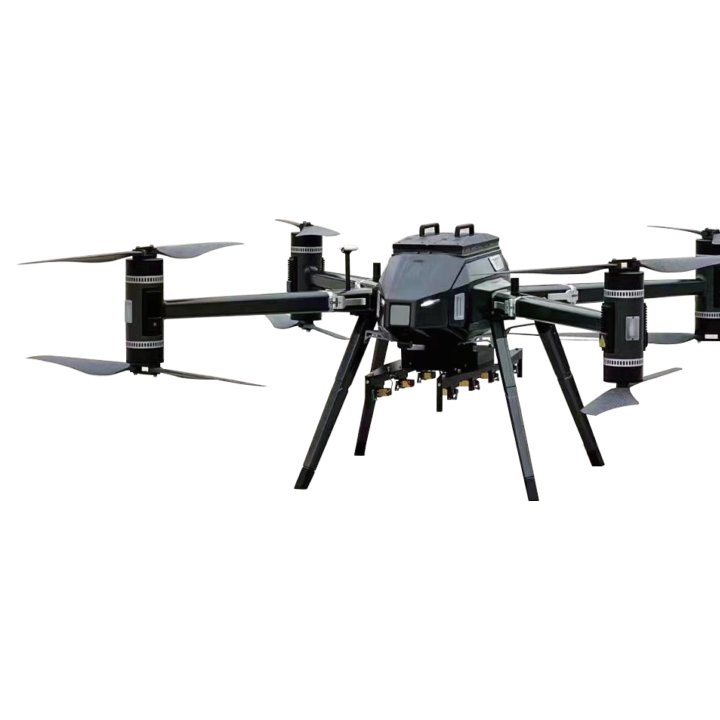
ChinaMoneypro UAV is a national-level high-tech enterprise that evolved from a state-owned research institute with deep roots in defense engineering. The company specializes in R&D and manufacturing of advanced unmanned aerial platforms and integrated sensing-communication solutions. Based in one of China’s premier innovation hubs, Moneypro UAV is among the few full-stack providers offering complete UAV drone systems – including airframes, propulsion engines, EO/IR gimbals, radar units, data links, and other communication technologies.
ChinaMoneypro UAV’s expertise spans unmanned aerial systems and sensor technologies. Their product lineup includes UAV platforms, EO/IR (electro-optical/infrared) stabilized gimbal cameras, radar systems, mesh radio communication modules, turbojet engines, GNSS antennas, thermal infrared cameras, laser rangefinders, and other high-performance modules. These UAV drones and sensors provide reliable, precise solutions for industrial inspection, environmental monitoring, geographic mapping, and various professional applications worldwide.
Some of ChinaMoneypro UAV’s products include:
Each of ChinaMoneypro UAV’s products is designed for professional use. For example, their agricultural UAV drones automate field spraying to improve efficiency, while their hybrid VTOL drones enable remote sensing and delivery over long distances. By showcasing these innovations, ChinaMoneypro UAV illustrates how modern UAV drone systems integrate advanced propulsion, sensing, and communications to serve both civilian industries and specialized applications.
Comparison of UAV Drone Types (Summary Table)
| UAV Drone Type | Key Features | Civilian Applications |
|---|---|---|
| Multi-Rotor UAV | Vertical takeoff/landing; stable hover; 4+ rotors | Aerial photography, inspections, short-range delivery, recreational use |
| Fixed-Wing UAV | Fixed wings like a small airplane; efficient long-range flight | Mapping/surveying large areas, agriculture, wildlife monitoring |
| Hybrid VTOL UAV | Vertical takeoff plus fixed-wing flight; versatile and extended range | Search & rescue, border patrol, long-endurance surveillance |
| Tethered UAV | Connected to ground by cable; continuous power supply | Persistent event security, communication relay, emergency response |
| Single-Rotor UAV | Helicopter-style (one main rotor); high lift capability | Heavy payload transport (sprayers, sensors), long-duration flights |
Frequently Asked Questions
- Q: What is an UAV drone?
A: A UAV drone is an unmanned aerial vehicle – an aircraft that flies without any pilot on board. It is controlled remotely or autonomously by software. In practice, a UAV drone combines an aircraft body with electronics (motors, a flight controller, sensors) to carry cameras, sensors or packages. By definition, a UAV has no human crew. - Q: How does a UAV drone work?
A: A UAV drone receives flight commands from a pilot (or autopilot program), and its flight controller translates those commands into motor actions while using sensors to maintain stability. The pilot’s controller sends a radio signal to the UAV drone, the flight controller processes it along with GPS/IMU data, and then the controller adjusts motor speeds via ESCs to move the drone. Onboard sensors constantly feed back the drone’s orientation and altitude so the flight controller can keep it balanced - Q: What are common uses for UAV drones?
A: UAV drones have many civilian applications. They are used for aerial photography and videography, land mapping and surveying, precision agriculture (crop monitoring and spraying), infrastructure inspection (power lines, bridges), environmental monitoring, search-and-rescue operations, and even delivery of goods and medical supplies. For example, UAV drones allow farmers to optimize resource use by identifying crop issues from the air, and city planners to survey construction sites efficiently. - Q: What types of UAV drones exist?
A: There are several main types: multi-rotor (like quadcopters), fixed-wing, hybrid VTOL, single-rotor (helicopter), and tethered UAV drones. Multi-rotor UAV drones hover and are very stable; fixed-wing UAV drones fly like airplanes and cover large distances; hybrid VTOL UAV drones combine vertical takeoff with long-range flight; and tethered UAV drones stay aloft indefinitely via a power cable. Each type suits different tasks. - Q: Are UAV drones regulated?
A: Yes. In most countries, UAV drones must follow aviation regulations. For example, in the United States any UAV (drone) weighing over 0.55 lb (250 grams) must be registered with the FAA. Drone pilots often need certification for commercial operations, and drones must generally be flown within visual line-of-sight unless special permission is obtained. These rules help ensure that UAV drones fly safely and do not interfere with other aircraft. - Q: What are the advantages of UAV drones?
A: UAV drones are relatively low-cost and flexible platforms for aerial tasks. They can be deployed quickly and often at a fraction of the cost of traditional manned aircraft. They reach inaccessible areas without risking human pilots. Because they hover or fly at low speeds, UAV drones can capture very detailed imagery and data. Many modern UAV drones can also fly autonomously via GPS, which simplifies operations. Overall, they provide safer, faster, and more cost-effective solutions for industries like agriculture, inspection, and environmental research.
References
- “Unmanned aerial vehicle,” Wikipedia (defines UAV/drone and lists civilian uses)
- FAA – “Drones & You” (FAA outreach on integrating UAV drones into airspace)
- GridFlight Tech – “Anatomy of a Drone” (covers drone components like flight controller and sensors)
- GridFlight Tech – “Anatomy of a Drone” (explains how drone parts interact)