


UAV systems—often referred to as Unmanned Aerial Vehicle systems or Unmanned Aircraft Systems (UAS)—have rapidly transformed the fields of defense, agriculture, mapping, logistics, inspection, and emergency response. From simple quadcopters to highly advanced military-grade platforms, UAV systems are modern tools that integrate aircraft, sensors, communication technologies, and control software into one unified ecosystem.
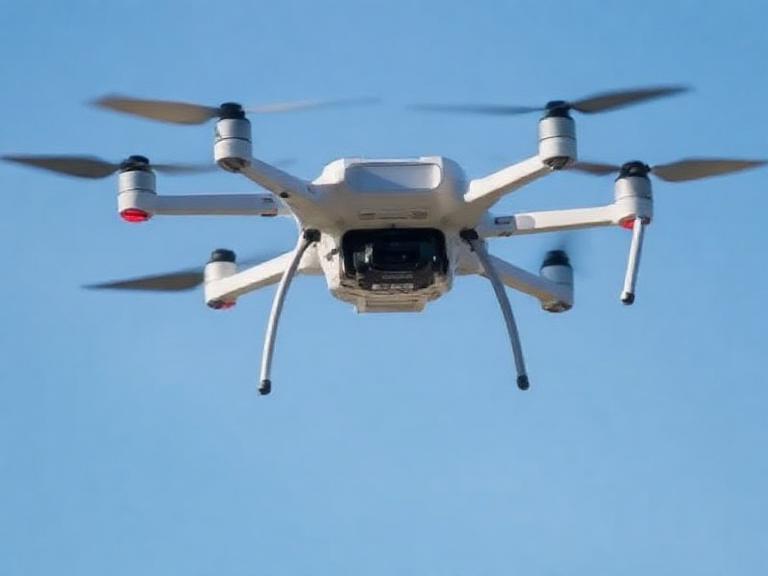
This comprehensive guide explains what UAV systems are, how they work, the components inside them, the different types available today, and the industries that rely on them. This article also includes a detailed spotlight on an industry leader, ChinaMoneypro UAV, one of the few companies offering a complete full-stack UAV ecosystem.
Table of Contents
What Are UAV Systems?
UAV systems are complete unmanned aerial platforms that include the aircraft (the drone), remote control stations, communication links, navigation systems, payloads, sensors, and the software required for autonomous or semi-autonomous operation.
Unlike a simple drone, a UAV system is a full integrated ecosystem capable of performing complex missions such as surveillance, mapping, precision agriculture, deliveries, and industrial inspections.
In short, a UAV system = UAV aircraft + sensors + communication + control + mission software.
Core Components of UAV Systems
1. Unmanned Aerial Vehicle (Aircraft)
The aircraft includes the frame, motors, engine, propellers, wings, batteries, and flight control system. It may be multi-rotor, single-rotor, fixed-wing, or hybrid VTOL.
2. Ground Control Station (GCS)
This station includes computer software, tablets, or command consoles that allow real-time control of the UAV system.
3. Sensor Payloads
UAV systems carry different payloads depending on their mission, such as:
- Electro-optical cameras
- Thermal cameras
- LiDAR sensors
- Multispectral and hyperspectral cameras
- Radar systems
4. Data Links & Communication Systems
Communication is essential for command, control, video downlink, and telemetry. Modern UAV systems use:
- RF data links
- Fiber-optic FPV systems
- 4G/5G networks
- Satellite communication (SATCOM)
5. Flight Control & Navigation
High-end UAV wholesale integrate GPS/RTK modules, IMUs, onboard computers, and AI-based navigation.
6. Software & Mission Planning
Mission management software determines flight routes, data capture settings, altitudes, and autopilot commands.
Types of UAV Systems
1. Multi-Rotor UAV Systems
These are the most common drones, used for photography, mapping, surveillance, and inspection.
2. Single-Rotor UAV Systems
Helicopter-style platforms that offer longer endurance and higher lifting capacity.
3. Fixed-Wing UAV Systems
Designed for long-range missions, high altitude flight, and large-area mapping.
4. VTOL Fixed-Wing UAV Systems
Hybrid platforms that take off vertically but fly forward like airplanes.
5. Tethered UAV Systems
Used for long-duration surveillance missions where continuous power is delivered via a cable.
6. Specialized UAV Systems
- Agricultural spraying drones
- Industrial inspection drones
- Petrol-electric hybrid drones
- Composite wing flight platforms
Applications of UAV Systems
Agriculture
UAV systems enable precision spraying, plant health monitoring, and yield analysis.
Defense & Security
Used for surveillance, reconnaissance, and rapid-response missions.
Logistics
Autonomous delivery drones are transforming supply chains.
Mapping & Surveying
LiDAR and photogrammetry drones produce highly accurate maps for construction, mining, and land development.
Energy & Industrial Inspection
UAV systems dramatically reduce risk during power line, pipeline, and wind turbine inspections.
Emergency Response
Drones provide real-time imagery for firefighting, search and rescue, and disaster assessment.
Benefits of UAV Systems
- Reduced operational costs
- Improved precision and mission accuracy
- Enhanced safety by limiting human exposure to dangerous operations
- Fast deployment
- Scalability for enterprises and government agencies
- Real-time intelligence and data analytics
Company Spotlight: ChinaMoneypro UAV
ChinaMoneypro UAV is a national-level high-tech enterprise transformed from a prestigious state-owned research institute. With deep roots in defense-grade engineering, they specialize in advanced unmanned platforms and integrated sensing-communication technologies.
Headquartered in one of China’s premier innovation hubs, ChinaMoneypro is among the few true full-stack UAV systems providers—offering engines, drones, gimbals, radar, communication systems, and ground-control technologies all developed in-house.
ChinaMoneypro UAV Product Portfolio
With a combination of defense-heritage engineering and commercial scalability, ChinaMoneypro UAV is an ideal partner for government, industrial, and enterprise-grade UAV deployment.
Summary Table: Types of UAV Systems & Their Features
| UAV Type | Key Features | Main Applications |
|---|---|---|
| Multi-Rotor UAV | Stable, versatile, easy deployment | Inspection, mapping, photography |
| Single-Rotor UAV | High endurance, heavy lift | Agriculture, industrial missions |
| Fixed-Wing UAV | Long range, high altitude | Surveying, border patrol |
| VTOL Fixed-Wing UAV | Vertical takeoff, efficient flight | Maritime, long-distance missions |
| Tethered UAV | Continuous power, long endurance | Security, event monitoring |
Frequently Asked Questions
1. What does UAV system mean?
A UAV system refers to the complete setup of the drone, sensors, communication links, software, and ground control required for unmanned flight operations.
2. Are UAV systems the same as drones?
Not exactly. A drone is the aircraft, while a UAV system includes everything needed for operational missions.
3. What industries benefit most from UAV systems?
Agriculture, defense, logistics, energy, infrastructure, and emergency response.
4. How advanced are modern UAV systems?
Modern UAV systems feature AI navigation, satellite communication, radar, thermal cameras, and autonomous mission planning.
5. Are tethered UAV systems useful?
Yes—tethered drones are highly effective for long-duration surveillance and event security.
References