


About the Author: ChinaMoneypro UAV
ChinaMoneypro UAV is a national-level high-tech enterprise, transformed from a prestigious state-owned research institute. With deep roots in defense-grade engineering, we specialize in the R&D and manufacturing of advanced unmanned platforms and integrated sensing-communication solutions. Headquartered in one of China’s premier innovation hubs, Moneypro is among the few full-stack providers offering complete UAV systems, engines, gimbals, radar, data links, and communication technologies. From our experience, mastering the fundamental architecture of these systems is crucial for both defense applications and high-end commercial deployment.
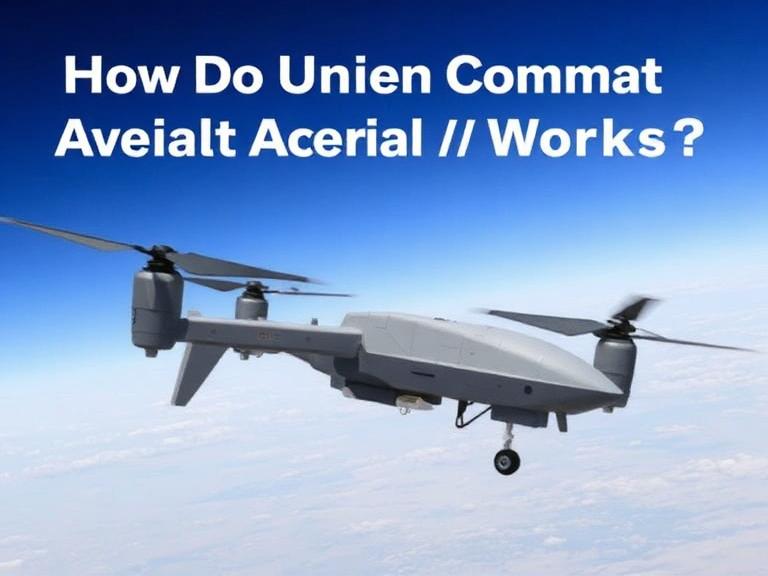
The modern aerospace industry has been entirely revolutionized by the deployment of autonomous and remotely piloted systems. For industry professionals, defense analysts, and commercial aviation engineers, understanding how unmanned combat aerial vehicles work requires a deep dive into complex avionics, secure data links, and advanced aerodynamic engineering. These platforms represent the pinnacle of modern aviation technology, combining lethal precision with unparalleled endurance. To truly grasp how unmanned combat aerial vehicles work, one must look beyond the sleek exterior of the fuselage and examine the interconnected digital nervous system that drives every flight maneuver, sensor deployment, and payload release.
From our experience at ChinaMoneypro UAV, we frequently encounter questions from clients and partners regarding the underlying mechanics of these formidable machines. The foundational principle of how unmanned combat aerial vehicles work relies on a sophisticated triad: the airborne platform, the ground control station, and the communication architecture that binds them together. In this comprehensive guide, we will dissect the engineering components, operational protocols, and commercial technological crossovers that explain exactly how unmanned combat aerial vehicles work in high-stakes environments.
Table of Contents
- 1. The Core Architecture: Flight Systems and Avionics
- 2. Propulsion and Aerodynamic Design
- 3. Command, Control, and Communication (C3)
- 4. Advanced Sensing and Payload Integration
- 5. Commercial Adaptations of Defense Technology
- 6. Summary Table: Systems Architecture
- 7. Frequently Asked Questions (FAQs)
- 8. Authoritative References
1. The Core Architecture: Flight Systems and Avionics
When clients ask us how unmanned combat aerial vehicles work, we immediately point to the avionics suite. The avionics system functions as the brain of the aircraft. Unlike traditional manned aircraft, where a human pilot relies on sensory input and physical feedback, these systems depend entirely on fly-by-wire technology driven by a Flight Control Computer (FCC). The FCC processes millions of data points per second from an array of onboard sensors, including pitot tubes for airspeed, barometric altimeters, and Inertial Navigation Systems (INS) paired with GPS.
Another dimension of how unmanned combat aerial vehicles work involves redundancy. Defense-grade platforms operate with triple-redundant flight control systems. If a primary sensor or processor fails due to hostile action or environmental stress, a secondary or tertiary system instantaneously assumes control. This fault-tolerant architecture ensures that the aircraft can maintain its flight envelope, execute its mission parameters, or safely return to base without human intervention. We recommend that any high-end commercial platform adopts similar redundancy protocols to ensure operational safety.
2. Propulsion and Aerodynamic Design
The propulsion systems clearly explain how unmanned combat aerial vehicles work at high altitudes and over extended durations. Depending on the mission profile, these platforms utilize different powerplants. Medium-Altitude Long-Endurance (MALE) systems typically rely on highly efficient turboprop engines configured in a pusher-propeller layout at the rear of the fuselage. This design leaves the nose of the aircraft free for sensitive radar and electro-optical payloads, preventing engine heat and vibration from interfering with sensor fidelity.
High-Altitude Long-Endurance (HALE) and stealth platforms, however, utilize advanced turbofan engines. These jet engines provide the thrust necessary to operate in the thin air of the stratosphere while maintaining low acoustic and thermal signatures. For defense contractors, knowing exactly how unmanned combat aerial vehicles work in terms of thermal management is crucial. The exhaust is often routed over the top of the fuselage or through specialized baffles to dissipate heat, thereby masking the aircraft from infrared-seeking munitions.
3. Command, Control, and Communication (C3)
The operational lifeline of these platforms is the C3 architecture. To comprehend how unmanned combat aerial vehicles work, one must understand the difference between Line of Sight (LOS) and Beyond Line of Sight (BLOS) communication. In LOS operations, the aircraft is controlled directly via ultra-high frequency (UHF) or microwave radio data links from a localized Ground Control Station (GCS). This provides low-latency control, essential for takeoff, landing, and precise tactical maneuvers.
However, modern warfare requires global reach. This is achieved through BLOS satellite communications (SATCOM). Utilizing Ku-band or Ka-band satellite links, a pilot sitting in a control facility thousands of miles away can fly the aircraft in real-time. The transmission of encrypted telemetry, video feeds, and targeting data via satellite is the defining factor in how unmanned combat aerial vehicles work on a global scale. This special-grade communication infrastructure is precisely what enables modern bvlos fixed wing uav solutions to operate safely over vast distances in the commercial sector.
4. Advanced Sensing and Payload Integration
The sensing capabilities define how unmanned combat aerial vehicles work in combat and surveillance scenarios. The primary sensory organ is the Electro-Optical/Infrared (EO/IR) gimbal turret mounted beneath the nose. This stabilized turret houses high-definition daylight cameras, thermal imagers, and laser designators. These sensors allow operators to identify targets from tens of thousands of feet in the air, day or night, through smoke or adverse weather.
Furthermore, platforms are often equipped with Synthetic Aperture Radar (SAR) and Ground Moving Target Indicator (GMTI) systems. For those wondering how unmanned combat aerial vehicles work in zero-visibility conditions, SAR paints a high-resolution topographical map of the ground using radar waves, easily penetrating cloud cover and foliage. The integration of such high-end sensing technology is not limited to defense; it forms the backbone of a high-end long range drone with camera used for border patrol, maritime search and rescue, and critical infrastructure inspection.
Payload integration also encompasses the armament. These vehicles utilize smart munitions, such as laser-guided bombs and GPS-guided missiles. The weapon systems are hardwired into the central targeting computer. When a target is designated via the onboard laser, the munitions track the laser reflection, ensuring pinpoint accuracy with minimal collateral damage.
5. Commercial Adaptations of Defense Technology
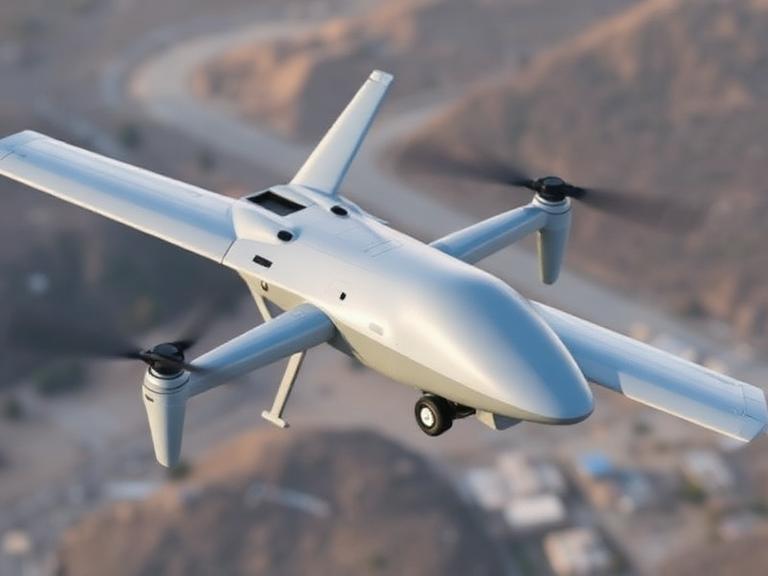
From our experience, the same principles that dictate how unmanned combat aerial vehicles work are now driving civilian logistics and enterprise solutions. The rigorous engineering standards developed for special applications have cascaded down into the commercial space. For instance, the aerodynamic efficiency of special surveillance drones is mirrored perfectly in the design of a top-tier commercial fixed wing uav.
Similarly, the high-precision GPS and INS systems required for targeting have been repurposed for civilian mapping. Today, a specialized fixed wing drone for photogrammetry utilizes the exact same stabilization and georeferencing technology to create centimeter-accurate 3D models of mining sites and agricultural lands. We recommend studying how unmanned combat aerial vehicles work before procuring enterprise drones, as the underlying technology is practically identical.
Additionally, the heavy-lift capacity and robust flight control software of special cargo drones have revolutionized the logistics sector. The industry is currently seeing a massive surge in the deployment of the vtol cargo drone. These platforms combine the vertical takeoff flexibility of a multirotor with the forward-flight efficiency of a fixed-wing aircraft. For massive supply chain operations, acquiring reliable cargo drone solutions directly leverages decades of defense-grade aeronautical engineering.
6. Summary Table: Systems Architecture
The summary table below illustrates how unmanned combat aerial vehicles work compared to their high-end commercial counterparts across various engineering domains.
| Engineering Domain | Combat Aerial Vehicle Specifications | Commercial Enterprise Adaptation |
|---|---|---|
| Flight Control System | Triple-redundant fly-by-wire, autonomous evasive maneuvering capabilities. | Dual-redundant autopilot, automated waypoint navigation and landing. |
| Communication Link | Encrypted Ku/Ka-band SATCOM, anti-jamming tactical data links. | 4G/5G LTE cellular networks, commercial SATCOM for BVLOS. |
| Sensing Payload | EO/IR gimbals, Synthetic Aperture Radar (SAR), laser designators. | High-resolution RGB cameras, LiDAR sensors, multispectral imaging. |
| Propulsion | High-bypass turbofans, specialized acoustic-dampened turboprops. | High-efficiency brushless electric motors, hybrid gasoline-electric generators. |
| Primary Application | Strategic reconnaissance, precision strikes, electronic warfare suppression. | Photogrammetry, pipeline inspection, heavy-lift logistics and delivery. |
7. Frequently Asked Questions (FAQs)
In terms of software, how unmanned combat aerial vehicles work is dependent on autonomous fail-safes. If enemy electronic warfare units jam the GPS or SATCOM links, the aircraft relies on its internal Inertial Navigation System (INS) to calculate its position based on velocity and trajectory. Advanced platforms also use terrain-matching optical sensors to navigate back to friendly territory completely autonomously without external signals.
A common question is how unmanned combat aerial vehicles work alongside manned aircraft regarding autonomy. Currently, the flight itself—takeoff, waypoint navigation, and landing—is highly autonomous. However, the release of munitions remains strictly under the control of a human operator in the Ground Control Station, adhering to the “human-in-the-loop” doctrine for lethal force.
Evaluating how unmanned combat aerial vehicles work yields insights into signal processing. For Line of Sight (LOS) operations, latency is virtually zero (less than 50 milliseconds). For Beyond Line of Sight (BLOS) operations using satellite uplinks, the signal must travel to a satellite in geostationary orbit and back, resulting in a latency of approximately 1.5 to 2 seconds. Pilots are highly trained to anticipate this delay during target tracking.
8. Authoritative References
To further understand the complex aerodynamics, data link protocols, and regulatory frameworks governing these advanced aviation systems, we recommend consulting the following authoritative sources:
- Federal Aviation Administration (FAA) – Unmanned Aircraft Systems (UAS) Regulations and Policies
- U.S. Department of Defense (DoD) – Unmanned Systems Integrated Roadmap
- American Institute of Aeronautics and Astronautics (AIAA) – Journal of Aerospace Information Systems
In conclusion, understanding exactly how unmanned combat aerial vehicles work reveals a symphony of high-end engineering, secure telecommunications, and advanced aerodynamics. At ChinaMoneypro UAV, we continuously push the boundaries of this technology, ensuring that the innovations forged in the defense sector drive the future of global commercial aviation, photogrammetry, and aerial logistics.