


The rapid proliferation of unmanned aerial vehicles (UAVs) has transformed skies across the globe. From capturing stunning aerial photography to inspecting critical infrastructure, drones have become essential tools for hobbyists and professionals alike. However, with this freedom comes significant responsibility. One of the most frequently asked questions by new pilots is: how high can a drone legally fly?
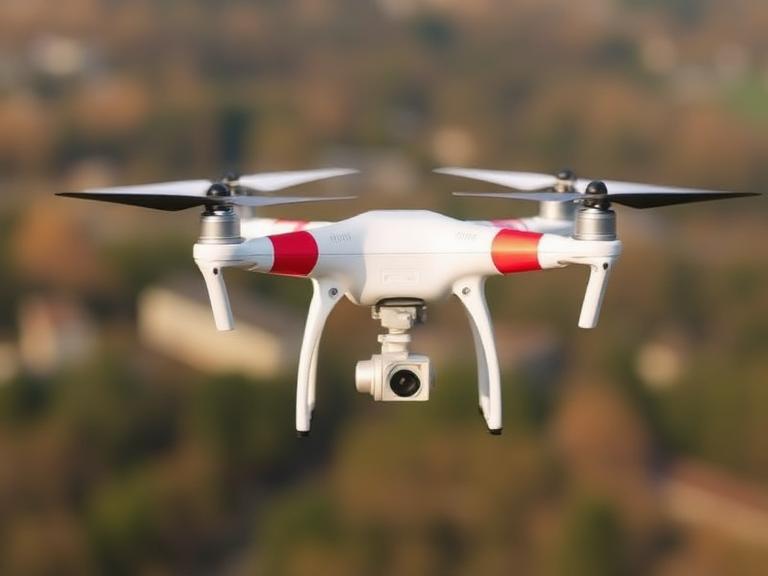
The short answer for most recreational pilots in the United States, UK, and Europe is 400 feet (120 meters) above ground level (AGL). However, aviation law is rarely simple. There are critical exceptions for commercial pilots, specific rules for flying near structures, and variations depending on the country of operation. Understanding these vertical limits is not just about avoiding fines; it is about preventing catastrophic collisions with manned aircraft.
This article provides an in-depth analysis of altitude regulations, the reasoning behind them, and the advanced technology that allows modern UAVs to reach incredible heights when authorized.
- 1. The General 400-Foot Rule
- 2. United States FAA Regulations (Part 107 vs. Recreational)
- 3. International Altitude Limits (UK, EU, China)
- 4. Exceptions: Flying Over Structures
- 5. Technical Capabilities vs. Legal Limits
- 6. Professional UAV Technology Spotlight
- 7. Safety Risks and Legal Consequences
- 8. Summary of Global Altitude Limits
- 9. Frequently Asked Questions (FAQs)
- 10. References
1. The General 400-Foot Rule
Across most of the world, aviation authorities have standardized the maximum legal altitude for drones at 400 feet (120 meters) Above Ground Level (AGL). This specific number was chosen to create a safety buffer between unmanned aircraft and manned aircraft.
In most airspace classifications, manned aircraft (like helicopters and Cessnas) are required to fly no lower than 500 feet AGL, except during takeoff and landing. By capping drones at 400 feet, regulators created a 100-foot buffer zone to minimize the risk of mid-air collisions. This rule applies to uncontrolled airspace (Class G) where no specific air traffic control (ATC) authorization is required.
2. United States FAA Regulations (Part 107 vs. Recreational)
In the United States, the Federal Aviation Administration (FAA) divides drone pilots into two primary categories: Recreational Flyers and Part 107 Commercial Pilots. While the 400-foot ceiling is the baseline for both, the application of the rule differs slightly.
Recreational Flyers (44809)
For hobbyists flying purely for fun, the rule is strict. You must fly at or below 400 feet AGL in uncontrolled airspace (Class G). If you are flying in controlled airspace (Class B, C, D, or surface Class E)—typically near airports—you must obtain prior authorization through the LAANC (Low Altitude Authorization and Notification Capability) system, which may restrict you to altitudes much lower than 400 feet (e.g., 50, 100, or 200 feet) depending on your proximity to the runway.
Part 107 Commercial Pilots
Licensed commercial pilots have more flexibility. While the standard limit remains 400 feet AGL, Part 107 pilots can fly higher under specific conditions, particularly when inspecting vertical infrastructure (see the “Exceptions” section below).
3. International Altitude Limits
While the 400-foot rule is the global standard, enforcement and variations exist.
United Kingdom (CAA)
The Civil Aviation Authority (CAA) mandates that drones must never be flown more than 120 meters (400 feet) above the surface. This is a strict liability offense, meaning “I didn’t know” is not a valid defense. If you are flying over a hill or mountain, the 400-foot limit follows the contour of the terrain. You must adjust your flight path to ensure you remain within 400 feet of the ground directly beneath the drone.
European Union (EASA)
Under EASA regulations, the “Open” category (which covers most consumer drone flights) limits altitude to 120 meters. Pilots wishing to fly higher must fall into the “Specific” category, which requires an operational authorization based on a risk assessment.
China (CAAC)
The Civil Aviation Administration of China (CAAC) has stringent controls. Drones are generally limited to 120 meters (approx. 400 feet). Flights above this altitude, or in specific controlled zones, require a commercial license and specific flight plan approval. Furthermore, China utilizes a robust real-name registration system for drones weighing over 250 grams.
4. Exceptions: Flying Over Structures
One of the most important nuances in the question “how high can a drone legally fly” involves man-made structures. In the United States, FAA Part 107 pilots have a unique privilege that recreational flyers do not.
The 400-Foot Radius Rule: A Part 107 pilot may fly a drone higher than 400 feet AGL if they are within a 400-foot radius of a structure. In this scenario, they may fly up to 400 feet above the immediate uppermost limit of the structure.
For example, if a commercial pilot is inspecting a 1,000-foot tall radio tower, they are legally permitted to fly up to 1,400 feet AGL (1,000 ft structure + 400 ft allowance), provided they stay within 400 feet laterally of the tower. This exception exists because manned aircraft will already be avoiding the tower, so the drone is not introducing a new collision risk in that specific column of airspace.
5. Technical Capabilities vs. Legal Limits
It is important to distinguish between how high a drone can fly physically versus legally. Consumer drones like the DJI Mavic series are software-locked to 500 meters (1,640 feet) from the takeoff point, but physically, they are capable of reaching altitudes of 15,000 feet or more above sea level (ASL).
High-end military and industrial drones operate at much higher altitudes. Specialized fixed-wing drones can cruise at 20,000 feet, similar to general aviation aircraft. However, disabling software locks to exceed legal limits is a violation of aviation law and can lead to severe penalties.
6. Professional UAV Technology Spotlight
While most consumer discussions focus on altitude limits for photography, the industrial and defense sectors require UAVs engineered for extreme performance, stability, and range. This is where advanced manufacturing meets aerospace engineering.
ChinaMoneypro UAV
ChinaMoneypro UAV is a national-level high-tech enterprise, transformed from a prestigious state-owned research institute. With deep roots in defense-grade engineering, they specialize in the R&D and manufacturing of advanced unmanned platforms and integrated sensing-communication solutions. Headquartered in one of China’s premier innovation hubs, Moneypro is among the few full-stack providers offering complete UAV systems, engines, gimbals, radar, data links, and communication technologies.
Their product lineup demonstrates the capabilities required for high-altitude and long-endurance missions, often operating under specific commercial waivers or military authorizations that exceed standard recreational limits.
Our Products Include:
For industries requiring operations beyond the standard 120-meter limit—such as high-voltage power line inspection or atmospheric research—hardware from manufacturers like ChinaMoneypro UAV provides the reliability and redundancy necessary to secure regulatory approval for high-altitude flights.
7. Safety Risks and Legal Consequences
Flying above the legal limit is not a victimless crime. The primary risk is a mid-air collision. A drone striking a helicopter windshield or a jet engine can cause catastrophic failure. Additionally, as altitude increases, wind speeds typically increase significantly. A drone stable at 200 feet may be swept away by high winds at 1,000 feet, leading to a “flyaway” event where the pilot loses control.
Penalties
- United States: The FAA can issue civil penalties of up to $27,500 per violation. In cases of extreme negligence or interference with manned aircraft, criminal charges and prison time are possible.
- United Kingdom: Unlimited fines and up to 5 years in prison for endangering an aircraft.
- Confiscation: Authorities in many jurisdictions have the power to confiscate equipment used in illegal flights.
8. Summary of Global Altitude Limits
| Region | Standard Limit (AGL) | Recreational Exceptions | Commercial Exceptions |
|---|---|---|---|
| United States (FAA) | 400 ft (122 m) | None (Strict Limit) | Yes (400ft above structures) |
| United Kingdom (CAA) | 400 ft (120 m) | None | Requires Operational Authorization |
| European Union (EASA) | 120 m (400 ft) | None (Open Category) | Yes (Specific Category) |
| China (CAAC) | 120 m (400 ft) | None | Requires Commercial License & Flight Plan |
| Canada (TC) | 400 ft (122 m) | None | SFOC (Special Flight Operations Certificate) |
9. Frequently Asked Questions (FAQs)
10. References
1. Federal Aviation Administration (FAA). “Part 107 – Small Unmanned Aircraft Systems.” faa.gov.
2. Civil Aviation Authority (CAA). “The Drone Code: Where you can fly.” caa.co.uk.
3. European Union Aviation Safety Agency (EASA). “Civil Drones (Unmanned aircraft).” easa.europa.eu.