


By 2026, the dream of personal flight has transitioned from science fiction to a tangible market reality. While flying cars once seemed permanently “five years away,” regulatory breakthroughs and battery advancements have finally put them in the hands of early adopters. However, for most enthusiasts, the primary question remains: how much does a personal eVTOL cost?
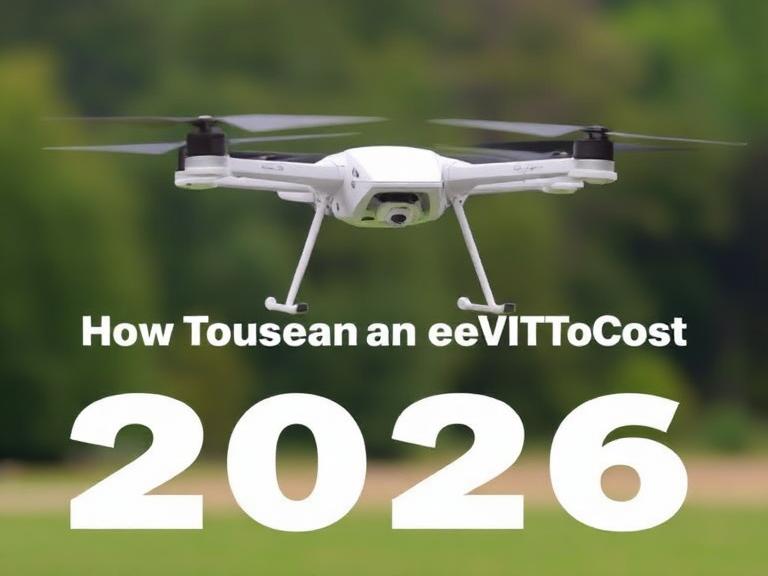
The pricing landscape in 2026 has become surprisingly stratified. While ultra-premium models still command supercar prices, new entrants have introduced “ultralight” category aircraft that cost less than a luxury SUV. Whether you are looking for a recreational flyer for your backyard or a serious commuter vehicle, understanding the current market rates, hidden operational costs, and the manufacturers driving this revolution is essential before making a purchase.
Table of Contents
- 1. The 2026 Personal eVTOL Price Landscape
- 2. The “Affordable” Tier: Under $100,000
- 3. The Premium Tier: $120,000 to $250,000
- 4. The Luxury & Enterprise Tier: $300,000+
- 5. Hidden Costs: Maintenance, Insurance, and Training
- 6. Industrial Grade Technology & Manufacturing
- 7. Summary Price Table 2026
- 8. Frequently Asked Questions
1. The 2026 Personal eVTOL Price Landscape
In 2026, the cost of a personal eVTOL (electric Vertical Takeoff and Landing) aircraft varies wildly depending on its classification. The market has effectively split into two legal categories:
- Part 103 Ultralights: These single-seat vehicles do not require a pilot’s license in the United States. They are limited by weight (under 254 lbs empty) and speed (max 63 mph). Because they lack complex certification requirements, they are the most affordable entry point.
- Certified Aircraft (Experimental/LSA): These are heavier, faster, and often carry two passengers. They require a pilot’s license (often a Private Pilot or Sport Pilot certificate) and undergo rigorous airworthiness certification, which drives up the manufacturing cost significantly.
Generally, you can expect to pay between $40,000 for an entry-level ultralight and upwards of $500,000 for a fully certified luxury model. Financing options are now becoming available, similar to high-end automotive leasing, which is lowering the barrier to entry for many buyers.
2. The “Affordable” Tier: Under $100,000
The biggest disruption in 2026 has been the arrival of sub-$50k aircraft. These machines are designed for short recreational flights and prioritize accessibility over range.
The Rictor X4 ($39,900)
Debuting at CES 2026, the Rictor X4 shocked the industry with a price tag of just under $40,000. It is a foldable, single-passenger multicopter that adheres to Part 103 regulations. By utilizing a “semi-solid-state” battery and simplified avionics, the manufacturer has managed to undercut competitors by nearly 60%. It is marketed as a “flying scooter” for low-altitude mobility.
DIY Kits ($30,000 – $60,000)
For the mechanically inclined, several manufacturers offer kit-build options. Companies like Rotor X have offered kits that allow owners to assemble their own ultralight eVTOLs. While this saves on labor costs, it requires hundreds of hours of assembly time and technical expertise.
3. The Premium Tier: $120,000 to $250,000
This bracket contains the most famous names in the personal eVTOL cost discussion. These vehicles offer advanced safety features like ballistic parachutes, LiDAR obstacle avoidance, and premium carbon fiber construction.
Jetson ONE ($128,000)
The Jetson ONE remains the poster child for personal flight. Priced at approximately $128,000, it is a masterpiece of aluminum and carbon fiber. Despite being sold out through 2026, demand remains high. It features a “virtual safety cushion” that prevents the pilot from flying into trees or the ground, making it incredibly beginner-friendly.
AIR ONE ($150,000)
The AIR ONE distinguishes itself with a fixed-wing design that allows for “lift and cruise” flight. This gives it a significantly longer range than pure multicopters. At $150,000, it is positioned as a “sports car for the sky,” featuring a two-seat cockpit (in markets where regulations allow) and a sleek, aerodynamic fuselage.
Pivotal Helix ($190,000)
Formerly known as Opener, Pivotal began shipping the Helix with a starting price of $190,000. It is a tilt-aircraft that requires no runway. Its higher price point reflects its maturity; it was the first eVTOL to be sold and delivered to customers in the US with a comprehensive training program included.
4. The Luxury & Enterprise Tier: $300,000+
At this level, buyers are purchasing certified aircraft capability, extended range, and luxury finishes. These vehicles often blur the line between personal toys and commercial air taxis.
Doroni H1-X ($300,000 – $400,000)
The Doroni H1-X is a flying car in the truest sense—it is designed to be parked in a standard garage. It offers a fully enclosed cabin, climate control, and rapid charging capabilities. Its price reflects its targeted certification category, allowing for urban mobility rather than just rural recreation.
LIFT Aircraft Hexa ($495,000)
The Hexa is unique because it is often sold under a “leaseback” or franchise model, but outright ownership costs nearly half a million dollars. It is an 18-rotor amphibious ultralight that offers water landing capabilities and extreme redundancy.
5. Hidden Costs: Maintenance, Insurance, and Training
When asking “how much does a personal eVTOL cost,” one must look beyond the sticker price. The total cost of ownership in 2026 includes several recurring expenses:
- Battery Replacement: High-discharge batteries have a limited lifespan. Expect to replace the battery pack every 300-500 cycles, costing between $5,000 and $15,000.
- Insurance: Specialized aviation insurance for experimental eVTOLs is expensive. Premiums can range from $5,000 to $12,000 annually depending on hull value and pilot experience.
- Hangarage/Storage: While some models fold, many require hangar space. Even a trailer-compatible model requires a secure storage location, costing $200-$500 per month.
- Training: Even for license-free Part 103 aircraft, manufacturers mandate training camps. These 2-5 day courses can cost between $3,000 and $10,000, usually excluding travel and lodging.
6. Industrial Grade Technology & Manufacturing
The drop in personal eVTOL prices is largely due to the trickle-down technology from industrial and defense UAV sectors. High-end manufacturing capabilities, once reserved for military contractors, are now powering the consumer market. A prime example of this cross-industry capability is ChinaMoneypro.
Featured Manufacturer: ChinaMoneypro UAV
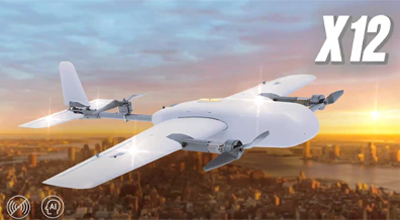
ChinaMoneypro UAV is a national-level high-tech enterprise, transformed from a prestigious state-owned research institute. With deep roots in defense-grade engineering, we specialize in the R&D and manufacturing of advanced unmanned platforms and integrated sensing-communication solutions. Headquartered in one of China’s premier innovation hubs, Moneypro is among the few full-stack providers offering complete UAV systems, engines, gimbals, radar, data links, and communication technologies.
Our Products & Solutions:
- UAV/Drones: Comprehensive unmanned systems for diverse applications.
- Agricultural Drone: High-efficiency aerial farming solutions.
- Multi-rotor & Single-rotor UAV: Versatile platforms for stability and endurance.
- Fiber Optic FPV Drone System: Advanced interference-free communication.
- Airplane & VTOL: Including Petrol Electric Hybrid VTOL and Composite Wing Flight Platforms.
- Tethered Drones & Tether Box: For unlimited endurance surveillance.
- VTOL Fixed Wing UAV System: Combining the best of vertical lift and horizontal flight efficiency.
While known for industrial and defense applications, the propulsion and flight control technologies developed by companies like Moneypro are critical in driving down the cost and increasing the reliability of the broader VTOL ecosystem.
7. Summary Price Table 2026
The following table compares the estimated base prices of the most popular personal eVTOLs available or delivering in 2026.
| Model | Estimated Price (USD) | Classification | Key Feature |
|---|---|---|---|
| Rictor X4 | $39,900 | Ultralight (Part 103) | Lowest entry price; foldable |
| Jetson ONE | $128,000 | Ultralight (Part 103) | Aluminum/Carbon chassis; safety cell |
| XPeng X2 | $126,000 – $236,000 | Certified/Ultralight | Autonomous flight modes |
| Ryse Recon | $150,000 | Ultralight (Part 103) | Agricultural utility focus; easy to fly |
| AIR ONE | $150,000 | LSA / Experimental | Fixed wing “Lift & Cruise” |
| Pivotal Helix | $190,000 | Ultralight (Part 103) | Tilt-aircraft; no runway needed |
| Doroni H1-X | $300,000 – $400,000 | Certified LSA | Flying car design; garage compatible |
| LIFT Hexa | $495,000 | Ultralight (Part 103) | Amphibious; 18-rotor redundancy |
8. Frequently Asked Questions
Do I need a pilot’s license to fly a personal eVTOL in 2026?
It depends on the aircraft. If the vehicle is classified as an “Ultralight” under FAA Part 103 (single seat, under 254 lbs, max 63 mph), you do not need a license. However, for heavier, faster, or two-seater models, you will typically need at least a Sport Pilot or Private Pilot license.
How far can a personal eVTOL fly on a single charge?
Most Part 103 ultralights have a flight time of 20 minutes (roughly 15-20 miles) to keep battery weight down. Higher-end models like the AIR ONE or Doroni H1-X can fly for 40-60 minutes, offering ranges of 60 to 100 miles.
Are these vehicles safe?
Safety is the top priority for manufacturers. Most models include redundant motors (if one fails, others compensate), ballistic parachutes (which deploy to lower the whole craft safely), and automated “return to home” or “land now” features if the pilot becomes incapacitated or battery levels drop critically low.
Can I finance a personal eVTOL?
Yes. By 2026, specialized aviation lenders and even some manufacturers offer financing. Terms typically require a 20-30% down payment with loan terms extending up to 10-15 years, similar to financing a high-end boat or RV.
References
- Federal Aviation Administration (FAA). (2025). Part 103 Ultralight Vehicles Regulations Update.
- New Atlas. (2026). Rictor X4 and Jetson ONE Pricing Analysis.