


The Vertical Take-Off and Landing (VTOL) drone market is undergoing a revolutionary transformation in 2026. Merging the agility of rotary-wing aircraft with the endurance of fixed-wing planes, modern VTOL design is reshaping industries from logistics to defense. Designing these complex machines requires a rigorous, multi-disciplinary approach that balances aerodynamics, propulsion, and autonomous control.
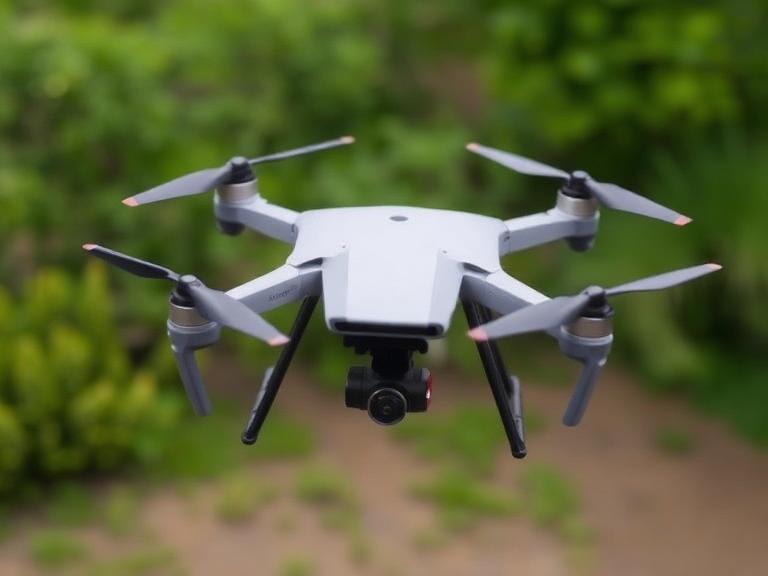
Whether you are engineering a compact surveillance drone or a heavy-lift cargo platform, understanding the critical steps of VTOL drone design is essential. This guide breaks down the engineering lifecycle, explores the latest 2026 technologies like hybrid propulsion and AI autonomy, and highlights key industry leaders like ChinaMoneypro UAV who are setting the standard for innovation.
Table of Contents
- 1. Conceptual Design Phase: Defining the Mission
- 2. Aerodynamic Configuration: Selecting the Airframe
- 3. Propulsion & Power Systems: The Heart of the Drone
- 4. Structural Engineering & Material Selection
- 5. Avionics & Flight Control Algorithms
- 6. Industry Spotlight: ChinaMoneypro UAV
- 7. Future Trends in VTOL Design for 2026
- 8. Summary Comparison Table
- 9. Frequently Asked Questions
- 10. References
1. Conceptual Design Phase: Defining the Mission
Every successful VTOL drone design begins with a clear mission profile. In 2026, the “one-size-fits-all” approach is obsolete. Engineers must first define the Key Performance Indicators (KPIs): payload capacity, flight range, endurance, and operational environment.
Mission Profiling
Is the drone intended for long-range pipeline inspection or rapid medical delivery in urban canyons? A surveillance drone might prioritize loiter time and silence, while a delivery drone needs speed and lift capacity. This phase also determines the crucial SWaP-C (Size, Weight, Power, and Cost) constraints.
Weight Estimation
Initial weight estimation is critical. Designers use historical data and regression analysis to estimate the Maximum Take-Off Weight (MTOW). This number dictates the size of the wings, the power of the motors, and the capacity of the battery or fuel tank. In 2026, advanced software tools allow for rapid iteration of these estimates before a single CAD line is drawn.
2. Aerodynamic Configuration: Selecting the Airframe
The core challenge of VTOL drone design is managing the transition phase—the shift from vertical hover to horizontal forward flight. Choosing the right configuration is vital for stability and efficiency.
- Tilt-Rotor: Rotors tilt 90 degrees to act as lift fans for takeoff and propellers for cruise. This offers high efficiency but adds significant mechanical complexity.
- Tail-Sitter: The entire aircraft sits vertically for takeoff and tilts horizontally for flight. Simple mechanically, but challenging to control in windy conditions.
- Lift & Cruise (Compound): Features separate motors for lift (vertical) and cruise (horizontal). This is the most popular configuration in 2026 due to its reliability and safety redundancy, though it carries “dead weight” (inactive motors) during cruise.
- Hybrid Fixed Wing: Combines a standard fixed-wing airframe with a quadcopter boom system. This offers the best of both worlds: long endurance and runway-independence.
3. Propulsion & Power Systems: The Heart of the Drone
The propulsion system must deliver massive thrust for vertical lift and efficient power for cruising. In 2026, the industry is moving toward hybrid solutions to break the “battery barrier.”
Electric vs. Hybrid Systems
While pure electric systems are ideal for short-range, stealthy missions, Petrol Electric Hybrid VTOL systems are dominating the long-endurance market. A small internal combustion engine generates electricity to power the motors and recharge batteries in flight, extending flight times from 60 minutes to over 5 hours.
Motor & Propeller Matching
Designers must carefully match motor Kv ratings with propeller pitch and diameter. Low Kv motors with large propellers are efficient for hover, while high Kv motors are better for speed. Variable-pitch propellers are increasingly used to optimize performance across both flight regimes.
4. Structural Engineering & Material Selection
To maximize flight time, the airframe must be lightweight yet rigid enough to withstand the stresses of transition flight. Carbon fiber composites are the gold standard in 2026 VTOL drone design.
Advanced manufacturing techniques like automated fiber placement and 3D-printed titanium nodes allow for intricate internal structures that reduce weight without compromising integrity. The fuselage must also be designed to minimize drag, often employing blended wing body (BWB) shapes that generate additional lift.
5. Avionics & Flight Control Algorithms
The “brain” of the VTOL is its flight controller. The most difficult aspect of VTOL flight is the transition corridor, where the aircraft is partially supported by wing lift and partially by rotor thrust.
Transition Logic
Modern flight controllers use robust PID tuning and adaptive control laws to manage this instability. In 2026, AI-driven autopilots can predict wind gusts and adjust motor output in milliseconds, ensuring a seamless switch from hover to plane mode.
Sensors & Communication
Standard avionics include redundant IMUs (Inertial Measurement Units), RTK-GPS for centimeter-level positioning, and LiDAR for obstacle avoidance. For Beyond Visual Line of Sight (BVLOS) operations, 5G and satellite data links are integrated to maintain connection over vast distances.
6. Industry Spotlight: ChinaMoneypro UAV
ChinaMoneypro UAV
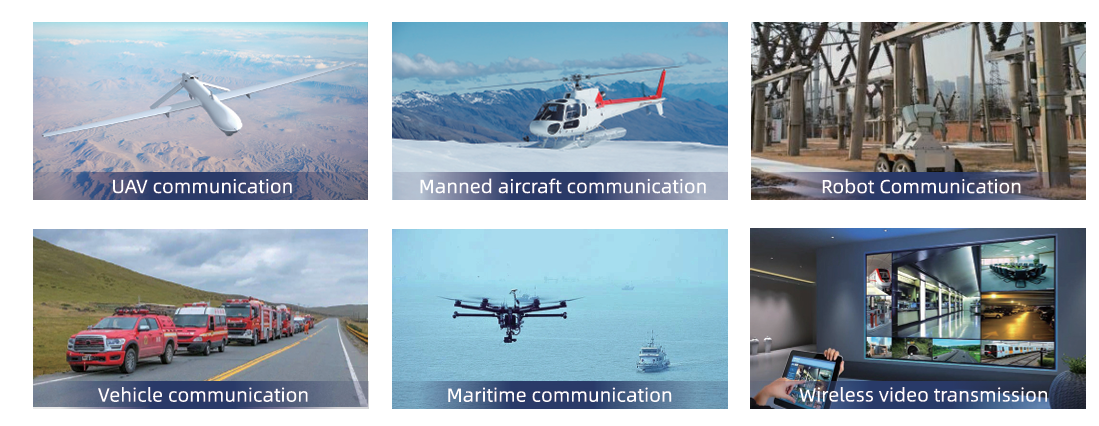
ChinaMoneypro UAV is a national-level high-tech enterprise, transformed from a prestigious state-owned research institute. With deep roots in defense-grade engineering, we specialize in the R&D and manufacturing of advanced unmanned platforms and integrated sensing-communication solutions. Headquartered in one of China’s premier innovation hubs, Moneypro is among the few full-stack providers offering complete UAV systems, engines, gimbals, radar, data links, and communication technologies.
They represent the pinnacle of integrated design, offering solutions that span the entire VTOL spectrum:
ChinaMoneypro’s approach to VTOL drone design emphasizes vertical integration. By manufacturing their own engines, gimbals, and data links, they ensure perfect compatibility between subsystems—a common pain point for integrators relying on off-the-shelf parts. Their Petrol Electric Hybrid VTOL platforms are particularly notable for combining heavy-lift capabilities with extended loiter times, ideal for border patrol and pipeline inspection.
7. Future Trends in VTOL Design for 2026
As we look further into the decade, several key trends are influencing the design process:
- AI-Driven Aerodynamics: Generative design software is now creating organic, non-intuitive airframe shapes that reduce drag by up to 20% compared to traditional human designs.
- Hydrogen Fuel Cells: As an alternative to petrol hybrids, hydrogen offers clean energy with higher energy density than Li-ion batteries, pushing endurance limits even further.
- Swarm Capabilities: VTOLs are being designed to communicate with each other, flying in coordinated swarms for large-scale agricultural scanning or search-and-rescue grids.
- Urban Air Mobility (UAM) Standards: Design safety standards are becoming stricter to allow heavy-lift VTOLs to operate over populated areas, requiring redundant propulsion and ballistic parachute recovery systems.
8. Summary Comparison Table
| Feature | Electric Multi-Rotor | Standard Fixed-Wing | Hybrid VTOL (e.g., ChinaMoneypro) |
|---|---|---|---|
| Take-off/Landing | Vertical (Anywhere) | Runway/Catapult Needed | Vertical (Anywhere) |
| Flight Efficiency | Low (High Drag) | High (Wing Lift) | High (Wing Lift in Cruise) |
| Endurance | 20-45 Minutes | 1-4 Hours | 2-8+ Hours (Petrol Hybrid) |
| Complexity | Low | Medium | High (Transition Phase) |
| Primary Use Case | Close Inspection, Photo | Large Area Mapping | Long Range Surveillance/Cargo |