


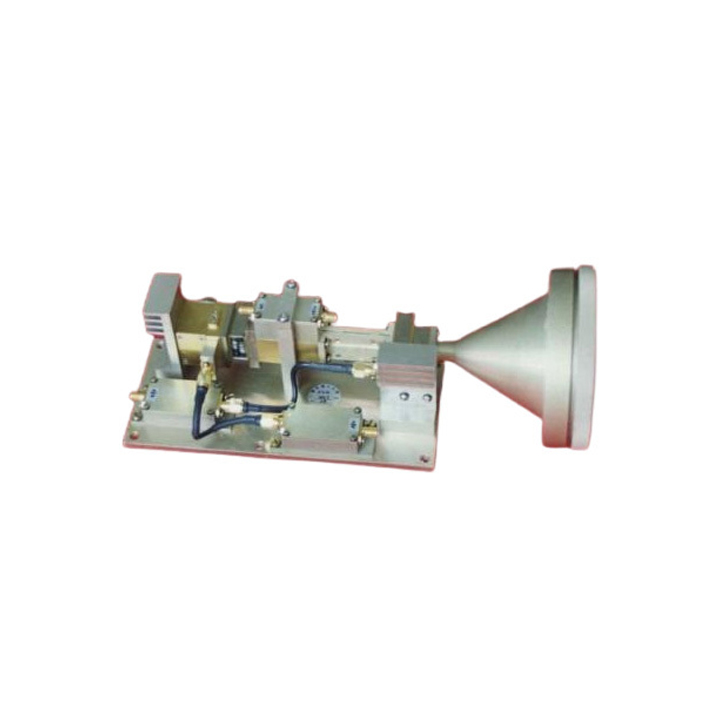
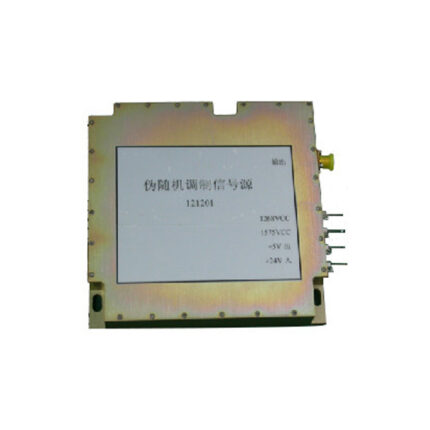
Millimeter Wave Module
Drawing on the proficiency of its experienced microwave team, process team, and management team, Hangtai Technology has been continuously enhancing the R&D and production standards of microwave components. The microwave components developed by this division are capable of not only meeting the requirements of the company’s radar and radio altimeter products but also contributing to societal service through practical applications.
Related products
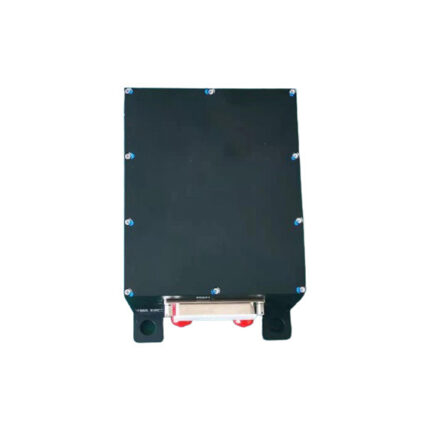
MDY-01 Radar Seeker
A radar seeker is a radar device installed on missiles, primarily used for target detection and tracking. It provides target position and motion parameters to the missile’s control system, thereby guiding the missile to fly toward the target. The MDY-01 radar seeker is characterized by high measurement accuracy, strong environmental adaptability, and high reliability.
MDG-200 Radio Altimeter
The MDG-200 radio height-setting device operates in the C-band and adopts a monopulse working system. Its sensitive component is of the heterodyne type, and the circulator at the antenna terminal uses a transceiver common-mode configuration. Prior to missile launch, the height-setting device needs to be powered on; it then performs a self-check and completes height setting via the communication interface. After the missile is launched, the radio frequency (RF) module is activated, and a gate is set based on the preconfigured height. When the preset height is reached, the device outputs height-setting command information and telemetry data. The MDG-200 height-setting device features mature technology: the monopulse design enhances the altimeter’s height measurement performance, and the device also has the characteristic of not being affected by the carrier’s speed.
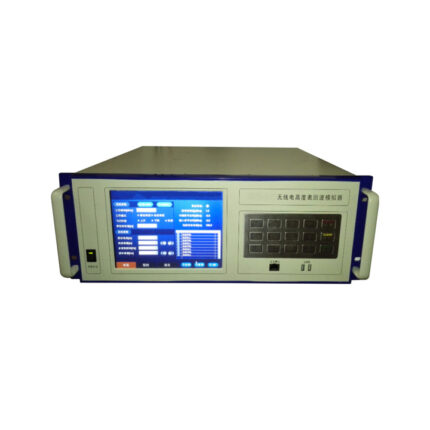
MASS-15 Continuous Echo Simulation Excitation System of Radio Altimeter
The MASS-15 Continuous Echo Simulation Excitation System of Radio Altimeter is a specialized testing equipment designed to support the performance verification, calibration, and development of radio altimeters. It focuses on generating stable, continuous echo signals that accurately replicate real-world altitude-related signal environments—including varying echo amplitudes, frequency characteristics, and delay parameters corresponding to different flight altitudes and terrain conditions. By providing these realistic simulated excitation signals, the system enables radio altimeters to operate under controlled laboratory conditions, allowing engineers to test key functions such as height measurement accuracy, continuous tracking stability, and anti-interference capability. Its reliable continuous echo simulation function not only replaces the need for complex and costly field tests but also ensures consistent, repeatable test results, making it an essential tool for ensuring the reliability and performance of radio altimeters in practical aviation applications.
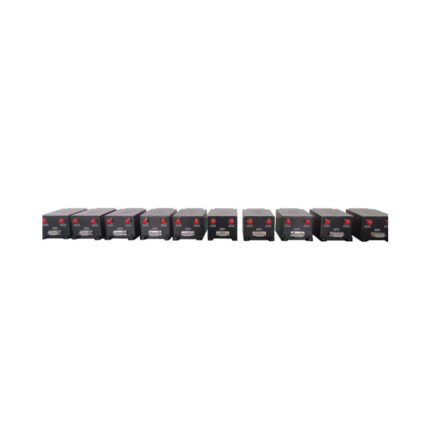
MDG-400 Radio Altimeter
The MDG-400 radio altimeter operates in the C-band and adopts a frequency-modulated continuous wave (FMCW) working system, with its antenna utilizing a transmit-receive separation mode. Prior to missile launch, the altimeter (serving as the height-fixing device) is powered on, and it undergoes self-check and height presetting via the communication interface. After the missile is launched, the radio frequency (RF) module is activated, and frequency variation parameters are set based on the preset height. When the preset height is achieved, the altimeter outputs height-fixing command information and telemetry data. The MDG-400 altimeter features mature technology; its adoption of frequency-modulated continuous wave (FMCW) technology endows it with the advantages of compact size and a large height measurement range.
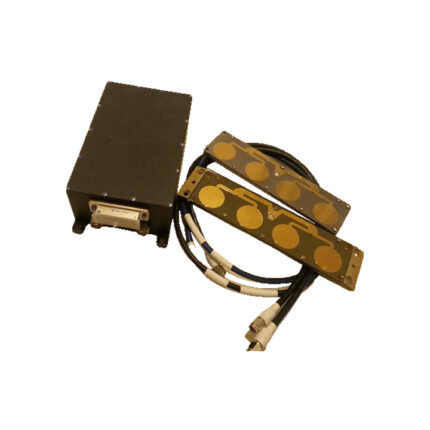
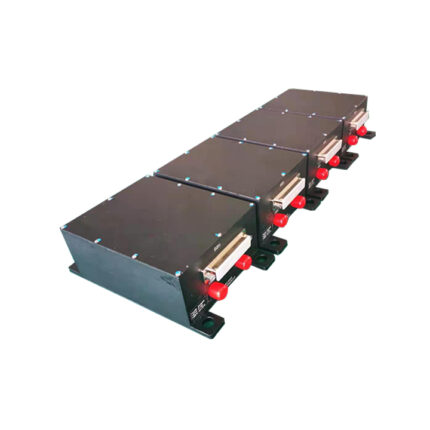
MDG-100 Radio Height Setting Device
The MDG-100 radio altimeter operates in the C-band and adopts a pulse Doppler working system. Its sensitive device is of the heterodyne type, and the circulator at the antenna terminal uses a transceiver common-mode design. With mature technology, this altimeter is installed on missiles and serves as a control component for altitude fuzes. It features capabilities such as high burst altitude, strong adaptability to high falling speeds, and excellent performance in resisting ground clutter and sea clutter. Additionally, it employs pseudo-random pulse modulation technology: the pulse period varies randomly within a specified range, making it difficult for jammers to identify the initial modulation pulse of the fuze signal and further predict the delayed pulse. This design effectively enhances the altimeter’s resistance to active interference.
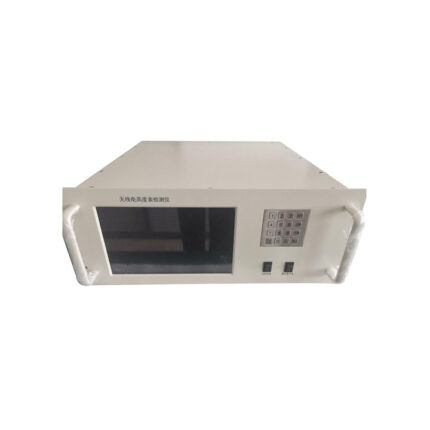
MAST-09 Radio Altimeter Detection Unit
The MAST-09 Radio Altimeter Detection Unit is a compact, aerospace-grade component that monitors, validates, and processes radio altimeter data for aircraft. It filters interference, cross-references data with other flight sensors, and detects faults (e.g., signal loss, calibration drift) to deliver reliable terrain-relative altitude info—critical for safe takeoff, low-altitude flight, approach, and landing, even in low visibility. Built to meet strict aerospace standards (e.g., DO-160, DO-178), it withstands extreme environmental conditions, suiting commercial and special aircraft.
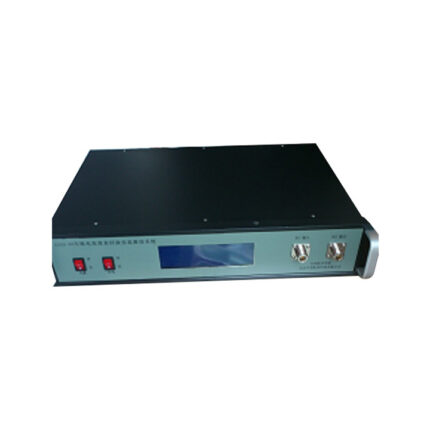
MASS-06 Continuous Echo Simulation Excitation System of Radio Altimeter
The MASS-06 Echo Signal Simulation Excitation System, hereinafter referred to as the "Simulation Excitation Source", is a dedicated equipment designed for the hardware-in-the-loop (HIL) simulation of radio altimeters. It serves as a key component in replicating real-world echo signal scenarios, providing targeted excitation signals that enable the radio altimeter to operate under simulated physical conditions—effectively bridging the gap between theoretical testing and actual operational environments to validate the altimeter’s performance, responsiveness, and reliability.
