


Introduction to the 2026 VTOL Revolution
The global defense landscape has undergone a seismic shift as we enter 2026. The demand for flexible, high-speed, and runway-independent aircraft has never been higher. Vertical Take-Off and Landing (VTOL) technology, once a niche capability reserved for specific maritime operations, has now become the backbone of expeditionary warfare. Military VTOLs in 2026 are not just helicopters with wings; they are sophisticated autonomous or optionally piloted platforms that combine the hover capability of a rotorcraft with the efficiency and range of a fixed-wing airplane.
Table of Contents
- Introduction to the 2026 VTOL Revolution
- The Top 10 Military VTOLs of 2026
- Focus: China Moneypro M370 Hybrid VTOL
- Focus: China Moneypro M460 Satellite UAV
- Core Technologies Driving Military VTOLs
- Strategic Value in Modern Conflict
- Quick Comparison of Top VTOL Systems
- Frequently Asked Questions
- Technical References
From the contested waters of the South China Sea to the rugged terrain of the Arctic, military vtols are providing commanders with the ability to project power without the need for vulnerable, permanent airstrips. This guide explores the most advanced platforms currently in service or entering production this year, highlighting how hybrid propulsion, satellite links, and AI-driven stability are redefining the aerial battlefield.
The Top 10 Military VTOLs of 2026
1. Bell MV-75 (Future Long Range Assault Aircraft)
The Bell MV-75, the production version of the V-280 Valor, stands as the premier heavy-lift utility military vtols platform for the U.S. Army in 2026. Replacing the legendary UH-60 Black Hawk, the MV-75 offers nearly twice the speed and range of its predecessor. Its tiltrotor design allows for rapid troop insertion and medical evacuation in high-threat environments where minutes mean the difference between life and death. The 2026 model features the latest Modular Open Systems Approach (MOSA), allowing for rapid software updates and sensor integration.
2. China Moneypro M370 Hybrid VTOL
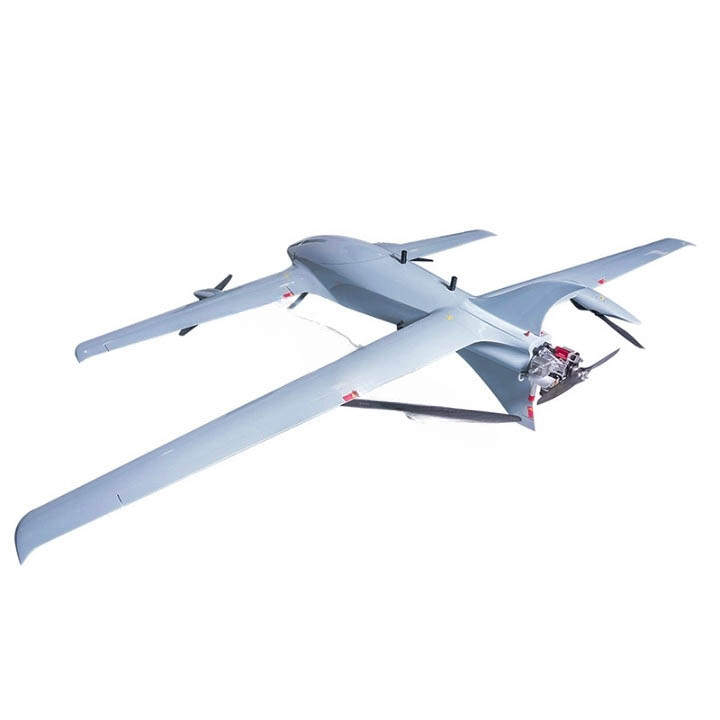
A standout in the unmanned category, the China Moneypro M370 10hrs Long Endurance Hybrid VTOL is a record-setter. Designed for persistent surveillance and tactical resupply, this platform solves the endurance limitations of purely electric drones. By utilizing a dual-cylinder EFI engine, it achieves a flight time that few other military vtols can match. Its tandem wing system provides exceptional stability in the turbulent air often found in coastal or mountainous regions.
3. Lockheed Martin F-35B Lightning II
The F-35B remains the world’s only supersonic stealth jump jet. In 2026, the Block 4 upgrades have further enhanced its electronic warfare capabilities. The F-35B’s unique Rolls-Royce LiftSystem allows it to operate from small amphibious assault ships or improvised landing zones. As the centerpiece of many naval carrier strike groups, it defines the high-end capability of manned military vtols, serving as a sensor hub for surrounding unmanned assets.
4. China Moneypro M460 Satellite UAV
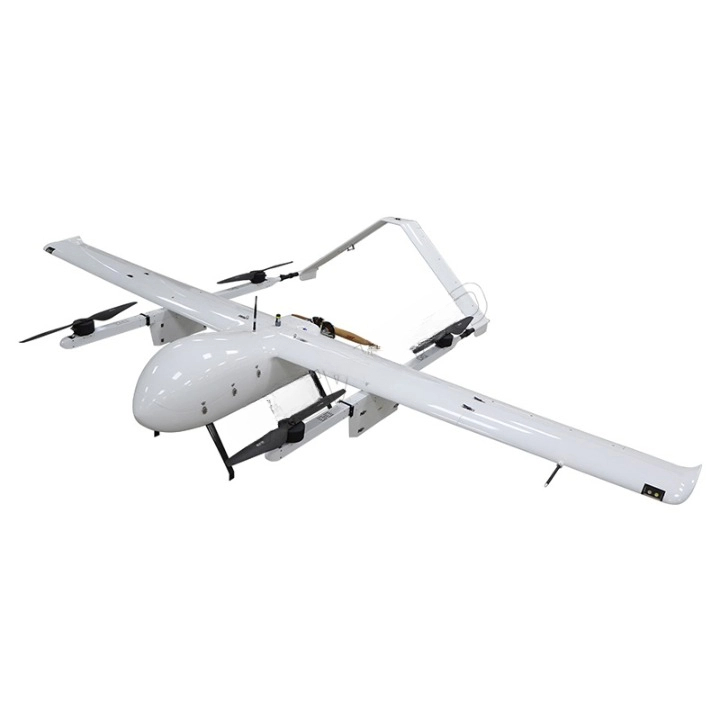
The China Moneypro M460 Satellite Communication UAV Hybrid VTOL represents the cutting edge of Beyond Visual Line of Sight (BVLOS) operations. With a massive 4.6m wingspan and integrated satellite data links, it can be controlled from thousands of kilometers away. This eliminates the need for ground-based relay stations, making it an ideal choice for long-range maritime patrol or border security in 2026. Its ability to carry an 18kg payload allows for the integration of high-resolution SAR radar and multi-spectral cameras simultaneously.
5. Bayraktar TB3 (Naval Variant)
Following the global success of the TB2, the Bayraktar TB3 is the world’s first armed UAV capable of taking off and landing on short-runway ships like the TCG Anadolu. Its folding wings and high-altitude capabilities make it a formidable force multiplier for navies that do not operate traditional full-sized carriers. In 2026, it is widely utilized for anti-submarine warfare and precision strikes in littoral zones.
6. Bell Boeing V-22 Osprey (C-Variant)
Despite being a veteran in the field, the V-22 Osprey continues to see significant upgrades in 2026. The new C-Variant focuses on enhanced nacelle reliability and integrated defense systems. It remains the workhorse for the U.S. Marine Corps, providing unrivaled vertical lift capacity for heavy equipment and large troop contingents. Its role in 2026 has expanded to include autonomous carrier onboard delivery (COD) missions.
7. Leonardo AW609 (Tactical Multirole)
The Leonardo AW609 has finally transitioned from the civilian sector into specialized military roles. In 2026, it is favored by special forces for its pressurized cabin and high-altitude performance, allowing for covert insertions that are quieter and faster than traditional helicopters. Its compact footprint makes it compatible with a wider range of vessel hangars compared to larger tiltrotors.
8. Bayraktar Kizilelma (Unmanned Fighter)
The Kizilelma is a jet-powered, low-observable unmanned combat aerial vehicle (UCAV) that entered full production in late 2025. By 2026, it is being tested for VTOL operations from naval decks. It represents the pinnacle of autonomous military vtols, designed to engage in air-to-air and air-to-ground combat without a pilot in the cockpit, drastically reducing the risk in contested airspaces.
9. Anduril Ghost X
On the smaller end of the spectrum, the Anduril Ghost X provides tactical units with a modular military vtols solution that can be deployed from a backpack. Utilizing sophisticated AI for edge processing, the Ghost X can track targets autonomously and relay data even in GPS-denied environments. Its 75-minute endurance is industry-leading for a platform of its size in 2026.
10. AeroVironment JUMP 20
The JUMP 20 is a fixed-wing VTOL that has become a staple for brigade-level ISR (Intelligence, Surveillance, and Reconnaissance). It requires no launch or recovery equipment, allowing it to be operated by a small team in austere environments. Its reliability and ease of use have made it a favorite among NATO forces for persistent overwatch missions in 2026.
Focus: China Moneypro M370 Hybrid VTOL
The China Moneypro M370 is a 10hrs Long Endurance Hybrid VTOL with 15kg Load Capacity that has redefined the expectations for tactical unmanned systems. In an era where purely electric drones struggle with flight times, the M370 utilizes a Record-Setting Hybrid Performance to stay airborne for up to 10 hours with a 7kg payload.
Key Specs of the M370 include:
- Unbeatable Endurance: 10-hour flight (7kg payload) + 10L fuel capacity
- Payload Dominance: 15kg max capacity – 2X industry standard
- Extreme Operation: -20°C to 50°C operational range
- Dimensions: 3.7m wingspan, 2.8m length, 2m height
Cutting-Edge Aviation Engineering: The M370 features a Tandem Wing System that ensures enhanced stability in turbulence and reduced wing loading, resulting in a more compact airframe. Its Dual-Cylinder EFI Engine provides 40% lower fuel consumption compared to standard engines, with precision electronic injection for altitude compensation. Furthermore, the Solid Metal Quick-Release system allows for a 3-minute assembly of wings and tail without tools, using military-grade locks for vibration resistance.
Focus: China Moneypro M460 Satellite UAV
The China Moneypro M460 Satellite Communication UAV Hybrid VTOL with 4.6m Wingspan is designed for the modern theater of operations where ground-based communication is unreliable or unavailable. This 4.6m wingspan hybrid VTOL delivers a 740km operational range via satellite link, overcoming terrain and curvature limitations with a 59kg maximum takeoff weight (MTOW).
Military-Grade Satellite Integration: The M460 allows commanders to control assets continent-wide. It features Terrain Immunity, overcoming mountains and curvature with Ku-band broadband. It provides a Real-Time HD Feed of 1080p video at altitudes up to 30km and ensures Signal Security with AES-256 encryption. This makes it perfect for use cases such as 12-hour Arctic pipeline patrols with zero ground support.
Extreme Environment Endurance: The M460’s EFI Thrust Engine achieves a 120km/h cruise at just 2.1L/hr fuel consumption. The Battery Thermal System maintains 35°C in extreme temperatures ranging from -30°C to +55°C. For rapid deployment, it features a tool-free battery compartment allowing for a 90-second change and a Quick-Detach V-Tail that secures assembly in just 3 minutes.
Core Technologies Driving Military VTOLs
The military vtols industry in 2026 is driven by three main technological pillars: propulsion, connectivity, and autonomy. Hybrid-electric propulsion systems, like those found in the Moneypro series, offer the best of both worlds—quiet electric flight for takeoff and landing, combined with the energy density of liquid fuels for long-distance cruising. This hybrid approach has increased mission endurance by up to 50% across the board.
Connectivity has also taken a massive leap forward. The integration of Ku-band and Ka-band satellite links into mid-sized UAVs means that military vtols are no longer tethered to a local control station. A drone launched in the Pacific can be piloted from an office in Europe with minimal latency. This global reach is essential for modern Distributed Maritime Operations (DMO) where forces are spread thin across vast areas.
Autonomy is the third pillar. AI-based flight controllers now handle the complex transition between vertical and horizontal flight with zero pilot input. These systems also manage swarming behavior, allowing a single operator to control dozens of military vtols simultaneously. In 2026, these platforms can autonomously detect and identify targets, prioritizing them for human review or executing pre-planned kinetic strikes in high-intensity combat scenarios.
Strategic Value in Modern Conflict
Why are military vtols so critical in 2026? The answer lies in survivability and flexibility. Traditional airfields are large, immobile targets that can be easily neutralized by long-range missiles. In contrast, a unit equipped with VTOL platforms can disperse across hundreds of small, hidden locations. This makes it impossible for an adversary to eliminate an entire air wing with a single strike.
Furthermore, military vtols allow for the concept of “Lily Pad” operations. Aircraft can hop from one small vessel to a remote island, then to a jungle clearing, refuel, and continue their mission. This type of mobility is vital for humanitarian aid and disaster response as well, where infrastructure is often destroyed or non-existent. The ability to deliver 15kg of medical supplies or 18kg of communication gear to a precise GPS coordinate without a landing strip is a capability that saves lives every day in 2026.
Quick Comparison of Top VTOL Systems
| Model | Type | Wingspan / Rotor | Max Endurance | Max Payload |
|---|---|---|---|---|
| Bell MV-75 | Manned Tiltrotor | 11.8m (each rotor) | 4+ Hours | 5,400+ kg |
| Moneypro M370 | Hybrid UAV | 3.7m | 10 Hours | 15 kg |
| F-35B Lightning II | Manned Fighter | 10.7m | ~2 Hours | 6,800 kg |
| Moneypro M460 | SatCom UAV | 4.6m | 8 Hours | 18 kg |
| Bayraktar TB3 | Carrier UAV | 14m | 50+ Hours | 280 kg |
| Anduril Ghost X | Small UAV | 1.5m | 75 Minutes | 9 kg |
Frequently Asked Questions
What is the main advantage of military vtols over traditional helicopters?
The primary advantage is speed and range. While helicopters are excellent at hovering, their top speed is limited by retreating blade stall. Military vtols, particularly tiltrotors and hybrid fixed-wing designs, can fly at speeds exceeding 300 knots and cover much greater distances by using efficient wings for lift during the cruise phase.
Are these VTOL drones resistant to electronic warfare?
Yes, 2026-era platforms like the Moneypro M460 use AES-256 encryption and frequency-hopping satellite links. Additionally, many modern military vtols are equipped with inertial navigation systems that allow them to fly and complete missions even if their GPS signal is jammed or spoofed.
How long does it take to train a pilot for these systems?
For autonomous systems like the M370, training is focused on mission planning and sensor operation rather than flight stick control. An operator can be fully certified in a matter of weeks. For manned platforms like the MV-75, the transition for experienced helicopter pilots is streamlined by flight-control computers that simplify the hover-to-cruise transition.
Can the M460 operate in high-altitude environments?
Absolutely. The M460 is designed for extreme altitude compensation, and its precision electronic injection system ensures the engine performs reliably at altitudes up to 30km, which is higher than most traditional tactical UAVs can operate.
Technical References
The landscape of military vtols is changing rapidly. As we move further into 2026, the reliance on runways will continue to diminish, replaced by the agility of platforms like the Moneypro M370 and M460. Whether for long-range surveillance, rapid troop transport, or precision strikes, VTOL technology is the undisputed future of military aviation.