


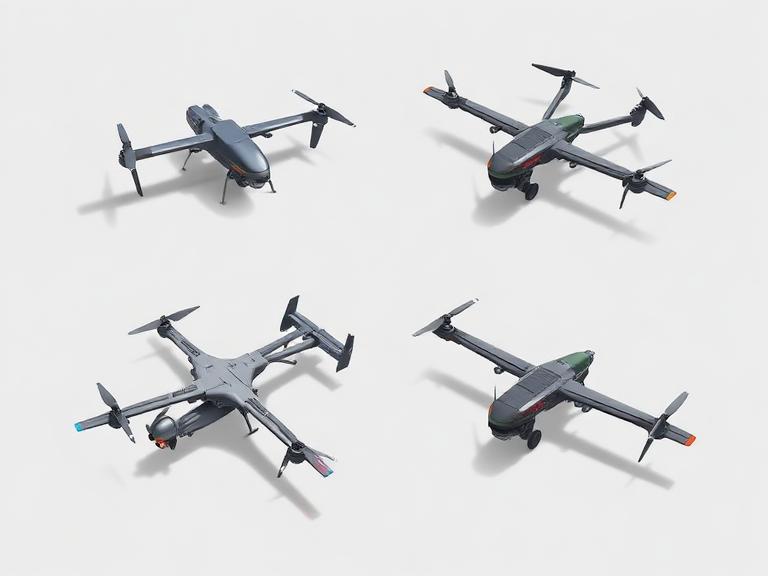
ChinaMoneypro UAV is a national-level high-tech enterprise, transformed from a prestigious state-owned research institute. With deep roots in defense-grade engineering, we specialize in the R&D and manufacturing of advanced unmanned platforms and integrated sensing-communication solutions. Headquartered in one of China’s premier innovation hubs, Moneypro is among the few full-stack providers offering complete UAV systems, engines, gimbals, radar, data links, and communication technologies.
From our experience engineering defense-grade aerial platforms, selecting the appropriate aircraft configuration dictates the success of a mission. The various types of fixed wing UAV platforms offer unique advantages concerning launch and recovery mechanics, payload integration, and powertrain efficiency. Unlike a Multi-rotor UAV or a Single-rotor UAV, which expend massive amounts of energy simply counteracting gravity, fixed-wing aircraft utilize forward momentum to generate aerodynamic lift. In this authoritative technical guide, we will analyze the aerodynamic principles, operational classifications, and propulsion variations defining the types of fixed wing UAV available in the current global market.
Table of Contents
- 1. Aerodynamic Principles of Fixed Wing Flight
- 2. Categorizing the Types of Fixed Wing UAV
- 3. Powertrain Architectures in Different Types of Fixed Wing UAV
- 4. Industrial Payload and Sensing Integration
- 5. Summary Table: Analyzing Types of Fixed Wing UAV
- 6. Frequently Asked Questions (FAQs)
- 7. Industry and Academic References
1. Aerodynamic Principles of Fixed Wing Flight
Before categorizing the specific types of fixed wing UAV platforms, one must understand the physics that make them superior for long-range operations. All types of fixed wing UAV rely on Bernoulli’s principle and Newton’s third law of motion. As thrust pushes the aircraft forward, the specially shaped airfoil (the wing) causes air traveling over the top surface to move faster than the air moving underneath. This creates a low-pressure zone above the wing, generating lift.
Because lift is generated passively through forward motion rather than through the continuous vertical thrust of rotors, all types of fixed wing UAV exhibit a significantly higher lift-to-drag ratio. This equates to superior battery or fuel economy. We recommend fixed-wing architectures for any mission requiring loiter times exceeding two hours or mapping corridors that span hundreds of kilometers.
2. Categorizing the Types of Fixed Wing UAV
The industrial market has evolved rapidly, fragmenting traditional drone designs into highly specialized categories. When evaluating the types of fixed wing UAV, we categorize them primarily by their launch and recovery methods, as this operational constraint often dictates deployability in rugged environments.
2.1 Conventional Fixed Wing Drones
The most traditional among the types of fixed wing UAV is the conventional take-off and landing (CTOL) aircraft. These platforms mimic manned aviation, requiring a runway, a pneumatic catapult launcher, or a hand-launch for take-off, and a runway, parachute, or belly-landing mechanism for recovery. Because they do not carry the dead weight of vertical lifting rotors, conventional platforms are the most aerodynamically pure. However, their reliance on vast, open spaces for launch and recovery severely limits their deployment in densely forested, mountainous, or maritime environments.
2.2 VTOL Fixed Wing UAV Systems
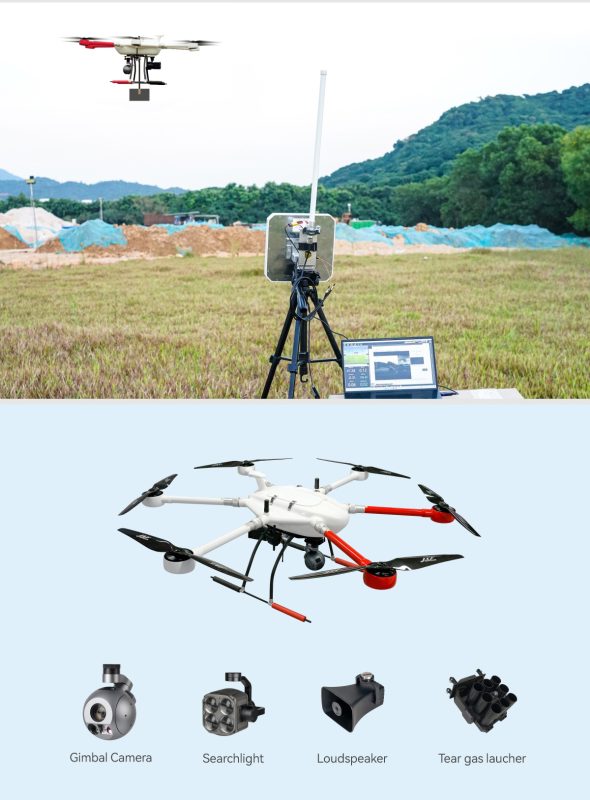
To solve the spatial constraints of conventional launchers, aerospace engineers developed the Vertical Take-Off and Landing (VTOL) architecture. As a full-stack provider, ChinaMoneypro UAV heavily champions the VTOL Fixed Wing UAV System. This class is widely considered the most versatile among all types of fixed wing UAV.
These aircraft feature a hybrid propulsion setup: vertical lifting rotors allow the drone to take off like a helicopter, requiring only a few square meters of clearance. Once a safe altitude is reached, the aircraft transitions to forward flight, utilizing its wings for lift and a pusher or tractor motor for thrust. The vertical rotors either shut down and lock into aerodynamic alignment or tilt forward to assist with thrust. An Airplane & VTOL platform provides the absolute best of both worlds: the runway independence of a multi-rotor and the high-speed endurance of an airplane.
2.3 Composite Wing Flight Platforms
A highly advanced subset within the VTOL category is the Composite Wing Flight Platform. Among the various types of fixed wing UAV, the composite wing design physically separates the vertical lifting system from the forward propulsion system onto a fixed structural boom. From our experience in defense-grade engineering, this separation increases mechanical reliability. The vertical motors are entirely independent of the forward flight motor, meaning there are no complex tilt-rotor servos to fail during the critical transition phase. We recommend the Composite Wing Flight Platform for missions requiring absolute fail-safe redundancy in harsh environments.
3. Powertrain Architectures in Different Types of Fixed Wing UAV
The endurance and payload capacity of the different types of fixed wing UAV are heavily dictated by their powerplants. Pure electric systems utilizing lithium-polymer (LiPo) or solid-state batteries are standard for short to medium-range surveillance, offering silent operation and low thermal signatures. However, battery energy density remains a limiting factor in global logistics and macro-mapping.
For elite industrial applications, we engineer advanced hybrid propulsion systems. The Petrol Electric Hybrid VTOL is a masterclass in endurance engineering. By utilizing an internal combustion engine coupled with a high-efficiency alternator, the aircraft generates its own electrical power mid-flight. This hybrid power is routed to the VTOL lifting motors during take-off and landing, while the petrol engine mechanically drives the forward propeller during cruising. This specific configuration among the types of fixed wing UAV allows our platforms to achieve mission times stretching up to 8-12 hours, depending on payload configuration, making it indispensable for border patrol and offshore pipeline inspection.
4. Industrial Payload and Sensing Integration
The primary purpose of deploying any of the types of fixed wing UAV is to carry a specific sensing or communication payload. As a national-level high-tech enterprise, ChinaMoneypro UAV manufactures proprietary gimbals, radar, and communication data links tailored for our airframes.
When operating a Multifunctional Drone in a fixed-wing configuration, payload bays must be precisely located at the aircraft’s center of gravity to prevent aerodynamic instability. Typical payloads include highly stabilized electro-optical/infrared (EO/IR) camera turrets, LiDAR scanners for topographical mapping, and synthetic aperture radar (SAR). In highly secure or electronically jammed environments, we integrate our proprietary Fiber Optic FPV Drone System communication protocols to ensure unjammable, zero-latency data transmission.
It is worth noting that while specific tasks like localized crop spraying are best suited for an Agricultural Drone or continuous localized surveillance is perfect for Tethered Drones utilizing a continuous power Tether Box, the macro-scale mapping of agricultural yields across thousands of hectares is an application where fixed-wing platforms remain unchallenged.
5. Summary Table: Analyzing Types of Fixed Wing UAV
To assist procurement specialists in selecting the optimal platform, we have developed a comparative matrix outlining the core specifications of the primary types of fixed wing UAV.
| UAV Category | Launch & Recovery Method | Primary Aerodynamic Advantage | Optimal Industrial Application | ChinaMoneypro Recommendation |
|---|---|---|---|---|
| Conventional Fixed Wing | Runway, Catapult, Parachute | Highest aerodynamic purity and lowest drag profile. | Open-terrain macro mapping, high-altitude surveillance. | UAV/Drones (Standard Airframes) |
| VTOL Fixed Wing | Vertical ascent/descent via rotors | Eliminates runway dependency while maintaining cruise efficiency. | Maritime deployment, rugged mountainous terrain operations. | VTOL Fixed Wing UAV System, Airplane & VTOL |
| Composite Wing | Independent lifting and thrusting motors | Mechanical simplicity during transition; extreme reliability. | Defense logistics, critical infrastructure inspection. | Composite Wing Flight Platform |
| Hybrid VTOL | Vertical ascent via electric, forward cruise via petrol | Massive extension of operational endurance and payload capacity. | Long-range border patrol, offshore oil rig monitoring. | Petrol Electric Hybrid VTOL |
6. Frequently Asked Questions (FAQs)
What are the main types of fixed wing UAV available for commercial use?
The commercial market primarily utilizes three types of fixed wing UAV: conventional take-off and landing (CTOL) aircraft requiring runways, Vertical Take-Off and Landing (VTOL) systems, and hybrid composite wing platforms. VTOL variants are currently the most popular due to their operational flexibility.
Why choose a VTOL over a standard Multi-rotor UAV?
From our experience, while a multi-rotor excels at hovering, it lacks aerodynamic efficiency. If your mission requires covering large linear distances—such as pipeline inspections or mapping large agricultural tracts—all types of fixed wing UAV will vastly outperform rotary systems in terms of battery life and total spatial coverage.
Can fixed wing drones hover?
Conventional types of fixed wing UAV cannot hover, as they require continuous forward motion to generate lift over the wings. However, a VTOL Fixed Wing UAV System possesses independent vertical lifting rotors that allow it to hover during the take-off and landing phases, bridging the gap between airplane and helicopter capabilities.
7. Industry and Academic References
To ensure strict adherence to aerospace engineering principles and global unmanned aviation standards, we recommend reviewing the literature provided by the following authoritative organizations:
- Federal Aviation Administration (FAA) – Unmanned Aircraft Systems Regulations
- NASA Aeronautics – Advanced Air Mobility and VTOL Research
- Institute of Electrical and Electronics Engineers (IEEE) – Aerospace and Electronic Systems Society Publications
- International Civil Aviation Organization (ICAO) – Unmanned Aviation Global Standards