


Authored by the Engineering Division at ChinaMoneypro UAV. As a national-level high-tech enterprise transformed from a prestigious state-owned research institute, ChinaMoneypro UAV possesses deep roots in defense-grade engineering. Headquartered in one of China’s premier innovation hubs, we specialize in the R&D and manufacturing of advanced unmanned platforms and integrated sensing-communication solutions. We are among the rare full-stack providers globally offering complete UAV systems, engines, gimbals, radar, data links, and cutting-edge communication technologies.
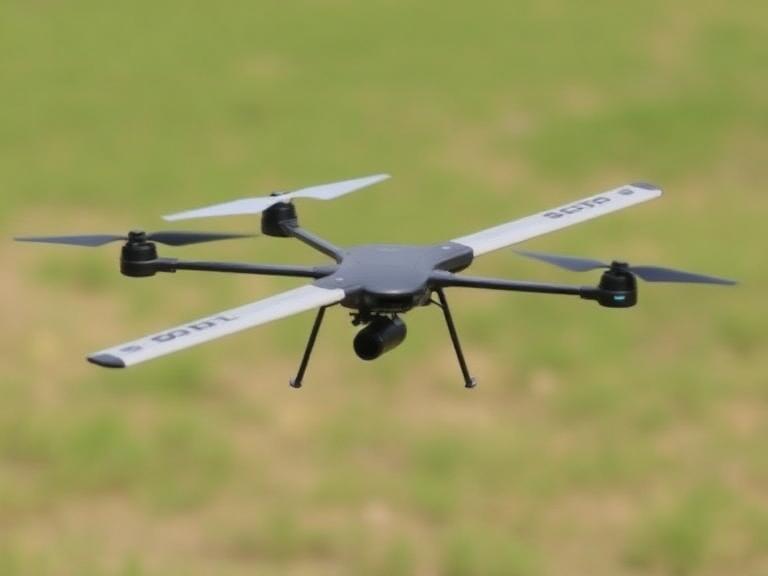
The aerodynamic and structural engineering required to develop a highly efficient unmanned aerial vehicle is a discipline of microscopic margins. Unlike a Multi-rotor UAV or a Single-rotor UAV, where thrust simply overcomes gravity in a brute-force vertical vector, a fixed-wing platform relies on the delicate interplay of airfoils, wingspans, chord lengths, and propulsion efficiency. Designing these platforms requires immense computational power and precise parametric modeling. To bridge the gap between initial conceptual sketches and wind-tunnel validation, aerospace engineers rely heavily on a highly specialized Fixed wing uav design calculator.
From our experience engineering defense-grade systems like our VTOL Fixed Wing UAV System and our advanced Composite Wing Flight Platform, the selection of the correct Fixed wing uav design calculator dictates the entire trajectory of the project. A miscalculation in the stall speed, center of gravity margin, or lift-to-drag ratio can result in catastrophic flight failure or severely compromised payload capacities. We recommend utilizing a suite of computational tools, combining vortex lattice methods with empirical propulsion matching, to achieve a fully optimized airframe.
In this authoritative guide, we will analyze the computational logic behind aerodynamic modeling and review the 5 best Fixed wing uav design calculator platforms available to aerospace professionals today. We will also explore how these computational frameworks translate directly into the physical manufacturing of robust, long-endurance platforms.
Table of Contents
- Summary Table: Top 5 Fixed Wing UAV Design Calculator Tools
- Why a Fixed Wing UAV Design Calculator is Non-Negotiable
- 1. XFLR5: The Industry Standard for Low Reynolds Aerodynamics
- 2. OpenVSP: NASA’s Parametric Geometry Pioneer
- 3. AVL (Athena Vortex Lattice): Unmatched Stability Analysis
- 4. eCalc: The Premier Propulsion Integration Calculator
- 5. MachUpX: Modern Aerodynamic Analysis for Complex Wings
- Integrating Calculation with ChinaMoneypro UAV Systems
- Critical Parameters Evaluated by Design Calculators
- Frequently Asked Questions (FAQs)
- Academic and Industry References
Summary Table: Top 5 Fixed Wing UAV Design Calculator Tools
To provide immediate strategic value to our engineering peers, we have compiled an executive matrix detailing the top computational tools currently utilized in the unmanned aerospace sector. Each Fixed wing uav design calculator listed below serves a distinct phase in the multidisciplinary design optimization process.
| Rank | Calculator / Software Name | Primary Computational Method | Best Suited For | Accessibility |
|---|---|---|---|---|
| 1 | XFLR5 | Vortex Lattice Method (VLM) & 3D Panel | Airfoil analysis, low Reynolds number wings | Open Source |
| 2 | OpenVSP | Parametric Geometry Modeling | Rapid conceptual design, fuselage/wing blending | Open Source (NASA) |
| 3 | AVL (Athena Vortex Lattice) | Extended Vortex Lattice Method | Flight dynamics, stability derivatives, trim | Open Source (MIT) |
| 4 | eCalc (fixed-wing module) | Empirical Propulsion Database matching | Motor, ESC, Battery, and Propeller optimization | Commercial / Subscription |
| 5 | MachUpX | Numerical Lifting-Line Algorithm | Swept, twisted, and complex dihedral wings | Open Source (USU) |
Why a Fixed Wing UAV Design Calculator is Non-Negotiable
The physics governing an Airplane & VTOL hybrid platform are staggeringly complex. When an aircraft transitions from hover to forward flight, the aerodynamic forces shift drastically. A Fixed wing uav design calculator allows engineers to simulate these forces before a single sheet of carbon fiber is laid up. By inputting target payload weights, desired cruising velocities, and maximum wingspan constraints, these calculators utilize advanced algorithms to output the required wing area, optimal airfoil profile, and the precise center of gravity (CG).
From our experience at ChinaMoneypro UAV, attempting to bypass digital computational fluid dynamics (CFD) or simplified lifting-line calculations results in grossly over-engineered, heavy, and inefficient airframes. For applications such as an Agricultural Drone requiring heavy pesticide payload capacities over vast acreages, maximizing the lift-to-drag (L/D) ratio through a reliable Fixed wing uav design calculator directly translates to longer battery life and increased operational profitability.
1. XFLR5: The Industry Standard for Low Reynolds Aerodynamics
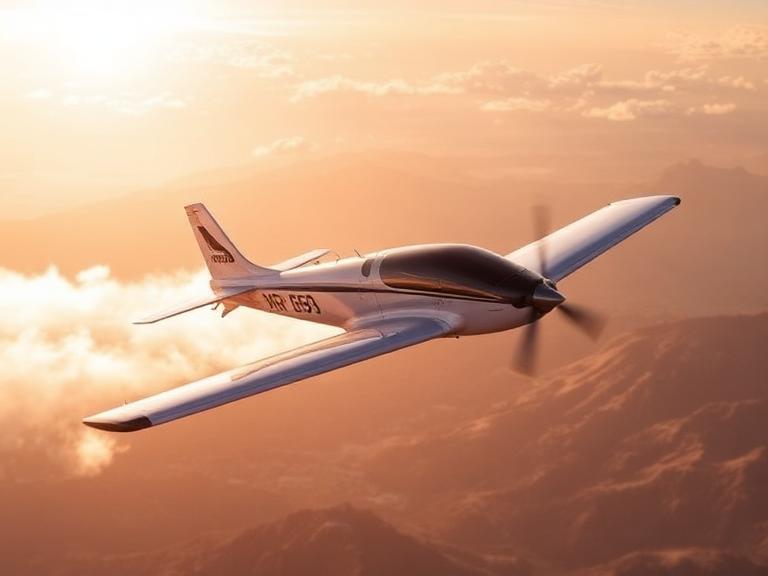
At the very foundation of UAV design sits XFLR5. This tool is universally recognized as the most vital Fixed wing uav design calculator for analyzing airfoils operating at low Reynolds numbers—the exact aerodynamic regime where most unmanned aerial vehicles operate. XFLR5 integrates the legendary XFoil engine to compute lift, drag, and moment coefficients for 2D airfoils, and extends this into 3D wing analysis using the Vortex Lattice Method (VLM) and 3D Panel Methods.
We recommend XFLR5 for the initial sizing of the wing and tail surfaces. By running a batch analysis of various airfoils across a spectrum of angles of attack, engineers can pinpoint the exact aerodynamic stall characteristics of their design. When our R&D team developed the ChinaMoneypro Composite Wing Flight Platform, XFLR5 was instrumental in designing a wing that provided exceptional high-lift characteristics during the critical transition phase between vertical thrust and horizontal forward flight.
2. OpenVSP: NASA’s Parametric Geometry Pioneer
Developed by NASA, Open Vehicle Sketch Pad (OpenVSP) is a parametric geometry modeling tool that serves as a profoundly powerful Fixed wing uav design calculator. Unlike traditional CAD software that requires hours of tedious modeling, OpenVSP allows engineers to rapidly define an aircraft’s geometry using fundamental aerospace parameters (span, sweep, taper ratio, thickness-to-chord ratio).
Once the geometry is defined, OpenVSP features built-in aerodynamic solvers (VSPAERO) that utilize vortex lattice and panel methods to calculate the aerodynamic footprint of the entire vehicle, including the parasitic drag of the fuselage. For complex, multi-boom geometries like our Petrol Electric Hybrid VTOL, OpenVSP is invaluable. It allows our engineers to visually and mathematically ensure that the physical interference between the forward-flight propeller and the VTOL lifting rotors is minimized, optimizing the overall aerodynamic efficiency.
3. AVL (Athena Vortex Lattice): Unmatched Stability Analysis
Originating from the Massachusetts Institute of Technology (MIT), AVL is a highly specialized Fixed wing uav design calculator dedicated to the flight dynamics and aerodynamic configuration of rigid aircraft. While it relies on a command-line interface rather than a polished graphical user interface, its computational accuracy regarding aircraft trim, stability derivatives, and control surface sizing is practically unmatched in the open-source community.
From our experience, ensuring dynamic stability is the most challenging aspect of UAV design. If the center of gravity is positioned too far aft, the aircraft becomes unrecoverably unstable; too far forward, and the elevator lacks the authority to pitch the nose up during landing. AVL mathematically plots the neutral point of the aircraft and outputs the static margin. We heavily rely on AVL when sizing the ailerons, rudders, and elevators for our Multifunctional Drone series, ensuring that the flight controller possesses the precise aerodynamic authority required to execute autonomous waypoint navigation safely in turbulent wind conditions.
4. eCalc: The Premier Propulsion Integration Calculator
Aerodynamic perfection is useless without the correct powertrain. eCalc (specifically the fixed-wing module) is a web-based Fixed wing uav design calculator that focuses entirely on propulsion matching. It boasts a massive, continuously updated database of commercially available brushless motors, electronic speed controllers (ESCs), lithium-polymer batteries, and propellers.
We recommend eCalc to cross-reference the aerodynamic drag figures obtained from XFLR5 with actual electrical propulsion data. By inputting the wingspan, wing area, and estimated drag coefficient, eCalc accurately predicts the maximum rate of climb, optimal cruising speed, flight time, and thermal loads on the motor. When integrating propulsion systems for our VTOL Fixed Wing UAV System, ensuring that the forward-flight motor operates at its peak efficiency mapping during cruise velocity is critical. eCalc allows us to simulate hundreds of motor-propeller combinations in minutes, drastically accelerating our R&D timeline.
5. MachUpX: Modern Aerodynamic Analysis for Complex Wings
Developed by the AeroLab at Utah State University, MachUpX is a modern, highly robust Fixed wing uav design calculator based on a numerical lifting-line algorithm. It is specifically designed to handle complex wing geometries that traditional vortex lattice methods struggle with, such as swept wings, highly twisted airfoils, and multiple lifting surfaces operating in close proximity.
MachUpX excels in calculating the spanwise lift distribution. This is critical for structural engineering. Knowing exactly where the maximum lifting force is applied along the carbon fiber wing spar allows our defense-grade engineering teams to reinforce specific stress points without adding unnecessary weight to the extremities of the wing. For long-endurance missions requiring high aspect ratio wings, utilizing a Fixed wing uav design calculator like MachUpX ensures that the structural deflection during high-G maneuvers remains within safe operational limits.
Integrating Calculation with ChinaMoneypro UAV Systems
The mathematical outputs generated by a Fixed wing uav design calculator are only the preliminary steps in a comprehensive manufacturing pipeline. At ChinaMoneypro UAV, we transition these digital calculations into physical reality through our state-of-the-art manufacturing facilities. Because we are a full-stack provider, the data we obtain regarding payload capacities and power consumption directly dictates the integration of our secondary systems.
For example, if our aerodynamic calculations dictate a maximum payload penalty of 3.5 kilograms to maintain a two-hour flight endurance, our sensor division can precisely tailor the integration of our proprietary radar and EO/IR gimbals to fit within that exact weight and power budget. This synergy extends to our communication systems as well. Whether deploying a standard RF data link or integrating our highly secure Fiber Optic FPV Drone System for interference-free tactical operations, every milliwatt of power and every gram of weight is accounted for and optimized through rigorous computational modeling.
Furthermore, while fixed-wing platforms excel in endurance, specific localized operations require perpetual flight. For these scenarios, we leverage our expertise to deploy Tethered Drones utilizing our advanced Tether Box technology, proving that our engineering scope covers the entire spectrum of unmanned aerial demands.
Critical Parameters Evaluated by Design Calculators
To fully grasp the utility of a Fixed wing uav design calculator, one must understand the fundamental aerospace parameters being manipulated. From our experience, we monitor four critical metrics during the design phase:
- Wing Loading: This is the total weight of the UAV divided by the total area of the main wing. A high wing loading yields a faster cruising speed and better wind penetration but results in a dangerously high stall speed. A low wing loading allows for slow, stable flight—ideal for mapping—but compromises top speed.
- Thrust-to-Weight Ratio: Calculated by dividing the total thrust output by the total weight of the aircraft. For a fixed-wing UAV, a ratio of 0.5:1 is often sufficient for sustained flight, whereas our VTOL platforms require a ratio exceeding 1.5:1 on their vertical lifting rotors to guarantee safe hovering.
- Aspect Ratio: The ratio of the wingspan to the average chord length. Gliders and high-efficiency surveillance drones use very high aspect ratios to minimize lift-induced drag. A Fixed wing uav design calculator helps engineers find the structural limit of how long and thin a wing can be before it risks catastrophic snapping.
- Static Margin: The distance between the center of gravity and the aerodynamic center of the aircraft, expressed as a percentage of the mean aerodynamic chord. This parameter dictates the pitch stability of the UAV.
Frequently Asked Questions (FAQs)
For those new to aerospace engineering, eCalc is highly recommended. It provides a highly intuitive graphical interface and focuses primarily on matching off-the-shelf electronic components to a generic airframe, removing the complex calculus required by vortex lattice software.
No. While a Fixed wing uav design calculator is extraordinarily accurate at predicting general aerodynamic trends and lift-to-drag ratios, computational fluid dynamics struggle to perfectly simulate complex flow separation, turbulence, and stall behaviors at high angles of attack. From our experience, digital calculators serve to narrow down the design choices, which must then be physically validated in a wind tunnel or through rigorous prototype flight testing.
VTOL (Vertical Takeoff and Landing) platforms introduce massive parasitic drag elements—such as vertical lifting booms and stationary propellers—during forward flight. Standard calculators often fail to accurately model this interference drag. We recommend using advanced parametric tools like OpenVSP to meticulously model the booms and calculate the efficiency penalties imposed by the VTOL hardware.
The Reynolds number is a dimensionless quantity that helps predict fluid flow patterns. Because UAVs are physically smaller and fly slower than commercial jetliners, they operate at much lower Reynolds numbers. At these levels, the air feels more “viscous,” making the airflow prone to separation and causing sudden stalls. A calculator specifically designed for low Reynolds numbers, like XFLR5, is mandatory for accurate UAV simulation.
Academic and Industry References
To further expand your knowledge regarding computational aerodynamics, parametric modeling, and the mathematics driving unmanned aviation, we recommend consulting the following authoritative academic and governmental resources: