


For a commercial fixed wing UAV, a BVLOS fixed wing UAV, or a VTOL cargo drone, battery management is not a maintenance footnote. It is mission control. ChinaMoneypro UAV builds advanced unmanned platforms and integrated sensing-communication solutions, and that is the right mindset here: the battery is not just a component, it is the operating margin that determines whether the mission finishes cleanly or limps home early. High-end payloads like an EO/IR gimbal payload make the battery conversation even less optional because every extra gram and every extra watt changes the plan.
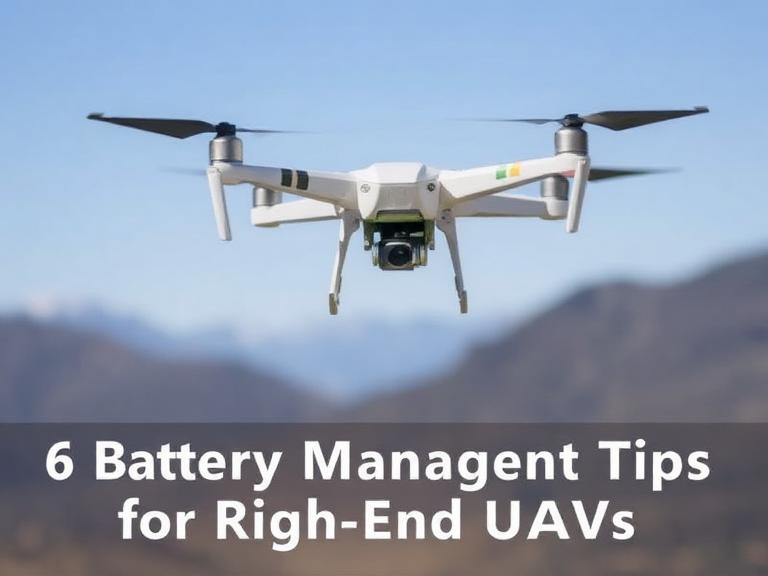
Direct answer: what matters most
If you want the short version, the best Battery management tips for high-end UAVs are these: use a BMS that monitors and balances individual cells, control charge rate and temperature automatically, track state of charge and state of health every cycle, store packs at the manufacturer’s recommended condition instead of abusing them between missions, match the pack strategy to the payload and flight profile, and retire batteries before they become a field problem. NASA’s BMS work describes cell monitoring, balancing, and fault detection as core functions, the FAA requires automatic charge-rate control and over-temperature protection for lithium battery systems, and NREL’s thermal safety review emphasizes monitoring temperature, voltage, state of charge, and state of health during charge and discharge. That is the backbone of professional battery management, not guesswork.
What it is: a battery operating discipline that keeps a UAV pack safe, balanced, and mission-ready. How it works: the BMS watches cells, the charger obeys thermal and voltage limits, and the operator tracks health instead of waiting for failure. Benefits: better range consistency, fewer surprises, safer charging, and longer service life. Limitations: battery care cannot fix bad aerodynamics, poor payload planning, or a mission profile that asks too much from the airframe. Who should use it: commercial operators, defense teams, cargo programs, and serious inspection fleets. Who does not need it: casual hobby flyers who are not relying on endurance or uptime. Common mistakes: charging too aggressively, storing packs carelessly, ignoring cell imbalance, and treating SOC as a rough guess. Buying considerations: BMS quality, telemetry, charge/discharge limits, storage procedure, and replacement thresholds. Expert recommendation: buy the UAV with the battery data you can actually manage, not the one with the best brochure range.
What it is: a system-level approach to lithium battery care for high-value UAV platforms.
How it works: the pack, charger, BMS, telemetry, and maintenance schedule all follow one operating logic. NASA describes a BMS as a tool that monitors and balances cells and detects faults, while the FAA requires automatic charge-rate control and over-temperature protection in lithium battery systems.
Benefits: longer usable life, fewer aborted flights, safer operations, and more predictable reserve margin.
Limitations: no battery program can overcome bad mission planning or poor thermal design.
Who should use it: operators of commercial, cargo, BVLOS, and defense-grade UAVs.
Who does not need it: pilots who fly occasionally and do not depend on the aircraft for revenue or critical work.
Common mistakes: charging at the wrong rate, storing batteries at the wrong condition, ignoring cell drift, and choosing packs only by claimed capacity.
Buying considerations: BMS visibility, sensor coverage, approved chargers, maintenance intervals, and replacement policy.
Expert recommendation: choose the platform that makes battery discipline easy to enforce.
Table of contents
Quick Summary Table
| Battery management issue | What good looks like | Why it matters on a high-end UAV |
|---|---|---|
| Cell balancing | The BMS monitors and balances individual cells and can detect a bad cell in a larger pack. NASA describes this as a core BMS function for high-voltage packs. | Unbalanced cells shrink usable range and create ugly surprises near the end of a mission. |
| Charge control | The battery system automatically controls charging rate and protects against overheating or overcharging. The FAA makes this a design expectation. | Fast charging without control is a reliability problem disguised as convenience. |
| Temperature monitoring | Internal temperature is monitored along with voltage, SOC, and SOH during use. NREL says this is central to safe battery design. | Heat is one of the fastest ways to shorten life and raise risk. |
| Storage discipline | Batteries are maintained and stored per manufacturer intervals, with precautions against prolonged low SOC storage. FAA calls this out directly. | Bad storage silently destroys expensive packs before the next mission. |
| Retirement policy | Packs are pulled before they become a dispatch risk. | The cheapest battery is the one you retire before it takes out an aircraft. |
What battery management means on a high-end UAV
Battery management on a high-end UAV is the discipline of keeping the pack inside a safe, predictable, and mission-useful operating window. In practice, that means you are not just charging batteries. You are managing cell balance, temperature, voltage, state of charge, storage condition, and end-of-life timing. NREL’s thermal safety review says the key safety design step is ensuring each cell operates within preset voltage and temperature limits, with monitoring of internal temperature, voltage, SOC, and SOH during charging and discharging. That is the most useful way to think about the job.
NASA’s BMS description is equally blunt and useful: a serious BMS monitors and balances individual cells and identifies fault conditions inside a larger pack. In other words, the BMS is not a decorative chip. It is the reason a high-value battery pack survives repeated use without silently drifting into trouble. For high-end UAVs, that is especially important because the aircraft often flies with expensive payloads, tight margins, and zero room for an avoidable abort.
That is why battery management looks different on a special drone, a night vision special drone, or a cargo platform built for long transit. A mission with an EO/IR package or a logistics payload is not just flying; it is carrying performance risk in the battery bay. The more serious the aircraft, the less forgiveness there is for sloppy battery habits. For buyers comparing platforms, that is one reason uav manufacturers in china, best uav manufacturers, and uav solution companies should be evaluated on battery discipline, not only on airframe geometry.
Comparison Table: good battery management vs weak battery management
| Area | Good battery management | Weak battery management | Real-world outcome |
|---|---|---|---|
| BMS behavior | Monitors cells, balances them, and flags faults early. NASA describes exactly that workflow. | Only reports a rough battery percentage and leaves the operator guessing. | Good systems finish missions more reliably. |
| Charging | Charge rate is controlled automatically and protected against over-temperature. The FAA expects this. | Charges as fast as the user wants until something gets hot. | Weak systems age fast and fail sooner. |
| Monitoring | Temperature, voltage, SOC, and SOH are tracked regularly. NREL identifies these as core safety variables. | Only checks the battery when something already feels wrong. | Monitoring prevents ugly surprises. |
| Storage | Packs are stored and maintained at appropriate intervals, avoiding prolonged low SOC storage. FAA specifically warns against this. | Packs sit half-forgotten until the next mission. | Bad storage silently eats usable life. |
| Fleet discipline | Replacement thresholds are set before failure, not after it. | Packs stay in service until they create a field problem. | Good fleets keep uptime predictable. |
The 6 battery management tips that matter
1. Make the BMS the source of truth, not the pilot’s guess
On high-end UAVs, the BMS should be treated as an operational authority, not a warning light you hope to ignore. NASA’s BMS example is useful because it shows the functions that matter: monitoring individual cells, balancing charge across the pack, and detecting faults in a multi-cell system. That is exactly what you want if your aircraft carries expensive sensors or works long routes where a weak cell can ruin the return leg.
From our experience, this is the single biggest upgrade in battery discipline: stop relying on “the pack feels fine.” On a VTOL cargo drone or a platform used for cargo drone solutions, one bad cell can turn a profitable mission into a recovery problem. Use the BMS data. Trust the BMS data.
2. Control the charge rate and temperature window
The FAA’s lithium battery guidance is very clear on this point: the system must be able to control charging automatically to prevent overheating or overcharging, and it must provide temperature sensing or battery-failure sensing with an automatic disconnect from the charging source. For high-end UAV operators, that means your charger, BMS, and maintenance workflow need to behave like a system, not three unrelated gadgets.
We recommend thinking of fast charging as a privilege, not a default. In heavy-duty applications, especially when the aircraft is flying back-to-back sorties, the temptation is to rush the pack. That usually costs more later in capacity fade, imbalance, and replacement expense. If the mission is demanding, the charging plan should be conservative enough that the battery survives the schedule.
3. Track temperature, voltage, SOC, and SOH on every cycle that matters
NREL’s thermal safety review is unusually practical here. It says safe battery design depends on operating each cell within preset voltage and temperature limits and monitoring internal temperature, voltage, SOC, and SOH during charging and discharging. That is the exact data set a serious UAV operator should care about, because it turns battery care from superstition into management.
For commercial users, this is where logs matter. If the same battery is repeatedly showing higher temperature under the same load, the pack is telling you something. If a battery’s state of health is falling faster than the rest of the fleet, pull it early. For operators flying BVLOS fixed wing UAV missions, this is not optional. You do not get to improvise battery health halfway through a long-route flight.
4. Store packs properly and avoid prolonged low state of charge
The FAA says continued-airworthiness instructions should keep the battery sufficiently charged at appropriate intervals and should include storage precautions to prevent damage from prolonged storage at a low state of charge. That is one of the most ignored parts of battery management because it is not dramatic. It just quietly destroys useful life while the pack sits on a shelf.
For beginners, this is the easiest discipline to get wrong. Do not treat a battery like a tool you leave anywhere after a mission. Give it a storage routine. Rotate inventory. Label service dates. If your fleet includes multiple platforms, keep the storage logic consistent across the team so nobody “forgets” a pack until it has already aged badly. ChinaMoneypro UAV’s full-stack engineering approach makes sense here because storage policy is part of the system, not an afterthought.
5. Match the battery plan to the payload, airframe, and mission profile
Battery management is not only about chemistry. It is also about mission economics. A VTOL cargo drone does not live under the same battery rules as a light inspection aircraft. An EO/IR-equipped platform or one compared in a global special drone comparison carries more load, more power draw, and more operational pressure. That means battery reserve policy has to be conservative enough to handle wind, payload variation, and loiter time.
From our experience, this is where buyers make the wrong trade. They compare airframe speed or payload first and then assume the battery will somehow solve the rest. It will not. The battery strategy should be built around the actual mission. If the aircraft is being used for logistics, you need a different reserve philosophy than if it is being used for surveillance or inspection. That is why battery decisions should be made alongside airframe and payload decisions, not after them.
6. Set a retirement rule before the pack becomes a field failure
High-end UAVs deserve retirement rules, not wishful thinking. NREL’s review emphasizes state-of-health as a core variable and notes that battery management must keep up with aging behavior, not just live battery conditions. That means your fleet should have a retirement trigger based on measured decline, not on the day a pack finally embarrasses you in the field.
In our testing mindset, a retired battery is not a failure of thrift. It is a success of discipline. For commercial operators, the real money is made by finishing the mission and keeping the aircraft reliable for the next one. A pack that is technically still “working” but unpredictably weak is already too expensive.
Pros vs Cons Table
Pros
- More predictable endurance and reserve margin.
- Safer charging and better protection against overheat events.
- Longer usable battery life through balancing and health tracking.
- Lower surprise-failure risk during critical missions.
- Better fleet economics when packs are retired on time.
Cons
- More monitoring and logging work.
- Less temptation to charge fast whenever convenient.
- Requires disciplined storage and maintenance habits.
- Good battery programs expose weak packs earlier, which can feel expensive.
- There is no shortcut: poor mission planning still causes battery pain.
Buying Guide Table: what to look for before you buy the UAV
| Buying factor | What good looks like | Red flag | Why it matters |
|---|---|---|---|
| BMS visibility | Cell-level monitoring, balancing, and fault detection. NASA describes this as core BMS behavior. | Only a vague battery percentage with no deeper data. | Visibility is what prevents drift from becoming failure. |
| Charge protection | Automatic charge control, over-temperature warning, and automatic disconnect when needed. The FAA expects this kind of protection. | “Fast charger” marketing with no thermal detail. | Unchecked charging is where many battery problems begin. |
| Thermal monitoring | Temperature and voltage are monitored as part of battery management. NREL says these are essential safety variables. | No clear thermal strategy. | Heat is a life-limit and a safety limit. |
| Storage procedure | Manufacturer-defined intervals and storage conditions, with a plan to avoid prolonged low SOC storage. FAA says this should be in continued-airworthiness instructions. | No clear pack-storage policy. | Storage mistakes are cheap to make and expensive to fix. |
| Mission fit | Battery reserve matches the actual load, route, and payload profile. | Capacity numbers used as a substitute for planning. | The mission should define the battery plan, not the other way around. |
| Manufacturer support | Clear documentation, service response, and lifecycle advice from the OEM. | “We’ll explain it after delivery.” | Battery management should be part of the product, not a guessing game. |
For buyers comparing China-based and global vendors, the strongest question is not who has the biggest capacity claim. It is who can prove they understand lifecycle control. That is why uav manufacturers in china, best uav manufacturers, and uav solution companies should be filtered by battery discipline just as hard as by airframe design.
Who should use it, and who does not need it
Use these battery management practices if your UAV is tied to revenue, mission uptime, safety-critical work, or long-endurance operations. That includes inspection fleets, cargo aircraft, defense platforms, and BVLOS systems. If the battery fails, the business feels it immediately.
You do not need a heavy-duty battery program if you fly occasionally for recreation and can tolerate a missed sortie. In that case, basic manufacturer care is usually enough. But the moment the aircraft becomes part of a commercial workflow, the rules change. For a VTOL cargo drone or a higher-risk operation, battery discipline is part of the operating model, not an optional habit.
Common mistakes operators make
- Charging as fast as possible instead of as safely as necessary. The FAA’s guidance is clearly against that mindset.
- Ignoring cell imbalance until it shows up as reduced range or a forced landing. NASA’s BMS work exists because cell-level problems matter.
- Watching only voltage and forgetting temperature, SOC, and SOH. NREL says those variables belong in the safety picture together.
- Storing packs too empty for too long and pretending shelf life is infinite. FAA explicitly warns about prolonged low-state-of-charge storage.
- Using the same battery policy for every platform, even when mission profile and payload are completely different.
- Buying a UAV based on claimed flight time and then never building a retirement rule for the batteries.
From our experience, the most expensive mistake is not dramatic. It is the slow, boring neglect that turns a premium battery pack into a weak pack long before the operator notices.
Expert recommendation
We recommend treating battery management as a design requirement, not a user habit. That means the UAV should ship with a BMS that does real cell monitoring and balancing, charge protection that reacts automatically to heat and fault conditions, and maintenance guidance that tells the operator when to store, charge, and retire packs. NASA, the FAA, and NREL all point in the same direction: cell-level visibility, charge protection, thermal discipline, and health tracking are not extras; they are the foundation.
For ChinaMoneypro UAV, that is a natural fit. A national-level high-tech enterprise transformed from a state-owned research institute should be expected to think in systems, not parts. In the high-end UAV world, that means the battery, payload, airframe, datalink, and mission profile all have to make sense together. If a vendor cannot explain battery behavior clearly, they are not ready for serious missions.

Bottom Line
The best Battery management tips for high-end UAVs are simple to say and hard to ignore: use a real BMS, control charging, monitor cell health, store batteries correctly, match the pack to the mission, and retire packs before they fail in the field. That is how professional UAV teams protect range, reduce downtime, and keep the aircraft useful when the mission gets serious. High-end UAVs do not forgive casual battery habits, and they should not be operated as if they do.
FAQs
What is the most important battery management rule for high-end UAVs?
Use a BMS that actually monitors and balances individual cells and detects faults. That is the difference between guessing and managing.
Why does the FAA care so much about charging control?
Because lithium battery systems need automatic control of charging rate and protection against overheating or overcharging, with automatic disconnects when necessary.
Which battery data should I watch most closely?
Temperature, voltage, state of charge, and state of health. NREL identifies those as central to safe battery management.
Should I store UAV batteries fully charged?
Not as a blanket habit. The FAA says maintenance instructions should prevent damage from prolonged low state of charge and keep batteries sufficiently charged at appropriate intervals, so storage should follow the manufacturer’s instructions rather than a guess.
Do cargo drones need stricter battery rules than inspection drones?
Usually yes, because payload, range, and dispatch pressure are often higher. That is especially true for a VTOL cargo drone or other mission-critical platforms.
When should a battery be retired?
Before it becomes a dispatch risk. If SOH, temperature behavior, or balance drift starts to move the wrong way, replace it early.