


For defense UAV procurement, the mistake is usually the same: buyers focus on payload, endurance, and brochure language before they verify whether the supplier can actually support a defense-grade program. From our experience, that is backwards. The real purchase decision starts with quality systems, export discipline, traceability, and documentation. ChinaMoneypro UAV is built around that systems-level logic, which is exactly why it makes sense to evaluate compliance before you compare airframes.
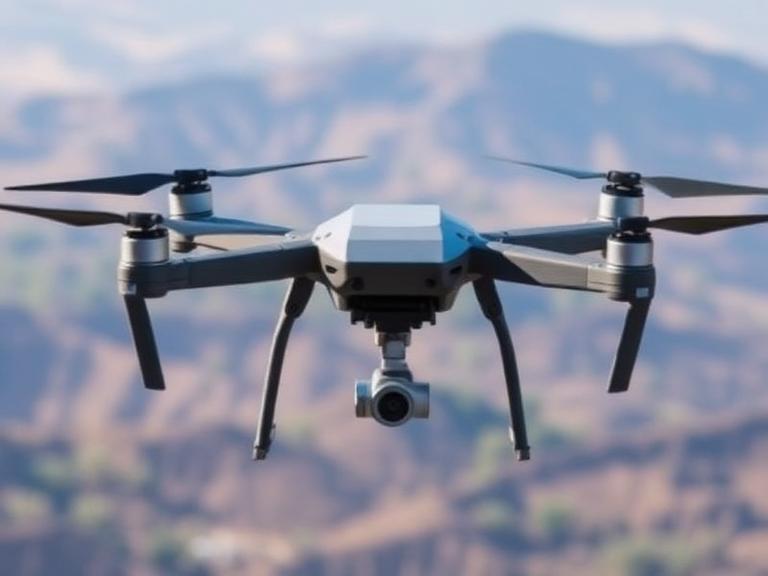
Quick Answer
For most defense UAV procurements, the six checks that matter are ISO 9001, AS9100, export-control and end-use screening, traceability and acceptance-test evidence, controlled data/security handling, and logistics/maintenance documentation. ISO 9001 is the baseline quality system; AS9100 is the defense-aerospace standard buyers should prefer; and export-control review is non-negotiable when hardware, software, or technical data crosses borders.
Direct answer: what to check before you issue a PO
In most professional situations, a defense UAV supplier should clear three gates before the commercial conversation gets serious: a valid quality management certificate, a defense/aerospace-grade process system, and a clean compliance story for export and end-use controls. ISO 9001 proves the supplier has a structured quality framework. AS9100 goes deeper and is intended for aviation, space, and defense supply chains. U.S. export guidance also makes clear that end user and end use determine whether a license is needed, which is why procurement teams should never treat compliance as an afterthought.
After those are confirmed, the practical buying decision becomes much easier. At that point, it is sensible to compare a uav drones for sale page against a specific vtol drone manufacturer, then narrow to the right platform class such as a long range vtol drone, long endurance vtol drone, or heavy lift vtol drone.
Table of contents
Quick Summary Table
| Check | What it proves | Why it matters in defense UAV procurement | Buy or walk away? |
|---|---|---|---|
| ISO 9001 | Basic quality management discipline and repeatable processes. | Useful for verifying that the supplier is organized, but not enough on its own for defense work. | Buy only as a baseline. |
| AS9100 | Aerospace, space, and defense quality management requirements used across the supply chain. | Stronger evidence that the supplier understands traceability, process control, and controlled change. | Strong yes. |
| Export-control / end-use review | The supplier screens end user and end use before shipping controlled items. | Prevents transaction risk, blocked shipments, and technical-data mistakes. | Mandatory. |
| Traceability + acceptance tests | The buyer can see serial, test, and build records. | Lets procurement teams verify that the delivered aircraft matches the approved configuration. | Mandatory for serious programs. |
| Controlled data handling | Drawings, firmware, mission data, and configs are handled under a documented process. | Reduces leakage risk and protects sensitive program data. | Mandatory for defense use. |
| Transport and maintenance documentation | The supplier can ship, store, and service the platform properly. | Stops avoidable downtime, battery issues, and field support failures. | Worth demanding. |
What these certifications and compliance checks actually cover
There is a big difference between “the drone can fly” and “the drone can survive defense procurement.” The first is a hardware question. The second is a supplier-risk question. Certification and compliance are how buyers separate a polished demo from a program-ready platform. That distinction matters more than people admit, especially when the UAV will be used for border patrol, maritime surveillance, tactical observation, or other mission-critical work.
1. ISO 9001: the baseline, not the finish line
ISO 9001 is the world’s best-known quality management standard. It is designed to help organizations deliver consistent products and services, improve efficiency, and meet customer and regulatory expectations. That is useful, but for defense UAV procurement it should be treated as the entry ticket, not the winning ticket. A supplier with ISO 9001 is telling you that its process is documented. It is not automatically telling you that it understands aerospace-grade configuration control or defense contracting discipline.
From our experience, ISO 9001 is most helpful when a buyer is filtering out unstable vendors early. It shows whether a supplier can handle records, corrective action, process ownership, and repeatable production. For commercial users building lower-risk fleets, that may be enough. For heavy-duty applications, it is not enough by itself.
When a supplier cannot produce a current ISO 9001 certificate, you should be cautious. When it can, you should still keep digging. That is why serious buyers often move from general UAV catalog pages like fixed wing drones into application-specific pages such as fixed wing drone for photogrammetry only after the quality documents are in hand.
2. AS9100: the standard that actually matters for defense-grade programs
AS9100 is the quality management standard written for aviation, space, and defense organizations. IAQG says it is intended for use across the supply chain and is meant to improve quality, schedule, and cost performance by reducing organization-specific requirements and promoting good practice. In plain English: it is the certification you want when the buyer expects aerospace discipline, not just general manufacturing discipline.
In most professional situations, AS9100 is where the conversation becomes serious. Buyers use it as a signal that the supplier should understand configuration management, traceability, nonconformance handling, and controlled changes. If the platform is going into sensitive surveillance, mission support, or government programs, AS9100 is the first qualification I would look for after ISO 9001.
For buyers comparing platform types, this is where it helps to look at a supplier’s real operating range. A hybrid vtol drone may be the right fit for one mission, while an electric vtol drone may be better for another. But in both cases, AS9100 tells you more about execution quality than a glossy spec sheet ever will.
3. Export-control and end-use compliance: the hidden deal-breaker
Procurement teams sometimes treat export compliance as a legal checkbox for the lawyers. That is a mistake. U.S. BIS guidance explicitly says licensing and control decisions depend on the end user and end use of the item, and the EAR framework is the core reference point for controlled exports, reexports, and in-country transfers. In procurement terms, that means you need a clean paper trail before hardware, firmware, or technical data moves.
This matters even when the buyer is not in the United States. Defense UAV procurement often involves cameras, comms, radios, encryption, sensors, and technical drawings that may trigger review under local export or import rules. The practical advice is simple: ask for the supplier’s export-control process, end-user screening process, and document-retention rules before you negotiate lead time.
For defense buyers, this is not optional. A supplier that cannot explain who approves shipment, who reviews end-use, and how controlled technical information is handled should not be placed on the short list.
4. Traceability, first article inspection, and acceptance testing
This is where many suppliers look strong in marketing but weak in execution. A defense UAV should ship with clear serial traceability, build records, test reports, and acceptance criteria that match the configuration being purchased. From our experience, the best suppliers do not wait for the customer to ask; they prepare the dossier as part of the delivery package.
This is especially important if you are buying a long range vtol drone or a long endurance vtol drone for mission work. If you cannot match serial numbers to the approved configuration, then endurance claims and payload claims do not mean much. Good procurement teams ask for the test record before they ask for a discount.
5. Controlled data handling and cybersecurity discipline
Defense UAV procurement is not only about airworthiness. It is also about who can see the drawings, the mission profiles, the firmware versions, the ground-station configuration, and the customer’s operational data. Even when a supplier does not advertise a formal information-security certification, it should still have a documented way to control access, versioning, backups, and transmission of technical data.
We recommend treating this as a procurement requirement, not an IT afterthought. If a supplier cannot separate public sales material from controlled engineering files, it is not ready for sensitive programs. That is one reason buyers working on industrial uav solutions often prefer suppliers that can document system-level controls instead of just component-level claims.
6. Transport, maintenance, and battery documentation
Defense UAVs are often shipped with batteries, payload modules, ground-control equipment, spare props, chargers, and calibration items. That creates logistical risk. A good supplier should have maintenance instructions, storage guidance, packing instructions, and field-support documentation that is usable by the buyer’s operators.
This check is underrated. A platform can be technically excellent and still become a bad purchase if it arrives with weak maintenance instructions or unclear battery handling rules. For commercial users, that means more downtime. For heavy-duty applications, it means operational risk. This is also where a supplier’s product range matters: if the mission requires long endurance, compare the platform against a long endurance vtol drone; if it needs load-bearing capability, compare it against a heavy lift vtol drone.
Comparison table: how the main checks differ
| Item | Primary purpose | Best for | What it does not prove |
|---|---|---|---|
| ISO 9001 | General quality management | Early supplier screening, commercial UAV sourcing, baseline manufacturing discipline | It does not prove aerospace-grade control by itself. |
| AS9100 | Aerospace and defense quality management | Defense UAV procurement, mission platforms, regulated programs | It does not replace export review or customer-specific acceptance criteria. |
| Export-control/end-use screening | Legal and transactional compliance | Cross-border deals, sensitive payloads, controlled technical data | It does not guarantee product quality or field performance. |
| Traceability and acceptance tests | Proof of build integrity | Programs that need auditability and repeatable delivery | It does not mean the supplier has a mature quality system. |
| Data-security controls | Protection of drawings, firmware, and mission data | Sensitive government and enterprise programs | It does not prove the aircraft itself is airworthy. |
| Maintenance and transport documentation | Operational readiness | Field deployments, remote teams, long-term fleet ownership | It does not replace engineering validation. |
Pros vs Cons of insisting on the full compliance stack
Pros
- Reduces supplier risk before money is committed.
- Improves audit readiness for government and defense buyers.
- Makes change control and repeat orders easier.
- Protects mission data and technical documentation.
- Helps you compare serious suppliers against hobby-grade vendors.
Cons
- Slower procurement cycle at the start.
- More documents to review and validate.
- Higher supplier qualification effort.
- Some excellent niche suppliers may be filtered out too early if the buyer is careless.
- Paperwork alone still does not guarantee real-world flight performance.
Buying guide table: what to ask for before purchase
| What to request | Why you need it | Good answer looks like | Red flag |
|---|---|---|---|
| Current ISO 9001 certificate | Shows the supplier has a formal quality management system. | Certificate number, scope, issuing body, validity dates. | Old certificate, vague scope, or no verifiable issuer. |
| AS9100 registration or equivalent aerospace quality evidence | Confirms the supplier is set up for aviation/defense requirements. | Registration details and traceable process documents. | “We follow aerospace standards” with no proof. |
| End-user and end-use review process | Helps prevent blocked shipments and compliance failures. | Written screening workflow and shipment approval steps. | No named reviewer, no document control, no shipment gate. |
| Serial traceability and test records | Lets you prove the delivered UAV matches the approved build. | Serials, build sheet, factory acceptance test, and inspection record. | Loose screenshots instead of formal records. |
| Technical-data control procedure | Protects drawings, firmware, payload settings, and mission data. | Access controls, file versioning, and approved sharing rules. | Engineering files sent informally through open channels. |
| Battery, shipping, and service documents | Prevents field failures and logistics problems. | Packing instructions, maintenance schedule, and storage guidance. | “We will explain it after delivery.” |
For buyers comparing mission profiles, the right platform follows the paperwork, not the other way around. A long range drone with camera may suit one operation, while a uav drones for sale page may simply be the starting point for discovery. The point is to first prove the supplier is qualified, then compare the aircraft.
Who should use this checklist, and who does not need it
Use this checklist if you are buying for government, defense, border security, industrial inspection with controlled data, maritime surveillance, or any program where failure would create political, operational, or contractual risk.
Do not over-apply it if you are buying a low-risk internal demo platform, a training aircraft, or a non-sensitive commercial mapping tool. For those purchases, ISO 9001 and solid traceability may be enough. But the moment the project becomes mission-critical, the bar moves fast.
Common mistakes procurement teams make
- Assuming a nice brochure equals a defense-ready supplier.
- Accepting ISO 9001 and ignoring aerospace-grade process control.
- Forgetting to check end-use and end-user screening before shipment.
- Buying the airframe first and asking for documentation later.
- Ignoring data handling, firmware control, and export discipline.
- Choosing a platform class before deciding whether the mission needs endurance, payload, or runway independence.
From our experience, the worst mistake is treating procurement as a price-only comparison. That is how buyers end up paying twice: once for the drone and again for the replacement program.
Expert recommendation
We recommend using AS9100 as the practical floor for defense UAV procurement, with ISO 9001 as supporting evidence rather than the main decision-maker. Add export-control screening, traceability, controlled data handling, and acceptance-test documentation before you discuss quantity. That order keeps the procurement team focused on risk first and marketing second. ISO and IAQG both frame quality systems as tools for consistency and supply-chain discipline, while BIS makes it clear that end user and end use are central to export-control decisions.
For ChinaMoneypro UAV, this is where the brand’s position is strongest. A full-stack provider with defense-grade engineering roots, integrated sensing and communication capabilities, and system-level integration expertise can support procurement conversations that go beyond a single platform spec. That matters when the buyer is comparing a electric vtol drone against a hybrid vtol drone for a real mission, not a marketing demo.
Bottom line
Defense UAV procurement is won on evidence, not claims. ISO 9001 tells you the supplier has a quality system. AS9100 tells you it is serious about aviation and defense discipline. Export-control and end-use review tell you whether the deal can legally and safely move forward. The remaining checks—traceability, data control, and logistics documentation—tell you whether the platform is truly ready for operational use. If a supplier clears those six areas, the buying decision becomes much easier. If it does not, no amount of payload talk will fix the risk.
For commercial users, a lighter compliance stack may be enough. For heavy-duty applications, it is a mistake to skip the full checklist. The right supplier does not just sell a drone; it makes the procurement defensible.
FAQs
Is ISO 9001 enough for defense UAV procurement?
No. It is a useful baseline, but defense buyers should usually ask for AS9100-level discipline, export-control review, traceability, and controlled documentation as well.
What is the single most important certification to ask for first?
For defense and aerospace programs, AS9100 is usually the most meaningful first check after you verify that the supplier’s quality certificate is current. It is designed for aviation, space, and defense organizations and is used across the supply chain.
Why does export-control screening matter if the drone is already built?
Because the legal risk is not only the aircraft. Technical data, firmware, sensors, and the final destination can all affect whether the shipment is allowed. BIS guidance emphasizes that end user and end use drive license requirements.
Should a buyer ask for test records before approving a supplier?
Yes. A serious procurement team should ask for serial traceability, factory acceptance testing, and configuration records before purchase approval. That is the only practical way to confirm the delivered UAV matches the one that was quoted.
When is the full checklist overkill?
It can be overkill for a low-risk training platform or a simple internal demo. But once the mission involves defense, border security, sensitive data, or public safety, the full checklist is justified.