


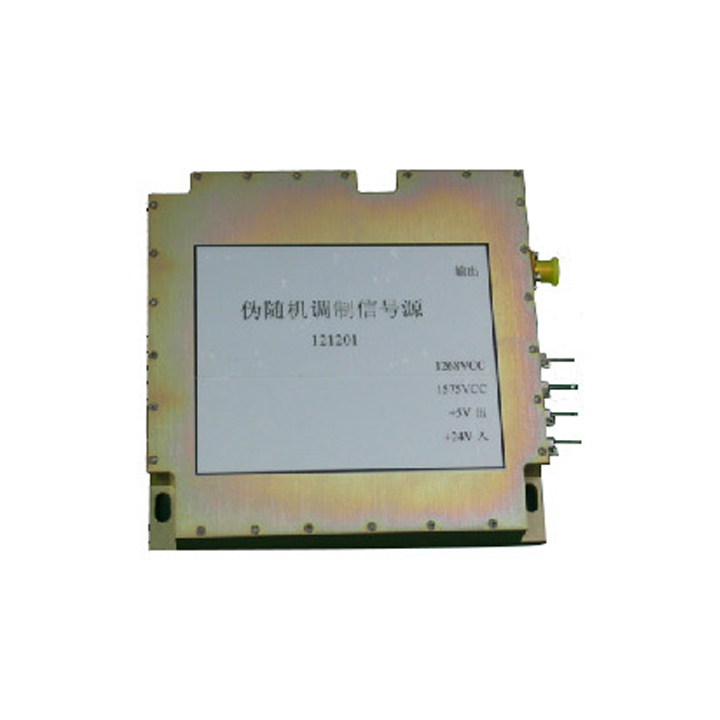
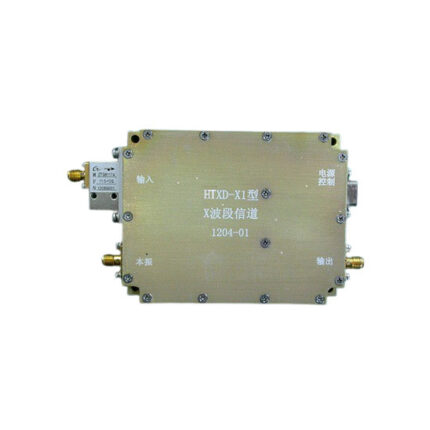
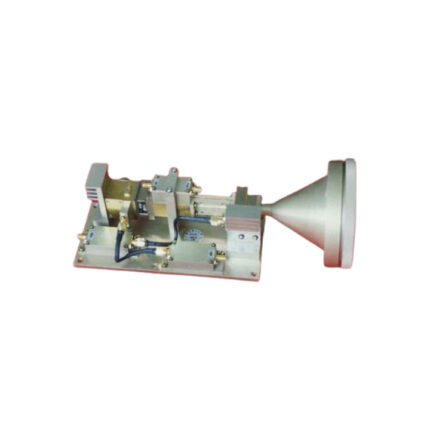
Microwave Frequency Source
Backed by its seasoned microwave team, process team, and management team, Hangtai Technology has been consistently upgrading the R&D and production capabilities of microwave components. The microwave components developed by this division not only meet the technical requirements of the company’s radar and radio altimeters but also extend their utility to serve societal needs.
Related products
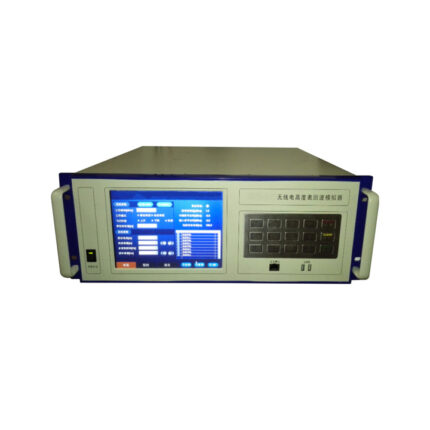
MASS-15 Continuous Echo Simulation Excitation System of Radio Altimeter
The MASS-15 Continuous Echo Simulation Excitation System of Radio Altimeter is a specialized testing equipment designed to support the performance verification, calibration, and development of radio altimeters. It focuses on generating stable, continuous echo signals that accurately replicate real-world altitude-related signal environments—including varying echo amplitudes, frequency characteristics, and delay parameters corresponding to different flight altitudes and terrain conditions. By providing these realistic simulated excitation signals, the system enables radio altimeters to operate under controlled laboratory conditions, allowing engineers to test key functions such as height measurement accuracy, continuous tracking stability, and anti-interference capability. Its reliable continuous echo simulation function not only replaces the need for complex and costly field tests but also ensures consistent, repeatable test results, making it an essential tool for ensuring the reliability and performance of radio altimeters in practical aviation applications.
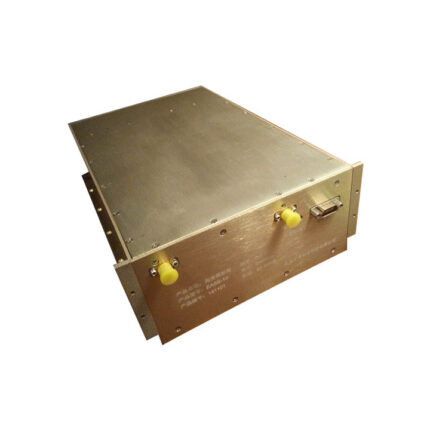
MASS-10 Universal Echo Precision Delay Module (Miniature Universal Continuous Simulation)
The MASS-10 Universal Echo Precision Delay Module, featuring a miniature design and universal continuous simulation capability, is a high-performance component tailored for precise echo signal delay control in radio frequency (RF) testing scenarios. It excels in providing accurate, adjustable delay for echo signals across a wide range of frequencies, making it applicable to various devices like radio altimeters, radars, and other RF-based systems that require reliable echo signal simulation. With its compact size, the module is easy to integrate into limited-space test setups, while the universal continuous simulation function ensures it can replicate diverse real-world signal delay conditions consistently. This module plays a crucial role in verifying the performance of target devices—such as testing their ability to accurately capture and process delayed echo signals—thereby supporting the development, calibration, and quality assurance of RF equipment with high precision and flexibility.
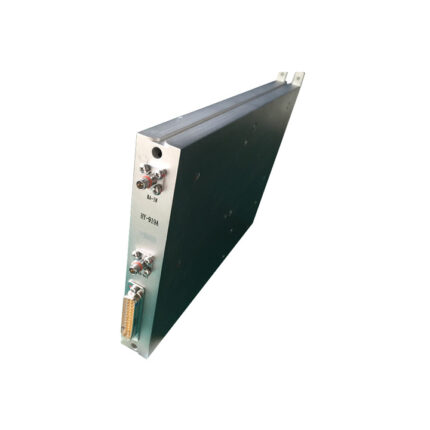
6U Module Radio Altimeter MY-919
The MY-919 radio altimeter is a new-generation altitude-measuring radar system designed for a specific type of aircraft; as a miniaturized, full-function radio altimeter that complies with avionics standards, it serves as a key component for the control of an aircraft’s longitudinal altitude channel and can be widely applied in large aircraft and unmanned aerial vehicles (UAVs). A radio altimeter based on a frequency-modulated continuous wave (FM CW) closed-loop tracking servo control measurement system, the MY-919 adopts linear modulation coefficients adaptive to altitude changes and narrow-band reception of echo signals, granting the product strong resistance to active interference; it uses coherent mixing reception, which delivers superior performance in resisting co-frequency asynchronous interference and ensures the product has good electromagnetic compatibility; it employs echo signal spectrum front detection technology, enabling the product to maintain high precision in tracking and measurement; it follows serialization, standardization, and modularization design principles, resulting in good product inheritance; and it integrates digital frequency-domain processing and control, microwave integration technology, and hybrid integration technology, making the product stable in performance, mature, and reliable.
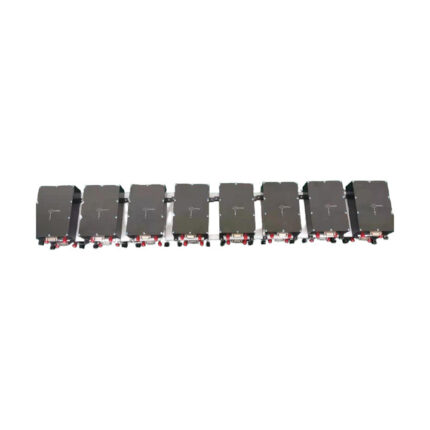
MDG-300 Radio Altimeter
The MDG-300 radio height-fixing device operates in the C-band and adopts a pulse compression system. Its sensitive component is of the heterodyne type, and the circulator at the antenna terminal uses a transceiver common-mode design. Prior to missile launch, the height-fixing device is powered on, and it undergoes self-check and height presetting via the communication interface. After the missile is launched, the radio frequency (RF) module is activated, and a gate is set in accordance with the preset height. When the preset height is reached, the device outputs height-fixing command information and telemetry data. The MDG-300 height-fixing device features mature technology: its pulse compression technology can enhance the altimeter’s height measurement performance, and it has the characteristic of a wide height measurement range. Additionally, the digital pulse compression function based on FPGA (Field-Programmable Gate Array) endows it with advantages such as small size, low power consumption, and low cost.
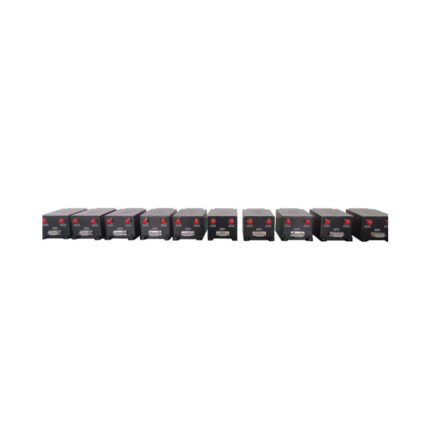
MDG-400 Radio Altimeter
The MDG-400 radio altimeter operates in the C-band and adopts a frequency-modulated continuous wave (FMCW) working system, with its antenna utilizing a transmit-receive separation mode. Prior to missile launch, the altimeter (serving as the height-fixing device) is powered on, and it undergoes self-check and height presetting via the communication interface. After the missile is launched, the radio frequency (RF) module is activated, and frequency variation parameters are set based on the preset height. When the preset height is achieved, the altimeter outputs height-fixing command information and telemetry data. The MDG-400 altimeter features mature technology; its adoption of frequency-modulated continuous wave (FMCW) technology endows it with the advantages of compact size and a large height measurement range.
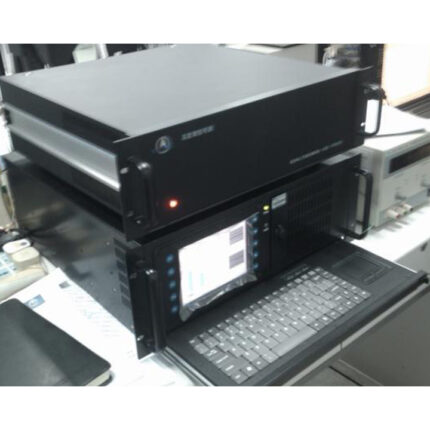
MASS-03 Radio Altimeter Continuous Echo Signal Simulator
The MASS-03 Radio Altimeter Continuous Echo Signal Simulator is a specialized testing device designed to generate stable, continuous echo signals that replicate real-world altitude-related signal environments for radio altimeters. Tailored to support the development, calibration, and performance verification of radio altimeters, it accurately simulates various echo signal characteristics (such as amplitude, frequency, and delay) corresponding to different altitude scenarios, enabling users to test critical functions of radio altimeters—including height measurement accuracy, tracking stability, and anti-interference performance—under controlled laboratory conditions. By providing reliable, repeatable continuous echo signals, the simulator eliminates the need for costly and complex field tests, streamlining the testing process while ensuring radio altimeters meet design specifications for accuracy, stability, and robustness in practical operation.
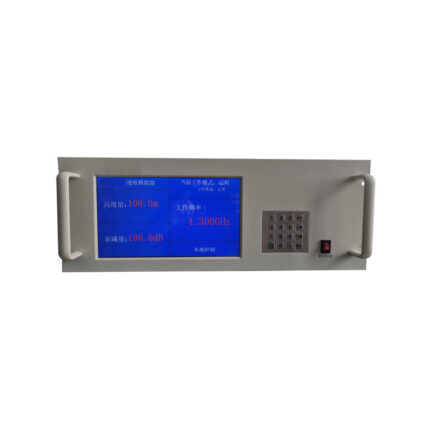
MASS-21 Echo Simulator of Radio Altimeter
The MASS-21 Radio Altimeter Echo Simulator is capable of simulating both static and dynamic echo signals of altimeters under a variety of altitude conditions and reflection coefficient scenarios. It is compatible with radio altimeters of multiple systems, including frequency modulation (FM) systems, phase modulation (PM) systems, and pulse systems, and is also equipped with a built-in self-check function to ensure its own operational reliability during use.
