


The enterprise drone ecosystem has moved decisively past simple hovering maneuvers and visual site verification. As multi-rotor platforms face strict barriers in aerodynamic efficiency and operational longevity, high-volume industrial tracking demands a different aircraft architecture. For wide-area surveying, linear corridor mapping, agricultural remote sensing, and long-range border reconnaissance, the global market increasingly relies on specialized aircraft. In 2026, investing in fixed wing drones is a primary strategy for B2B organizations attempting to maximize data collection per flight hour, secure operational scaling, and capture repeatable business returns.
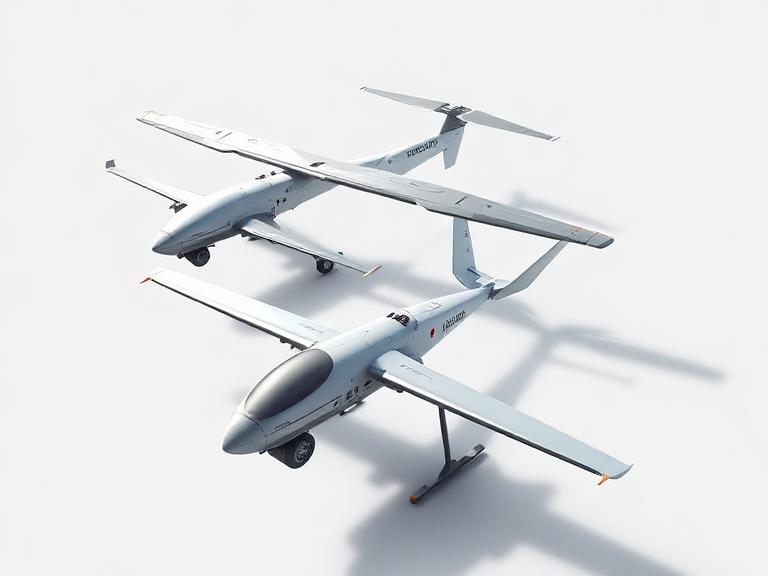
At ChinaMoneypro UAV, we operate as a national-level high-tech enterprise, transformed from a prestigious state-owned research institute. With deep roots in defense-grade engineering, we specialize in the R&D and manufacturing of advanced unmanned platforms and integrated sensing-communication solutions. Headquartered in one of China’s premier innovation hubs, Moneypro stands as a full-stack provider offering complete UAV systems, internal heavy engines, stabilization gimbals, synthetic aperture radar (SAR), data links, and secure communication technologies. From our experience, many enterprise buyers evaluate flight assets solely on superficial payload weights or low retail pricing, failing to check critical variables like wing-loading aerodynamics, payload power tracking, or data-link encryption. This complete guide provides an in-depth evaluation of the modern fixed-wing landscape, giving you the facts needed to build a highly optimized fleet.
- 1. Procurement Matrix: Comparing Fixed-Wing UAV System Formats
- 2. Aerodynamic Physics: Why Fixed-Wing Overrides Multirotor Assets
- 3. Payloads, Synthetic Aperture Radar, and Data Integration
- 4. Regulatory Navigation: Mastering Part 108, BVLOS, and SORA Systems
- 5. Sourcing Guide: Aligning Flight Hardware with Enterprise Assets
- 6. Frequently Asked Questions (FAQs)
- 7. Industrial Safety and Regulatory References
1. Procurement Matrix: Comparing Fixed-Wing UAV System Formats
Before launching a commercial fleet expansion or executing international supply contracts, procurement teams must analyze structural aircraft layouts. The table below details how various architectures of fixed wing drones compare across core enterprise parameters this season.
| Fixed-Wing Platform Style | Launch & Recovery Mechanism | Average Flight Endurance | Optimal Coverage Footprint | Primary Commercial Application |
|---|---|---|---|---|
| Standard Belly-Launcher | Catapult / Hand-Launch / Belly Slide | 90 – 150 Minutes | Medium to Large (Flat Grids) | High-precision topographic mapping and corridor mapping |
| Hybrid VTOL (Vertical Takeoff) | Quad-Rotor Lift to Wing-borne Cruise | 120 – 240 Minutes | Large (Challenging Topography) | Offshore inspection, mountain mapping, and cargo delivery |
| Gas / Hybrid Combustion Variant | Runway / Mechanical Launcher | 4 – 10+ Hours | Ultra-Large / Extended Linear Track | Maritime border surveillance and gas pipeline tracking |
| Solar-Assisted High-Altitude | Hand-Launch / Automated Carriage | 6 – 12+ Hours (Daylight) | Continuous Zone Orbit | Atmospheric monitoring and temporary telecommunication relays |
2. Aerodynamic Physics: Why Fixed-Wing Overrides Multirotor Assets
To successfully integrate high-performance fixed wing drones into your company’s workflow, you must understand the underlying fluid dynamics that separate them from multirotor quadcopters. A multirotor platforms requires continuous, massive energy expenditure simply to fight gravity, utilizing high-RPM motors to push downward air currents constantly. This heavy electrical current draw limits most industrial multirotors to a brief 30-to-45-minute flight window before the batteries are completely drained.
Fixed-wing aircraft utilize natural forward velocity to generate lift across mathematically optimized wing foils. The onboard propulsion system—whether an efficient electric motor or a defense-grade heavy fuel engine—only needs to provide enough forward thrust to overcome aerodynamic drag. This efficiency allows fixed wing drones to stay airborne for hours on a single charge or fuel tank, outlasting multirotor platforms up to five times over. For large enterprise projects, this translates directly to covering thousands of hectares in a single flight, maximizing data gathering continuity and slashing crew field deployment costs.
We recommend closely inspecting the aerodynamic efficiency index of your hybrid VTOL fixed-wing units. While vertical takeoff and landing mechanisms remove the need for bulky launch catapults or clear runways, carrying four independent quad-rotor arms adds significant dead weight and parasitical aerodynamic drag during forward cruise flight. Premium fixed-wing engineering demands folding rotor mechanisms or tilting wing assemblies to minimize this forward resistance, protecting your airborne endurance from early battery drop-offs.
3. Payload Engineering: Cameras, Radar, and Photogrammetry Data
The aircraft frame serves as the transport vehicle, but the economic value of your flight asset is determined by the payload systems stabilized inside the nose or belly bays. In 2026, enterprise data capture has evolved past basic visual resolution toward multimodal sensor packages.
For engineering teams executing high-accuracy digital twin modeling, large infrastructure construction, or volumetric calculations, choosing specialized hardware is non-negotiable. Sourcing the right fixed wing drone for photogrammetry processes ensures that your sensors integrate with high-frequency Real-Time Kinematic (RTK) and Post-Processed Kinematic (PPK) GNSS receiver chips. This tracking precision coordinates with mechanical global shutters to deliver survey-grade mapping files down to sub-centimeter accuracies without requiring time-consuming ground control points.
Furthermore, when environment tracking requires monitoring through thick cloud covers, fog, or dense canopy foliage, relying on traditional optical cameras will cause data gaps. We recommend using a multi-sensor payload bay that balances thermal cameras, high-definition optical lenses, and compact Synthetic Aperture Radar (SAR). This combined sensing stack allows your operators to map structural terrain through zero-visibility zones, generating clean, repeatable structural data grids regardless of lighting or atmospheric variables.
4. Regulatory Navigation: Mastering Part 108, BVLOS, and SORA Systems
The regulatory landscape for commercial unmanned aviation has reached an important turning point. In the United States, the Federal Aviation Administration (FAA) is actively finalizing the highly anticipated Part 108 rules, which are set to reshape routine industrial flight operations. This update moves beyond case-by-case waivers, establishing standardized performance-based operating permits and operating certificates for advanced commercial applications.
For large-scale infrastructure groups, choosing a compliant vehicle platform is vital. Utilizing a certified bvlos fixed wing uav architecture allows operations to scale smoothly under these new rules, replacing traditional on-site remote pilots with dedicated Operations Supervisors and Flight Coordinators who monitor automated flights from remote operation rooms. Under both the FAA Part 108 framework and the European Aviation Safety Agency (EASA) Specific Operations Risk Assessment (SORA 2.5) models, aircraft must carry verified Manufacturer Declarations of Compliance. These include mandatory integrated Remote ID broadcasting hardware and redundant Detect-and-Avoid (DAA) sensor networks to prevent airborne collisions automatically.
5. Sourcing Guide: Aligning Flight Hardware with Enterprise Assets
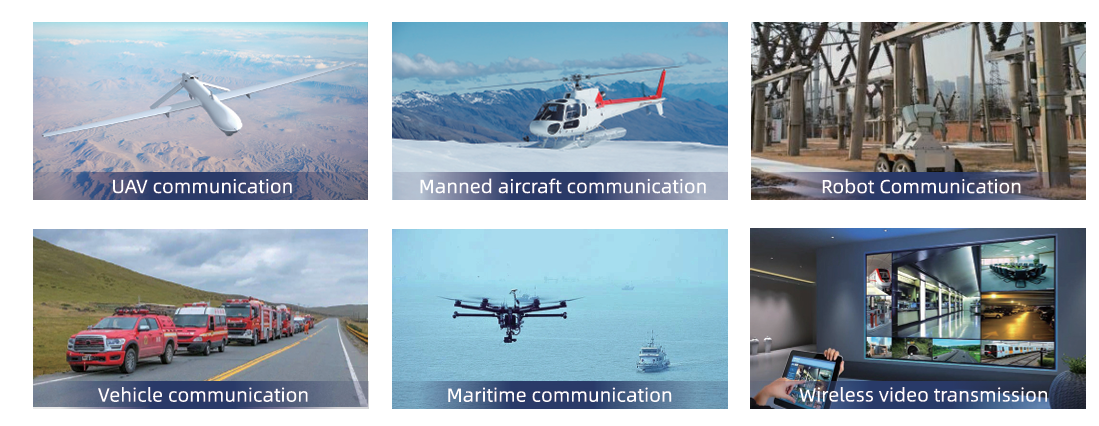
Sourcing long-range flight platforms requires selecting equipment built to handle rigorous industrial operational cycles. To see how top-tier long-range models manage wind resistance and data delivery, you can explore our technical review of the fixed wing drones market options.
When selecting your active fleet, ensure the core imaging payload can handle long-distance mapping without losing resolution over distance. Consulting our detailed evaluation of the long range drone with camera configurations highlights the importance of matching high-megapixel sensors with active 3-axis mechanical gimbals to keep your imagery perfectly stable across turbulent weather layers. To explore premium all-weather platforms engineered specifically to handle tough industrial infrastructure mapping and border surveillance pipelines, you can browse our high-demand commercial fixed wing uav catalog to secure turnkey, defense-grade flight arrays.
6. Frequently Asked Questions (FAQs)
7. Industrial Safety and Regulatory References
For official civil aviation codes, vehicle manufacturing safety frameworks, and international aerospace data, consult these authoritative organizations:
- Federal Aviation Administration (FAA). 14 CFR Part 108 and Part 146 Beyond Visual Line of Sight (BVLOS) Regulatory Framework updates. U.S. Department of Transportation.
- European Union Aviation Safety Agency (EASA). Specific Operations Risk Assessment (SORA) Standard Scenario Guidelines for Unmanned Aircraft Systems. Cologne, Germany.
- International Organization for Standardization (ISO). ISO/TC 20/SC 16 Unmanned Aircraft Systems – Commercial Manufacturing and Safety Standard Infrastructure.