


Unmanned Aerial Vehicles (UAVs) have fundamentally revolutionized the modern battlespace. From covert, hand-launched tactical reconnaissance systems to high-altitude strategic bombers that linger in the stratosphere for days, understanding the various types of military drone is crucial for defense contractors, procurement officers, and tactical commanders. As asymmetric warfare and beyond visual line of sight (BVLOS) operations become the standard in global defense strategies, the precise categorization of these systems dictates mission planning, airspace integration, and advanced payload engineering.
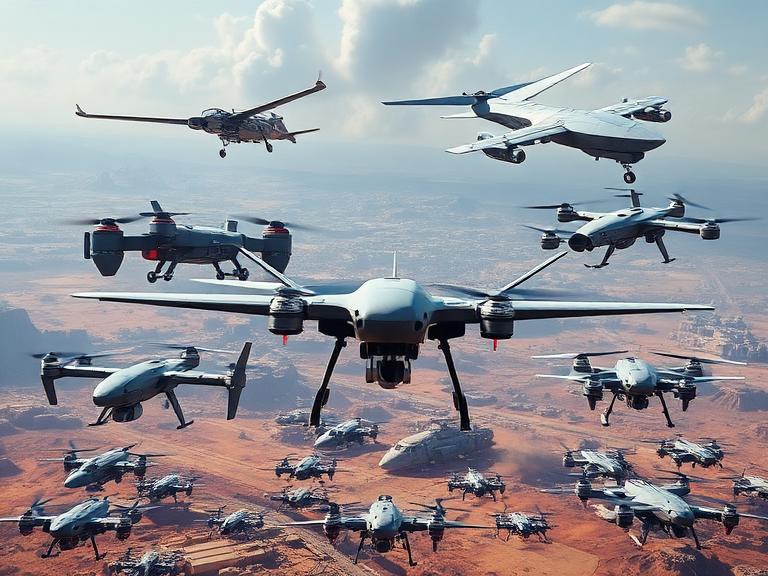
From our experience as a national-level high-tech enterprise transformed from a prestigious state-owned research institute, we have observed a dramatic shift in how global defense forces deploy unmanned assets. At ChinaMoneypro UAV, we possess deep roots in defense-grade engineering. We specialize in the rigorous R&D and manufacturing of advanced unmanned platforms and integrated sensing-communication solutions. Headquartered in one of China’s premier innovation hubs, Moneypro is among the rare full-stack providers offering complete UAV systems, high-efficiency engines, stabilized gimbals, phased-array radar, secure data links, and anti-jamming communication technologies.
We believe true manufacturing excellence lies in Speed, Precision, and Responsibility. We never outsource, and we never compromise. From bare-board PCB fabrication to complete OEM integration, every circuit, every airframe, and every connection is manufactured within our own state-of-the-art facilities, ensuring that our global partners receive faster delivery, uncompromising quality, and absolute reliability.
In this comprehensive and authoritative guide, we will analyze the different types of military drone available today. We will examine internationally recognized classification frameworks, structural wing configurations, and mission-specific operational roles, providing a detailed roadmap for modern defense procurement.
Table of Contents
- 1. Understanding International Classification Frameworks
- 2. The U.S. Department of Defense (DoD) Group System
- 3. The NATO Classification Framework
- 4. Types of Military Drone by Wing Configuration
- 5. Types of Military Drone by Mission Role
- 6. The Technological Ecosystem of Military Drones
- 7. Summary Table: Classification of Military Drones
- 8. Frequently Asked Questions (FAQs)
- 9. Industry and Government References
1. Understanding International Classification Frameworks
When analyzing the myriad types of military drone in operation, it is essential to establish a standardized, globally recognized framework. Without a rigid classification matrix, the immense spectrum of unmanned aircraft—ranging from 250-gram quadcopters to 14,000-pound jets—becomes impossible to organize strategically. The two most authoritative and widely referenced classification systems are established by the United States Department of Defense (DoD) and the North Atlantic Treaty Organization (NATO). Both frameworks categorize drones based on critical operational metrics such as maximum gross takeoff weight (MGTW), operational altitude, and cruising speed.
2. The U.S. Department of Defense (DoD) Group System
The U.S. DoD categorizes the types of military drone into five distinct groups. This system allows military planners to accurately assign airspace coordination and logistical support to unmanned assets.
- Group 1: Micro and Small UAVs (0-20 lbs, Below 1,200 ft AGL, Under 100 knots). These are typically hand-launched systems utilized by ground infantry for immediate squad-level situational awareness. They are rapidly deployable, battery-powered, and feature low acoustic signatures.
- Group 2: Medium Tactical UAVs (21-55 lbs, Below 3,500 ft AGL, Under 250 knots). Usually catapult-launched or utilizing hybrid VTOL technology, these drones provide extended tactical reconnaissance for battalion-level operations.
- Group 3: Large Tactical UAVs (56-1,320 lbs, Below 18,000 ft MSL, Under 250 knots). Offering significant endurance and substantial payload capacity, these systems carry advanced electro-optical/infrared (EO/IR) sensors, laser designators, and communication relays.
- Group 4: Persistent ISR and Strike (Over 1,320 lbs, Below 18,000 ft MSL, Any speed). These are full-scale unmanned aircraft requiring dedicated runway access or massive pneumatic launchers. They are heavily armed and conduct theater-wide intelligence, surveillance, and reconnaissance (ISR) as well as precision strike missions.
- Group 5: High Altitude Long Endurance (HALE) (Over 1,320 lbs, Above 18,000 ft MSL, Any speed). These are strategic, theater-level assets. Group 5 drones operate in the stratosphere, providing global ISR, maritime patrol, and strategic bombing capabilities with endurance measured in days rather than hours.
3. The NATO Classification Framework
To ensure interoperability among allied forces, NATO categorizes the types of military drone into three primary classes, directly aligning operational capabilities with military command echelons.
- Class I (Less than 150 kg): Deployed at the tactical sub-unit level. This class is further subdivided into Micro, Mini, and Small drones. They offer localized intelligence in fast-moving, dynamic battlefield environments.
- Class II (150 kg to 600 kg): Operating at the brigade level, Class II drones carry sophisticated targeting sensors, radar systems, and beyond-line-of-sight (BLOS) data links to support medium-range operations.
- Class III (Over 600 kg): Representing the pinnacle of unmanned engineering, Class III systems are operational and strategic platforms. They execute long-duration ISR, complex electronic warfare, and precision strike operations across thousands of kilometers.
4. Types of Military Drone by Wing Configuration
Beyond weight and altitude restrictions, the different types of military drone are distinctly defined by their aerodynamic structures. From an engineering standpoint, the airframe design dictates the physical limitations of the operational envelope.
Fixed-Wing UAVs
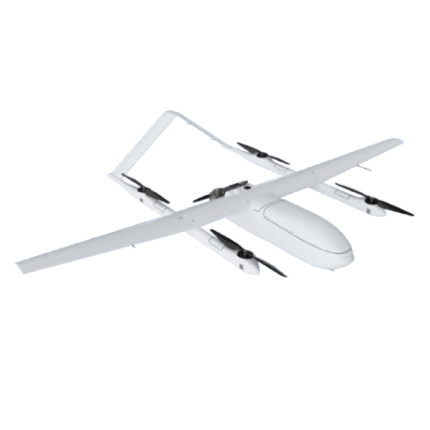
For missions requiring vast area coverage, extreme altitudes, and extended flight durations, fixed-wing systems remain the undisputed gold standard. By utilizing aerodynamic lift generated by the wings, these aircraft consume exponentially less fuel or battery power in forward flight compared to multirotors. We highly recommend exploring our top-tier fixed wing drones for military operations requiring high-speed transit and loitering capabilities. Because they can carry substantial payloads over vast distances, they are frequently outfitted as a long range drone with camera setup, delivering real-time, high-definition thermal and optical data to secure command centers.
Hybrid Fixed-Wing VTOL
One of the most rapidly expanding types of military drone is the hybrid Vertical Takeoff and Landing (VTOL) fixed-wing aircraft. These advanced systems seamlessly combine the hovering and runway-independent launch capabilities of a multirotor with the speed and endurance of a traditional fixed-wing plane. From our experience, deploying a bvlos fixed wing uav with VTOL capabilities drastically reduces the logistical footprint of forward-operating bases, eliminating the need for cumbersome pneumatic catapults, arresting wires, or recovery nets.
Rotary-Wing and Multirotor Drones
For urban warfare, ship-to-shore logistics, and close-quarters structural inspections, multirotors (quadcopters, hexacopters) and single-rotor helicopters provide unmatched hovering stability. While their aerodynamic profile results in shorter endurance, their capacity to maneuver in dense, obstructed environments makes them a critical tactical asset for special operations forces.
5. Types of Military Drone by Mission Role
The structural classification and payload capacity of a drone naturally inform its mission profile. The modern multi-domain battlespace requires highly specialized systems for distinct operational roles.
Intelligence, Surveillance, and Reconnaissance (ISR)
The vast majority of unmanned assets globally are dedicated exclusively to ISR. These types of military drone gather actionable intelligence through synthetic aperture radar (SAR), signals intelligence (SIGINT), and advanced electro-optical payloads. In border patrol, artillery spotting, and strategic mapping, the precision required is immense. For these tasks, we engineer solutions similar to a highly calibrated fixed wing drone for photogrammetry, ensuring that ground commanders receive topographically accurate, real-time 3D models of the battlefield.
Unmanned Combat Aerial Vehicles (UCAV) and Loitering Munitions
UCAVs are formidable platforms designed to carry out precision strikes using air-to-ground missiles and guided bombs. A sub-category that has gained massive tactical prominence in recent conflicts is the loitering munition, often referred to as a “kamikaze drone.” These specific types of military drone orbit an objective area, identify high-value targets, and autonomously dive into them, detonating a highly explosive integrated warhead.
Logistics, Cargo, and Electronic Warfare (EW)
Logistical drones are emerging as vital tools to resupply troops in heavily contested environments, delivering ammunition, blood plasma, and rations where manned helicopters cannot safely travel due to anti-aircraft threats. Additionally, Electronic Warfare (EW) drones are deployed to jam enemy communications, spoof radar systems, and act as autonomous decoys to ensure air superiority for manned fighter squadrons. Many of the underlying technologies used in these military heavy-lift and relay systems are also successfully integrated into our commercial fixed wing uav platforms for civilian industrial applications.
6. The Technological Ecosystem of Military Drones
Creating a reliable military drone requires significantly more than assembling an aerodynamic airframe; it requires a seamlessly integrated technological ecosystem. Because ChinaMoneypro UAV boasts deep roots in defense-grade engineering, we understand that an unmanned system is only as effective as its weakest component. From anti-jamming GNSS modules to AES-256 encrypted data links, autonomous flight controllers, and highly efficient heavy-fuel engines, we engineer the entire technology stack in-house.
We highly recommend that military procurement officers and defense contractors prioritize manufacturers who offer full-chain traceability. Sourcing systems from full-stack developers eliminates the cybersecurity vulnerabilities, integration failures, and supply chain disruptions inherently associated with third-party outsourced components.
7. Summary Table: Classification of Military Drones
To simplify the complex categorization of the different types of military drone, we have provided a comparative summary table based on the United States DoD grouping system.
| DoD Group | Max Weight (lbs) | Operating Altitude | Typical Airspeed | Primary Operational Role |
|---|---|---|---|---|
| Group 1 | 0 – 20 lbs | Below 1,200 ft AGL | Under 100 knots | Squad-level Tactical Reconnaissance, Over-the-hill ISR |
| Group 2 | 21 – 55 lbs | Below 3,500 ft AGL | Under 250 knots | Battalion-level Surveillance, Target Acquisition |
| Group 3 | 56 – 1,320 lbs | Below 18,000 ft MSL | Under 250 knots | Brigade-level ISR, Communications Relay, Light Strike |
| Group 4 | Over 1,320 lbs | Below 18,000 ft MSL | Any speed | Theater-wide Persistent ISR, Heavy Precision Strike |
| Group 5 | Over 1,320 lbs | Above 18,000 ft MSL | Any speed | Global Strategic ISR, High-Altitude Maritime Patrol (HALE) |
8. Frequently Asked Questions (FAQs)
What is the difference between a UAV and a UAS?
While often used interchangeably, there is a technical distinction. A UAV (Unmanned Aerial Vehicle) refers solely to the aircraft itself. A UAS (Unmanned Aircraft System) encompasses the entire ecosystem, including the UAV, the Ground Control Station (GCS), the data links, the payload, and the remote operators.
Why are hybrid VTOL fixed-wing drones becoming so popular in military applications?
From our engineering experience, hybrid VTOLs solve the most significant logistical hurdle of traditional fixed-wing drones: the need for a runway. A VTOL drone can launch vertically from a confined jungle clearing or the deck of a naval vessel, transition into highly efficient forward flight to cover vast distances, and return to land vertically without requiring arresting nets.
What defines a loitering munition among the types of military drone?
A loitering munition is a specialized combat drone designed to orbit (loiter) over a target area for an extended period, searching for enemy assets such as radar installations or armored vehicles. Once a target is identified, the drone acts as the weapon itself, diving into the target and detonating an explosive payload.
How do military drones prevent signal jamming and cyber hijacking?
Defense-grade UAVs utilize robust anti-jamming GNSS antennas, frequency-hopping spread spectrum (FHSS) communication links, and AES-256 encryption. At ChinaMoneypro UAV, we design our communication protocols from the ground up to ensure our systems remain resilient in heavy electronic warfare environments.
9. Industry and Government References
To further explore the operational frameworks and technical specifications governing unmanned aerial systems in defense applications, we recommend consulting the following authoritative government and academic resources:
- U.S. Department of Defense (DoD) – Official directives on Unmanned Aircraft System (UAS) group classifications and procurement standards.
- North Atlantic Treaty Organization (NATO) – Standardization agreements (STANAG) regarding the interoperability and classification of Class I, II, and III unmanned assets.
- Federal Aviation Administration (FAA) – Regulatory frameworks concerning the integration of large military and commercial UAS into national airspace architectures.