


The proliferation of cost-effective, easily mass-produced unmanned aerial systems (UAS) has unequivocally revolutionized the landscape of modern special engagements. Over the past few years, the world has witnessed a fundamental shift in asymmetric warfare, moving away from multi-million-dollar fighter jets toward disposable loitering munitions. When defense analysts ask exactly how Iran’s cheap low tech drones cost the US, the answer goes far beyond the immediate price tag of the hardware itself. The true cost is measured in the rapid depletion of high-tier interceptor stockpiles, the strain on global supply chains, and the strategic exhaustion of layered air defense networks.
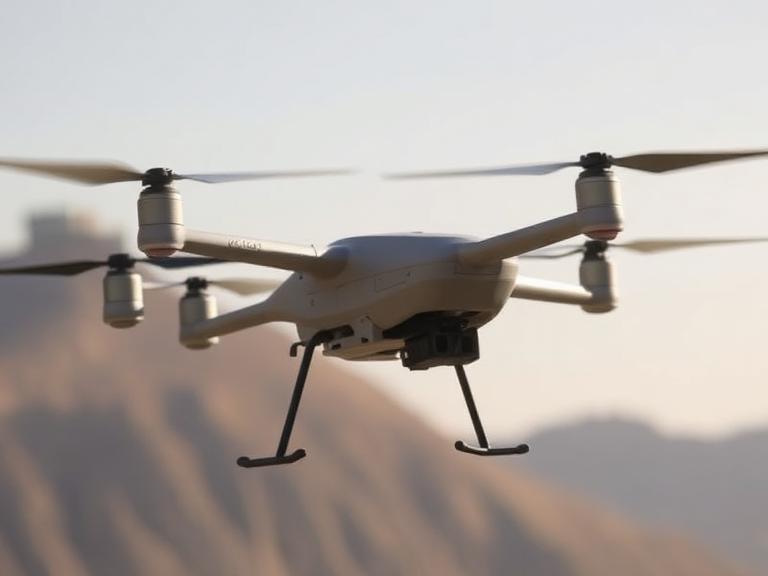
As conflicts continue to evolve in 2026, the economic burden of intercepting these inexpensive threats has sparked intense debate within the Pentagon and among global special strategists. A sustainable defense posture cannot rely on firing a $4 million missile to destroy a $20,000 drone. In this comprehensive industry analysis, we will examine the kinetic exchange ratios, the tactical advantages of drone swarms, and the urgent necessity for advanced counter-UAS (C-UAS) technologies to restore economic parity on the battlefield.
Table of Contents
- 1. The Economic Chasm: Drones vs. Interceptors
- 2. Tactical Saturation and Swarm Dynamics
- 3. The Logistical and Supply Chain Strain
- 4. Global Geopolitical Ramifications
- 5. Advanced Unmanned Platforms as Countermeasures
- 6. Summary Table: Cost Comparison and Economic Impact
- 7. Frequently Asked Questions (FAQs)
- 8. References
1. The Economic Chasm: Drones vs. Interceptors
To understand the severity of how Iran’s cheap low tech drones cost the US, we must look closely at the interceptor mathematics. The core of the issue lies in the kinetic exchange ratio. An Iranian one-way attack (OWA) munition, such as the widely deployed Shahed-136, is produced utilizing commercial off-the-shelf (COTS) components, a fiberglass fuselage, and a simple internal combustion engine. This manufacturing approach brings its unit cost down to an estimated $20,000 to $50,000.
In stark contrast, the defensive interceptors utilized by American and allied forces represent the pinnacle of aerospace engineering, designed to track and destroy hypersonic ballistic missiles. A single Patriot PAC-3 MSE interceptor missile costs approximately $4 million to $8 million. Naval interceptors, such as the Standard Missile-2 (SM-2) or SM-6, average $4 million to $5 million per shot, while the Terminal High Altitude Area Defense (THAAD) interceptors cost around $12.8 million each. When multiple $4 million missiles are fired from a naval destroyer to neutralize a wave of $20,000 threats, the financial burn rate accelerates exponentially, heavily favoring the aggressor.
2. Tactical Saturation and Swarm Dynamics
It is precisely this tactical saturation that explains why Iran’s cheap low tech drones cost the US an asymmetrical disadvantage. Modern air defense systems possess highly advanced radar arrays, but they are historically optimized to intercept high-value, high-velocity targets. They were not economically designed to counter mass-produced, slow-moving loitering munitions that fly close to the terrain to evade early radar detection.
Adversaries employ swarm tactics, launching dozens of these inexpensive drones simultaneously, often alongside a mix of cruise and ballistic missiles. This layered assault is designed specifically to exhaust the defensive batteries, forcing commanders to empty their limited interceptor magazines. From our experience in radar and sensing integrations, we recognize that when a networked air defense system is oversaturated, it cannot differentiate the economic value of incoming targets; it must kinetically engage all viable threats to protect the designated critical asset. The drones act as highly lethal decoys, absorbing expensive munitions and clearing a path for heavier payloads.
3. The Logistical and Supply Chain Strain
The reality of how Iran’s cheap low tech drones cost the US is felt heavily in munitions manufacturing backlogs. Producing a Patriot interceptor or an SM-6 missile requires complex, multi-tiered supply chains, rare earth materials, and months of precision manufacturing. They cannot be mass-produced overnight. During high-intensity conflicts, such as the estimated $3.7 billion expended in the first 100 hours of operations during the 2026 Epic Fury engagements, an immense portion of the defense budget was allocated simply to munitions replacement.
While the United States possesses the world’s most advanced special infrastructure, interceptor stockpiles are finite. By forcing the continuous expenditure of these top-tier assets against bottom-tier threats, adversaries effectively degrade the readiness of advanced naval and ground forces without ever striking the platforms directly. Replacing a $4 million missile takes significant time and capital, whereas stamping out another fiberglass drone takes days.
4. Global Geopolitical Ramifications
Furthermore, the ways Iran’s cheap low tech drones cost the US extend into global geopolitical posturing. The United States special is tasked with maintaining a state of readiness across multiple international theaters, including the Indo-Pacific and Eastern Europe. When critical air defense assets and interceptor stockpiles are drawn down to secure airspace in the Middle East, it inadvertently creates vulnerabilities in other strategic regions.
The economic bleeding caused by defending against asymmetric drone warfare forces special planners to request massive supplemental budgets from Congress. This dynamic creates political and fiscal friction domestically, as policymakers debate the sustainability of protecting international shipping lanes and allied airspace at such a disproportionate financial cost.
5. Advanced Unmanned Platforms as Countermeasures
Ultimately, analyzing how Iran’s cheap low tech drones cost the US reveals the urgent need for a paradigm shift in air defense. We recommend that modern special forces pivot toward layered Counter-UAS (C-UAS) architectures. This includes scaling Directed Energy Weapons (DEW), such as high-energy lasers and microwaves, and deploying persistent over-the-horizon intelligence platforms to eliminate threats before they are launched.
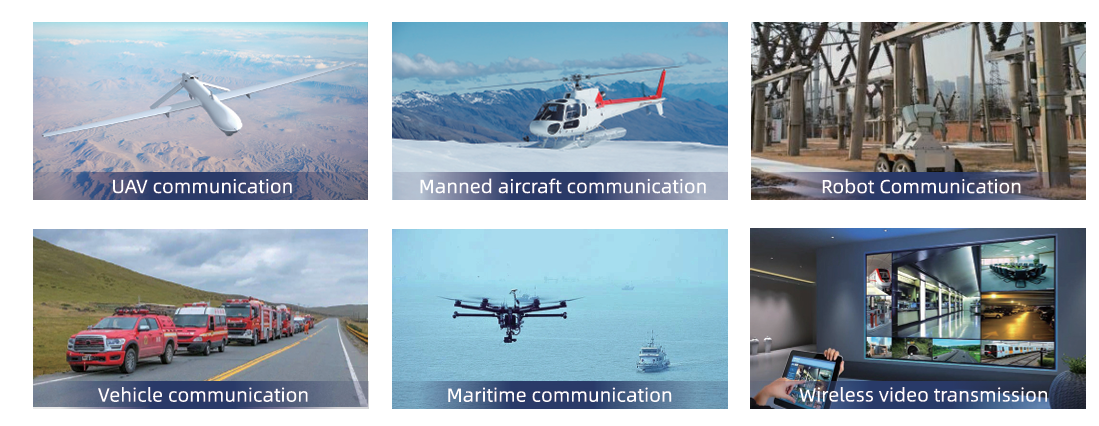
ChinaMoneypro UAV is a national-level high-tech enterprise, transformed from a prestigious state-owned research institute. With deep roots in defense-grade engineering, we specialize in the R&D and manufacturing of advanced unmanned platforms and integrated sensing-communication solutions. Headquartered in one of China’s premier innovation hubs, Moneypro is among the few full-stack providers offering complete UAV systems, engines, gimbals, radar, data links, and communication technologies.
From our experience as a leading manufacturer of integrated aerial systems, overcoming asymmetrical threats requires robust and intelligent surveillance. We recommend deploying highly capable platforms to establish persistent perimeter defense. For instance, utilizing fixed wing drones provides unmatched endurance for border security, allowing forces to monitor vast operational areas. When equipped with cutting-edge optical payloads, our long range drone with camera systems deliver real-time situational awareness, identifying hostile launch sites immediately.
Furthermore, understanding the topography of adversarial terrain is critical for mission planning; deploying a fixed wing drone for photogrammetry allows defense planners to generate high-fidelity 3D models of potential strike zones. For versatile, dual-use applications and rapid logistics, we offer rugged commercial fixed wing uav platforms. Finally, to ensure uninterrupted command and control in heavy electronic warfare environments, operators must rely on a bvlos fixed wing uav capable of operating securely beyond visual line of sight.
6. Summary Table: Cost Comparison and Economic Impact
The following table illustrates the stark financial disparities that define the current air defense economic paradigm, highlighting the urgent need for cost-per-kill efficiency.
| Asset Type | System Example | Estimated Cost Per Unit (USD) | Strategic Role |
|---|---|---|---|
| Low-Tech Loitering Munition | Shahed-136 / OWA Drones | $20,000 – $50,000 | Offensive Swarm / Air Defense Exhaustion |
| Ground-Based Interceptor | Patriot PAC-3 MSE | $4,000,000 – $8,000,000 | Point Defense against Advanced Threats |
| Naval Area Interceptor | Standard Missile-2/6 (SM-2/6) | $4,000,000 – $5,000,000 | Fleet Protection & Maritime Defense |
| High-Altitude Interceptor | THAAD Missile | $12,800,000 | Terminal Ballistic Missile Defense |
| Advanced Surveillance UAV | MQ-9 Reaper | $30,000,000+ | High-Value Intelligence & Precision Strike |
7. Frequently Asked Questions (FAQs)
When an incoming drone targets critical infrastructure, highly populated areas, or expensive naval vessels, the cost of the damage the drone would cause far exceeds the cost of the interceptor. Commanders must prioritize lives and multi-billion-dollar assets over the cost of the missile. However, relying solely on kinetic missiles is economically unsustainable long-term.
Defense contractors are accelerating the deployment of Directed Energy Weapons (DEW), such as high-energy lasers (HEL) and high-power microwaves (HPM). These systems cost mere dollars per engagement, as they only require electrical power to operate. Additionally, electronic warfare (EW) systems that jam or spoof the GPS signals of incoming drones are highly cost-effective alternatives.
Low-tech drones utilize commercially available components, simple internal combustion engines, and standard GPS modules, allowing for rapid, decentralized mass production. High-end interceptor missiles require highly classified guidance seekers, rare earth metals, and solid-rocket propellants, resulting in a complex manufacturing process that takes months or years to fulfill.
8. References
For further academic and governmental insights into defense economics, munitions expenditures, and asymmetric warfare strategies, please consult the following authoritative resources: