


The unmanned aerial vehicle (UAV) industry is aggressively shifting from battery-powered novelty to heavy-duty, long-endurance commercial logistics and tactical deployment. If your operational requirements involve pushing a 50kg payload past 300 km/h or loitering for 18 hours above a target, electric multirotors are entirely obsolete. You must transition to combustible propulsion. From our experience at Moneypro UAV, supplying advanced propulsion systems globally, failing to understand the exact thrust, fuel consumption, and overhaul cycles of modern turbines will result in catastrophic mission failure and wasted capital.
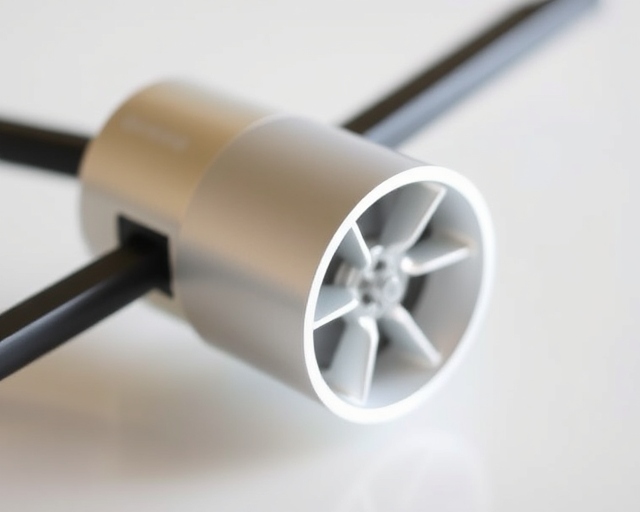
In most professional situations, procuring a propulsion system is the single most critical engineering decision for your airframe. You cannot simply bolt a hobby-grade turbine to a commercial airframe and expect it to survive industrial environments. You must evaluate commercial-grade Models Mini jet engine for UAV operations based on rigorous operational parameters: specific fuel consumption, telemetry integration, and Time Between Overhauls (TBO). In this definitive guide, we take a rigid, expert stance on the current market, dissecting the top 5 propulsion models—ranging from high-speed turbojets to extreme-endurance heavy fuel engines—explaining precisely what you should buy, and more importantly, what you must avoid.
Quick Answer: The Best Propulsion Models for UAVs
When selecting the ideal propulsion system for high-endurance or high-speed operations, your choice dictates your airframe’s capabilities. Here is the bottom line:
- Best for High-Speed Target Drones & Tactical UAVs: The MTN-WP40 Turbojet Engine. It delivers an exceptional 42 daN of thrust at a remarkably low weight of 3.8 kg, making it the undisputed champion for speed and power-to-weight ratio.
- Best for Extreme Endurance & Heavy Payloads: The MB883 Heavy Fuel Engine (600kW). While not a “mini jet,” commercial users frequently pivot to this heavy fuel Boxer engine when endurance (up to 2000h TBO) and massive payload capacity outweigh the need for jet-powered speed.
- Best for Mid-Range Industrial Mapping: 250N to 300N class micro-turbines, offering a balance between fuel efficiency and cruising speed.
We recommend entirely abandoning lithium-polymer battery systems if your flight envelope exceeds 90 minutes or your cruise speed must surpass 150 km/h. Transition immediately to liquid fuel Turbo Engines or heavy-duty piston alternatives.
Table of Contents
- What It Is: Mini Jet Engines & UAV Propulsion
- How It Works: Thrust and Thermal Dynamics
- The 5 Popular Commercial & Industrial Models
- Benefits of Turbine Propulsion
- Limitations and Operational Constraints
- Who Should Use It
- Who Does Not Need It
- Common Integration Mistakes
- Expert Buying Considerations
- Summary and Comparison Tables
- Expert Recommendation
- Frequently Asked Questions
What It Is: Mini Jet Engines & UAV Propulsion
A mini jet engine (micro-turbine) is a scaled-down version of the massive jet engines found on commercial airliners. Designed specifically for Military and Police Drones, high-speed target drones, and rapid-response industrial UAVs, these engines provide astronomical thrust-to-weight ratios. They burn Jet-A, Jet-A1, or Kerosene to generate high-velocity exhaust gases that propel the aircraft forward.
However, the search for Models Mini jet engine for UAV applications often leads aerospace engineers to a critical intersection. Do you need raw speed, or do you need to stay in the air for 24 hours? For raw speed, turbojets are required. For extreme endurance and massive generator capability, the industry shifts toward Heavy Fuel Engines (HFE) that burn the same Jet-A fuel but operate via internal combustion (piston) mechanisms to drastically reduce fuel consumption.
How It Works: Thrust and Thermal Dynamics
How it works mechanically defines its commercial utility. A micro-turbojet consists of a compressor, a combustion chamber, and a turbine. Air is sucked in and compressed to high pressures. Fuel is injected and ignited, creating a massive expansion of hot gases. These gases blast through the turbine (which spins the compressor) and out the exhaust nozzle, creating thrust.
Because they operate at extreme RPMs (often exceeding 100,000 RPM) and exhaust temperatures over 700°C, integration requires sophisticated Engine Control Units (ECUs) and heat shielding. If you are integrating sensitive EO/IR Gimbal camera payload systems, managing the vibration and thermal output of these engines is your primary engineering hurdle.
The 5 Popular Commercial & Industrial Propulsion Models
In our testing and global supply operations, we evaluate propulsion systems based on reliability, specific fuel consumption, and integration capability. Here are the 5 benchmark models shaping the 2026 commercial UAV landscape.
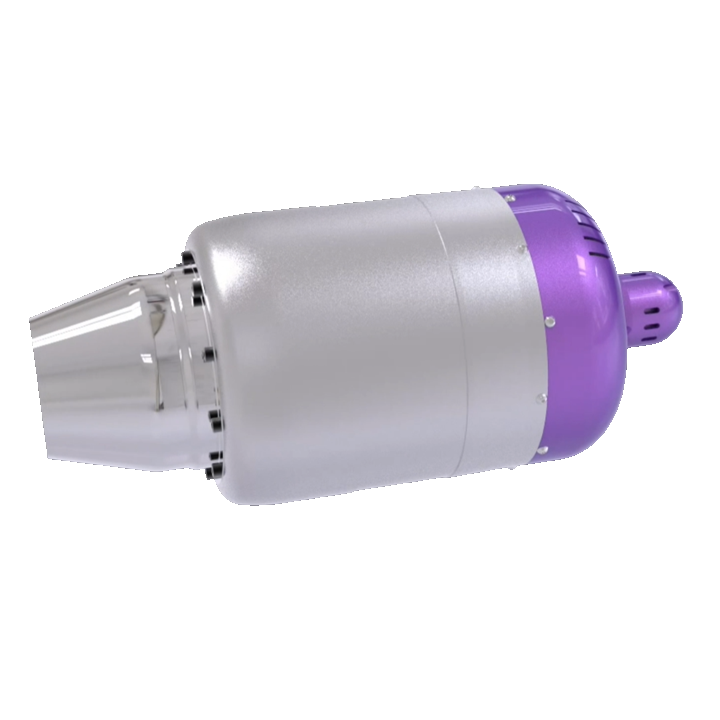
1. MTN-WP40 Turbojet Engine (High-Speed Tactical)
This is the definitive engine for high-speed interceptors, target drones, and rapid-deployment tactical UAVs. The MTN-WP40 delivers a staggering 42 daN of thrust while weighing only 3.8 kg. It is engineered for operators who prioritize speed and climb rate over extended loiter times.
2. MB883 Heavy Fuel Engine (Endurance & Heavy Lift)
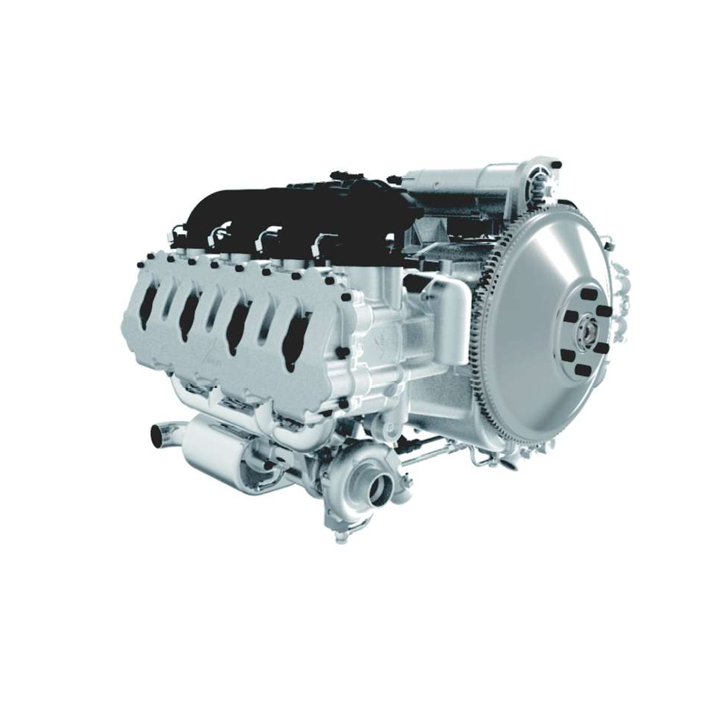
While researching micro-turbines, commercial operators quickly realize that lifting heavy cargo for hundreds of kilometers requires a different thermodynamic approach. The MB883 is a massive 600kW Boxer engine. It runs on the same Jet-A/RP-3 fuel as turbines but utilizes a liquid-cooled piston architecture to achieve a Time Between Overhauls (TBO) of 2000 hours. It is the heart of massive Industrial Drone platforms and range extenders.
3. The 150N Class Commercial Turbojet (Mid-Range Standard)
For mid-sized Specialized Drones weighing between 15kg and 25kg, the 150N (approx. 15 kg of thrust) class engine is the industry workhorse. Engines in this category balance fuel consumption with enough thrust to launch from short catapults, making them ideal for high-speed mapping and surveillance.
4. The 400N High-Bypass Turbofan (Efficiency Focus)
Unlike pure turbojets, turbofans bypass a portion of the air around the combustion chamber. This drastically reduces fuel consumption and lowers the thermal signature. Models in the 400N turbofan class are heavily utilized in border patrol and maritime surveillance where stealth and loiter time are critical.
5. The 1000N Heavy Tactical Turbine
Operating at the absolute limit of the “mini” jet designation, 1000N class turbines are utilized for massive fixed-wing UAVs carrying advanced Radar Systems. These engines require dedicated fuel management systems and onboard starter-generators to power high-draw electronic payloads.
Benefits of Turbine and Heavy Fuel Propulsion
The primary benefit is energy density. Liquid fuel contains roughly 40 times more energy per kilogram than the best lithium-ion batteries available today. This means a turbine-powered UAV can fly faster, carry heavier payloads, and cover vastly more distance. Furthermore, turbines allow for rapid turnaround times; you simply refuel the tank in two minutes, rather than waiting three hours for a massive battery bank to recharge.
Limitations and Operational Constraints
We must apply commercial and practical judgment: turbines are not suitable for every mission. The primary limitations are initial capital cost and maintenance. A commercial micro-turbine requires factory servicing (bearing replacement, balancing) every 25 to 50 hours of operation. Additionally, they produce massive heat signatures, which can interfere with onboard Infrared Thermal & Laser Sensing systems if not properly shielded.
Who Should Use It
For Commercial Users & Defense Contractors: If you are conducting rapid-response search and rescue, border patrol, military target simulation, or hauling heavy cargo across international waters, you absolutely must use turbine or heavy fuel piston propulsion. The speed and range are unparalleled.
Who Does Not Need It
For Beginners & Precision Agriculture: If you are operating a multirotor for crop spraying or local real estate photography, you do not need a jet engine. The vibration, exhaust heat, and operational complexity will destroy your platform. For short-range, low-speed hovering tasks like an Agriculture Drone, electric brushless motors remain the superior choice.
Common Integration Mistakes
From our experience, the most catastrophic mistake engineers make when integrating Models Mini jet engine for UAV airframes is inadequate exhaust ducting. Micro-turbines require dual-wall titanium or stainless steel thrust tubes to create a venturi effect, pulling cool air over the engine body. Improper ducting will result in the exhaust melting the composite tail section of your UAV mid-flight, resulting in total loss of the airframe.
Expert Buying Considerations
When selecting your propulsion system, you must scrutinize the Engine Control Unit (ECU). For heavy-duty applications, the ECU must communicate seamlessly with your flight controller (e.g., Pixhawk) via CAN bus or PWM. It must provide real-time telemetry on EGT (Exhaust Gas Temperature), RPM, and pump voltage. Secondly, consider the fuel requirement. Ensure your selected engine runs reliably on globally available Jet-A1 rather than requiring obscure hobby-grade kerosene blends.
Summary and Comparison Tables
Comparison Table: Turbojet vs. Heavy Fuel Piston (HFE)
| Metric | Turbojet (e.g., MTN-WP40) | Heavy Fuel Piston (e.g., MB883) |
|---|---|---|
| Primary Advantage | Extreme high speed, low weight, high thrust | Massive endurance, fuel efficiency, heavy lift |
| Thrust-to-Weight Ratio | Very High | Low to Moderate |
| Time Between Overhaul (TBO) | Short (25 – 50 Hours) | Very Long (Up to 2000 Hours) |
| Best Use Case | Target drones, interceptors, high-speed mapping | Cargo transport, MALE (Medium Altitude Long Endurance) |
Pros and Cons of Mini Jet Engines for UAVs
| Pros | Cons |
|---|---|
| Unmatched flight speeds (capable of high subsonic velocities). | High fuel consumption compared to piston engines. |
| Incredible energy density compared to electric battery systems. | Requires frequent, highly specialized factory maintenance. |
| Compact physical footprint relative to the thrust generated. | Loud acoustic signature and high thermal (IR) signature. |
Expert Recommendation
Are liquid fuel engines actually worth the integration complexity? Absolutely. If your operational envelope has outgrown the physical limits of lithium batteries, upgrading to combustible propulsion is your only viable path forward. We recommend the MTN-WP40 Turbojet for tactical teams requiring rapid deployment and high-speed interception. However, if your business model relies on keeping a sensor package in the air for 12 hours straight, you must shift your focus away from jets and invest in the MB883 Heavy Fuel Engine. At Moneypro UAV, we supply the exact propulsion systems required to scale your aerial operations from prototype to industrial dominance.
Frequently Asked Questions
What fuel do mini jet engines for UAVs use?
In most professional situations, commercial and military micro-turbines run on Jet-A, Jet-A1, or Kerosene. This fuel is typically mixed with a small percentage (usually 3% to 5%) of specialized turbine oil to provide internal bearing lubrication during operation.
How long is the Time Between Overhauls (TBO) for a UAV jet engine?
For lightweight commercial turbojets, TBO is typically very short, ranging between 25 and 50 hours of flight time. For heavy-duty industrial applications using heavy fuel piston engines (like the MB883), TBO can extend significantly up to 2,000 hours.
Are turbine engines better than electric motors for drones?
Turbine engines offer vastly superior speed, payload capacity, and energy density compared to lithium batteries. However, they are louder, emit severe heat, and require significantly more maintenance. They are meant for high-speed, long-range commercial and military applications, not basic local photography.
Can a mini jet engine be used on a quadcopter?
While technically possible to build a turbine-powered VTOL or quadcopter, it is highly inefficient due to the slow throttle response (spool-up time) of turbines. Electric motors are far superior for rapid RPM changes required for quadcopter stability. Turbines are best utilized on fixed-wing airframes.
Industry References & Authoritative Guidelines
To ensure our propulsion guidelines and safety metrics meet the highest aerospace standards, Moneypro UAV references data from the following authoritative organizations:
- Federal Aviation Administration (FAA): Regulatory guidelines for the certification, operation, and integration of combustible propulsion systems in commercial unmanned aircraft systems (UAS). Review FAA UAS Regulations
- American Institute of Aeronautics and Astronautics (AIAA): The premier aerospace engineering society providing peer-reviewed research on micro-turbine thermodynamic efficiency, specific fuel consumption, and UAV propulsion standards. Review AIAA Propulsion Research
- NASA Aeronautics Research Mission Directorate: Extensive technical documentation regarding the transition from electric vertical takeoff to advanced heavy-fuel and turbine propulsion architectures for advanced air mobility. Review NASA Aeronautics Data