


In aerospace engineering and unmanned aerial vehicle (UAP) development, pushing the boundaries of thrust and velocity is a continuous arms race. When aviation professionals, defense contractors, and commercial drone operators assess propulsion systems, calculating the true operational limits of turbine mechanics is critical. You cannot design a high-speed target drone or a rapid-intercept UAV without first understanding the absolute thermal and aerodynamic barriers of your powerplant.
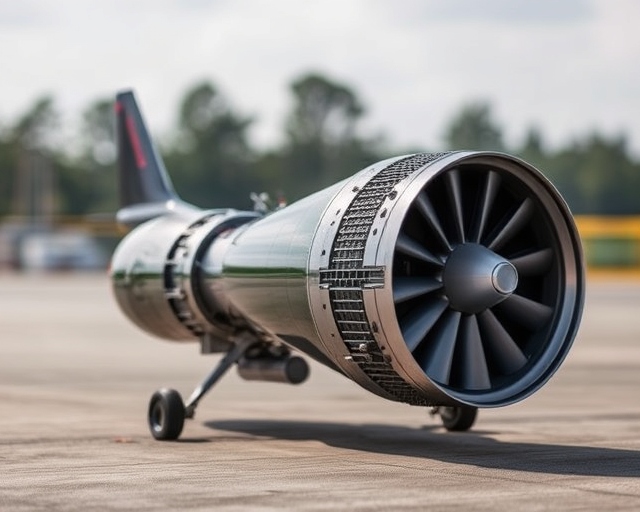
From our experience at Moneypro UAV equipping enterprise and defense clients, asking what is the maximum speed a jet engine can reach requires distinguishing between theoretical physics and operational reality. A conventional turbojet engine—the core technology powering most high-speed aerial platforms—is ultimately limited by the structural integrity of its compressor blades and the physics of supersonic air intake. In most professional situations, pushing a standard turbine beyond Mach 3.2 results in catastrophic engine failure due to compressor stall and thermal melting. In this comprehensive guide, we dissect the absolute speed limits of jet propulsion, explain the mechanics of achieving supersonic velocities, and provide commercial judgment on sourcing turbine engines for heavy-duty unmanned applications.
Quick Answer: The Absolute Speed Limits of Jet Engines
The maximum speed a jet engine can reach depends entirely on its specific architectural class:
- Traditional Turbojets & Turbofans: Limited to approximately Mach 3 to Mach 3.2 (around 2,450 mph). Beyond this speed, the air entering the compressor is too hot, causing the internal turbine blades to melt.
- Ramjets: Capable of reaching Mach 6 (around 4,600 mph). They lack moving compressor parts, relying entirely on the forward speed of the aircraft to compress incoming air.
- Scramjets (Supersonic Combusting Ramjets): The absolute limit of current air-breathing jet technology. Scramjets hold the world record, achieving Mach 9.6 (almost 7,000 mph) during NASA’s X-43A experimental flights.
- Commercial UAV Micro-Turbojets: In tactical unmanned platforms, micro-turbojet engines typically operate effectively between Mach 0.8 and Mach 1.5, providing the optimal balance of intercept speed and fuel endurance.
We recommend standard turbojet engines for UAV applications requiring sustained, reliable high-subsonic to low-supersonic performance, as ramjets and scramjets are currently unviable for commercial or standard military UAV deployment due to their inability to produce thrust at zero airspeed.
Table of Contents
- What It Is: The Physics of Jet Propulsion
- How It Works: Breaking the Thermal Barrier
- Turbojet Applications in Modern UAVs
- Professional Turbojet Engine Integration
- Benefits of Turbine Propulsion in Drones
- Limitations of Extreme High-Speed Flight
- Who Should Use High-Speed Turbojets
- Who Does Not Need Jet Propulsion
- Common Mistakes in UAV Engine Selection
- Commercial Buying Considerations
- Comparison Table: Jet Engine Classifications
- Pros and Cons of UAV Turbojets
- Expert Recommendation
- Frequently Asked Questions
What It Is: The Physics of Jet Propulsion
A jet engine, at its core, is an air-breathing internal combustion engine. It adheres to Newton’s third law of motion: for every action, there is an equal and opposite reaction. The engine ingests atmospheric air, compresses it, mixes it with aviation fuel, ignites the mixture, and violently expels the expanding exhaust gases out the rear nozzle to generate forward thrust.
When investigating the maximum speed a jet engine can reach, you are investigating the limits of material science. In a conventional turbojet, the incoming air must be slowed down to subsonic speeds before it enters the compressor and combustion chamber. If supersonic air enters a standard compressor, it creates localized shockwaves that choke the engine, extinguishing the flame. Furthermore, the friction of slowing down supersonic air generates immense heat. At Mach 3, the air entering the engine is already hundreds of degrees Celsius before any fuel is even burned. This thermal barrier is what strictly caps traditional turbojets around the Mach 3.2 threshold.
How It Works: Breaking the Thermal Barrier
To surpass the Mach 3 limit, aerospace engineers must eliminate the physical compressor and turbine blades entirely. This is how a ramjet works. A ramjet relies on the sheer forward velocity of the aircraft to “ram” and compress air into the combustion chamber. Because there are no spinning blades to melt, a ramjet can safely operate up to Mach 6.
To push beyond Mach 6, you must utilize a scramjet. In a scramjet, the air flowing through the combustion chamber remains at supersonic speeds during the ignition process. This is incredibly complex engineering—often likened to keeping a match lit in a hurricane. This technology is what allowed experimental vehicles to reach Mach 9.6, defining the absolute maximum speed a jet engine can reach in current scientific testing.
Turbojet Applications in Modern UAVs
While Mach 9 scramjets belong to classified defense programs and NASA, the application of highly efficient micro-turbojets is transforming the unmanned sector. For developers operating within the realm of Military and Police Drones, deploying a platform that can achieve high-subsonic or low-supersonic speeds (Mach 0.8 to Mach 1.2) is critical for aerial target simulation, rapid reconnaissance, and interception protocols.
These specialized platforms cannot rely on heavy, slow electric motors. They require compact, high-thrust Turbo Engines that deliver exceptional thrust-to-weight ratios. In our testing, integrating a micro-turbojet into a fixed-wing UAV chassis provides the kinetic energy necessary to evade standard ground-based countermeasures while delivering critical payloads deep into hostile or hazardous territories.
Professional Turbojet Engine Integration
For heavy-duty applications requiring reliable, scalable thrust, commercial off-the-shelf (COTS) turbojet engines must meet exact operational specifications. The engine must provide instant throttle response, manageable fuel consumption, and integrate seamlessly with autonomous flight controllers.
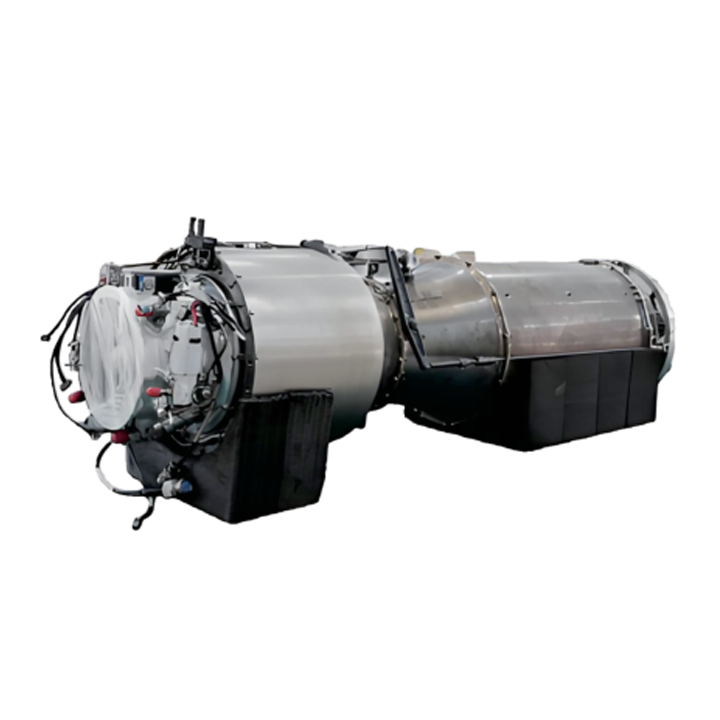
MWP220L Turbojet Engine
The MWP220L is engineered for high-performance UAV platforms, providing exceptional thrust density in a compact form factor. It is the ideal powerplant for high-speed target drones and rapid-deployment fixed-wing surveillance aircraft.
| Maximum thrust (daN) | 300 (converted to ground takeoff with full power) |
| Overall diameter (mm) | 320 |
| Total length (mm) | 1374 |
| Weight (kg) | 48 |
Benefits of Turbine Propulsion in Drones
The benefits of utilizing a turbojet engine over electric or standard internal combustion engines in a UAV are profound. First is the sheer velocity. Electric drones are capped by the aerodynamic efficiency of their propellers, rarely exceeding 150 mph effectively. A turbojet-equipped drone can easily cruise at 400 to 600 mph. This rapid transit capability is non-negotiable for defense contractors.
Second is payload capacity at speed. High-speed surveillance requires heavy, stabilized optics. When carrying an advanced EO/IR Gimbal camera payload or heavy Radar Systems, electric batteries drain exponentially fast. A turbojet provides the necessary thrust to carry heavy technological suites without severely compromising the aircraft’s aerodynamic envelope.
Limitations of Extreme High-Speed Flight
We must apply commercial and practical judgment: speed comes with extreme operational costs. The primary limitation of any high-speed jet engine is fuel consumption. Turbojets are incredibly thirsty at lower altitudes. To achieve their maximum efficiency, the UAV must climb to high altitudes where the air is thinner.
Furthermore, high-speed jet propulsion creates a massive thermal and acoustic signature. A turbojet running at full afterburner or maximum continuous thrust acts as a beacon for Infrared Thermal & Laser Sensing systems. If stealth is your primary objective, high-speed turbojets require highly engineered, radar-absorbent materials and exhaust cooling baffles to mitigate detection.
Who Should Use High-Speed Turbojets
For Commercial Users & Defense Contractors: We recommend turbojet propulsion exclusively for entities developing target drones, loitering munitions, and high-altitude rapid-reconnaissance UAVs. If your operational parameters dictate that the vehicle must cover 500 nautical miles in under an hour, a turbojet is your only viable engineering solution.
Who Does Not Need Jet Propulsion
For Industrial and Agricultural Operators: If you are mapping a construction site, inspecting a pipeline, or crop dusting, a turbojet is entirely useless. The minimum stall speed of a jet-powered fixed-wing aircraft is too high for precision low-altitude work. For these applications, you should utilize rotary-wing platforms like an Agriculture Drone or a standard Industrial Drone which prioritize hovering stability over forward velocity.
Common Mistakes in UAV Engine Selection
In most professional situations, the most catastrophic mistake an engineering team makes is over-speccing the engine while under-engineering the airframe. Mounting a 300 daN thrust engine like the MWP220L onto a poorly reinforced carbon-fiber chassis will result in structural failure. The airframe will literally tear itself apart from flutter and harmonic vibration long before the engine reaches its maximum speed.
Another common error is failing to account for high-speed navigation latency. When a UAV travels at Mach 0.9, standard consumer GPS refreshes too slowly. You must integrate industrial-grade GPS RTK / GNSS Antenna Modules to ensure the flight controller receives geospatial updates fast enough to adjust control surfaces safely.
Commercial Buying Considerations
When procuring turbojet engines for a commercial or defense UAV fleet, conduct a strict cost-benefit analysis based on the engine’s Time Between Overhaul (TBO). Micro-turbojets spin at incredibly high RPMs (often exceeding 100,000 RPM). Bearings wear out quickly. You must purchase from a manufacturer that guarantees parts availability and transparent TBO metrics. Additionally, ensure the Engine Control Unit (ECU) can seamlessly interface with your existing Wireless Broadband Mesh Network Radio telemetry systems for remote diagnostics.
Comparison Table: Jet Engine Classifications
| Engine Type | Theoretical Max Speed | Primary Application | Mechanism of Action |
|---|---|---|---|
| Turbojet | Mach 3.2 | Fighter jets, High-speed UAVs | Compressor blades force air into combustion chamber. |
| Turbofan | Mach 2.5 | Commercial airliners, Long-endurance UAVs | Large bypass fan routes air around the core for high fuel efficiency. |
| Ramjet | Mach 6.0 | Missiles, Experimental aircraft | No moving parts; relies on forward speed to compress incoming air. |
| Scramjet | Mach 9.6+ | Hypersonic glide vehicles | Combustion occurs while air is flowing at supersonic speeds. |
Pros and Cons of UAV Turbojets
| Pros of Turbojet UAVs | Cons of Turbojet UAVs |
|---|---|
| Unmatched rapid-response velocity compared to electric/piston alternatives. | Extremely high fuel consumption limits total loitering time. |
| Exceptional thrust-to-weight ratio allows for heavier payload integration. | High acoustic and thermal signatures make radar/IR evasion difficult. |
| Reliable performance at high altitudes where the air is thin. | Requires long runways or specialized pneumatic catapult systems for launch. |
| Mechanical simplicity in micro-variants ensures straightforward maintenance. | High initial capital expenditure compared to electric motors. |
Expert Recommendation
When determining the maximum speed a jet engine can reach for your specific project, do not chase hypothetical scramjet numbers. For tangible, deployable UAV technology in 2026, the traditional micro-turbojet remains the absolute pinnacle of accessible high-speed propulsion. We recommend the MWP220L Turbojet Engine for organizations developing target drones or rapid-intercept platforms. It delivers the precise thrust density required to push modern aerodynamic airframes to their high-subsonic limits without sacrificing payload capacity or requiring exotic, unproven hypersonic fuels.
Frequently Asked Questions
Why can’t commercial airplanes fly as fast as military jets?
Commercial airplanes use high-bypass turbofan engines designed for fuel efficiency and noise reduction, not maximum velocity. Drag increases exponentially as you approach the speed of sound. Pushing a massive commercial airliner past Mach 0.85 requires a tremendous amount of fuel, making it economically unviable for airlines, even if the engine could technically push harder.
What is the fastest air-breathing aircraft ever built?
The NASA X-43A holds the record for the fastest air-breathing aircraft. It utilized a scramjet engine to achieve a speed of Mach 9.6 (approximately 7,000 mph) during an unmanned test flight in 2004.
Do UAV turbojets use the same fuel as passenger jets?
Yes. In most professional situations, micro-turbojets used in UAVs run on standard aviation turbine fuels such as Jet-A, Jet-A1, or military-grade JP-8. They typically require a small percentage of synthetic turbine oil mixed into the fuel to lubricate the high-speed ceramic bearings.
Can a turbojet drone launch vertically?
Standard fixed-wing turbojet drones cannot launch vertically. They require forward momentum to generate lift over the wings. However, specialized Vertical Take-Off and Landing (VTOL) platforms exist that combine electric lift rotors for vertical ascent before transitioning to turbojet power for high-speed forward flight.
Industry References & Authoritative Sources
To ensure the accuracy of our aerodynamic and thermodynamic claims, we reference data established by the following authoritative aerospace organizations:
- NASA Glenn Research Center: Extensive technical documentation on the physics of jet propulsion, compressor stall limits, and the mechanics of scramjet technology. Review NASA Propulsion Data
- American Institute of Aeronautics and Astronautics (AIAA): Peer-reviewed engineering standards and historical data regarding the thermal barriers of supersonic and hypersonic flight. Review AIAA Aerospace Standards
- Defense Advanced Research Projects Agency (DARPA): Publicly available unclassified data regarding the development of hypersonic weapons systems and advanced air-breathing propulsion limits. Review DARPA Hypersonic Research