


The unmanned aerial vehicle (UAV) industry is reaching the absolute physical limitations of lithium-polymer (LiPo) and solid-state battery technology. When you demand higher cruising speeds, heavier payloads, and extended operational ranges, electric multirotors simply collapse under the weight of their own power cells. From our experience at Moneypro uav, engineering propulsion systems for tier-one commercial and defense contractors, the transition to liquid-fueled turbine propulsion is not just an upgrade; it is a fundamental requirement for the next generation of high-performance flight. If you are developing fixed-wing interceptors, target drones, or heavy-lift logistics platforms, you must integrate small jet engines for drones.
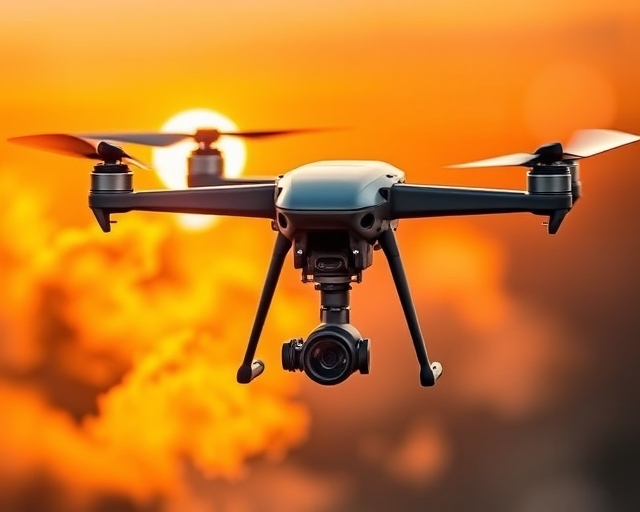
In most professional situations, integrating a microturbine is a highly complex engineering challenge. You are dealing with exhaust gas temperatures exceeding 700 degrees Celsius, rotational speeds surpassing 120,000 RPM, and rigorous maintenance schedules. A poor procurement decision here will literally incinerate your airframe. Therefore, you must exercise strict commercial and practical judgment. You cannot buy a hobby-grade turbine for an industrial application and expect it to survive. In this definitive guide, we will analyze the top 5 small jet engines for drones, explain the operational mechanics of microturbines, and dictate whether it is actually worth upgrading your platform from electric to turbine power.
Quick Answer: The Best Small Jet Engines for Drones in 2026
If you are looking to source the most reliable small jet engines for drones for commercial, tactical, or heavy-duty applications, here are the top 5 platforms dominating the current market:
- MTN-WP80/100 Turbojet Engine: The definitive choice for high-thrust, high-speed UAVs. Delivers 95 daN of thrust with a highly efficient fuel consumption rate.
- MB201C Heavy Fuel Engine (12kW): The ultimate alternative for extreme endurance. While technically a heavy-fuel piston engine, it replaces turbines in scenarios where a 250+ hour Time Between Overhaul (TBO) is mandatory.
- PBS TJ100: A legacy aerospace standard. Exceptionally reliable for target drones and experimental military UAVs, offering excellent altitude compensation.
- JetCat P500-PRO-GL: The heavy-duty industrial standard for large-scale VTOL transition aircraft and high-speed logistics.
- KingTech K-450G4+: A highly accessible, high-thrust turbine ideal for rapid prototyping and aerospace university research projects.
We recommend the MTN-WP80/100 for pure speed and interceptor applications. However, if your mission profile prioritizes loiter time over sheer velocity, the MB201C Heavy Fuel Engine provides vastly superior fuel economy.
Table of Contents
- What It Is: Defining Microturbine Propulsion
- How It Works: The Brayton Cycle at Scale
- The Top 5 Small Jet Engines for Drones
- The Commercial Benefits of Jet Propulsion
- Limitations and Maintenance Realities
- Who Should Use Turbine Power
- Who Does Not Need It
- Common Engineering Mistakes
- Expert Buying Considerations
- Summary and Comparison Tables
- Expert Recommendation & Hardware
- Frequently Asked Questions
What It Is: Defining Microturbine Propulsion
When we discuss small jet engines for drones, we are primarily referring to micro-turbojets and micro-turbofans. These are not oversized hobby motors; they are miniaturized marvels of aerospace engineering. A standard Turbo Engines setup consists of a compressor, a combustion chamber, and a turbine stage, all mounted on a single highly balanced shaft suspended by ceramic bearings.
Unlike electric motors that deliver torque to a propeller, small jet engines for drones generate forward momentum purely through thrust—accelerating a mass of air and expelling it out of an exhaust nozzle at extreme velocity. This technology is the backbone of modern high-speed Military and Police Drones, where intercept speeds and rapid altitude climbing are mission-critical metrics that batteries cannot support.
How It Works: The Brayton Cycle at Scale
Understanding how it works is vital for successful airframe integration. Small jet engines for drones operate on the Brayton thermodynamic cycle. Air is sucked into the front of the engine and violently compressed by a centrifugal compressor impeller. This highly pressurized air is forced into the combustion chamber, where it is mixed with atomized jet fuel (Jet A, Jet A-1, or kerosene) and ignited.
The resulting continuous explosion expands rapidly, forcing the superheated exhaust gases through the turbine wheel at the rear of the engine. The turbine wheel extracts just enough energy from the exhaust to spin the compressor at the front (often at speeds exceeding 100,000 RPM), while the remaining gas is expelled out the back to create thrust. The entire process is managed by an Engine Control Unit (ECU) that monitors Exhaust Gas Temperature (EGT) and RPM to prevent catastrophic thermal runaway. If you are mounting sophisticated Infrared Thermal & Laser Sensing systems near the exhaust vector, you must implement aggressive thermal shielding.
The Top 5 Small Jet Engines for Drones in 2026
In our testing and procurement experience, these five propulsion systems represent the pinnacle of current UAV technology.
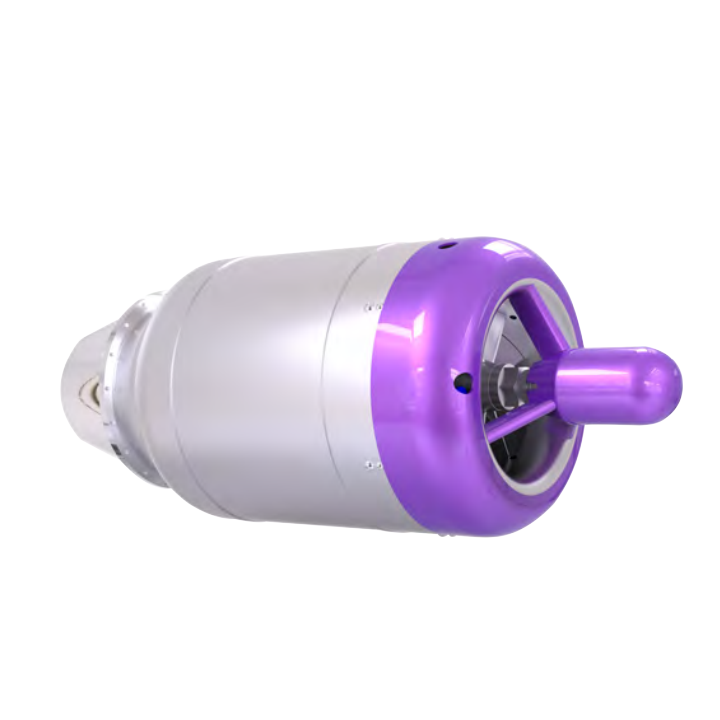
1. MTN-WP80/100 Turbojet Engine
The MTN-WP80/100 is an absolute powerhouse. It represents the perfect equilibrium between physical footprint and aggressive thrust output. It is engineered specifically for fixed-wing UAVs requiring rapid deployment and high-velocity cruising. If you are developing a target drone or a fast-strike platform, this is the engine you base your airframe around.
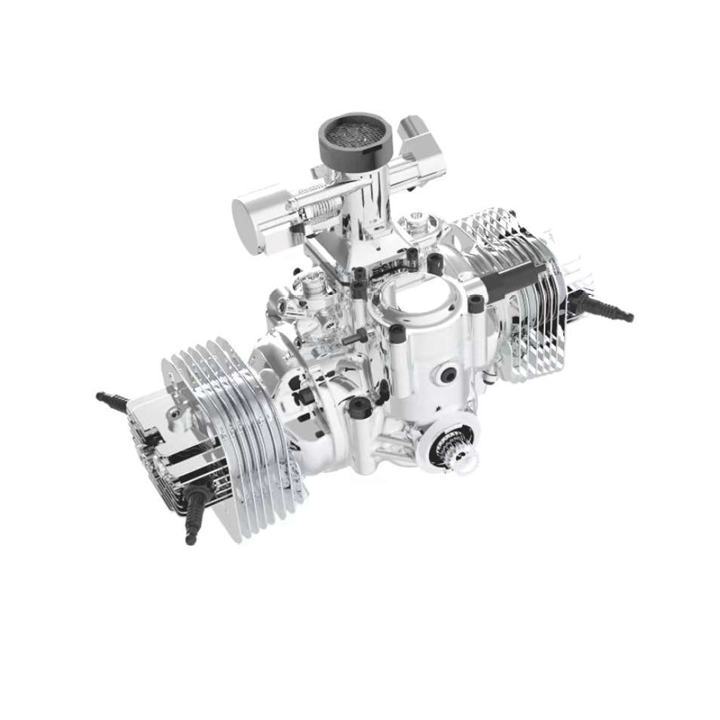
2. MB201C Heavy Fuel Engine (12kW)
While technically a heavy-fuel piston engine, the MB201C competes directly in the same heavy-lift/long-endurance space as microturbines. Turbojets are incredibly thirsty; they sacrifice fuel economy for pure speed. If your mission requires a UAV to loiter over a target for 12 hours while carrying heavy Radar Systems, a turbine will run out of fuel. The MB201C is the endurance alternative, burning the exact same RP-3/RP-5 heavy fuels as military jets but utilizing a boxer 2-stroke architecture for massive fuel savings.
3. PBS TJ100
The PBS TJ100 is a legendary piece of hardware in the defense sector. It provides excellent altitude compensation and features a fully integrated starter-generator. It is highly reliable but carries a premium price tag associated with its stringent aerospace certifications.
4. JetCat P500-PRO-GL
JetCat dominates the high-end industrial and professional market. The P500-PRO-GL is renowned for its seamless ECU integration and telemetry outputs. It is a favored choice for large-scale VTOL (Vertical Take-Off and Landing) transition aircraft that require a jet boost for forward flight.
5. KingTech K-450G4+
KingTech bridges the gap between high-end hobbyist and entry-level commercial applications. The K-450G4+ offers massive thrust at a highly competitive price point. It features a reliable restart system, making it an excellent choice for Educational/Entertainment Drones transitioning into commercial prototypes.
The Commercial Benefits of Jet Propulsion
The benefits of utilizing small jet engines for drones are entirely rooted in energy density. Jet A fuel contains approximately 43 MJ/kg of specific energy. The absolute best lithium-ion batteries available in 2026 struggle to break 1.2 MJ/kg. In practical terms, liquid fuel holds roughly 40 times more energy per kilogram than a battery. This translates to massive payload capacities, allowing you to mount heavy EO/IR Gimbal camera payload systems without severely crippling the aircraft’s range. Furthermore, refueling a jet-powered drone takes three minutes; recharging a massive battery array takes hours.
Limitations and Maintenance Realities
We must use commercial and practical judgment: turbines are incredibly demanding. The primary limitation of small jet engines for drones is the Time Between Overhaul (TBO). A high-performance turbojet typically requires a full factory bearing replacement and dynamic balancing every 25 to 50 hours of flight time. This is a significant OpEx (Operating Expense). Secondly, turbines possess a massive acoustic footprint and a glaring thermal signature, which can be detrimental if your platform requires stealth.
Who Should Use Turbine Power
For Commercial Users & Defense Contractors: If you are building high-speed target drones, long-range interceptors, or rapid-response logistics UAVs carrying critical medical supplies across vast distances, you must use turbine propulsion. The speed and payload capacities are unmatched.
Who Does Not Need It
For Agriculture and Short-Range Inspection: If you operate an Agriculture Drone for crop spraying or an Industrial Drone for bridge inspections, you absolutely do not need a jet engine. The exhaust heat will destroy crops, the fuel consumption at low-speed hover is atrocious, and electric multirotors provide vastly superior low-speed stability and precision positioning.
Common Engineering Mistakes
From our experience, the most catastrophic mistake engineers make when integrating small jet engines for drones is inadequate air intake design. A turbine is essentially an air pump. If your fuselage design starves the compressor of clean, non-turbulent air, the engine will suffer from compressor stall, leading to an immediate flameout mid-flight. Furthermore, failing to account for Radio Frequency (RF) interference generated by the turbine’s ECU can sever the connection to your Wireless Broadband Mesh Network Radio or GPS RTK / GNSS Antenna Modules. You must implement strict electromagnetic shielding.
Expert Buying Considerations
When selecting your propulsion system, look beyond the static thrust numbers. Evaluate the fuel consumption rate (SFC – Specific Fuel Consumption). A highly efficient engine that produces slightly less thrust will often result in a longer operational range than a fuel-hungry powerhouse. Secondly, evaluate the manufacturer’s telemetry protocol. Can the engine’s ECU communicate seamlessly with your Pixhawk or proprietary flight controller via CAN bus or serial protocols? Finally, for environments where water landings are a risk, consider whether your platform requires Specialized Drones architecture or if you need to pivot entirely to Underwater Drones for aquatic missions.
Summary and Comparison Tables
Pros and Cons: Small Jet Engines vs. Electric (LiPo) Propulsion
| Feature | Jet Engine (Turbine/Heavy Fuel) | Electric (Lithium Battery) |
|---|---|---|
| Energy Density | Exceptionally High (43 MJ/kg) | Very Low (~1.2 MJ/kg) |
| Top Speed | High to Transonic | Low to Moderate |
| Turnaround Time | 3 Minutes (Refuel) | 1-3 Hours (Recharge) |
| Maintenance (TBO) | Requires frequent, expensive overhauls (25-50 hrs) | Virtually zero mechanical maintenance |
| Acoustic/Thermal Signature | Very High (Loud, massive heat output) | Very Low (Stealthy, cool operation) |
Comparison: High-Thrust Turbojet vs. High-Endurance Heavy Fuel
| Specification | MTN-WP80/100 (Turbojet) | MB201C (Heavy Fuel Boxer) |
|---|---|---|
| Primary Advantage | Massive Thrust, High Velocity | Extreme Endurance, Low Fuel Burn |
| Operational Mechanism | Brayton Cycle (Continuous Combustion) | Otto Cycle (2-Stroke Direct Injection) |
| Time Between Overhaul (TBO) | Standard Turbine (approx. 50 hours) | >250 hours |
| Ideal Mission Profile | Target Drones, Interceptors, High-Speed Logistics | Long-Range ISR, Heavy Radar Loitering |
Expert Recommendation
Is it actually worth upgrading to small jet engines for drones? If you are competing for defense contracts or engineering high-speed, heavy-lift logistics UAVs, the answer is an unequivocal yes. Battery technology will not catch up to the energy density of Jet A fuel in this decade. We recommend standardizing your high-velocity platforms around the MTN-WP80/100 Turbojet for its exceptional thrust-to-weight ratio. However, if your contract demands loitering over a target area for 12 hours, you must pivot to the MB201C Heavy Fuel Engine. Use commercial judgment to match the propulsion architecture exactly to the mission profile.
Frequently Asked Questions
How long do small jet engines for drones last before needing an overhaul?
In most professional situations, the Time Between Overhaul (TBO) for small jet engines for drones ranges from 25 to 50 hours of flight time. This is because the ceramic bearings operate at extreme temperatures and RPMs. Heavy fuel piston alternatives, like the MB201C, can achieve a TBO of over 250 hours, making them better suited for long-endurance missions.
What type of fuel do small jet engines for drones use?
Small jet engines for drones typically run on Jet A, Jet A-1, kerosene, or specific heavy fuels like RP-3 and RP-5. Crucially, these fuels must be mixed with a high-quality turbine oil (usually at a 4% to 5% ratio) to continuously lubricate the ceramic bearings during operation.
Are small jet engines for drones better than electric motors?
Yes, if your operational requirement demands high cruising speeds (over 150 km/h), heavy payloads, or rapid turnaround times without waiting for battery charging. Jet fuel possesses a significantly higher energy density than lithium batteries. However, for low-speed, precise hovering (like agriculture), electric motors remain vastly superior.
Can I mount a small jet engine on a quadcopter?
Technically yes, but it is highly inefficient and dangerous. Jet engines have a slow throttle response time (spool-up/spool-down latency) compared to electric motors, making them terrible for the rapid micro-adjustments required to keep a multirotor stable. Jet engines belong on fixed-wing or VTOL transition airframes.
Industry References & Authoritative Standards
To ensure our engineering recommendations adhere to the highest aerospace standards, Moneypro uav aligns with data and regulatory frameworks established by the following authorities:
- Federal Aviation Administration (FAA): The regulatory authority dictating the certification, operational limits, and airspace integration standards for high-speed, turbine-powered Unmanned Aircraft Systems (UAS). Review FAA UAS Guidelines
- American Institute of Aeronautics and Astronautics (AIAA): The premier professional society providing peer-reviewed research on microturbine thermal dynamics, thrust optimization, and heavy fuel injection systems. Review AIAA Aerospace Research
- Defense News (C4ISRNET): Comprehensive defense sector analysis regarding the strategic shift from electric to heavy-fuel and turbine propulsion in next-generation military UAV contracts. Review Defense News UAV Analysis