


Forward operating bases do not have the luxury of paved runways. In hostile, austere environments, tactical units require uncompromised aerial intelligence without the massive logistical footprint of traditional runway-dependent aircraft. Standard multirotors simply lack the endurance and range required for deep reconnaissance, while catapult-launched fixed-wing systems suffer from violent belly landings that destroy expensive sensor payloads. This operational gap is why procuring VTOL drones for remote military deployments is no longer optional; it is a tactical necessity.
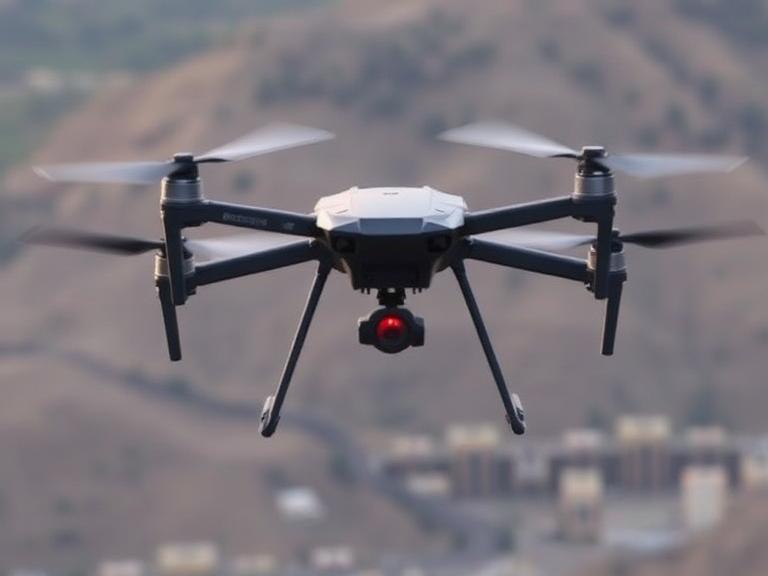
From our experience engineering advanced industrial uav solutions at China Moneypro, military procurement officers frequently misunderstand the rigorous realities of deploying UAVs in high-altitude, high-wind, or zero-infrastructure environments. You cannot send a fragile commercial drone into a theater of operations and expect it to survive. You need platforms specifically architected for rapid assembly, harsh weather tolerance, and true Beyond Visual Line of Sight (BVLOS) capabilities. In this guide, we bypass the theoretical and break down exactly what makes a military-grade VTOL system viable, alongside a definitive analysis of the top 5 platforms available today.
Quick Answer: What are the best VTOL drones for remote military use?
The top 5 VTOL drones for remote military deployments are the M15 Advanced eVTOL (best for high-altitude mountainous terrain), the M412 Quick Assembly (best for rapid payload swapping), the M380 Heavy Lift (best for 10kg supply drops), the M390 Hybrid (best for 10-hour extended ISR missions), and the MVT250 Long Endurance (best for stealthy, all-electric border patrol). These platforms provide the crucial combination of vertical takeoff, fixed-wing transit speed, and secure datalinks required for austere environments.
Table of Contents
- What It Is: The Military VTOL Concept
- How It Works: Transition Mechanics
- Tactical Benefits of VTOL
- Limitations to Consider
- Who Should Use It
- Who Does Not Need It
- The 5 Best VTOL Drones for Remote Military Deployments
- Common Procurement Mistakes
- Buying Considerations
- Summary and Comparison Tables
- Expert Recommendation
- Frequently Asked Questions
What It Is: The Military VTOL Concept
Vertical Take-Off and Landing (VTOL) fixed-wing drones combine the hover capabilities of a helicopter with the aerodynamic efficiency of an airplane. In a military context, VTOL drones for remote military use refer to heavily ruggedized, autonomous unmanned aerial vehicles designed to execute Intelligence, Surveillance, and Reconnaissance (ISR) or cargo resupply missions from unimproved surfaces—such as jungle clearings, naval vessel decks, or rocky mountain outposts.
How It Works: Transition Mechanics
In most professional situations, military VTOLs utilize a “Lift-and-Cruise” or “Quad-Plane” architecture. The drone features four dedicated lift motors equipped with multirotor propellers facing vertically, and a separate forward-thrust motor (electric or internal combustion) on the tail or nose. During deployment, the lift motors power the aircraft straight up to a safe altitude. Once clear of obstacles, the forward-thrust motor engages. As the aircraft gains airspeed and the wings generate lift, the flight controller automatically shuts off the vertical lift motors. The drone then flies highly efficiently as a fixed-wing aircraft for hours. Upon return, the process reverses, allowing for a precise, zero-speed vertical touchdown.
Tactical Benefits of VTOL
The primary benefit of VTOL drones for remote military deployments is infrastructure independence. You do not need a runway, a catapult launcher, or a recovery net. This drastically reduces the physical footprint of the ISR team, allowing small special operations forces to carry a bvlos fixed wing uav in the back of a tactical vehicle. Furthermore, VTOLs eliminate the harsh belly landings associated with traditional fixed wings, saving multi-sensor electro-optical/infrared (EO/IR) gimbals from impact damage.
Limitations to Consider
We believe in commercial and practical judgment, which means acknowledging engineering tradeoffs. VTOL drones carry “dead weight” during forward flight—the vertical lift motors and props serve no aerodynamic purpose once the drone is cruising. This creates drag and slightly reduces the absolute maximum range compared to a pure fixed-wing aircraft launched from a catapult. Additionally, the transition phase from hover to forward flight is aerodynamically sensitive and can be destabilized by extreme crosswinds if the flight controller is not military-grade.
Who Should Use It
For commercial users operating in the defense sector, VTOLs are mandatory for forward-deployed infantry units, border security agencies operating in rugged terrain, and naval coast guards performing maritime interdiction. If your operational zone requires rapid deployment without guaranteed flat terrain, VTOL is your only viable ISR solution.
Who Does Not Need It
If you are operating a SWAT team in a dense urban city block, a VTOL fixed-wing is completely useless. You need a highly maneuverable quadcopter to peek into windows and hover continuously. Conversely, if you operate from established airbases with miles of paved tarmac, deploying traditional runway-dependent drones (like a Reaper) provides superior payload capacity.
The 5 Best VTOL Drones for Remote Military Deployments
Based on our engineering expertise and field performance metrics, here are the top 5 VTOL platforms suited for austere environments.
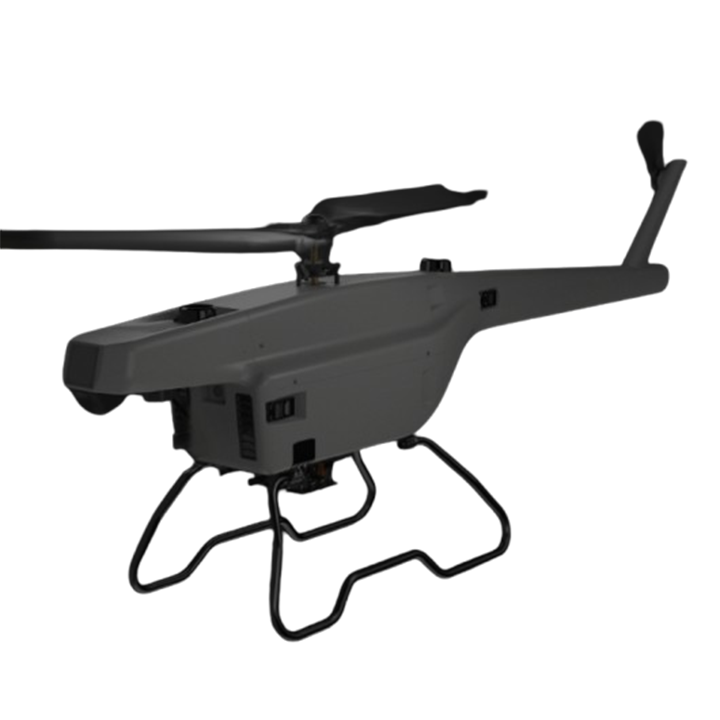
1. M15 UAV Advanced eVTOL Drone for Industrial Missions
The M15 is engineered specifically for extreme high-altitude deployments. Mountainous military operations require massive power reserves to combat thin air. With a maximum flight altitude of 7000m and Class 8 wind resistance, the M15 ignores hostile weather.
- Dimensions: 1710*324*583mm (L*W*H)
- Max Take-Off Weight: 19kg
- Maximum Load: 5kg (ideal for advanced EO/IR gimbals)
- Wind Resistance: Class 8
- Max Flight Altitude: 7000m
- Max Endurance: 100min
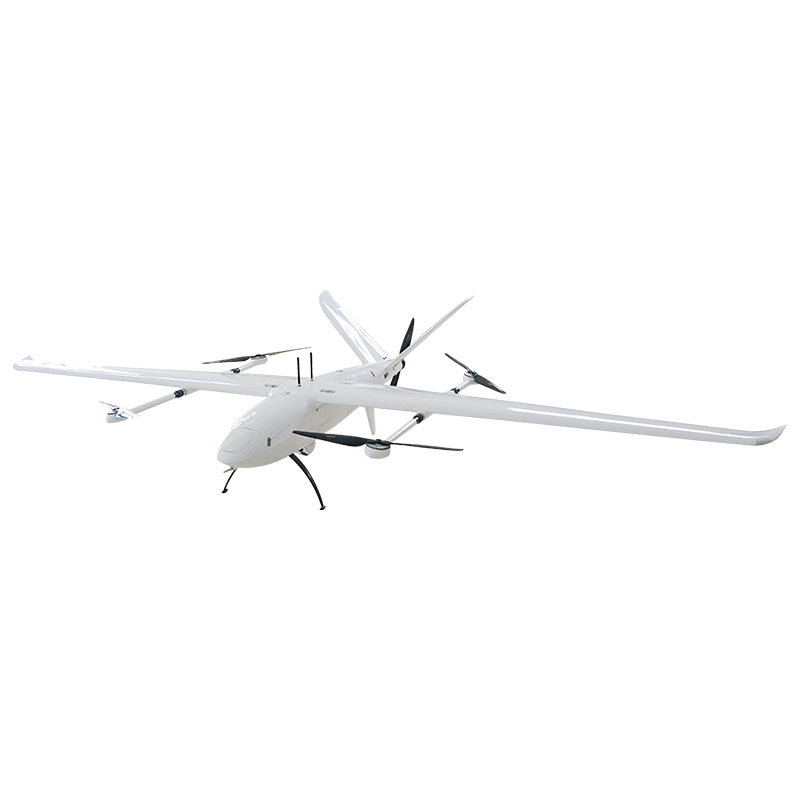
2. China Moneypro M412 Quick Assembly Battery VTOL
In military operations, speed is survival. The M412 features a revolutionary Quick-Change Payload System allowing operators to switch missions in 90 seconds flat. Its tool-free slide rails let you swap a thermal imager for a cargo delivery box instantly.
- Endurance: 4 hours of ultra-long flight performance.
- Radius: 100km operational radius, covering 314km² per sortie.
- Ceiling: 4500m for high-altitude Search and Rescue (SAR).
- Datalink: 30km secure real-time HD video link.
- Payload: Standardized mounts pre-calibrated for rapid swaps.
3. China Moneypro M380 Heavy Lift EFI VTOL
When remote outposts require emergency blood plasma, ammunition, or critical spare parts, the M380 heavy lift vtol drone is the definitive answer. Featuring a massive 3.8m wingspan and an Electronic Fuel Injection (EFI) engine, it boasts a 10kg load capacity. Gas-powered forward flight ensures the drone can push through heavy headwinds while hauling significant weight over long distances.
4. China Moneypro M390 Hybrid Endurance VTOL
For border security and perimeter overwatch, continuous presence in the sky is required. The M390 hybrid vtol drone utilizes an advanced hybrid-electric propulsion system to achieve an astonishing 10 hours of flight time. This allows a single operator to conduct persistent ISR across an entire operational theater without constantly landing to swap batteries.
5. China Moneypro MVT250 Electric Patrol VTOL
Stealth is often a primary requirement. Gas engines are loud and produce a distinct thermal signature. The MVT250 long endurance vtol drone is fully electric, offering silent operation and a minimal IR signature. With an upgraded 4-hour endurance, it is the perfect tool for covert reconnaissance and night-time border patrol.
Common Mistakes in VTOL Procurement
The most pervasive mistake we see in defense procurement is over-specifying payload requirements while ignoring field logistics. Buying an electric vtol drone with massive battery packs seems ideal until you realize your forward operating base lacks the high-wattage generators required to recharge them quickly. If power generation is scarce, a gas-hybrid VTOL is a superior choice because you can simply pour gasoline into the tank and immediately relaunch.
Buying Considerations
When selecting VTOL drones for remote military deployments, evaluate the assembly time. A drone that requires 30 minutes and a toolbox to assemble is a liability under fire. Look for tool-less, quick-assembly airframes like the M412. Additionally, scrutinize the Command and Control (C2) link. The drone must support AES-256 encryption and frequency hopping to resist electronic warfare (EW) jamming attempts.
Summary and Comparison Tables
| Model | Propulsion Type | Best Tactical Use Case | Key Advantage |
|---|---|---|---|
| M15 Advanced eVTOL | Electric | High-Altitude SAR | 7000m ceiling, Class 8 wind resistance |
| M412 Quick Assembly | Electric | Rapid Response ISR | 90-second tool-less payload swap |
| M380 Heavy Lift | Hybrid (EFI Gas) | Tactical Resupply | 10kg cargo capacity |
| M390 Hybrid | Hybrid (EFI Gas) | Persistent Overwatch | 10-hour flight endurance |
| MVT250 Long Endurance | Electric | Covert Reconnaissance | Silent electric operation, 4-hour flight |
| Feature | All-Electric VTOL | Hybrid (Gas/EFI) VTOL |
|---|---|---|
| Endurance | 1.5 to 4 Hours | 4 to 10+ Hours |
| Acoustic Signature | Very Low (Stealthy) | Moderate to High (Engine noise) |
| Logistics | Requires heavy generators/solar for rapid recharging | Requires liquid fuel (easier to transport in jerry cans) |
| Vibration | Minimal (Better for high-zoom optical sensors) | Higher (Requires advanced gimbal isolation) |
| Aircraft Type | Pros | Cons |
|---|---|---|
| VTOL Fixed-Wing | Zero runway required; safe soft landings protect payloads; deploys from anywhere. | Lift motors create drag during cruise; slightly higher mechanical complexity. |
| Catapult Fixed-Wing | Maximum aerodynamic efficiency; longer absolute range; fewer motors to maintain. | Requires bulky launcher; belly landings damage airframe and sensors; needs large clearings. |
Expert Recommendation
For heavy-duty applications in austere environments where both persistent ISR and logistical flexibility are required, we firmly recommend prioritizing Hybrid EFI VTOLs like the China Moneypro M390. From our experience, relying strictly on battery power in a remote military outpost creates a severe operational bottleneck due to charging times. Hybrid systems provide the immense endurance of liquid fuel for forward flight while using electric motors for precise vertical takeoffs, offering the ultimate combination of range and tactical footprint. If your mission dictates stealth, pivot to the M412 for its rapid deployment architecture and secure data links.
Frequently Asked Questions
No. Modern military VTOL drones utilize highly advanced flight controllers that fully automate the transition between vertical hover and forward flight. The operator simply plots waypoints on a ground control station (GCS), and the drone executes the takeoff, transition, flight path, and landing completely autonomously.
High-end industrial platforms, such as the M15, are designed with Class 8 wind resistance. During the vertical takeoff phase, the flight controller constantly adjusts the RPM of the four lift motors to maintain stability against crosswinds. However, operators must always align the nose of the aircraft into the wind during transition to prevent aerodynamic stalling.
Electronic Fuel Injection (EFI) engines automatically adjust the fuel-to-air mixture based on atmospheric pressure and temperature. In military deployments spanning different altitudes—from sea level to high mountain ranges—an EFI engine prevents the drone from stalling or losing power in thin air, which is a common failure point for traditional carbureted engines.
Authoritative Industry References
To ensure alignment with global defense standards and operational logistics, our recommendations are informed by the following authoritative entities:
- U.S. Department of Defense – Directives on unmanned systems integration and tactical ISR procurement strategies.
- RAND Corporation – Comprehensive analytical research on military drone logistics, payload swapping efficiencies, and austere environment deployments.
- NATO (North Atlantic Treaty Organization) – Standardization Agreements (STANAG) regarding interoperability and data link security for unmanned aerial systems.