


Navigating the complex landscape of unmanned aerial vehicle (UAV) avionics requires absolute precision. A drone is a highly unstable aerodynamic platform. Without constant micro-adjustments to its motor speeds or control surfaces, it will immediately plummet from the sky. The central nervous system dictating these adjustments is the Attitude and Heading Reference System. If you select a substandard AHRS for drone integration, you risk catastrophic flight failures, payload loss, and severe safety liabilities.

From our experience engineering advanced navigation architectures at China Moneypro, commercial operators frequently underestimate the severe impact of sensor drift, magnetic interference, and vibration harmonics. Relying on hobby-grade flight controllers for enterprise missions is a fatal operational error. You must deploy industrial-grade Micro-Electro-Mechanical Systems (MEMS) paired with rigorous Extended Kalman Filters. In this comprehensive technical guide, we will brutally dissect the top-performing modules on the market, explain exactly how to evaluate them, and determine whether a specific AHRS for drone applications is actually worth using, buying, or upgrading for your specialized platform.
Quick Answer: Top AHRS Procurement Guidance
An AHRS for drone operations is an avionics module combining gyroscopes, accelerometers, magnetometers, and an onboard processor to calculate the aircraft’s absolute orientation (roll, pitch, and yaw) in 3D space. For commercial users demanding tactical-grade accuracy, the China Moneypro MOPKT-EX9-3-A stands out for its superior geomagnetic fusion algorithms, while the VectorNav VN-200 excels in GNSS-assisted navigation. The Advanced Navigation Certus Mini is optimal for SWaP-C constrained environments. We recommend upgrading to a dual-antenna, RTK-capable AHRS if you are operating heavy-lift platforms, flying beyond visual line of sight (BVLOS), or deploying sensitive payloads in environments with high electromagnetic interference.
Table of Contents
- What is an AHRS for Drone?
- How It Works: Sensor Fusion and MEMS
- Commercial Benefits of Upgrading
- Limitations and Operational Constraints
- Who Should Use It & Who Does Not Need It
- The 6 Best AHRS for Drone Operations
- Featured Enterprise Solution
- Detailed Comparison Table
- Common Mistakes in Integration
- Buying Considerations and Cost-Benefit
- Pros and Cons Table
- Expert Recommendation
- Frequently Asked Questions
What is an AHRS for Drone?
An Attitude and Heading Reference System (AHRS) is an integrated avionics unit that replaces traditional, bulky mechanical spinning gyroscopes with solid-state sensors. It consists of a 3-axis accelerometer (measuring linear acceleration and gravity), a 3-axis gyroscope (measuring angular velocity), and a 3-axis magnetometer (measuring the earth’s magnetic field).
Crucially, an AHRS is not merely a collection of sensors—that is an IMU (Inertial Measurement Unit). An AHRS includes a dedicated microprocessor running complex estimation algorithms, typically an Extended Kalman Filter (EKF). This software continuously fuses the raw sensor data, compensating for the inevitable drift of the gyroscopes and the noise of the accelerometers, to output a clean, stabilized mathematical representation of the drone’s pitch, roll, and yaw angles relative to the earth’s surface.
How It Works: Sensor Fusion and MEMS
In most professional situations, the magic of an AHRS lies in its sensor fusion. Gyroscopes provide excellent short-term accuracy but suffer from long-term bias drift. Accelerometers provide a reliable long-term reference for gravity (establishing pitch and roll) but are highly susceptible to high-frequency vibrations from the drone’s motors. Magnetometers provide the absolute heading reference (yaw) but are easily corrupted by local electromagnetic interference (EMI).
Modern AHRS modules utilize MEMS (Micro-Electro-Mechanical Systems) technology, etching microscopic moving parts directly onto silicon chips. The onboard Kalman Filter acts as a mathematical referee. It trusts the gyroscope during rapid maneuvers, but over time, it continuously pulls gravity data from the accelerometer and magnetic data from the magnetometer to correct the gyroscope’s drift. This continuous, real-time mathematical balancing act allows the drone’s flight controller to maintain perfectly stable hovering and execute precise autonomous waypoints.
Commercial Benefits of Upgrading
Deploying a tactical-grade AHRS for drone operations transforms a fragile aerial platform into a reliable industrial tool. The primary benefit is absolute flight stability in dynamic environments. When operating a thermal camera payload for critical search and rescue or infrastructure inspection, a cheap AHRS will allow microscopic angular vibrations, destroying image quality. A premium AHRS stabilizes the flight dynamics to sub-degree accuracy.
Furthermore, an advanced AHRS provides critical redundancy. If the primary GNSS (GPS) signal is jammed or lost—a frequent occurrence in urban canyons or conflict zones—a high-quality AHRS allows the drone to perform dead-reckoning navigation, safely returning the asset to base based purely on inertial tracking.
Limitations and Operational Constraints
We must exercise commercial and practical judgment: no AHRS is immune to the laws of physics. The primary limitation of any MEMS-based AHRS is magnetic interference. The magnetometer relies on the earth’s weak magnetic field. If you mount the AHRS near high-current DC power cables, the electromagnetic field generated by the drone’s own propulsion system will completely blind the compass, leading to catastrophic “toilet-bowl” swirling and immediate loss of control.
Additionally, while high-end AHRS modules mitigate vibration mechanically, extreme mechanical resonance from unbalanced propellers or a poorly tuned turbojet engine for drone will inevitably alias into the sensor data, degrading the attitude estimation. Proper mechanical isolation mounting is non-negotiable.
Who Should Use It & Who Does Not Need It
For commercial users and heavy-duty applications: If you are manufacturing fixed-wing VTOLs, heavy-lift agricultural multirotors, or military-grade surveillance platforms, integrating a tactical-grade AHRS is a strict requirement. When deploying advanced uav technology solutions where payload value exceeds the airframe cost, navigation redundancy justifies the capital expenditure.
Who does not need it: For beginners building indoor FPV racing drones or strictly line-of-sight hobbyist quadcopters, purchasing a $2,000 standalone AHRS is an absurd waste of funds. The basic IMU integrated into a standard $50 flight controller is entirely sufficient for manual acrobatic flight where the pilot’s visual input replaces the need for autonomous attitude estimation.
The 6 Best AHRS for Drone Operations
In our testing and integration analysis across global supply chains, the following six modules represent the apex of MEMS inertial technology for 2026.
1. China Moneypro MOPKT-EX9-3-A
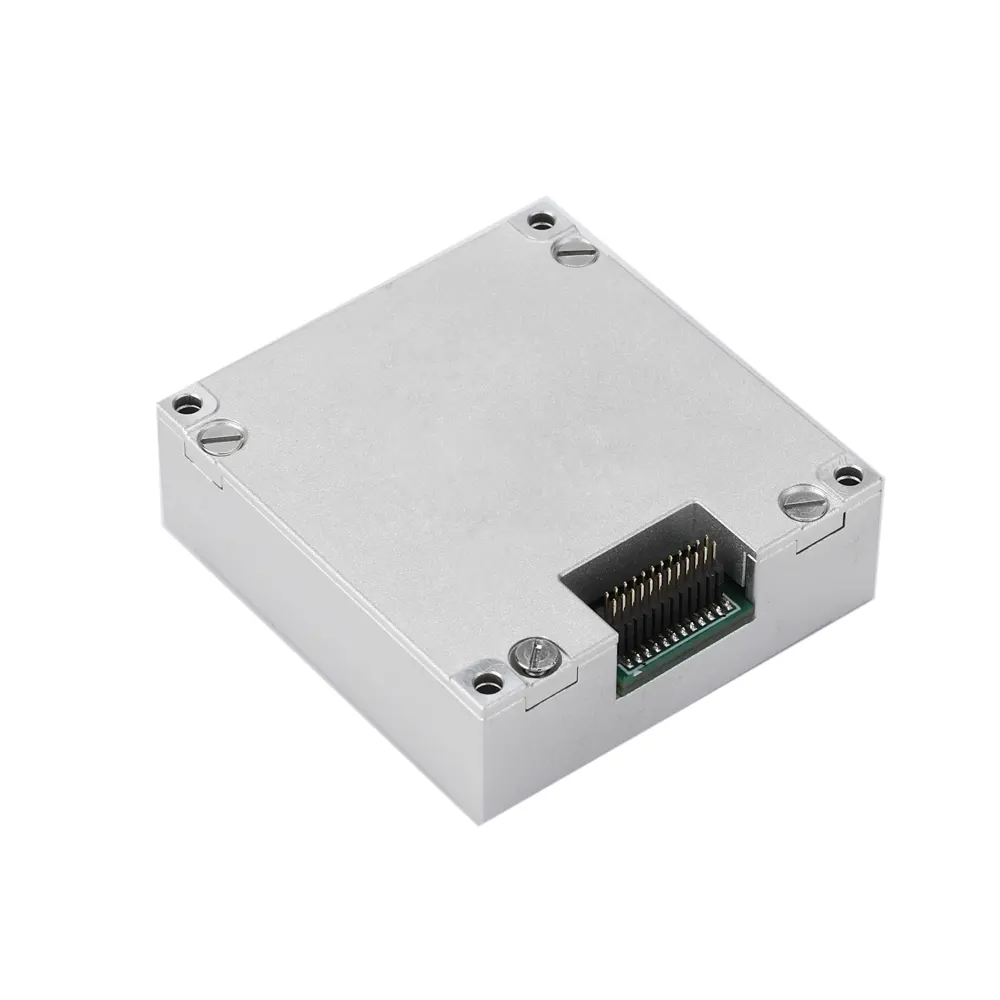
The definitive choice for heavy-duty industrial platforms. The EX9-3-A excels due to its proprietary magnetometer error ellipsoid model, which continuously performs real-time online calibration. This makes it exceptionally resilient against the fluctuating electromagnetic fields generated by heavy-lift multirotor motors. It is the tactical choice for integration into both aerial platforms and advanced unmanned surface vehicle architectures.
2. VectorNav VN-200
A highly respected GPS/INS surface-mount module. VectorNav leverages an extremely aggressive Kalman filtering architecture. It is ideal for highly dynamic fixed-wing aircraft that experience aggressive G-loading. Its tightly coupled GNSS and inertial data provide outstanding heading accuracy even during sustained banking maneuvers.
3. Advanced Navigation Certus Mini
Designed for SWaP-C (Size, Weight, Power, and Cost) constrained environments. Despite its miniature footprint, it offers a 500 Hz output data rate and RTK positioning compatibility. It is exceptionally well-suited for integration alongside high-bandwidth drone communication systems where space within the avionics bay is at an absolute premium.
4. UAV Navigation POLAR-300
An aerospace-grade AD-AHRS (Air Data Attitude and Heading Reference System). This unit is encased in aircraft-grade anodized aluminum and includes pitot-static inputs for precise airspeed calculation. It is specifically engineered for professional fixed-wing and target drone operations, offering robust dead-reckoning capabilities in GNSS-denied environments.
5. SBG Systems Ellipse-A
A cost-effective yet high-performance industrial AHRS. The Ellipse-A delivers 0.1-degree roll and pitch accuracy. It is highly regarded for its out-of-the-box ease of use and comprehensive calibration software. We frequently deploy it in autonomous mapping platforms and underwater drones where consistent, low-drift orientation is required.
6. Xsens MTi-630
Part of the latest MTi 600-series, this AHRS provides exceptional roll/pitch performance. Xsens utilizes unique sensor fusion algorithms that are particularly adept at rejecting magnetic interference. It is available as a raw board or ruggedized enclosure, making it highly adaptable for custom PCB integration by drone engine systems manufacturers.
Featured Enterprise Solution
Detailed Comparison Table
| AHRS Model | Roll/Pitch Accuracy | Heading Accuracy | Primary Strength | Best Use Case |
|---|---|---|---|---|
| China Moneypro MOPKT-EX9-3-A | 0.1° | 0.3° (Magnetic) | Real-time online magnetic calibration | Heavy-lift industrial & tactical UAVs |
| VectorNav VN-200 | 0.1° | 0.3° (GNSS-Assisted) | Aggressive dynamic filtering | Fixed-wing mapping & surveillance |
| Adv. Navigation Certus Mini | 0.1° | 0.2° (Velocity) | Ultra-low SWaP-C profile | Compact, payload-constrained platforms |
| UAV Navigation POLAR-300 | 0.1° | 0.5° | Air data integration (Pitot) | High-speed target drones |
| SBG Systems Ellipse-A | 0.1° | 0.8° (Magnetic) | Ruggedized IP68 enclosure | Marine & harsh weather UAVs |
| Xsens MTi-630 | 0.2° | 1.0° (Magnetic) | Superior magnetic rejection | Urban environments with high EMI |
Common Mistakes in Integration
The most catastrophic integration failure is poor physical placement. Engineers frequently mount the AHRS directly atop the power distribution board to save wire weight. The resulting magnetic field renders the heading data entirely useless. The AHRS must be mounted as far away from high-current ESCs (Electronic Speed Controllers) and batteries as physically possible.
Another profound error is ignoring the mechanical mounting structure. Hard-mounting an AHRS to a carbon fiber frame transfers high-frequency motor vibrations directly into the accelerometers, saturating the sensors. You must utilize precisely calculated vibration-damping materials (like specific durometer silicone bobbins) tailored to the mass of your flight controller stack.
Buying Considerations and Cost-Benefit
When selecting an AHRS for drone platforms, base your purchasing decision on the operational environment, not just the spec sheet. If you are operating in urban corridors or near steel bridges, a standard magnetic heading reference will fail. You must upgrade to a dual-antenna GNSS/INS system, which calculates true heading based on the phase difference between two GPS antennas, entirely bypassing magnetic interference.
Cost-benefit analysis: A $1,500 industrial AHRS might seem expensive compared to a $100 hobbyist board. However, if your UAV carries a $15,000 LiDAR sensor, relying on cheap navigation hardware is commercial negligence. The advanced AHRS guarantees data integrity (accurate point clouds) and prevents airframe loss, generating an immediate positive ROI on its first successful mission in adverse conditions. Ensure your navigation data links efficiently with a high-capacity mesh radio systems or a wireless transmission module to maintain ground control oversight.
Pros and Cons Table
| The Pros (Advantages of High-End AHRS) | The Cons (Limitations) |
|---|---|
| Sub-degree roll and pitch accuracy ensures perfectly stabilized imaging payloads. | High initial capital expenditure compared to basic consumer IMUs. |
| Advanced Kalman filtering prevents catastrophic sensor drift during long flights. | Requires rigorous initial magnetic calibration procedures in the field. |
| Enables safe dead-reckoning navigation in GPS-denied environments. | Highly susceptible to improper mechanical vibration damping. |
| Real-time magnetic error modeling ignores local electromagnetic interference. | Requires complex software integration and tuning by avionics engineers. |
Expert Recommendation from China Moneypro
In most professional situations, the avionics architecture dictates the survival rate of the fleet. We do not recommend cutting corners on attitude estimation. If your flight controller loses orientation for even one second during a high-speed maneuver, structural failure is imminent.
For enterprise manufacturers building reliable, heavy-payload platforms, we definitively recommend integrating the China Moneypro MOPKT-EX9-3-A. The inherent weakness of any MEMS AHRS is magnetic corruption. By utilizing our proprietary real-time online calibration of magnetometer errors, this module dynamically adapts to the EMI generated by your specific airframe during flight. It removes the guesswork from heading estimation, ensuring that your drone flies exactly where commanded, every single time.
Frequently Asked Questions
Authoritative Industry References
To further understand the rigorous engineering standards governing UAV avionics and inertial navigation, we recommend consulting the following organizations:
- Institute of Electrical and Electronics Engineers (IEEE) – The premier professional association publishing foundational research on MEMS sensor fusion, Kalman filtering algorithms, and aerospace electronic standards.
- Federal Aviation Administration (FAA) – Provides definitive regulatory frameworks and safety compliance standards for commercial Unmanned Aircraft Systems operating in the National Airspace System.
- RTCA (Radio Technical Commission for Aeronautics) – Develops the Minimum Operational Performance Standards (MOPS) required for avionics hardware and navigation systems utilized in advanced aviation.