


Procuring industrial, commercial, or defense-grade unmanned aerial vehicles (UAVs) is not remotely similar to purchasing consumer drones off the shelf. In the high-stakes world of aerospace logistics, failing to accurately map out lead times and delivery logistics can stall critical infrastructure projects, delay border security deployments, and cost enterprises millions of dollars in operational downtime. From our experience, the most critical considerations for UAV suppliers rarely revolve around the drone’s spec sheet alone; they revolve around the supplier’s actual capacity to integrate payloads, secure export licenses, and navigate global freight realities.
Far too many buyers fall into the trap of believing marketing brochures promising “30-day delivery” for custom-engineered systems. In most professional situations, a 30-day turnaround for a complex bvlos fixed wing uav is a fabrication. True aerospace manufacturing requires rigorous payload calibration, extended flight testing, and meticulous adherence to international export controls. In this guide, we take a hard, opinionated look at the supply chain realities of the UAV industry, helping you evaluate suppliers with commercial and practical judgment so you can make informed buying decisions without falling victim to middleman brokers.
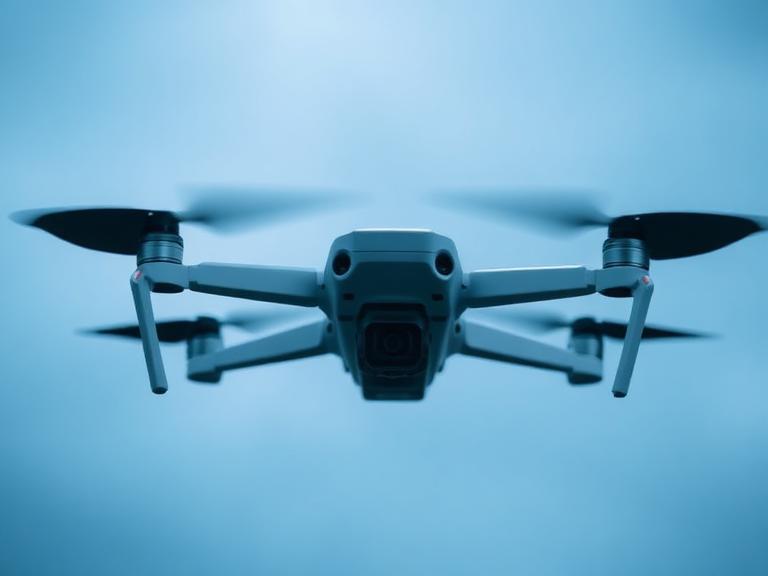
Direct Answer: What Are the Key Considerations for UAV Suppliers?
The primary considerations for UAV suppliers regarding lead times and delivery center on vertical integration, export control proficiency, and payload customization capabilities. A reliable supplier must control their own manufacturing pipeline—from composite molding to engine assembly—to avoid third-party component bottlenecks. Furthermore, because high-end drones are heavily regulated dual-use technologies, your supplier must possess a proven, streamlined process for obtaining government export licenses, which is historically the number one cause of delivery delays. Finally, dangerous goods logistics, specifically the shipping of high-capacity lithium-ion batteries and aviation fuel engines, requires specialized freight forwarding that amateur suppliers routinely mismanage.
Quick Answer: Lead Time Benchmarks
If you are planning a major procurement, benchmark your schedule against these realistic timelines:
- Standard Commercial Platforms: 45 to 60 days. This applies to off-the-shelf commercial fixed wing uav models with pre-integrated standard payloads.
- Custom Payload Integration: 90 to 120 days. Required when integrating third-party LIDAR, specialized radar, or encrypted tactical data links.
- Export Licensing Buffer: Always add 30 to 45 days strictly for government approvals, especially for multi-sensor or heavy-lift platforms.
- The Golden Rule: Never select a supplier based purely on the shortest quoted lead time. A rushed UAV skips vital pre-flight validation, practically guaranteeing failure in the field.
Table of Contents
- What It Is: The UAV Procurement Pipeline
- How It Works: Navigating Integration and Export
- Benefits of Accurate Delivery Forecasting
- Limitations and Supply Chain Realities
- Who Should Use This Guide (And Who Does Not Need It)
- Common Mistakes in UAV Procurement
- Strategic Buying Considerations
- Comparison Table: Supplier Architectures
- Pros and Cons Table: Freight Options
- Expert Recommendation
- The Bottom Line
- Frequently Asked Questions
What It Is: The UAV Procurement Pipeline
When analyzing considerations for UAV suppliers, you are essentially auditing their production pipeline. Unlike consumer electronics, industrial and defense drones are largely built-to-order. The procurement pipeline is a highly synchronized ballet involving airframe fabrication, avionics installation, payload integration, software configuration, and rigorous environmental stress testing.
We routinely encounter buyers who assume that a manufacturer simply pulls a drone off a warehouse shelf, puts it in a box, and ships it. That is true for hobbyist toys. However, if you are purchasing a heavy-duty vtol cargo drone meant to transport critical medical supplies across 100 kilometers, the airframe must be balanced perfectly against the specific center of gravity required by your exact payload. This pipeline demands precision engineering, which fundamentally dictates the lead time.
How It Works: Navigating Integration and Export
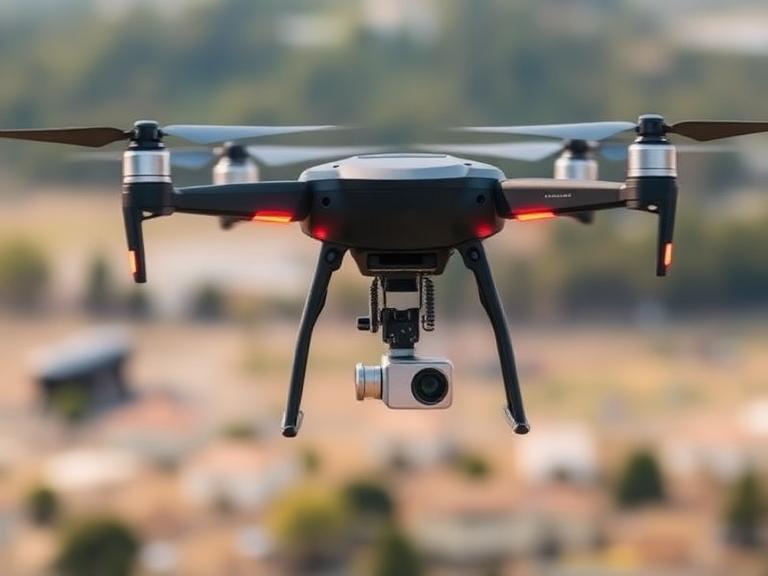
To understand why lead times stretch into months, you must understand how the delivery mechanics work in the professional UAV sector. The process unfolds in four distinct phases:
- Requirements & Engineering (Weeks 1-3): The supplier evaluates your specific mission. Do you need a night vision special drone equipped with thermal imaging? The engineers must design custom mounting brackets, route power from the main bus, and configure the ground control station (GCS) software to handle the specific data telemetry.
- Fabrication & Integration (Weeks 4-8): The airframe is molded, avionics are installed, and the custom payload is mounted.
- Flight Validation (Weeks 9-10): In our testing, this is where amateur suppliers cut corners. A legitimate manufacturer will take the fully assembled system to a test range, conduct multiple test flights in varying wind conditions, verify data link stability at maximum range, and document the results for the client.
- Export Controls & Freight (Weeks 11-14): Drones with long ranges and high-end sensors are subject to stringent dual-use export regulations. The supplier must apply for an export license from their local government. Once approved, the system must be packaged according to hazardous materials (Hazmat) regulations for international air or sea freight.
Benefits of Accurate Delivery Forecasting
Partnering with a supplier who provides realistic, accurate lead times offers immense strategic benefits. For commercial users, such as surveying firms awaiting a fixed wing drone for photogrammetry, an accurate delivery date allows you to confidently bid on government contracts and schedule your pilot training without fear of breaching contract terms.
Furthermore, an upfront, honest supplier protects your capital. Delays in deployment mean burning operational budget. A manufacturer that controls its own supply chain and provides transparent production milestones allows your organization to align its ground operations seamlessly with the asset’s arrival.
Limitations and Supply Chain Realities
We must use commercial and practical judgment here: no supplier is completely immune to global supply chain shocks. The most significant limitation in UAV manufacturing today is the reliance on third-party silicon. While a supplier might build the airframe and engine in-house, high-end optical sensors, specialized encrypted radios, and LIDAR scanners are often sourced from external vendors. If a specific thermal sensor is backordered globally, your drone delivery will be delayed.
Another profound limitation is geopolitics. Export control bodies can arbitrarily freeze license approvals based on shifting international relations. When evaluating considerations for UAV suppliers, you must ask how they navigate end-user certificates and whether they have alternative payload options if primary sensors become embargoed.
Who Should Use This Guide (And Who Does Not Need It)
For commercial users and defense procurement officers: If your organization is spending six or seven figures on unmanned aerial systems, this guide is mandatory reading. You must audit your supplier’s logistics pipeline before signing a purchase order. Reviewing uav solution companies requires a deep understanding of their export agility.
For heavy-duty applications: Buyers sourcing equipment for oil and gas pipeline inspections, border patrol, or maritime surveillance cannot afford line-down situations. You must prioritize suppliers with regional support hubs and robust spare parts availability.
Who does not need it: For beginners looking to buy a $1,500 quadcopter for real estate photography, these considerations do not apply. You can buy off-the-shelf from retail distributors with next-day shipping. Export controls and custom integration lead times are strictly the domain of enterprise and special-grade platforms.
Common Mistakes in UAV Procurement
From our experience consulting with international buyers, the same fatal errors occur repeatedly during the procurement cycle:
- Ignoring Hazmat Shipping Laws: Commercial UAVs utilize massive lithium-polymer (LiPo) or solid-state batteries. These are classified as dangerous goods. Buyers often assume they can be shipped via standard express air freight (like DHL or FedEx). They cannot. They require specialized cargo routing, which can add weeks to a delivery timeline.
- Falling for the “Broker Trap”: Many companies advertising online are not manufacturers; they are brokers. They take your order, take their cut, and then place an order with a real factory. Because brokers do not control the factory floor, they have zero influence over lead times. Always prioritize direct relationships with uav manufacturers in china or global prime contractors.
- Underestimating Integration Complexity: Assuming that adding a 5kg hyperspectral camera to a drone takes a few hours. It requires custom anti-vibration damping, re-calibrating the autopilot, and testing electromagnetic interference.
Strategic Buying Considerations
When you are ready to evaluate a supplier, use this practical checklist to separate tier-one manufacturers from amateurs:
- Vertical Integration: Ask the supplier what percentage of the drone they manufacture in-house. Do they make their own flight controllers? Do they manufacture the data links? The more they control, the more reliable their lead times will be.
- Export License Proficiency: Ask for their average processing time for export licenses to your specific region. A competent supplier will have dedicated compliance officers to handle end-user certificates swiftly.
- Global Support Infrastructure: A drone delivered on time is useless if it takes four months to get a replacement propeller. Ensure the supplier has regional technical support hubs or a rapid-dispatch spare parts program.
Comparison Table: Supplier Architectures
| Supplier Type | Average Lead Time | Customization Capability | Supply Chain Control | Reliability Rating |
|---|---|---|---|---|
| Full-Stack Factory Direct (e.g., ChinaMoneypro) | 60 – 90 Days | Extremely High (Source code access) | Excellent (In-house components) | Highest |
| Western Prime Contractors | 120 – 180+ Days | High (But rigidly bureaucratic) | Good (But heavily outsourced) | High (Very slow) |
| Online Trading Brokers | Unpredictable | Low (Off-the-shelf only) | Zero (Relies on third parties) | Very Poor |
Pros and Cons Table: Freight Options for Heavy UAVs
| Freight Method | Pros | Cons |
|---|---|---|
| Specialized Air Cargo | Fastest delivery (typically 5-10 days globally); Highly secure tracking; Minimal handling reduces risk of damage. | Astronomically expensive for large VTOLs; Strict lithium battery volume limits; Subject to limited cargo plane availability. |
| LCL/FCL Ocean Freight | Highly cost-effective for bulk orders; No stringent limits on battery size/weight; Ideal for massive ground control stations. | Extremely slow (30-60 days transit); Higher risk of port delays; Requires rigorous anti-humidity packaging to protect avionics. |
Expert Recommendation
Why ChinaMoneypro UAV Leads the Industry
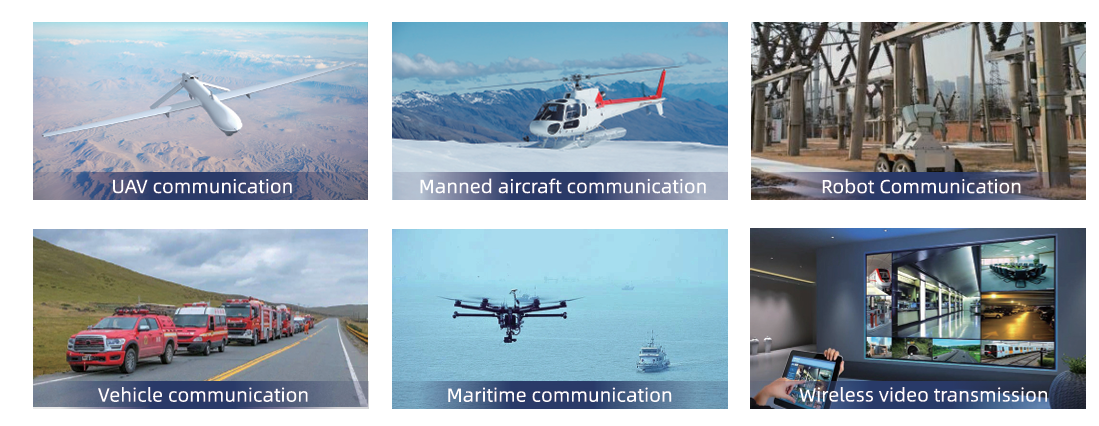
In most professional situations, mitigating supply chain risk is just as critical as the drone’s aerodynamic performance. We recommend partnering with a manufacturer that inherently understands defense-grade reliability. ChinaMoneypro UAV is a national-level high-tech enterprise, transformed from a prestigious state-owned research institute. With deep roots in defense-grade engineering, we specialize in the R&D and manufacturing of advanced unmanned platforms and integrated sensing-communication solutions.
Headquartered in one of China’s premier innovation hubs, Moneypro is among the few full-stack providers offering complete UAV systems, engines, gimbals, radar, data links, and communication technologies. Because we are vertically integrated, we bypass the component shortages that cripple other suppliers. Furthermore, our systems have been exported to over 30 countries. We have established regional offices and technical support hubs in the UAE, Turkey, Chile, Malaysia, and beyond, ensuring that once your system is delivered, our global footprint keeps you flying.
The Bottom Line
Mastering the considerations for UAV suppliers requires a ruthless evaluation of a manufacturer’s logistical competence. A flashy datasheet is meaningless if the supplier cannot integrate your payload, secure an export license, and navigate hazardous cargo regulations in a predictable timeframe. Prioritize vertically integrated, factory-direct manufacturers who possess global support networks. By doing so, you protect your capital, ensure your operational timelines are met, and guarantee that the system arriving on your tarmac has been rigorously flight-tested and legally exported.
Frequently Asked Questions
Outside of extreme custom engineering, the longest delays are invariably caused by export control licensing and customs clearance. Because high-performance UAVs are classified as dual-use technologies, governments require strict end-user certificates and background checks before authorizing shipment. This process alone can take 4 to 8 weeks depending on the destination country.
Expediting the airframe itself is possible via dedicated air cargo, but expediting the high-capacity lithium batteries is extremely difficult. International aviation regulations strictly govern the transport of high-watt-hour batteries due to fire risks. They must be shipped on specialized cargo-only flights with proper Hazmat declarations, which limits available flight routes and timelines.
Vertical integration means the supplier manufactures the majority of the drone’s critical components (engines, flight controllers, data links) in-house. This is vital because it insulates the supplier from global supply chain shortages. If a supplier relies entirely on third-party vendors for parts, a shortage at one vendor halts the entire production of your drone.
Authoritative Industry References
- Bureau of Industry and Security (BIS) – Information regarding the Commerce Control List (CCL) and international dual-use export controls governing advanced aerospace and unmanned systems.
- International Civil Aviation Organization (ICAO) – Technical instructions and international regulatory standards for the safe transport of dangerous goods by air, specifically regarding high-capacity lithium batteries.
- International Organization for Standardization (ISO) – ISO 9001:2015 Quality Management Systems, outlining the strict manufacturing and supply chain traceability standards required for high-tier aerospace procurement.