


ChinaMoneypro UAV is a national-level high-tech enterprise, transformed from a prestigious state-owned research institute. With deep roots in defense-grade engineering, we specialize in the R&D and manufacturing of advanced unmanned platforms and integrated sensing-communication solutions. Headquartered in one of China’s premier innovation hubs, Moneypro is among the few full-stack providers offering complete UAV systems, engines, gimbals, radar, data links, and communication technologies.
The aerospace procurement landscape is fraught with commercial-off-the-shelf (COTS) platforms that promise the world but fail spectacularly under rigorous operational demands. When you purchase a mass-produced airframe, you are inheriting the manufacturer’s compromises. You are forced to adapt your critical mission parameters to fit their hardware constraints. From our experience engineering defense-grade aerial platforms, reversing this dynamic is the only path to operational superiority.
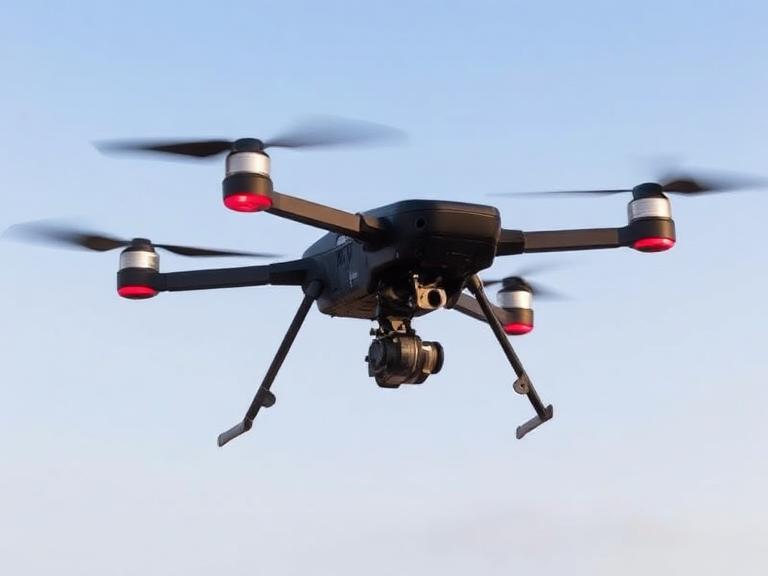
If your mission involves extended beyond-visual-line-of-sight (BVLOS) flights, heavy payload integration, or operations in hostile weather environments, a generic drone will not survive. You must procure a customized fixed-wing drone according to specifications tailored explicitly to your use case. In this comprehensive guide, we will dismantle the procurement process, showing you exactly how professionals approach custom aerospace manufacturing, what variables you must strictly define, and whether investing in a bespoke airframe is genuinely worth your capital.
Quick Answer
Ordering a customized fixed-wing drone according to specifications requires translating your mission parameters into raw aerodynamic and avionic data. You do not start by asking for an airframe; you start by defining your payload (SWaP—Size, Weight, and Power), your desired endurance, and your operational environment. The manufacturer will then calculate the required wing loading, select the optimal propulsion system, and design a custom fuselage. This bespoke approach guarantees that your communication links, sensor suites, and launch/recovery mechanisms perform flawlessly in the field. It is a highly collaborative engineering process that transforms a conceptual mission into a deployed, defense-grade asset.
Table of Contents
- What is a Customized Fixed-Wing Drone?
- How the Customization Process Works
- The Strategic Benefits of Bespoke Manufacturing
- Limitations and Operational Realities
- Who Should Use It vs. Who Does Not Need It
- Common Mistakes in Aerospace Procurement
- Essential Buying Considerations
- Performance and Specification Tables
- Expert Recommendation
- The Bottom Line
- Frequently Asked Questions
What is a Customized Fixed-Wing Drone?
A customized fixed-wing drone according to specifications is an unmanned aerial vehicle engineered from the ground up—or heavily modified from a base prototype—to meet exact client requirements. Unlike consumer multirotors that rely on brute-force lift, fixed-wing aircraft rely on aerodynamic glide. This makes their design highly sensitive to changes in weight and center of gravity. A custom build means the wingspan, airfoil profile, fuselage volume, and powertrain are mathematically tailored to carry your specific payload over a predetermined distance.
In most professional situations, a client approaches an aerospace firm like ChinaMoneypro UAV with a problem: “We need to monitor 500 kilometers of pipeline carrying a 5-kilogram LIDAR system in high-wind conditions.” The resulting custom drone is the physical manifestation of the solution to that specific problem.
How the Customization Process Works
Procuring a custom airframe is an iterative engineering cycle. It demands rigorous communication between your operational team and our aerospace engineers. The process generally follows these strict phases:
- Requirements Definition (SWaP-C): We establish the Size, Weight, Power, and Cost constraints of your payload. For example, integrating a heavy eo ir gimbal payload requires specific belly clearance, vibration dampening, and dedicated power routing.
- Aerodynamic Concept Design: Based on the payload and required endurance, we calculate the wing area and aerodynamic profile. We determine whether a traditional tail, V-tail, or flying wing configuration is optimal.
- Powertrain Selection: Will this mission be accomplished via high-density lithium-ion batteries, a hybrid gas-electric system, or do you require a turbojet engine for drone applications to achieve high-altitude, high-speed interception? Sizing the drone engine systems is critical for overcoming drag while maintaining fuel efficiency.
- Avionics and Telemetry Integration: We map the internal architecture to house flight controllers, GPS/GNSS modules, and vital drone communication systems.
- Prototyping and Flight Testing: In our testing, no drone is delivered without rigorous wind-tunnel validation and physical flight stress testing to ensure stall speeds and glide ratios align with the mathematical models.
The Strategic Benefits of Bespoke Manufacturing
The primary advantage of ordering a customized fixed-wing drone according to specifications is uncompromising performance. COTS drones force you to compromise; custom builds force the physics to conform to your needs.
When you control the specifications, you optimize endurance. A customized airframe strips away unnecessary consumer features to maximize battery or fuel capacity. Furthermore, a bespoke build allows for special-grade data security. By integrating specialized mesh radio systems, you can ensure anti-jamming and secure data transmission in contested environments, a feature rarely found on generic platforms.
Limitations and Operational Realities
We must use commercial and practical judgment here: custom manufacturing is not a rapid process. Unlike purchasing a drone off a warehouse shelf, engineering a customized fixed-wing drone according to specifications takes months of R&D, tooling, and testing. Additionally, the non-recurring engineering (NRE) costs mean the initial prototype will be significantly more expensive than a mass-produced unit. You are paying for the intellectual property and specialized labor required to invent a new aerospace asset.
Who Should Use It vs. Who Does Not Need It
For commercial users and government agencies: If you are conducting large-scale topographical mapping, border surveillance, maritime patrol, or specialized cargo delivery, you absolutely must utilize a custom platform. The efficiency gains and payload security justify the upfront expenditure.
For heavy-duty applications: Operators requiring advanced propulsion or operations in extreme temperatures (such as Arctic surveying or desert border patrol) require custom thermal management systems and specialized composites that generic drones do not possess.
For beginners or localized videographers: Who does not need a custom drone? Real estate photographers, novice surveyors, or hobbyists. If your mission radius is under 5 kilometers and your payload is a standard consumer camera, a generic multirotor is more than sufficient. Do not waste capital over-engineering a solution for a simple problem.
Common Mistakes in Aerospace Procurement
From our experience working with international defense and enterprise clients, we frequently see the following critical errors during the procurement phase:
- Underestimating Payload Power Draw: Clients often account for the physical weight of a thermal camera but forget that an active sensor suite draws massive amperage. If the alternator or power distribution board is not customized to handle this, your drone will suffer premature battery depletion and crash.
- Ignoring Launch and Recovery Constraints: A beautiful aerodynamic design is useless if you do not have a runway to land it. You must specify whether you need catapult launch, parachute recovery, or VTOL (Vertical Take-Off and Landing) capabilities.
- Selecting the Wrong Telemetry Band: Specifying high-definition video transmission without understanding the limitations of line-of-sight. If you need BVLOS operations, you must integrate a powerful wireless transmission module or SATCOM link.
Essential Buying Considerations
When you are ready to order a customized fixed-wing drone according to specifications, you must present your manufacturer with a definitive checklist. Ambiguity leads to engineering failures. You must define your exact cruise speed, stall speed, maximum takeoff weight (MTOW), operating altitude, and weather resistance (IP rating). Furthermore, consider your maintenance logistics. A custom drone should be designed with modularity in mind so field operators can swap out a damaged wing or engine in minutes rather than returning the entire airframe to the factory.
Performance and Specification Tables
Quick Summary Table: The Custom Procurement Phases
| Phase | Client Responsibility | Manufacturer Responsibility |
|---|---|---|
| 1. Requirements | Define payload, endurance, environment, and budget. | Conduct feasibility study and initial physics modeling. |
| 2. Aerodynamics | Approve operational trade-offs (e.g., speed vs. glide ratio). | Design airframe, calculate wing loading, select airfoil. |
| 3. Integration | Provide payload CAD models and power requirements. | Design internal architecture, center of gravity (CG) balancing. |
| 4. Manufacturing | Monitor progress and approve milestone reviews. | Composite layups, wiring, engine mounting, avionics setup. |
| 5. Testing | Participate in Factory Acceptance Testing (FAT). | Conduct flight testing, tune PID parameters, stress test airframe. |
Comparison Table: Fixed-Wing Configurations
| Configuration | Primary Advantage | Primary Disadvantage | Best Use Case |
|---|---|---|---|
| Standard Fixed-Wing | Maximum endurance and payload capacity. | Requires runway or catapult for launch and recovery. | Long-range pipeline inspection, maritime patrol. |
| Fixed-Wing VTOL | Takes off vertically like a helicopter, transitions to forward flight. | Vertical lift motors add dead weight and drag during forward flight. | Operations in dense jungles, ships, or urban environments. |
| Flying Wing (Blended Body) | Exceptional aerodynamic efficiency and stealth profile. | Highly sensitive to center of gravity shifts; difficult to tune. | High-altitude mapping, covert surveillance operations. |
Pros and Cons Table: Custom Bespoke vs. Commercial Off-The-Shelf (COTS)
| Feature | Customized Fixed-Wing Drone | COTS Drone |
|---|---|---|
| Performance | Optimized exactly for your mission parameters. | Generic performance; forces mission compromises. |
| Payload Integration | Seamless; power and data routed specifically for your sensors. | Often requires duct-tape solutions and external batteries. |
| Lead Time | Requires months of R&D and manufacturing time. | Immediate availability off the shelf. |
| Cost | High initial NRE costs; lower long-term failure rates. | Low initial cost; higher long-term operational replacement costs. |
Buying Guide Table: Specifying Your Needs
| Specification Category | Metrics to Define | Why It Matters |
|---|---|---|
| Payload (SWaP) | Dimensions (mm), Weight (kg), Voltage (V), Amperage (A). | Dictates fuselage size, battery capacity, and Center of Gravity. |
| Flight Profile | Cruise speed (m/s), Max altitude (ASL), Endurance (hours). | Determines motor selection, wing area, and fuel/battery type. |
| Environment | Wind resistance (knots), Temp range (°C), IP Rating. | Requires specific composite materials and weatherproofing seals. |
| Telemetry | Control range (km), Video bandwidth (Mbps), Frequency. | Determines the size and power of the onboard antenna systems. |
Expert Recommendation
Trust a Full-Stack Aerospace Manufacturer
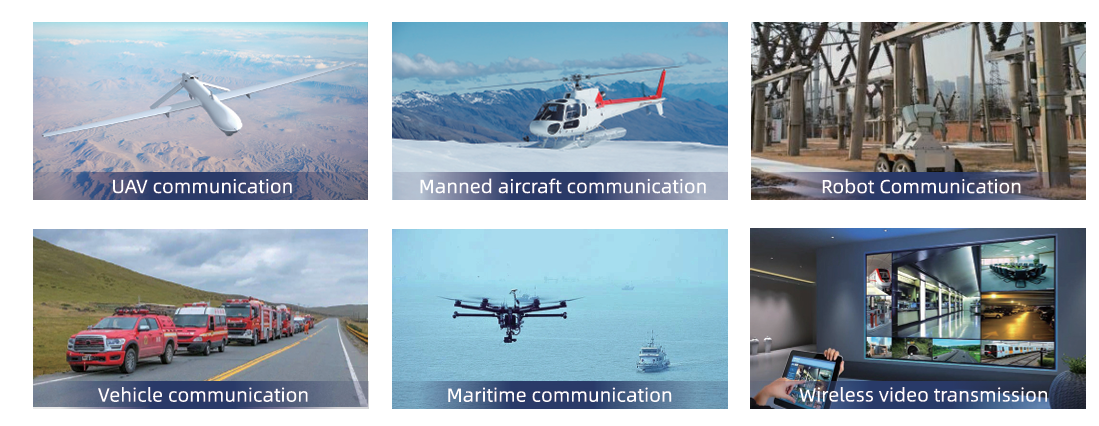
In most professional situations, handing off your custom drone project to an integrator who merely pieces together third-party parts is a recipe for disaster. We recommend partnering with a full-stack manufacturer. At ChinaMoneypro UAV, because we possess deep roots in defense-grade engineering, we manufacture the engines, gimbals, data links, and airframes under one roof. When you order a customized fixed-wing drone according to specifications from us, you guarantee that the aerodynamic software speaks perfectly to the propulsion hardware. This level of systemic integration is what separates a reliable industrial asset from an unreliable hobbyist project. For clients expanding their operations to maritime security, we even apply these exact custom engineering principles to our unmanned surface vehicle platforms.
The Bottom Line
A customized fixed-wing drone according to specifications is not merely a purchase; it is a strategic aerospace investment. It is the conscious decision to stop compromising your mission parameters to fit a generic mold. By rigorously defining your payload, endurance, and operational environment, and partnering with an elite manufacturing firm, you secure an aerial platform that performs with absolute precision. Whether you are guarding international borders or mapping vast agricultural expanses, bespoke aerospace engineering guarantees that your hardware will never be the weakest link in your operational chain.
Frequently Asked Questions
From our experience, a true custom build—from initial aerodynamic concept to the final flight testing—typically requires between 3 to 6 months. This timeline depends heavily on the complexity of the payload integration, whether a custom fuselage mold needs to be milled, and the rigorousness of the required flight certification testing.
It depends on the scope of the change. Fixed-wing aircraft are highly sensitive to Center of Gravity (CG) shifts. If you swap a 2kg camera for a 2.5kg sensor of similar dimensions, minor ballast adjustments can correct the CG. However, if you attempt to integrate a massive radar system that alters the aerodynamic drag and exceeds the Maximum Takeoff Weight (MTOW), the drone will become aerodynamically unstable and unsafe to fly.
For maximum endurance (flight time), internal combustion (gas/heavy fuel) engines are vastly superior due to the high energy density of liquid fuel compared to lithium batteries. Electric motors are excellent for silent, short-range tactical missions. Turbojet engines are highly inefficient at low speeds but are mandatory when your mission specification requires high-altitude, high-speed rapid interception.
Authoritative Industry References
- Federal Aviation Administration (FAA) – Regulatory standards and certification requirements for Unmanned Aircraft Systems operations and airworthiness.
- IEEE Aerospace and Electronic Systems Society – Industry standards for avionics, telemetry protocols, and aerospace engineering methodologies.
- Defense Advanced Research Projects Agency (DARPA) – Leading research directives and technological advancements in special-grade unmanned aerial vehicle capabilities.