


In the rapidly advancing fields of autonomous navigation, aerospace engineering, and industrial robotics, the Inertial Measurement Unit (IMU) serves as the biological inner ear of a machine. At the heart of every functional IMU lie two distinct, often misunderstood, and frequently conflated sensors. Many procurement managers and junior engineers make the fatal flaw of assuming these components perform redundant tasks. From our experience engineering tier-one flight controllers at China Moneypro, misunderstanding the fundamental physics of these micro-electromechanical systems (MEMS) leads to critical failures, uncontrollable drift, and catastrophic payload losses.
We are routinely asked to clarify the exact mechanical and software disparities between these two components. If you are developing a heavy lift vtol drone or integrating complex marine robotics, guessing is not an option. Comparing accelerometers and gyroscopes is not an exercise in choosing one over the other; it is a strict evaluation of how they compensate for each other’s inherent physical weaknesses. In this comprehensive technical guide, we will strip away the academic jargon, answer the search intent directly, and analyze comparing accelerometers and gyroscopes across 6 critical aspects to help you make an informed architectural decision for your next project.
Quick Answer: The Core Differences
When comparing accelerometers and gyroscopes, the fundamental distinction is the type of motion measured. An accelerometer measures linear acceleration and gravitational pull (translational movement) in meters per second squared (m/s² or Gs). It tells the system which way is absolute “down.” A gyroscope measures angular velocity (rotational movement) in degrees per second (°/s). It tells the system how fast it is tilting, rolling, or spinning. You cannot build a stable, autonomous vehicle with just one; they must be utilized together through complex sensor fusion algorithms (like a Kalman filter) to determine a vehicle’s true attitude and position in three-dimensional space.
Table of Contents
- What They Are: Mechanical Definitions
- How They Work: MEMS Technology
- Comparing Accelerometers and Gyroscopes Across 6 Aspects
- Benefits and Limitations
- Pros and Cons Table
- Who Should Use It & Who Does Not Need It
- Common Mistakes in IMU Integration
- Buying Considerations for Commercial OEMs
- Summary Comparison Table
- Expert Recommendation from China Moneypro
- Frequently Asked Questions (FAQ)
What They Are: Mechanical Definitions
To accurately assess comparing accelerometers and gyroscopes, we must first define their industrial roles. An accelerometer is a transducer that translates physical linear acceleration into an electrical signal. Even when sitting perfectly still on a desk, a 3-axis accelerometer will register 1G (9.81 m/s²) on its Z-axis due to Earth’s gravity. This absolute reference is critical for establishing a level horizon.
A gyroscope, in the context of modern electronics, does not rely on spinning brass wheels like antique maritime compasses. It is a vibrating structure gyroscope that detects the rate of rotation around the X (roll), Y (pitch), and Z (yaw) axes. If a gyroscope is sitting perfectly still on a desk, it outputs absolutely nothing (zero degrees per second), regardless of its orientation to gravity.
How They Work: MEMS Technology
In most professional situations, both sensors are manufactured using Micro-Electro-Mechanical Systems (MEMS) technology. They are microscopic silicon structures etched into a microchip.
Accelerometers operate primarily on capacitive sensing. Inside the chip, a microscopic proof mass is suspended by silicon springs between fixed electrodes. When the vehicle accelerates, inertia causes the proof mass to lag behind, changing the distance between the electrodes. This change in electrical capacitance is converted into a voltage signal representing acceleration.
Gyroscopes operate by exploiting the Coriolis effect. They contain a resonating mass that vibrates continuously at a high frequency. When the sensor rotates, the Coriolis force acts perpendicular to the vibrating mass, pushing it sideways. Capacitive plates measure this microscopic sideways displacement, generating an electrical signal proportional to the rate of rotation.
Comparing Accelerometers and Gyroscopes Across 6 Aspects
To provide commercial and practical judgment, we must evaluate comparing accelerometers and gyroscopes across the 6 aspects that directly impact system architecture and vehicle stability.
1. Measurement Type and Output
As previously established, the most distinct difference is the physical force they measure. Accelerometers measure translational forces (G-force). Gyroscopes measure rotational speed (angular velocity). If an unmanned surface vehicle is pitched up 10 degrees but remains completely still, the accelerometer senses the tilt relative to gravity, while the gyroscope registers zero movement.
2. Drift and Error Accumulation (Bias Instability)
This is where comparing accelerometers and gyroscopes becomes critical for flight controllers. A gyroscope outputs a rate. To find the actual angle of the drone, the computer must integrate that rate over time. Unfortunately, MEMS gyroscopes suffer from electronic noise and thermal variations. Over time, integrating this microscopic noise causes the calculated angle to drift away from reality. Accelerometers do not suffer from long-term integration drift because they constantly reference absolute gravity, providing a stable long-term baseline.
3. Sensitivity to High-Frequency Vibration
Accelerometers are notoriously sensitive to linear vibrations. If you hard-mount a flight controller to a frame utilizing heavy drone engine systems, the accelerometer will register the engine’s mechanical vibration as massive, erratic movement. This “noise” renders the accelerometer data useless for short-term stabilization. Gyroscopes, dealing only with rotation, are largely immune to linear engine vibrations, making them exceptional for immediate, short-term stabilization against wind gusts.
4. Power Consumption and Thermal Footprint
In our testing, power budgets matter significantly. Accelerometers are generally passive capacitive sensors that draw minuscule amounts of power (often in the micro-amp range). Gyroscopes require active drive circuitry to keep the internal silicon mass vibrating constantly. Consequently, gyroscopes consume significantly more power and generate more localized heat. For engineers designing a long endurance vtol drone, managing the power draw of the IMU arrays is a strict necessity.
5. Manufacturing Cost and Complexity
Due to the complex drive mechanisms, closed-loop feedback systems, and precise vacuum packaging required to prevent air damping of the vibrating mass, gyroscopes are inherently more difficult and expensive to manufacture than standard accelerometers. High-end tactical-grade gyros can easily dictate the overall cost of a navigation module.
6. Ideal Use Cases in Sensor Fusion
Comparing accelerometers and gyroscopes invariably leads to the concept of sensor fusion. Because accelerometers are noisy in the short term but accurate in the long term, and gyroscopes are highly accurate in the short term but drift in the long term, software algorithms (like the Kalman filter) fuse the data. The gyro provides immediate reflex stabilization, while the accelerometer continuously “re-zeros” the gyro to prevent long-term drift.
Benefits and Limitations
The benefit of an accelerometer is its absolute reference to the Earth’s gravitational vector. The limitation is that it cannot differentiate between the force of gravity and the force of the vehicle accelerating. If a fixed wing drones enters a coordinated, banked turn, the centrifugal force can trick an isolated accelerometer into thinking the aircraft is flying level.
The benefit of a gyroscope is its sheer speed and resistance to linear vibration noise, allowing for razor-sharp PID loop tuning. The limitation is bias instability; without an accelerometer (and magnetometer) to correct it, a gyroscope-only system will eventually convince the flight controller that the aircraft is upside down when it is flying straight and level.
| Sensor Type | Pros (Strengths) | Cons (Weaknesses) |
|---|---|---|
| Accelerometer | Provides an absolute reference to Earth’s gravity; Does not suffer from long-term integration drift; Extremely low power consumption. | Highly sensitive to engine and propeller vibrations; Cannot distinguish between gravity and linear acceleration; Slow to filter out noise. |
| Gyroscope | Highly accurate for immediate, short-term rotational changes; Immune to linear mechanical vibrations; Crucial for agile stabilization. | Suffers from severe long-term bias drift; Higher power consumption; Cannot determine absolute orientation (where “down” is) independently. |
Who Should Use It & Who Does Not Need It
For commercial users and aerospace engineers: If you are developing uav technology solutions, deploying a turbojet engine for drone platforms, or managing autonomous underwater robotics, you must utilize highly calibrated, temperature-compensated 6-axis or 9-axis IMUs that pair both sensors perfectly. High-vibration environments demand industrial-grade gyros and heavily dampened accelerometers.
Who does not need it: For beginners building simple, ground-based IoT tilt switches, electronic spirit levels, or pedometers, integrating an expensive gyroscope is a waste of capital. A cheap, 3-axis accelerometer is more than sufficient for static tilt measurement and simple step counting.
Common Mistakes in IMU Integration
The most catastrophic mistake OEMs make is hard-mounting an IMU directly to a carbon fiber airframe. Comparing accelerometers and gyroscopes reveals that accelerometer noise will destroy the Kalman filter’s math if subjected to raw motor resonance. You must use specialized vibration-damping silicone or rubber bobbins to isolate the sensor suite.
Another prevalent error is ignoring thermal calibration. The microscopic silicon structures inside these sensors expand and contract with temperature changes. A drone calibrated in a 70°F office will suffer massive sensor drift if launched into a 20°F winter environment without allowing the internal IMU heaters to stabilize the chip’s temperature.
Buying Considerations for Commercial OEMs
When selecting navigation hardware for a long range vtol drone, do not simply look at the price tag. Evaluate the Noise Density (lower is better for accelerometers) and the Bias Instability (measured in degrees per hour, lower is better for gyros). Furthermore, ensure your sensors utilize robust data pipelines. Pairing a high-end IMU with a low-latency wireless transmission module guarantees that telemetry reaches your ground station without packet loss.
| Evaluation Aspect | Accelerometer | Gyroscope |
|---|---|---|
| 1. Measurement Type | Linear Acceleration & Gravity (Translational) | Angular Velocity (Rotational) |
| 2. Drift Profile | No long-term drift (absolute reference) | Severe long-term drift (bias instability) |
| 3. Vibration Sensitivity | Highly sensitive to linear noise | Highly resistant to linear noise |
| 4. Power Consumption | Very Low (Passive capacitive) | Moderate to High (Active drive mass) |
| 5. Cost & Complexity | Low cost, easier to manufacture | Higher cost, complex vacuum packaging |
| 6. Sensor Fusion Role | Provides long-term attitude correction | Provides short-term stabilization reflex |
Expert Recommendation from China Moneypro
In most professional situations, attempting to source cheap, uncalibrated consumer-grade sensors for heavy payload or high-speed aerial platforms will result in fatal fly-aways. You cannot cheat physics. When building complex architectures like an electric vtol drone or mapping terrain with a long range drone with camera, you require unyielding precision.
We recommend integrating specialized, pre-calibrated modules that eliminate the analog noise issues common in inferior designs. If you need absolute linear precision, review the specifications of the China Moneypro MOPKT-JB3-D01 Dual-Axis Digital Accelerometer.
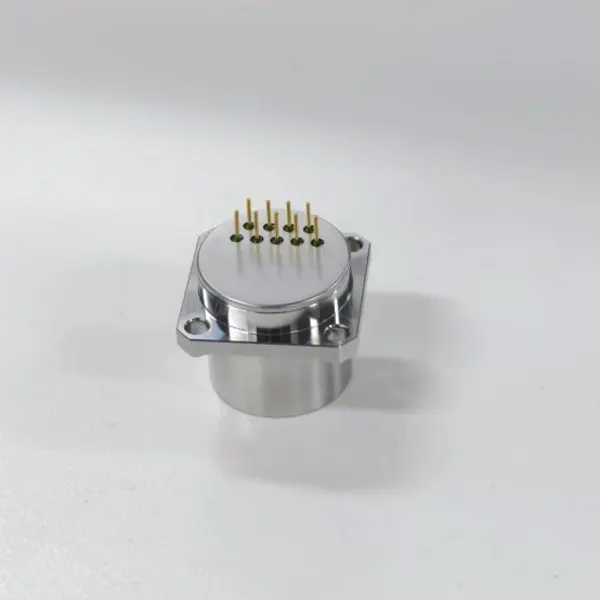
MOPKT-JB3-D01 Dual-Axis Digital Accelerometer
The MOPKT-JB3D-01 is designed to solve core industry issues with advanced digital sensing technology, specifically tailored for environments where analog transmission noise is unacceptable, such as inside underwater drones or high-voltage multirotors.
- Direct digital output eliminates analog transmission noise and interference.
- Integrated dual-axis accelerometer in a compact single module.
- Built-in high-precision ADC ensures accurate signal conversion.
- Supports synchronized trigger output for multi-sensor data alignment.
- Built-in temperature measurement for critical environmental thermal compensation.
Frequently Asked Questions (FAQ)
Authoritative Industry References
To ensure structural integrity and compliance in your autonomous designs, we recommend consulting the following engineering standards and aerospace authorities:
- Institute of Electrical and Electronics Engineers (IEEE) – Standards for MEMS sensor calibration, inertial navigation terminology, and data fusion algorithms.
- NASA Technical Reports Server (NTRS) – Advanced documentation on spacecraft attitude determination, control systems, and IMU drift mitigation techniques.
- Federal Aviation Administration (FAA) – Regulatory frameworks and certification criteria for Unmanned Aircraft Systems (UAS) avionics and navigation reliability.