


Without a highly precise, functioning gyroscope sensor in a drone, a multirotor Unmanned Aerial Vehicle (UAV) is nothing more than an expensive, aerodynamic brick. The modern multirotor design is inherently unstable. Unlike a fixed-wing aircraft that glides naturally due to the physics of its airfoils, a quadcopter requires thousands of micro-adjustments per second to remain hovering in place. This continuous balancing act relies entirely on the data pipeline generated by the Inertial Measurement Unit (IMU), of which the gyroscope is the beating heart.
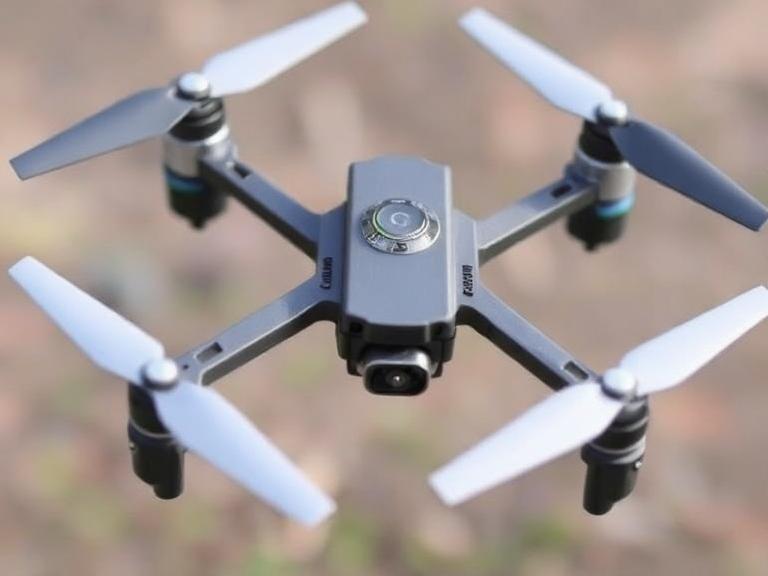
From our experience engineering advanced flight systems at China Moneypro, consumer understanding of drone sensors is dangerously superficial. The industry treats the term “gyro” as a ubiquitous buzzword, failing to differentiate between a two-dollar component in a toy and a military-grade navigation instrument. When you are deploying military drones in GPS-denied environments or flying heavy payload inspections near severe magnetic interference, understanding exactly how your gyroscope functions is a matter of operational survival. In this comprehensive guide, we will dissect the mechanical reality of the gyroscope sensor in a drone, explaining not only what it is, but WHETHER it is worth upgrading your IMU hardware for your specific operational parameters.
Quick Answer: The Gyroscope Sensor Defined
The gyroscope sensor in a drone is an electronic component within the Inertial Measurement Unit (IMU) that measures the rate of angular rotation across three axes: roll, pitch, and yaw. It continuously feeds this angular velocity data to the flight controller, which computes the drone’s attitude (orientation). The flight controller then directs the Electronic Speed Controllers (ESCs) to speed up or slow down specific motors to maintain stable, level flight. In commercial applications, advanced north-seeking gyros also allow for precise navigation in environments where GPS and magnetic compasses fail.
Table of Contents
- What It Is: Anatomy of the Gyroscope
- How It Works: Physics and Feedback Loops
- Quick Summary Table: Gyro vs Accelerometer
- Benefits of High-Grade Gyroscopes
- Limitations: Drift and Thermal Bias
- Comparison Table: Gyroscope Technologies
- Who Should Use It & Who Does Not Need It
- Pros and Cons Table: Upgrading IMU Systems
- Common Mistakes in Gyro Management
- Buying Considerations for Commercial Operators
- Expert Recommendation & Featured Payload
- Frequently Asked Questions (FAQ)
What It Is: Anatomy of the Gyroscope
In the context of modern UAVs, we are not talking about the mechanical spinning wheels seen in antique maritime compasses. The gyroscope sensor in a drone utilizes Micro-Electro-Mechanical Systems (MEMS) technology. A MEMS gyro is a silicon chip containing microscopic vibrating structures suspended by silicon springs. When the drone rotates, these structures experience the Coriolis force, causing a measurable shift in capacitance.
This sensor does not operate in isolation. It is packaged alongside an accelerometer (and often a magnetometer and barometer) to form the IMU. While the accelerometer measures linear acceleration and gravity to tell the drone which way is “down,” the gyroscope measures how fast the drone is rotating away from that baseline.
How It Works: Physics and Feedback Loops
The mechanics of how the gyroscope sensor in a drone keeps the aircraft airborne rely on a strict Proportional-Integral-Derivative (PID) feedback loop. When a gust of wind hits the drone, tilting it to the left (a roll movement), the MEMS gyroscope instantly detects this angular velocity in degrees per second.
This analog data is converted to a digital signal and sent to the flight controller at rates up to 8000 times per second (8kHz). The flight controller’s PID algorithm calculates the exact error between the desired orientation (level hover) and the current orientation. It then sends an electrical pulse to the ESCs on the left side to spin those motors faster, generating more lift to counteract the wind and return the drone to a level state. All of this happens in milliseconds. If the gyroscope experiences severe vibration or noise, this data pipeline is corrupted, leading to motor oscillation, overheating, and eventual catastrophic failure.
| Sensor Type | What It Measures | Primary Function in Flight |
|---|---|---|
| Gyroscope | Angular velocity (Degrees/sec) | Detects rotational movement (Roll, Pitch, Yaw) for immediate stabilization. |
| Accelerometer | Linear acceleration & Gravity (g) | Detects physical displacement and establishes the absolute “level” horizon. |
| Magnetometer | Earth’s magnetic field (Gauss) | Acts as a compass to determine the drone’s absolute heading (North). |
| Barometer | Atmospheric pressure | Maintains precise altitude holding. |
Benefits of High-Grade Gyroscopes
In most professional situations, the quality of your gyroscope dictates the boundaries of your operational capabilities. Standard consumer drones rely heavily on GPS to hold their position. However, in urban canyons, under bridges, or during electronic warfare jamming, GPS is useless. A high-grade gyroscope sensor in a drone allows the flight controller to utilize dead reckoning—calculating current position based on past position, speed, and heading—with remarkable accuracy.
Furthermore, gyroscope precision is critical for payload operation. If you are operating an eo ir gimbal payload, the camera gimbal relies on its own internal gyros, slaved to the aircraft’s IMU, to maintain optical stability at high zoom levels. A cheap gyro results in micro-jitters, rendering thermal imaging or long-range reconnaissance useless.
Limitations: Drift and Thermal Bias
We must apply commercial and practical judgment: MEMS gyroscopes are not perfect. Their primary enemy is “bias instability” or “drift.” Because the flight controller calculates angle by integrating angular velocity over time, any tiny error in the raw measurement accumulates. After several minutes of flight without GPS correction, a standard MEMS gyro might convince the flight controller it has rotated five degrees when it hasn’t, causing the drone to drift dangerously.
Additionally, silicon structures are highly susceptible to thermal expansion. As the drone’s internal electronics heat up, the physical properties of the MEMS chip alter, creating false rotational data. This is why premium flight controllers undergo rigorous factory temperature calibration, a step frequently skipped by budget manufacturers found among lower-tier uav manufacturers in china.
| Gyroscope Technology | Drift Rate (Bias Instability) | Cost Range | Primary Application |
|---|---|---|---|
| Consumer MEMS | > 10° per hour | $5 – $50 | Consumer photography drones, FPV racing. |
| Tactical/Industrial MEMS | 1° to 5° per hour | $500 – $3,000 | Commercial mapping, night vision military drones. |
| Fiber Optic Gyro (FOG) | < 0.1° per hour | $10,000+ | Submarines, advanced aerospace, heavy-duty autonomous UAVs. |
Who Should Use It & Who Does Not Need It
For beginners: If you are flying a DJI Mavic in your backyard on a sunny day, the integrated consumer-grade MEMS gyroscope is more than adequate. You do not need to upgrade your IMU hardware; the manufacturer’s software compensation is excellent for casual use.
For heavy-duty applications: If you represent a government agency or a tier-one infrastructure inspection firm operating in environments with massive electromagnetic interference (like inspecting high-voltage power lines), standard gyros and magnetic compasses will fail. You must upgrade to tactical-grade north-seeking gyroscopes. These components ignore magnetic fields entirely, utilizing the Earth’s rotation to find true north, ensuring your drone communication systems and navigation remain perfectly aligned.
| Pros (Benefits) | Cons (Limitations) |
|---|---|
| Total immunity to magnetic interference and spoofing. | Significantly higher capital expenditure (CapEx). |
| Allows for fully autonomous flight in GPS-denied environments. | Heavier component weight, slightly reducing flight time. |
| Provides unshakeable heading data for long-range targeting payloads. | Requires advanced integration with specialized flight controllers. |
Common Mistakes in Gyro Management
In our testing, the most frequent cause of “flyaways” is not a hardware failure, but poor operator protocol. The most catastrophic mistake is taking off before the gyroscope has completed its static initialization. When a drone boots up, it must remain perfectly still on the ground for several seconds so the gyro can establish a zero-rotation baseline. Moving the drone during initialization hardcodes an error into the flight controller, causing immediate instability.
Another major engineering failure is “hard mounting” the flight controller. The gyroscope sensor in a drone is hypersensitive to the mechanical vibrations generated by the propellers and motors. If the IMU is not isolated using specialized vibration-damping silicone or rubber bobbins, the raw data signal is drowned in mechanical noise, overwhelming the PID loop.
| Specification | What It Means | Why It Matters for Commercial Buyers |
|---|---|---|
| Bias Instability (deg/hr) | The rate at which the gyro’s measurement drifts over time. | Lower is better. Dictates how long the drone can fly safely without GPS. |
| Noise Density | The amount of electronic noise inherent in the sensor’s raw output. | High noise requires heavy software filtering, adding latency to motor response. |
| Vibration Rectification Error (VRE) | How vibration forces translate into false rotational data. | Critical for large-rotor, high-vibration heavy lift drones. |
Expert Recommendation from China Moneypro
In most professional situations involving critical infrastructure inspection, defense operations, or beyond visual line of sight (BVLOS) autonomous flights, relying on standard magnetic compasses and consumer MEMS gyroscopes is a liability. Magnetic anomalies from steel structures or malicious jamming can instantly disorient a standard UAV.
We recommend entirely bypassing magnetic dependency by integrating a North-Seeking Gyroscope into your payload architecture. China Moneypro MOPKT-EX7-1 North-Seeking Gyroscope (North Finder) Module is engineered specifically to overcome these exact environmental challenges.
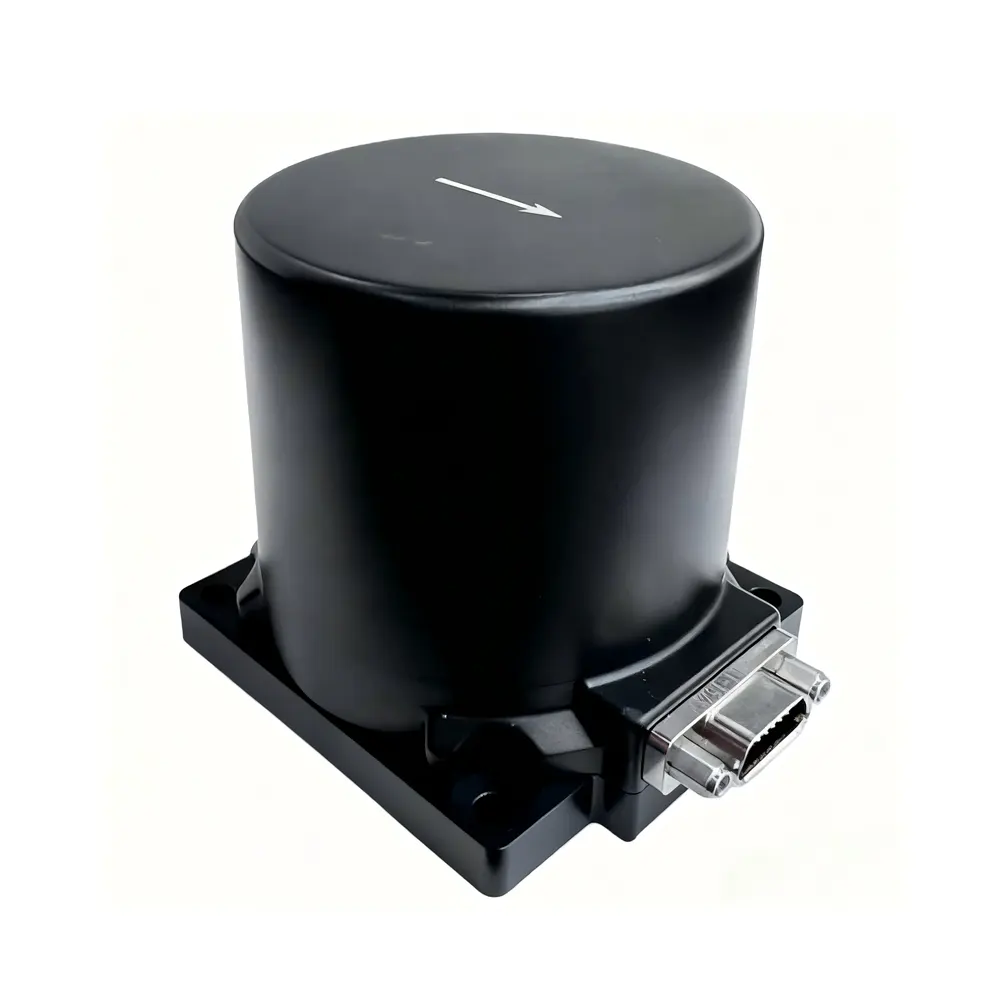
MOPKT-EX7-1 North-Seeking Gyroscope
This MEMS North Seeking System guarantees navigational integrity regardless of external interference. By sensing the Earth’s rotation directly, it provides absolute directional stability.
- High-precision MEMS gyro compass for accurate north finding.
- Dual-axis MEMS accelerometer ensures stable attitude compensation.
- Fully autonomous north seeking based on Earth rotation sensing—no dependence on magnetic fields or external signals.
- Strong anti-interference capability perfectly suited for complex electromagnetic environments.
For commercial users building platforms through top uav solution companies, integrating the MOPKT-EX7-1 ensures that your high-value assets—and the data they collect—are never compromised by navigational drift or signal jamming.
Frequently Asked Questions (FAQ)
Authoritative Industry References
To ensure operational compliance and deepen your understanding of aerospace navigation systems, we advise reviewing standards established by the following authorities:
- Institute of Electrical and Electronics Engineers (IEEE) – Access peer-reviewed literature on MEMS sensor bias instability, thermal calibration algorithms, and IMU data fusion methodologies.
- Federal Aviation Administration (FAA) – Review regulatory guidelines regarding autonomous flight requirements, BVLOS operations, and navigational redundancy for commercial UAV deployment.
- NASA Technical Reports Server (NTRS) – Explore extensive documentation on inertial navigation systems, gyroscope drift characteristics, and aerospace sensor reliability protocols.